


What is the 2027 state of dialer tools (Aircall, Dialpad, RingCentral) with AI?
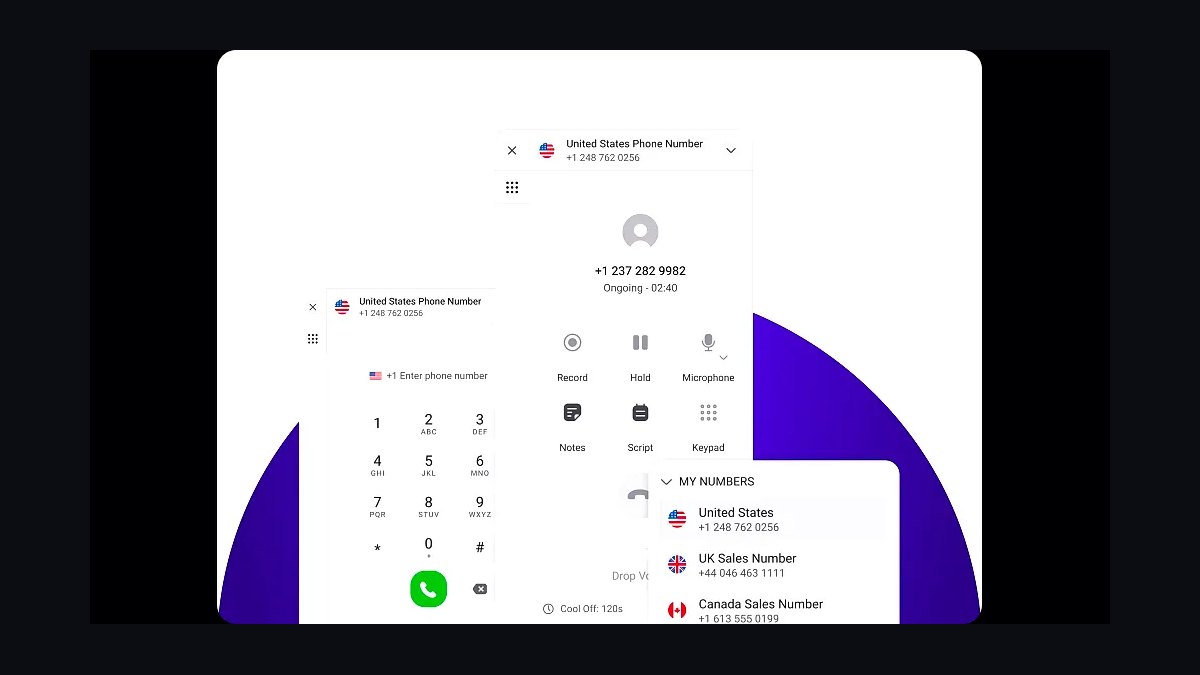
The 2027 state of dialer tools (Aircall, Dialpad, RingCentral, plus AI-native alternatives) has been transformed by agentic AI from a relatively commoditized telephony category to a strategic component of the AI-native sales stack. The traditional dialer providers — Aircall, Dialpad, RingCentral, Five9 — have each added significant AI capabilities through 2024-2027, including real-time call transcription, AI-generated call summaries, sentiment analysis, and integration with broader sales coaching workflows. Simultaneously, AI-native dialer alternatives (Orum and Nooks for parallel dialing; Voze and Pickle for voice agent prospecting) have emerged to handle high-velocity outbound calling at AI-augmented productivity levels. The 2027 enterprise dialer market: Dialpad leads in AI integration depth (Dialpad Ai is the most mature AI-native voice platform); Aircall leads in mid-market simplicity and integration; RingCentral leads in unified communications (voice, video, messaging) for enterprises; Five9 leads in contact-center applications. For B2B SaaS sales organizations, the dialer choice is increasingly bundled with broader workflow decisions — Gong customers often deploy Dialpad for tight integration; HubSpot customers often use HubSpot's native calling; Salesforce customers often use Aircall for native integration.
1The Dialer Category Evolution
Dialer tools in 2010-2020 were primarily about phone-call infrastructure — VoIP technology, call routing, recording, and CRM integration. The category was relatively commoditized; the major providers competed mostly on price, feature breadth, and CRM integration depth. Aircall, Dialpad, RingCentral, and Five9 each held meaningful market positions without strong differentiation.
The 2020-2027 evolution has fundamentally changed the category in three ways.
First, AI capabilities have moved from differentiating to default. Every major dialer in 2027 includes real-time call transcription, AI-generated call summaries, sentiment analysis, and basic conversation intelligence. The dialer is no longer just a phone — it is a conversation intelligence platform with voice telephony attached.
Second, integration with broader sales workflows has deepened. Modern dialers integrate tightly with sales engagement platforms (Outreach, Salesloft, Apollo), conversation intelligence platforms (Gong, Clari Copilot), CRM platforms (Salesforce, HubSpot), and agentic AI platforms (Agentforce, Microsoft Copilot Studio). The dialer is part of an integrated workflow rather than a standalone tool.

Third, AI-native parallel dialer and voice agent alternatives have emerged. Orum and Nooks have established meaningful presence in inside-sales contexts with AI parallel dialing that increases dial-to-conversation ratio significantly. Voze and Pickle are early players in autonomous voice agent prospecting where the agent (not a human) makes the call.
1.1 The 2027 deployment patterns
A typical 2027 B2B SaaS sales organization deploys dialers in one of three patterns. First, integrated dialer-plus-CRM. HubSpot customers often use HubSpot's native calling; Salesforce customers often deploy Aircall or Dialpad for tight Salesforce integration. Second, standalone enterprise dialer plus CRM integration. Aircall, Dialpad, or RingCentral plus CRM integration. Third, AI-native parallel dialer for inside sales. Orum or Nooks for high-velocity outbound calling, layered on top of CRM and sales engagement.
2The Major Dialer Platforms in 2027
Six dialer platforms dominate the 2027 B2B sales market.

Dialpad. The AI-native leader with Dialpad Ai providing the most mature real-time AI capabilities — live transcription with high accuracy, real-time sentiment analysis, AI-generated coaching prompts during calls, and post-call AI summaries. Dialpad is preferred by sales-focused mid-market and lower-enterprise companies. Pricing typically 30 to 60 dollars per seat per month.
Aircall. The mid-market leader with strong CRM integration (especially Salesforce and HubSpot) and clean user experience. Aircall added significant AI capabilities through 2024-2026 but is not as AI-native as Dialpad. Aircall pricing typically 25 to 50 dollars per seat per month.
RingCentral. The enterprise unified communications leader with voice, video, messaging, and contact center in a single platform. RingCentral is preferred by enterprises wanting unified communications rather than standalone dialer. Pricing typically 30 to 75 dollars per seat per month depending on tier.
Five9. The contact center platform with strong inbound and outbound calling capabilities for high-volume operations. Five9 is preferred by customer service organizations and high-volume inside sales operations. Pricing varies based on contact center vs sales-only usage.

Orum. The AI parallel dialer specialist with mature parallel dialing technology that automatically dials multiple prospects simultaneously and connects the AE only when a human answers. Orum increases dial-to-conversation ratios by 3 to 8 times versus single-line dialing. Pricing typically 1500 to 2500 dollars per AE per month for a parallel dialer license.
Nooks. The Orum competitor with similar AI parallel dialing plus additional sales engagement capabilities. Nooks is preferred by SDR-heavy operations that want parallel dialing plus sequence management plus coaching in one platform. Pricing similar to Orum.
2.1 The dialer selection framework
The dialer selection framework depends on three factors. First, sales motion type. High-volume outbound SDR operations strongly benefit from Orum or Nooks parallel dialing. AE-focused enterprise sales benefit from Dialpad or Aircall. Inbound-focused customer service benefits from Five9 or RingCentral.

Second, CRM integration priority. HubSpot customers often pick HubSpot's native calling. Salesforce customers often pick Aircall or Dialpad for deep integration. Multi-CRM environments often pick Dialpad for its broad integration support.
Third, AI sophistication requirements. Companies that want best-in-class AI capabilities pick Dialpad. Companies that prioritize simplicity and integration pick Aircall. Companies that prioritize unified communications pick RingCentral.
3The AI Capabilities in 2027 Dialers
Modern dialers in 2027 include four core AI capability layers.
Real-time call transcription. The dialer transcribes the call in real time with 95-plus percent accuracy. The transcript is searchable, shareable, and available for downstream analysis. Top platforms (Dialpad Ai, Aircall AI) support multiple languages.

Real-time sentiment analysis. The AI analyzes call sentiment continuously and can alert the AE or manager when sentiment shifts negatively. This enables real-time intervention on calls going poorly.
AI-generated post-call summaries. The AI generates a summary of the call within seconds of the call ending — key topics discussed, next steps, action items, MEDDIC/MEDDPICC field updates. The summary pushes to the CRM automatically.
Real-time coaching prompts. Some platforms (Dialpad Ai notably) provide real-time coaching prompts during the call — suggesting talking points, surfacing relevant content, flagging missed opportunities. The prompts are subtle (typically text on the AE's screen) and do not interrupt the conversation.

3.1 The AI quality differences
Not all dialer AI is equal. The 2027 AI quality leaders are Dialpad (deepest AI integration), Gong (which integrates with various dialers as the AI layer), and Clari Copilot (similar AI layer pattern). Among standalone dialers, Dialpad clearly leads on AI; Aircall and RingCentral are competitive but typically rely on integrated partnerships with Gong or Clari for advanced capabilities.
Companies that prioritize AI quality should evaluate the dialer-plus-conversation-intelligence stack holistically rather than the dialer alone.
4The Parallel Dialer Revolution
Orum and Nooks have transformed inside sales productivity through 2024-2026 with AI parallel dialing. The technology works as follows.
The AE starts a parallel dialing session. The platform automatically dials 3 to 8 prospects simultaneously from a curated list. When a human answers any of the simultaneous dials (rather than voicemail or no answer), the platform instantly connects that human to the AE while abandoning the other calls. The AE has a conversation; the platform queues the next batch of parallel dials.

The productivity math: a traditional single-line dialer produces 1 conversation per 15 to 25 dials (call connect rate of 4 to 7 percent). A parallel dialer produces 1 conversation per 6 to 12 dials (effective connect rate of 8 to 17 percent thanks to parallel attempts). The AE's actual conversation time per hour rises from 30 to 60 minutes per hour to 45 to 75 minutes per hour.
For SDR-heavy operations doing high-volume outbound, the parallel dialer productivity improvement is significant. Companies running 20-plus SDRs typically see 30 to 60 percent improvement in meetings booked per SDR after deploying Orum or Nooks.
4.1 The parallel dialer limitations
Parallel dialers have limitations. The technology is most effective for low-complexity outbound to ICP-qualified contact lists. High-touch enterprise outreach (where each call is heavily researched and personalized) benefits less from parallel dialing. Voicemail handling becomes more complex (the platform must manage which dials get voicemail messages vs immediate abandonment).

Some buyers also dislike the experience of being called by a parallel dialer — the brief click before the AE comes on the line can be detectable. Most prospects don't notice but some do, and they perceive the experience as low-touch.
5The Voice Agent Prospecting Frontier
The 2026-2027 frontier is autonomous voice agents that make outbound calls without a human AE on the line. Voze, Pickle, and several emerging platforms are pushing this capability.
The voice agent makes the call, introduces itself (often disclosing that it is an AI agent depending on regulatory requirements), runs a brief qualification conversation, and either books a meeting directly or schedules a follow-up with a human AE. The technology is improving fast but is not yet at production-quality for most use cases.
The voice agent productivity math is dramatic: a single voice agent can run hundreds of calls per day at human-equivalent quality on simple use cases. The cost per call is a fraction of human cost. However, the calls have to be very simple (basic qualification, meeting booking) — anything requiring complex conversation breaks the agent.

The 2027 reality for voice agents is pilot deployment in specific use cases (event follow-up, basic qualification, appointment confirmation). The 2028-2029 trajectory points toward broader deployment as the technology matures.
6The Mistakes Companies Make on Dialer Selection
The biggest mistake is selecting a dialer in isolation from the broader sales tech stack. The dialer is one component of the workflow; the right dialer choice depends on the CRM, sales engagement platform, conversation intelligence platform, and AI tools. Companies that evaluate the dialer in isolation often pick the cheapest option and regret the integration costs later.
The second mistake is under-investing in AI capabilities. Some companies pick the cheapest dialer without AI capabilities, then layer Gong or Clari Copilot on top. The hybrid approach works but is more expensive and complex than picking an AI-native dialer like Dialpad. For most companies, the AI-native dialer is the simpler choice.

The third mistake is over-deploying parallel dialers. Some sales leaders deploy Orum or Nooks for all sales motions without considering whether parallel dialing fits the motion. Enterprise sales with heavy-research outreach typically does not benefit from parallel dialing.
The fourth mistake is under-investing in conversation intelligence on the dialer. The dialer captures conversations; the conversation intelligence platform analyzes them. Companies that deploy the dialer without the conversation intelligence layer miss most of the value.
The fifth mistake is failing to integrate with sales coaching workflows. The dialer captures conversations; the sales coaching workflow uses them for coaching. Companies that have the data but don't operationalize coaching see minimal performance improvement.
Related on PULSE
- What is Aircall and why is it a hot RevOps AI cloud-calling platform for 2027?
- What is Dialpad and why is it a hot RevOps AI communications platform for 2027?
- What is Nooks and why is it a hot RevOps AI parallel dialer for 2027?
- What is AI parallel dialer and how does Orum and Nooks change inside sales in 2027?
- What is Orum and why is it a hot RevOps parallel dialer for 2027?
- Which vendor consolidation strategies are failing most often when integrating AI sales tools into existing stacks?
FAQ
Are Aircall, Dialpad, and RingCentral still the main players in 2027? Yes, they remain major players, but the market has expanded. Aircall leads in mid-market simplicity, Dialpad in AI depth, and RingCentral in unified communications. However, AI-native tools like Orum, Nooks, Voze, and Pickle now compete strongly for high-velocity outbound use cases.
How has AI changed dialer tools by 2027? AI now powers real-time transcription, auto-generated call summaries, sentiment analysis, and coaching workflows. These features are now standard across major platforms, not just add-ons. The shift has made dialers a strategic part of the sales stack rather than just a telephony tool.
Which dialer is best for B2B SaaS sales teams in 2027? It depends on your existing stack. Dialpad integrates tightly with Gong for sales intelligence. Aircall is strong for mid-market teams needing simplicity. RingCentral suits enterprises wanting unified voice, video, and messaging. HubSpot’s native calling works well for HubSpot users.
Do AI-native dialers like Orum and Nooks replace traditional ones? Not entirely, but they excel in specific areas. Orum and Nooks focus on parallel dialing for high-volume outbound, while Voze and Pickle use voice agents for prospecting. Traditional providers still lead in full-featured communications and contact center needs.
Are there any downsides to AI-powered dialers in 2027? Yes, potential downsides include higher costs for advanced AI features, reliance on accurate transcription for coaching, and integration complexity with existing CRMs. Some teams also find AI summaries less reliable for nuanced conversations.
How do I choose between these dialers for my team? Evaluate your primary use case: outbound sales velocity, customer support, or unified comms. Test AI features for accuracy and ease of use. Consider integration with your CRM and existing tools like Gong or HubSpot. Budget and team size also matter—mid-market often prefers Aircall, while enterprises lean toward RingCentral or Five9.
Sources
- Dialpad Ai 2026-2027 product documentation and customer case studies
- Aircall 2026-2027 mid-market customer benchmarks
- RingCentral 2026-2027 unified communications platform documentation
- Five9 2026-2027 contact center benchmarks
- Orum 2026 parallel dialer productivity benchmarks
- Nooks 2026 SDR productivity case studies
- Forrester Wave 2026 Sales Dialer Platforms Wave
- Pavilion 2026 RevOps Benchmark Survey on dialer adoption and ROI
People also search for: best what is the 2027 · top what is the 2027 · top rated what is the 2027 · top ranked what is the 2027 · highest rated what is the 2027 · what is the reviews 2027
This page will be disappearing soon. Save it to your device for $1 — or read it free while it is here.
@Kory-White- · if Venmo asks, the last 4 of my number are 2012
This page is gone.
This one is off the shelf now. $1 keeps it on your phone for good — the whole page, pictures and diagrams included.
 revopsWhat is AI parallel dialer and how does Orum and Nooks change inside sales in 2027?
 revopsHow do you set up revenue reporting dashboards in 2027?
 revopsHow do you reduce CRM data decay in 2027?
 revopsHow do you migrate CRM platforms without losing data in 2027?
 revopsHow to evaluate a fractional CRO — 15 interview questions in 2027
 revopsAre college athletes employees, and where does the unionization fight stand in 2027?
 revopsHow do you handle commission disputes in 2027?
 revopsHow do you run a customer expansion playbook in 2027?
 revopsWhat skills should you hire for in a RevOps analyst in 2027?
 revopsHow do you calculate and improve pipeline coverage ratio in 2027?