


Is the MQL dead in 2026, and what replaces it for RevOps?

Yes — the MQL is effectively dead as a primary metric heading into 2027, and the shift away from MQL-first is the single most common conversation among demand-gen and RevOps leaders right now. The form-fill model broke for three reasons: it's a lagging indicator (by the time someone fills a form they're often deep into their decision), it's misaligned with revenue (when the CFO asks "where's the revenue?", MQL counts don't answer), and it ignores the buying committee — roughly half of all CRM opportunities in 2026 have no contacts attached at all, and a single MQL is statistically meaningless when the real committee is ten people. What replaces it is signal-based selling and a pipeline-first scoreboard: instead of counting form fills, teams act on intent spikes, job changes, funding announcements, and tech installs, and they measure SQLs per month (quality), pipeline velocity in days (speed), and CAC payback in months (efficiency). For RevOps, the job is to retire the MQL as the handoff trigger and stand up a shared, signal-driven data model that sales and marketing both trust.
1Why the MQL Broke
The MQL assumed a single, linear buyer who raises a hand by filling a form. That buyer doesn't exist in 2027.
1.1 It's a Lagging Indicator
By the time someone completes a form, they've usually already done their research — increasingly via AI search and peer communities — and are deep into the decision. The MQL fires after the moment that mattered, so marketing optimizes for a signal that arrives too late to influence the outcome.

1.2 It Doesn't Match the Buying Committee
Enterprise deals involve large committees, yet roughly half of all CRM opportunities in 2026 have no contacts associated at all. Using one MQL as the proxy for a ten-person committee is statistically insignificant — you're scoring a fraction of the people who actually decide, and ignoring the dynamics among them.
1.3 It's Misaligned With Revenue
When CFOs ask "where's the revenue?", a pile of MQLs doesn't answer. Marketing gets measured on a volume metric that sales discounts, which fuels the endless "lead quality" argument instead of shared accountability for pipeline — the most corrosive dynamic in a revenue org.

2What Replaces It: Signal-Based Selling
Signal-based selling prioritizes motion over form fills. Teams act on intent data, job changes, funding events, and technology shifts.
2.1 AI Changes the Scoring
Instead of awarding arbitrary points from a rules table someone invented years ago, models analyze patterns across your closed-won deals to learn what actually predicts conversion, and third-party intent data turns qualification into a system that improves over time. The score stops being a guess and becomes a prediction grounded in your own win history.

3The Pipeline-First Scoreboard
The MQL is replaced by pipeline sourced, pipeline influenced, and in-market account coverage, measured through three numbers everyone agrees on.
3.1 The Three Numbers That Matter
SQLs per month (quality), pipeline velocity in days (speed), and CAC payback in months (efficiency) become the shared scoreboard. When sales, marketing, and CS share one data model and one set of definitions, they stop arguing about lead quality and start chasing pipeline together — which is the cultural win, not just the metric one.

3.2 Pipeline Sourced vs. Influenced
The two pipeline numbers do different jobs. "Pipeline sourced" credits the team that originated an opportunity, while "pipeline influenced" credits every team that touched it — and the distinction matters because in a ten-person committee, marketing and sales both contribute and a sourced-only model under-counts marketing's real impact. RevOps has to define both precisely and report them side by side, or the org slides right back into a credit fight that looks exactly like the old MQL argument with new labels on it.
4The RevOps Playbook for 2027
Retire the MQL as the handoff trigger and replace it with a signal threshold (intent + fit + committee coverage). Build one shared data model so "pipeline sourced" and "in-market" mean the same thing to every team. Feed your CRM with intent and third-party signals, and let AI scoring learn from closed-won rather than from a points table. Re-cut marketing's targets from MQL volume to pipeline contribution, and rebuild dashboards around SQLs, velocity, and CAC payback.

4.1 The Political Work Is the Hard Part
The technical change (signals, scoring, dashboards) is easier than the organizational one. The win is a shared scoreboard that ends the lead-quality blame game, so the rollout is as much about getting sales and marketing to agree on definitions as it is about tooling. RevOps owns that alignment, and without it the new metrics just become a new thing to argue about.
5Risks To Watch
Three risks. First, definition drift: if "in-market" or "pipeline sourced" mean different things to different teams, the new scoreboard reproduces the old fight under new names. Second, signal noise: more signals without AI scoring to weight them just creates a louder, less actionable inbox. Third, half-measures: keeping MQL targets alongside the new metrics signals that nothing really changed, so reps and marketers keep optimizing the old number. The hedge is a clean cutover with shared definitions and a single, agreed scoreboard.

6Bottom Line
The MQL is dead as the primary metric: it's a lagging, revenue-misaligned, single-contact proxy in a ten-person buying world, and roughly half of CRM opportunities don't even have contacts attached. Signal-based selling — intent, job changes, funding, tech installs, scored by AI against your closed-won — replaces it, and the scoreboard becomes pipeline sourced and influenced plus SQLs, velocity, and CAC payback. RevOps wins this by retiring the MQL handoff, unifying the data model and definitions, and ending the lead-quality blame game. The teams that make the clean cutover chase pipeline together; the teams that bolt signals onto an MQL world just argue about lead quality in a new vocabulary. For RevOps leaders, the practical first move is small and concrete: stop reporting MQLs to the executive team this quarter and replace that slide with pipeline sourced, pipeline influenced, and SQLs — because the metric the leadership team stares at every week is the one the whole org will actually optimize toward.

Related on PULSE
- Is cold outbound dead in 2027 and what replaces it?
- How do you coach reps to remove dead deals from the pipeline?
- Is cold email outbound dead in 2027?
- How do I tell the difference between a stalled deal and a dead deal?
- What 2027 RevOps metric replaces win rate when AI handles 80% of initial qualification?
- What replaces RevOps stack if AI agents replace SDRs natively?
The Four Key Signals That Replace the MQL
RevOps teams in 2026 are moving to a signal stack that tracks four primary buying signals instead of a single MQL threshold. Intent signals (content consumption patterns, competitor research spikes) indicate active evaluation. Job-change signals (new CRO hired, VP of Engineering promoted) trigger outreach when decision-makers enter new roles. Funding signals (Series A announced, new budget line items) predict purchasing power. Tech-stack signals (new CRM installed, marketing automation added) reveal infrastructure readiness. Each signal is weighted and scored independently, then combined into a composite "buying momentum" score — no single form fill ever triggers a handoff.
How RevOps Builds the Signal-Based Data Model
Retiring the MQL requires a new shared data layer. Start by unifying your CDP and CRM around event streams, not lead statuses. Map every signal to a standardized "buying stage" (Awareness, Active Evaluation, Decision Committee Formed) that both sales and marketing agree on. Implement reverse-ETL to push enriched signal data back into sales tools daily. The critical change: replace the MQL-to-SQL conversion rate with signal-to-meeting rate and signal-to-pipeline-velocity. Most teams see signal-to-meeting rates between 8-15% initially, improving to 20-30% after six months of tuning.
Common Pitfalls When Ditching MQLs
The biggest mistake is abandoning all lead scoring overnight. Instead, run a 90-day parallel test: keep MQL scoring running silently while training your team on signal-based workflows. Second pitfall: over-indexing on one signal type (e.g., only intent data) — the buying committee requires balanced signals across roles. Third: failing to define "signal decay" — a 90-day-old job change or funding event is noise. Set automated signal freshness rules to expire old signals and re-engage only when new signals appear. Teams that avoid these traps see 20-40% faster pipeline velocity within two quarters.
FAQ
Is the MQL completely gone from all companies in 2026? No, but it's rapidly fading as a primary metric. Some organizations still use MQLs for early-stage tracking, but most RevOps teams have moved to signal-based models. The shift is most common in B2B SaaS and enterprise tech, where buying committees are large and form-fill data is unreliable.
What's the biggest challenge when retiring the MQL? Aligning sales and marketing on a new handoff trigger. Without a shared definition of "qualified," teams often revert to old habits. The key is to agree on a signal-based scoreboard—like intent spikes or job changes—and test it for at least two quarters before fully committing.
How do you measure success without MQLs? Focus on pipeline velocity, SQLs per month, and CAC payback in months. These metrics directly tie to revenue outcomes. For example, a team might track how quickly a signal (like a funding announcement) converts to a qualified meeting, rather than counting form fills.
Does signal-based selling require expensive new tools? Not necessarily. Many teams start with existing CRM data and free intent sources like LinkedIn job changes or public funding alerts. Paid tools can enhance accuracy, but the core shift is process-driven: training reps to act on signals rather than waiting for inbound forms.
How do you handle attribution without MQLs? Attribution becomes more nuanced. Instead of last-touch MQL credit, teams use multi-touch models that weight signals across the buyer journey. For example, a job change might get 20% credit, a content download 10%, and a demo request 70%. The goal is to reflect the committee's collective behavior.
What's the timeline for this transition in most companies? It typically takes 6 to 12 months to fully retire MQLs and stabilize a signal-based system. The first quarter is for alignment and tool setup, the second for testing, and the third for scaling. Companies with strong RevOps leadership often move faster, while those with entrenched sales cultures may take longer.
Sources
- The Pedowitz Group — The MQL is dead: what killed it and what to do instead
- LeadPipe — Is MQL-first marketing dead in 2026?
- GrowthSpree — The MQL is dead in B2B SaaS: SQLs, pipeline velocity, and CAC payback
- G2 Learn — MQLs are dead: why AI search killed your old funnel
- Qualified — The MQL is dead: how AI is revolutionizing sales and marketing
This page will be disappearing soon. Save it to your device for $1 — or read it free while it is here.
@Kory-White- · if Venmo asks, the last 4 of my number are 2012
This page is gone.
This one is off the shelf now. $1 keeps it on your phone for good — the whole page, pictures and diagrams included.
 revopsHow should a 2027 sales and marketing team run joint forecasting?
 revopsWhat are Florida Gators football's 2027 NIL needs and strategy?
 revopsHow do you design the PLG-to-sales handoff in 2027?
 revopsHow should a 2027 sales enablement team run content audits at scale?
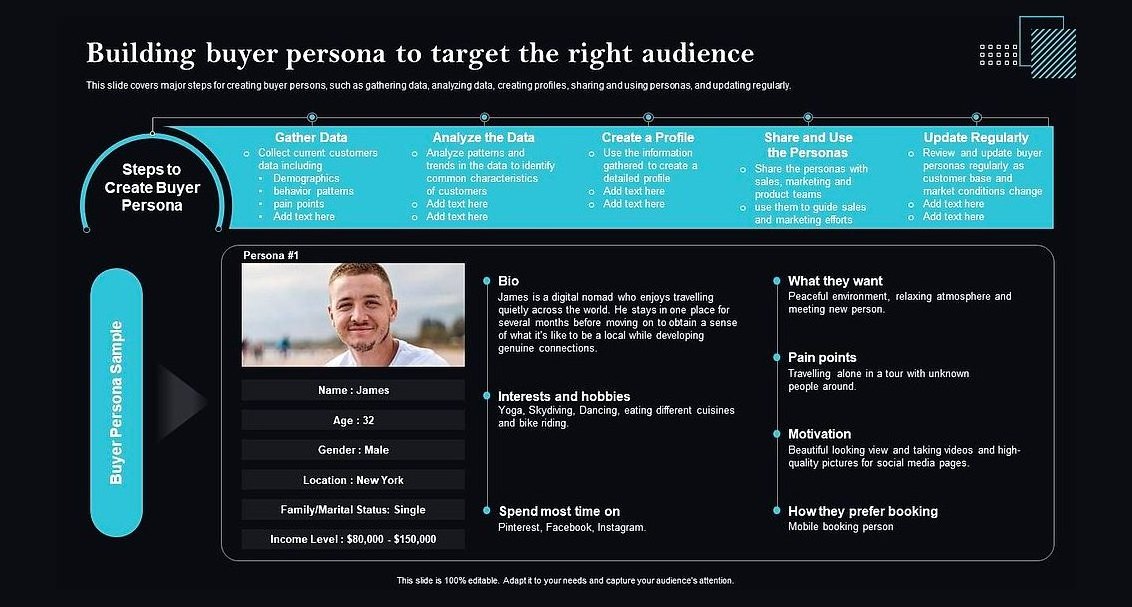 revopsHow do you build a buyer persona that sales actually uses in 2027?
 revopsWhat are the 2027 best churn-save playbooks?
 revopsHow do you explain a missed quarter to the board in 2027?
 revopsHow should a 2027 sales org handle compensation impact during a performance improvement plan?
 revopsHow should a 2027 CS team attribute expansion vs save revenue?
 revopsWhat are Tennessee Volunteers men's basketball's 2027 NIL needs and strategy?