


What is PandaDoc and why is it a hot RevOps document and e-signature platform for 2027?
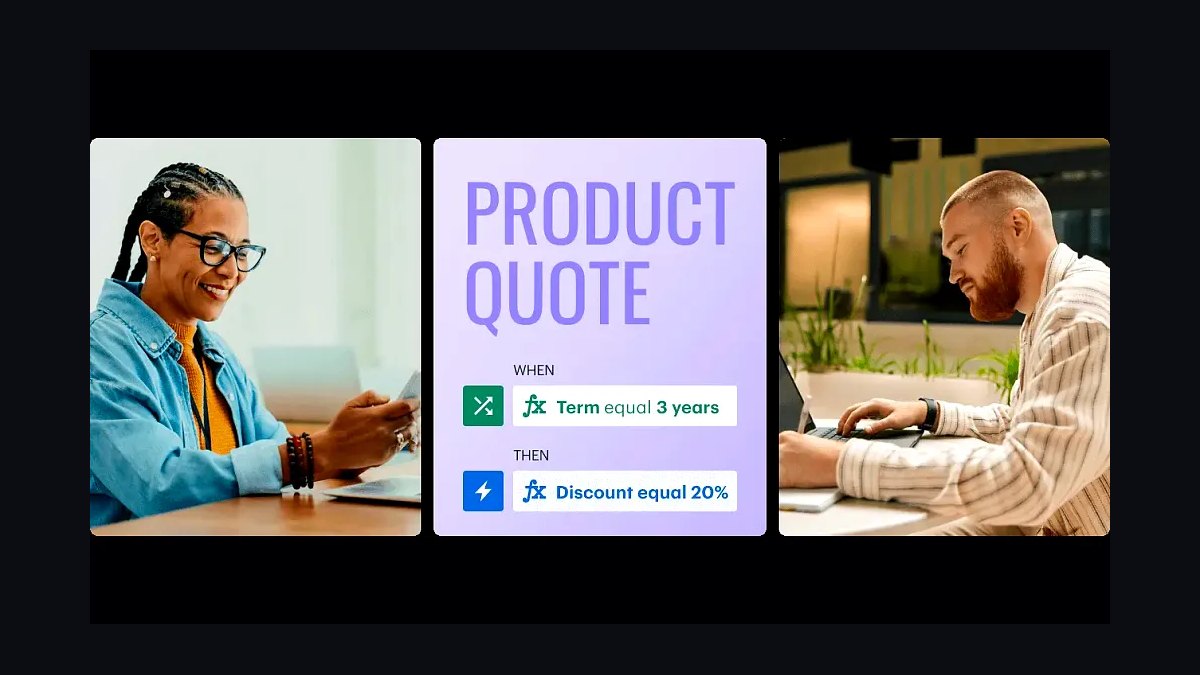
PandaDoc is a document-automation and e-signature platform that handles proposals, contracts, quotes, and forms in one workflow from creation through signing and payment, and it is a hot RevOps tool for 2027 because it is aggressively repositioning as an AI-native, outcome-priced alternative to DocuSign — making the agreement step of the revenue cycle faster, cheaper, and increasingly agent-driven. PandaDoc covers the full agreement flow: a drag-and-drop editor to build custom proposals and contracts, AI-assisted redlining and audit trails that cut review time, legally binding e-signatures compliant with E-SIGN, UETA, GDPR, and HIPAA, real-time analytics showing who viewed a document and for how long, and built-in payment collection. Its 2026 push is notable on two fronts: an AI-native MCP (Model Context Protocol) server that lets developers connect AI agents to drive complete agreement flows with natural-language instructions like "create a sales proposal for Acme at twenty-five thousand a year and send for signature," and a break from seat-centric pricing — a Launch plan with free, unlimited seats where companies pay for results (documents sent and signed) rather than per user. Paid tiers run Essentials around nineteen dollars per user per month and Business around forty-nine, plus a free e-sign plan. For RevOps teams that want to compress the proposal-to-signature step, attack DocuSign's cost, and prepare for agent-driven agreements, PandaDoc is the modern, AI-first document engine.
1What PandaDoc actually is
PandaDoc is a document-automation and e-signature platform built primarily for sales teams at small and medium businesses, handling the documents that close deals — proposals, contracts, quotes, and forms — through a single workflow that spans creation, approval, signing, and payment collection. Where many teams cobble together a document editor, a separate e-sign tool, and a payment processor, PandaDoc unifies them so an agreement goes from draft to signed-and-paid in one place.
The core capabilities are practical and proven. A drag-and-drop editor lets reps build custom, branded agreements quickly from templates. AI-assisted redlining and audit trails reduce review time and create a defensible record of changes. Legally binding e-signatures meet E-SIGN, UETA, GDPR, and HIPAA requirements, with SOC 2 certification, SSO, and a robust API for permissions. And real-time analytics tell reps who viewed a proposal and how long they spent — a useful engagement signal at the close.

1.1 The AI-native MCP and outcome-based pricing
PandaDoc's 2026 strategy directly targets DocuSign on two fronts. First, an AI-native MCP server lets developers connect AI agents to drive complete agreement flows via natural language — an agent can be instructed to "create a sales proposal for Acme at twenty-five thousand a year and send for signature" and execute it end to end. This positions PandaDoc for the agentic era, where agreements are generated and sent by agents rather than hand-built. Second, outcome-based pricing: the Launch plan offers free, unlimited seats and charges for results (documents sent and signed) rather than per user. This breaks the seat-centric model that makes legacy e-sign expensive, aligning cost with value and lowering the barrier to broad deployment.
2Where PandaDoc fits in the RevOps stack
PandaDoc occupies the agreement layer — the proposal-to-signature-to-payment step near the close of the revenue cycle — integrated with the CRM. It does not replace the CRM or CPQ; it turns deal terms into a signed, paid agreement, and increasingly lets agents drive that flow.

The diagram shows PandaDoc's value: it carries an agreement from draft through signature and payment, with analytics on engagement, and the MCP path lets AI agents drive the whole flow. For RevOps, this compresses the often-slow final step of the deal, provides a closing-stage engagement signal, and — via outcome pricing and the MCP — modernizes both the cost structure and the automation of agreements.
2.1 Why the DocuSign challenge matters
The strategic context is that the agreement step is ripe for disruption. DocuSign dominates e-signature but on legacy, seat-heavy pricing and a pre-AI model. PandaDoc's bet — AI-native agent flows plus outcome-based pricing — directly attacks both the cost and the workflow. For RevOps, the outcome pricing (free unlimited seats, pay for documents sent/signed) can dramatically lower the cost of equipping the whole team, while the MCP server prepares the agreement process for agent automation. This is the kind of pricing-and-AI repositioning that makes a mature category newly interesting.

2.2 Accessible, results-aligned pricing
PandaDoc's pricing is built for accessibility and value alignment: a free e-sign plan (up to 60 documents a year), Essentials around nineteen dollars per user per month, Business around forty-nine, and the outcome-based Launch plan with free unlimited seats paying for results. For RevOps, this flexibility means you can match the model to your usage — per-seat for predictable teams, outcome-based to deploy broadly without per-user cost. RevOps should model expected document volume against the plans, since the right choice depends on send/sign volume versus seat count.
3Who PandaDoc is for
PandaDoc fits sales teams — especially SMB and mid-market — that want to streamline proposals, contracts, and e-signatures in one workflow, and that are cost-conscious about legacy e-sign pricing. It is especially attractive to teams wanting agent-ready, modern agreement automation.

3.1 Where it shines
The strongest fit is an SMB or mid-market sales team that creates many proposals and contracts and wants creation, signing, and payment unified, with analytics on buyer engagement. For these teams, PandaDoc's editor, templates, and AI redlining speed the close, the outcome-based pricing lowers cost versus seat-heavy legacy tools, and the MCP server future-proofs for agent-driven agreements. It shines for teams frustrated by DocuSign's cost or wanting a more modern, sales-oriented document experience.
3.2 Where it is a weaker fit
PandaDoc is a weaker fit for the largest enterprises with the most complex CLM and legal-redlining needs, where a dedicated contract-lifecycle platform may offer more depth. It is also less compelling for teams that already have document automation embedded in a CPQ or quote-to-revenue platform, where adding PandaDoc duplicates capability. And organizations with minimal document volume may not need a dedicated platform beyond a basic e-sign tool.

4The 2027 edge
PandaDoc is a 2027 story because the agreement step is being reinvented by AI and challenged on pricing, and PandaDoc is leading both shifts — agent-driven flows via MCP and outcome-based pricing. The edge is being AI-native and value-aligned in a category long dominated by a legacy incumbent on seat-based pricing.
4.1 The RevOps shift
The 2027 implication for RevOps is that the agreement process becomes faster, cheaper, and agent-ready. RevOps owns the templates, approval flows, and pricing model (per-seat versus outcome-based), and increasingly designs how AI agents generate and send agreements via the MCP server. The discipline becomes optimizing the close-stage agreement flow — compressing proposal-to-signature time, using engagement analytics to time follow-up, and preparing for agent automation. Teams that modernize the agreement step will close faster and cheaper than those paying legacy seat prices for a pre-AI workflow, and will be positioned for the agentic future of agreements.

5Limits and watch-outs
The first watch-out is depth at the high end: PandaDoc is built primarily for SMB and mid-market sales, so the largest enterprises with complex contract-lifecycle and legal needs may find a dedicated CLM platform deeper — match the tool to your contract complexity. The second is overlap: if your CPQ or quote-to-revenue platform already does document automation, adding PandaDoc may duplicate capability, so check for redundancy. The third is pricing-model fit — the outcome-based Launch plan is attractive but only advantageous at certain send/sign volumes, so model your actual document volume against per-seat versus outcome pricing before choosing. The fourth concerns the MCP/agent flows: letting agents generate and send agreements via natural language is powerful but demands guardrails — an agent sending an incorrectly priced or unapproved proposal is a real risk, so RevOps must govern approval steps even in agent flows. Finally, as with any close-stage tool, the analytics are a signal, not certainty, and should inform rather than dictate follow-up.
6Bottom Line
PandaDoc is a strong 2027 bet for SMB and mid-market sales teams that want to streamline and modernize the agreement step, because it unifies proposals, contracts, e-signature, and payment in one workflow — now AI-native via an MCP server that lets agents drive full agreement flows, and value-aligned via outcome-based pricing that breaks the seat-heavy legacy model. The strategic shift it embodies is the agreement process becoming faster, cheaper, and agent-ready, with RevOps owning the templates, pricing model, and agent guardrails. Buy it if you create many proposals and contracts, want lower cost than legacy e-sign, and value agent-ready modern automation; be cautious if you are a large enterprise needing deep CLM, you already have document automation in your CPQ, or your document volume is too low to justify a dedicated platform. Its differentiator is AI-native, outcome-priced agreement automation — reinventing a mature category for the agentic era while attacking the incumbent's cost.

Related on PULSE
- How do you document territory overlap when Palantir Foundry is the buyer-mandated platform in state and local RFPs using Dynamics 365?
- How do you document multi-thread depth when Palantir Foundry is the buyer-mandated platform in IDIQ vehicle renewals using Salesforce?
- How do you document POC stage duration when Palantir Foundry is the buyer-mandated platform in multi-agency shared services deals using Salesforce?
- How do you document POC stage duration when Palantir Foundry is the buyer-mandated platform in classified deployment environments using Salesforce?
- How do you document commission splits when Palantir Foundry is the buyer-mandated platform in partner marketplace referrals using Salesforce?
- How do you document loss reason capture when Palantir Foundry is the buyer-mandated platform in commercial enterprise expansions using Salesforce?
FAQ
Can PandaDoc really replace DocuSign for enterprise contracts? Yes, for many use cases it can. PandaDoc offers legally binding e-signatures compliant with E-SIGN, UETA, GDPR, and HIPAA, plus AI-assisted redlining and audit trails that can cut review time. However, some large enterprises with deeply integrated DocuSign workflows may find switching costs high.
How does the AI-native MCP server work for RevOps teams? The MCP server lets developers connect AI agents to drive agreement flows using natural-language instructions, like “create a sales proposal for Acme at twenty-five thousand a year and send for signature.” This can automate repetitive tasks, but actual agent reliability depends on the complexity of the document and the quality of your templates.
Is PandaDoc’s pricing really free for unlimited users? The Launch plan offers free, unlimited seats, but you pay per document sent and signed. This outcome-based model can be cheaper for teams with many users but few documents, or more expensive for high-volume senders. Paid tiers with additional features also exist.
Can I collect payments directly inside a PandaDoc document? Yes, PandaDoc has built-in payment collection, allowing you to add payment fields to proposals or contracts. This can speed up the revenue cycle, but the supported payment gateways and transaction fees vary by region and plan.
How does PandaDoc handle compliance for healthcare or international contracts? PandaDoc is compliant with E-SIGN, UETA, GDPR, and HIPAA, making it suitable for many regulated industries. However, specific compliance certifications (like SOC 2) and data residency options may differ by plan and region, so you should verify with their sales team.
What’s the biggest downside of PandaDoc compared to other platforms? The main trade-off is that while PandaDoc is strong for proposals and sales documents, some users report that its advanced contract lifecycle management features are less mature than dedicated CLM tools. Also, the outcome-based pricing can become unpredictable for very high-volume senders.
Sources
- PandaDoc.com product and pricing pages on document automation, e-signature, AI redlining, the MCP server, and outcome-based pricing
- BusinessWire 2025 release on PandaDoc's AI-native MCP, enterprise trust, and outcome-based pricing
- Docupilot and Proposify 2026 PandaDoc pricing guides and plan breakdowns
- PandaDoc vs DocuSign 2026 comparisons on features and pricing
- Industry analysis on document automation, e-signature disruption, and agent-driven agreements
This page will be disappearing soon. Save it to your device for $1 — or read it free while it is here.
@Kory-White- · if Venmo asks, the last 4 of my number are 2012
This page is gone.
This one is off the shelf now. $1 keeps it on your phone for good — the whole page, pictures and diagrams included.
 revopsHow do you compare quotas across sales segments in 2027?
 revopsHow should a 2027 RevOps team handle international forecast complexity?
 revopsHow should a 2027 RevOps team write a sunset SOP for a legacy GTM tool?
 revopsWhat are Kentucky Wildcats men's basketball's 2027 NIL needs and strategy?
 revopsHow do you operate sales during a system outage during end-of-quarter in 2027?
 revopsRevOps-as-strategy vs RevOps-as-operations: which positioning in 2027?
 revopsHow should a 2027 CSM build an ROI justification ahead of renewal?
 revopsHow should a 2027 startup run a founder-shadow program for the first AE?
 revopsHow should a 2027 sales org draw boundaries between deal desk and RevOps?
 revopsWhat's the right interview process for hiring a great B2B SaaS AE in 2027?