


What is GetAccept and why is it a hot RevOps digital sales room platform for 2027?
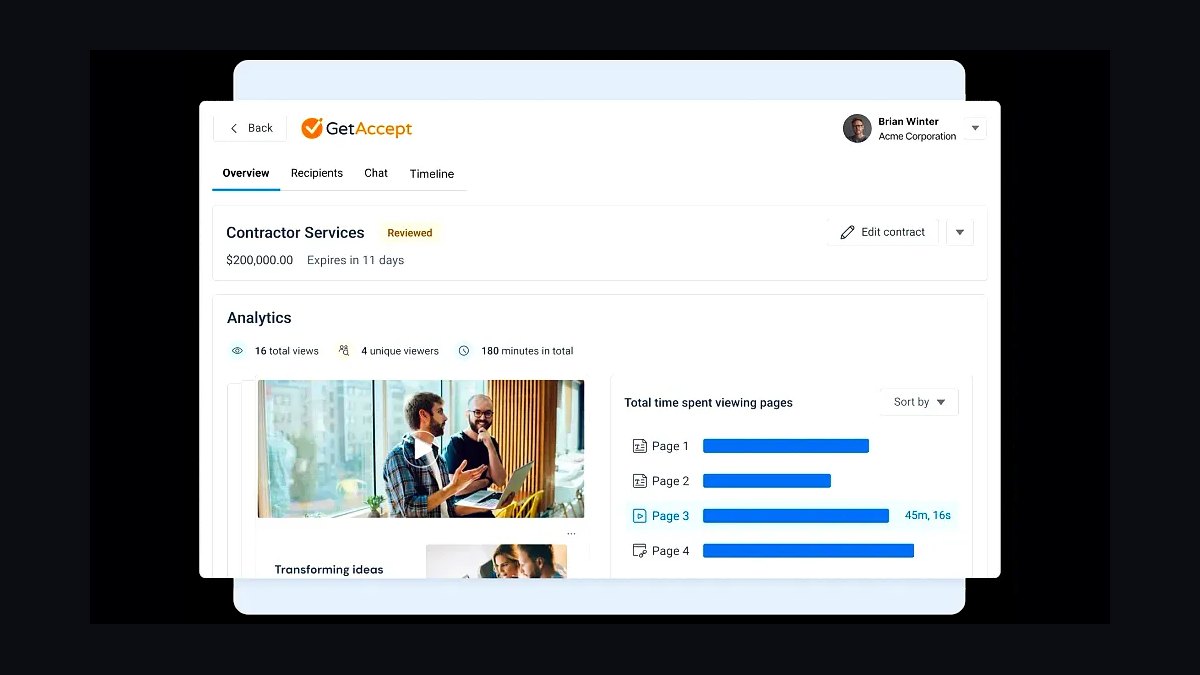
GetAccept is an AI-powered digital sales room platform that gives buyers and sellers a single shared space to collaborate, review proposals, sign, and move a deal forward, and it is a hot RevOps tool for 2027 because B2B buying has become a committee-driven, multi-stakeholder process that scatters across email threads and attachments — and a digital sales room consolidates it into one trackable, engaging place. GetAccept centers on a Deal Room for seamless buyer-seller collaboration and a Contract Room for engaging proposals, layering in video messaging, document tracking and analytics, mutual action plans, CPQ, sales content management, advanced e-signatures, and real-time tracking. Its AI lets a rep set up a high-quality digital sales room in just a few clicks, with built-in templates and CRM data automatically fetched, and automated workflows sync between GetAccept, the CRM (Salesforce, HubSpot, Microsoft Dynamics), and other tools. Pricing scales by capability: eSign at twenty-five dollars per user per month, Deal Room at thirty-nine, Contract Room at forty-nine, and Full Suite at seventy-nine, with custom Enterprise. Trusted by 9,500-plus companies. For RevOps teams where deals stall in fragmented buyer communication and where tracking buyer engagement matters, GetAccept turns the messy late-stage deal process into one collaborative, measurable room.
1What GetAccept actually is
GetAccept is a digital sales room (DSR) platform — software that creates a shared, branded online space where a seller and a buying group collaborate through the deal. The problem it solves is the fragmentation of modern B2B buying: a deal involves multiple stakeholders, and the materials, proposals, and conversations scatter across email threads, attachments, and calls, with the seller losing visibility into what the buyer is actually doing. A digital sales room consolidates all of it into one place the buyer and seller share.
GetAccept's two core spaces are the Deal Room (for seamless buyer-seller collaboration — sharing content, aligning stakeholders, tracking engagement) and the Contract Room (for creating engaging proposals through to signature). Around these it layers video messaging (personal seller videos), document tracking and analytics (who viewed what, for how long), mutual action plans (the shared plan of steps to close), CPQ, sales content management, advanced e-signatures, and real-time tracking.

1.1 AI setup and CRM automation
Two things modernize GetAccept. First, AI-assisted setup: a rep can spin up a high-quality digital sales room in a few clicks, with AI and built-in templates doing the assembly and CRM data automatically fetched — removing the friction that would otherwise make per-deal rooms too much work. Second, CRM automation: automated workflows sync between GetAccept, the CRM (Salesforce, HubSpot, Microsoft Dynamics), and other platforms, so the room is populated from and feeds back to the system of record. Together these make digital sales rooms practical to use on every deal, not just marquee ones.
2Where GetAccept fits in the RevOps stack
GetAccept occupies the buyer-collaboration-and-deal-execution layer — the late-stage space where proposals, stakeholder alignment, mutual action plans, and signature happen — integrated with the CRM. It doesn't replace the CRM; it's where the buyer-facing deal collaboration lives and where engagement is tracked.

The diagram shows GetAccept's value: it consolidates the scattered late-stage deal process into one room — collaboration, mutual action plan, proposal, signature — while tracking buyer engagement and syncing to the CRM. For RevOps, this turns an opaque, fragmented stage into a visible, measurable, collaborative one, giving reps insight into buyer activity and a structured path to close.
2.1 Why digital sales rooms matter in 2027
The strategic argument is the changed nature of B2B buying. Deals now involve large buying committees, longer cycles, and buyers who self-educate — and the traditional approach (emailing PDFs to one contact) breaks down when six stakeholders need to align. A digital sales room gives the whole buying group one place to engage, gives the seller visibility into who's engaging and how, and provides a mutual action plan to keep the deal moving. For RevOps, this addresses deal slippage and lost visibility at the most critical stage, and the engagement analytics become a signal for deal health.

2.2 Capability-tiered pricing
GetAccept's pricing scales by capability: eSign at twenty-five dollars per user per month (signatures), Deal Room at thirty-nine (collaboration space), Contract Room at forty-nine (proposals/contracts), and Full Suite at seventy-nine (everything), with custom Enterprise. RevOps should match the tier to the motion — teams wanting the full collaborative DSR experience need Deal Room or Full Suite, while those needing just e-sign can start lower. The accessible entry and broad adoption (9,500-plus companies) make it approachable, but the full value lives in the higher tiers.
3Who GetAccept is for
GetAccept fits B2B sales teams with multi-stakeholder, considered deals where buyer collaboration, proposal engagement, and deal visibility matter. It rewards teams whose deals involve committees and where late-stage fragmentation causes slippage.

3.1 Where it shines
The strongest fit is a B2B team selling considered, multi-stakeholder deals that wants to consolidate buyer collaboration, mutual action plans, proposals, and signature into one tracked room. For these teams, GetAccept's Deal Room aligns the buying group, the engagement analytics reveal deal health, the AI setup makes per-deal rooms practical, and CRM sync keeps everything connected. It shines where deals are complex enough that fragmented communication and lost visibility genuinely hurt close rates.
3.2 Where it is a weaker fit
GetAccept is a weaker fit for transactional, single-stakeholder, high-velocity sales where a full digital sales room is overkill — a simple proposal or e-sign tool suffices. It's also less compelling for teams that already have CPQ and document tools they're committed to and don't want a consolidated DSR, and for motions where buyers don't engage with collaborative rooms. The full value requires reps to actually build and use rooms, so teams that won't adopt the workflow get less.

4The 2027 edge
GetAccept is a 2027 story because committee-driven B2B buying needs a collaborative, trackable space, and GetAccept's AI-assisted DSR makes that practical on every deal. The edge is the consolidated room — collaboration, mutual action plans, proposals, signature, and engagement tracking in one place — with AI setup removing the friction that limited DSR adoption.
4.1 The RevOps shift
The 2027 implication for RevOps is that the late-stage deal process becomes a consolidated, measured, buyer-collaborative system rather than a scatter of emails and attachments. RevOps owns the room templates, the mutual-action-plan structure, the CRM sync, and how engagement analytics feed deal-health signals. The discipline becomes operationalizing buyer collaboration — giving committees one place to engage and reps visibility into it. Teams that consolidate deal collaboration into tracked digital sales rooms will close complex deals with more visibility and less slippage than those still emailing PDFs into the void.

5Limits and watch-outs
The first watch-out is fit: digital sales rooms shine for multi-stakeholder, considered deals, so transactional or single-buyer motions will find a full DSR overkill — match it to deal complexity. The second is adoption: the value requires reps to build and use rooms per deal, and buyers to engage with them, so RevOps must drive the workflow or rooms go unused; the AI setup helps but adoption is still the gate. The third is overlap: GetAccept includes CPQ, e-sign, and content management, which may duplicate tools you already have, so check for redundancy and decide whether to consolidate on GetAccept or integrate. The fourth is tier-matching: the full collaborative value lives in Deal Room/Full Suite, so the cheap eSign tier alone won't deliver the DSR benefit — budget the right tier. Finally, engagement analytics are a signal, not certainty — high room activity suggests interest but should inform, not dictate, deal judgment.
6Bottom Line
GetAccept is a strong 2027 bet for B2B teams with multi-stakeholder, considered deals, because it consolidates the fragmented late-stage process — buyer collaboration, mutual action plans, proposals, CPQ, and e-signature — into one AI-built, trackable digital sales room, with engagement analytics and CRM sync giving reps visibility and a path to close. The strategic shift it embodies is committee-driven B2B buying moving into collaborative, measured rooms rather than scattered emails, with RevOps owning the templates, action plans, and engagement signals. Buy it if your deals involve buying committees, late-stage fragmentation hurts your close rates, and you'll drive room adoption; be cautious if your sales are transactional and single-buyer, you'd duplicate existing CPQ/e-sign tools, or buyers won't engage with rooms. Its differentiator is the AI-assisted, consolidated digital sales room — turning the messy, opaque end of the deal into one collaborative, trackable space.
Related on PULSE
- What is Common Room and why is it a hot RevOps signal platform for 2027?
- Should I open or buy a Zoom Room dog training franchise in 2027?
- How Do I Get My Hotel Front Desk to Upsell Room Upgrades?
- How Many Employees Should I Schedule Each Shift at My Distillery Tasting Room?
- How Many Employees Should I Schedule Each Shift at My Winery Tasting Room?
- How Many Employees Should I Schedule Each Shift at My Escape Room?
FAQ
What exactly is a digital sales room, and how is it different from a regular proposal tool? A digital sales room is a shared, persistent online space where buyers and sellers can collaborate throughout the entire deal cycle — not just send a static proposal. Unlike a basic proposal tool, it includes video messaging, document tracking, mutual action plans, and real-time analytics, all in one place.
Does GetAccept integrate with my existing CRM and RevOps stack? Yes, it offers native integrations with Salesforce, HubSpot, and Microsoft Dynamics, syncing data automatically. It also connects with other common tools through APIs and workflows, so you can keep your existing RevOps processes intact.
How does the AI in GetAccept actually help sales teams save time? The AI can automatically populate a digital sales room with relevant CRM data, suggest templates, and set up the room in just a few clicks. It also provides smart recommendations for content and next steps, reducing manual setup and follow-up work.
What kind of tracking and analytics does GetAccept provide for RevOps teams? You get real-time visibility into when buyers open documents, how long they spend on each section, and which stakeholders are most engaged. This data helps RevOps identify deal risks and optimize sales content based on actual buyer behavior.
Is GetAccept suitable for small teams, or is it only for enterprise companies? It works for teams of all sizes, with pricing starting at $25 per user per month for basic eSign capabilities. Smaller teams can start with a single room type and scale up to the Full Suite at $79 per user per month as their needs grow.
How secure is the platform for handling sensitive sales documents and contracts? GetAccept uses enterprise-grade encryption and complies with common security standards like SOC 2 and GDPR. Access controls, audit trails, and permission settings ensure that only authorized buyers and sellers can view or sign documents.
Sources
- GetAccept.com product pages on the Deal Room, Contract Room, digital sales room, and RevOps use case
- Software Finder and GetApp 2026 GetAccept pricing and feature profiles
- G2 and Hummingdeck 2026 GetAccept and digital-sales-room comparisons
- Storylane 2026 digital-sales-room software guide
- Industry analysis on digital sales rooms, mutual action plans, and committee-driven B2B buying
This page will be disappearing soon. Save it to your device for $1 — or read it free while it is here.
@Kory-White- · if Venmo asks, the last 4 of my number are 2012
This page is gone.
This one is off the shelf now. $1 keeps it on your phone for good — the whole page, pictures and diagrams included.
 revopsHow should a 2027 CRO and CEO align before a board meeting?
 revopsWhat are the 2027 best churn-save playbooks?
 revopsHow should a 2027 RevOps team write a sunset SOP for a legacy GTM tool?
 revopsWhat are Tennessee Volunteers football's 2027 NIL needs and strategy?
 revopsWhat is lemlist and why is it a hot RevOps multichannel outreach platform for 2027?
 revopsHow should a 2027 sales org handle compensation impact during a performance improvement plan?
 revopsHow should a 2027 sales org structure deal review templates?
 revopsShould 2027 RevOps report to finance or to the CRO?
 revopsWhat are Kansas Jayhawks men's basketball's 2027 NIL needs and strategy?
 revopsWhat are the 2027 predictive interview signals for hiring AEs?