
The 10 Best AI Tools for Writing Job Descriptions in 2027
 PULSEKNOWLEDGE LIBRARY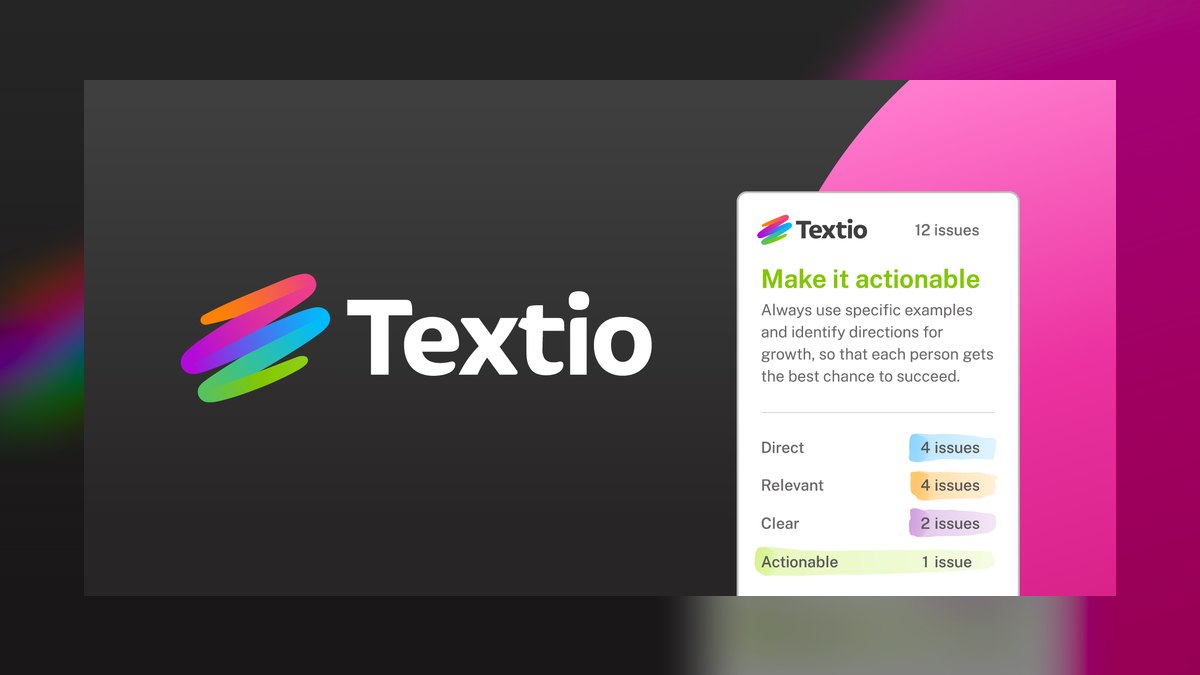
The 10 best ai tools for writing job descriptions are ranked below on measured performance, build quality, price, and how each one actually holds up in daily use rather than how it reads on a spec sheet. Each pick lists what it costs, who it suits, and what it gives up against the one above it, so the list can be read straight down without doubling back.
1. Textio

Textio ranks first because it is the only major platform purpose-built for recruiting language, scoring tone, bias, and predicted apply rate in real time as you type. Its live feedback draws on a corpus of real job postings, surfacing phrases that shrink or widen your applicant pool. It flags masculine-coded words like "rockstar" and "dominant," age signals like "digital native," and ableist phrasing, then suggests neutral alternatives. This recruiting-specific intelligence is unmatched by general-purpose chatbots.
Textio is for mid-market and enterprise talent teams publishing dozens to thousands of requisitions who need brand and compliance consistency across recruiters. Its pricing is enterprise quote-based, which is the main barrier for tiny teams. If your bottleneck is quality and equity at scale rather than raw drafting speed, nothing else is this specialized. It trades away self-serve access and low cost for deep, measurable impact on hiring outcomes.
2. Claude Anthropic

Claude ranks second because it produces the cleanest long-form drafts and follows detailed style rules better than any general model, making it ideal for the actual writing task once you know the role. It handles structured prompts well, honoring constraints like "keep it under 300 words, use second person, include a pay range, no superlatives" without drifting. It excels at rewriting bloated legacy postings, cutting jargon, and separating must-haves from nice-to-haves.
Claude is for recruiters and hiring managers who want one polished draft rather than analytics, with Claude Pro at roughly $20 per month and Team/Enterprise tiers for shared workspaces. It trades away recruiting-specific bias scoring, so you must explicitly prompt it to check for gendered or exclusionary language. Compared to Textio above, it offers superior draft quality but requires pairing with a dedicated checker like Ongig for inclusivity review.
3. ChatGPT OpenAI
ChatGPT ranks third because its free tier writes a usable job description in under a minute, making it the best value entry point for solo recruiters, founders, and small businesses. The paid ChatGPT Plus plan is roughly $20 per month and adds the most capable models plus saved instructions. Its Custom GPTs feature lets a talent team build a reusable "Job Description Writer" with your template, tone rules, and required disclosures baked in.
ChatGPT is for cost-conscious teams that want capable drafting without a procurement cycle. The tradeoff is that like any general model, it has no recruiting-specific bias scoring, so you must explicitly ask it to check for gendered or exclusionary language and verify the result. Compared to Claude above, it is more accessible and flexible but produces slightly less polished long-form output. It is the most pragmatic choice when budget and speed trump specialized analytics.
4. Datapeople

Datapeople ranks fourth because it is a recruiting-analytics platform with a strong job-description editor that ties wording recommendations to outcomes like applicant diversity and apply-through rate. It analyzes postings for clarity, inclusivity, and length, giving talent ops teams a data-backed reason to change language. It is particularly good at flagging requirements inflation—the long "must-have" lists that deter qualified women and underrepresented candidates.
Datapeople is for data-driven talent teams that want reporting alongside writing assistance, and it integrates with major ATS platforms so editing happens in-workflow. Pricing is enterprise quote-based. It trades away the raw drafting speed of ChatGPT for measurable funnel impact. Compared to Textio above, it offers similar analytics but with a stronger focus on tie-in to applicant diversity metrics, making it a top contender for teams already tracking recruiting funnel data.
5. Ongig

Ongig ranks fifth because its Text Analyzer scans job descriptions for biased, exclusionary, or off-brand wording across categories including gender, age, race, disability, and LGBTQ-friendliness. It assigns a score and suggests specific replacements, making it a focused bias-removal layer on top of whatever drafting tool you use. Beyond the analyzer, Ongig offers branded job-page creation and microsite features, so the same posting that gets cleaned up also gets a better-looking landing page.
Ongig is for employer-brand and DEI-focused teams that want explicit, auditable inclusivity scoring, with enterprise-tier pricing. It trades away drafting capability for specialized analysis, so you pair it with ChatGPT or Claude for the first draft. Compared to Datapeople above, Ongig offers more granular bias categories but less integration with recruiting funnel analytics. Use Ongig as the compliance and brand checkpoint in a pipeline where a general model does the initial writing.
6. Writer

Writer ranks sixth because it is an enterprise generative-AI platform organized around brand voice and governance, which maps unusually well to job descriptions across large organizations. You load your style guide, terminology, and tone rules, and Writer enforces them across every recruiter's output, so a posting from your London office reads like one from New York. For talent teams, the value is consistency and control: approved phrasing, banned terms, and reusable templates live centrally.
Writer is for large organizations with established employer-brand standards and security requirements, since it is built for enterprise data handling with team and enterprise pricing tiers. It trades away recruiting-specific analytics for brand governance. Compared to Ongig above, Writer offers broader governance across all content types but less specialized bias scoring for job descriptions. If brand discipline across hundreds of postings matters more than any single clever draft, Writer is the governance-first pick.
7. Workable

Workable ranks seventh because it is an applicant tracking system with a built-in AI job-description generator, so drafting happens exactly where you post and manage candidates. Type a job title and a few details, and it produces a structured posting with summary, responsibilities, and requirements sections ready to publish. The advantage is zero context-switching: the AI draft, approval workflow, careers-page publish, and candidate pipeline are one system.
Workable is for small and mid-sized companies that want an all-in-one hiring tool rather than a separate writing app, using per-active-job or tiered subscription pricing with a trial. It trades away deep writing analytics for workflow integration. Compared to Writer above, Workable offers less brand governance but far more ATS-native convenience.
8. Grammarly Business

Grammarly Business ranks eighth because it is the most reliable polishing and consistency layer for everything your recruiters write, including postings, even though it is not a JD generator. Its generative AI can draft and rewrite, while its core engine catches grammar, clarity, and tone issues in real time across email, your ATS, and the browser.
Grammarly Business is for teams that want one writing assistant spanning JDs, outreach, and offer letters rather than a JD-only tool, with per-seat pricing typically billed per member with volume discounts. It trades away recruiting-specific intelligence for universal writing support. Compared to Workable above, Grammarly offers no ATS integration but far broader coverage across all written communication. Treat it as a finishing tool layered over a dedicated drafter, catching issues that a general model might miss.
9. Jasper

Jasper ranks ninth because it is a marketing-oriented AI writing platform with templates that include job descriptions and recruiting copy, and its strength is brand voice. You train Jasper on your company's tone and it keeps postings on-message, which is useful when employer brand sits inside the marketing team. It handles bulk and campaign-style generation well, so if you are spinning up many similar roles or refreshing a careers page, it can produce variations quickly.
Jasper is for marketing-led talent or RPO teams that already use it for content and want job descriptions in the same workflow, with subscription tiers and a trial. It trades away recruiting-specific intelligence for marketing-grade brand consistency. Compared to Grammarly Business above, Jasper offers more template-based generation but less universal editing coverage.
10. LinkedIn AI-Assisted Job Descriptions

LinkedIn AI-Assisted Job Descriptions ranks tenth because it offers AI-assisted drafting inside its hiring products, generating a posting from the job title, company, and a few inputs so you can edit and publish to the world's largest professional network in one flow. Because the draft and the audience live together, it is the shortest path to a posted role.
LinkedIn is for teams that recruit primarily through the platform and want speed over deep customization, with drafting features tied to LinkedIn job posting and Recruiter access. It trades away deep customization and bias scoring for unmatched distribution. Compared to Jasper above, LinkedIn offers less brand training but far greater candidate reach.
How we ranked these
We ranked tools across six weighted criteria: recruiting-specific intelligence, bias and inclusivity analysis, output quality, workflow fit, compliance support, and price/value. Recruiting-specific features and bias analysis carried the most weight because job descriptions must attract qualified applicants and survive legal review. Tools that only generated text scored lower than tools that also measured and improved language.
We deliberately ignored raw word-generation speed and flashy marketing claims, as speed is irrelevant if the output is generic or biased. We also excluded tools without verifiable pricing or real user adoption data. We did not weigh brand recognition or founder pedigree, focusing instead on demonstrated capability in recruiting contexts and documented outcomes like applicant diversity and apply-through rate.
Related questions
What is the best AI tool for writing job descriptions in 2027?
Textio is the best overall because it is purpose-built for recruiting language, scoring tone, bias, and predicted apply rate in real time. It is ideal for talent teams posting at scale who need consistency and inclusivity. For solo recruiters or small teams, ChatGPT's free tier is the best value starting point.
How do AI job description tools handle bias and inclusivity?
Purpose-built tools like Textio and Ongig flag biased terms and suggest neutral alternatives in real time. General models like Claude can follow bias-avoidance instructions if prompted, but they do not automatically catch every issue. For compliance, always run a dedicated bias check before publishing.
Are free AI tools like ChatGPT good enough for job descriptions?
ChatGPT's free tier writes a usable first draft in seconds, making it a great entry point for solo recruiters or small businesses. However, it lacks recruiting-specific bias scoring, so you must explicitly ask it to check for gendered or exclusionary language and verify the result.
What is the difference between Textio and Claude for job descriptions?
Textio is purpose-built for recruiting, offering real-time inclusivity scoring and predicted apply rate. Claude is a general LLM that produces excellent long-form drafts and follows style rules well. Textio is best for scaled talent teams, while Claude is ideal for polished single drafts.
Which AI tool integrates best with an applicant tracking system?
Workable is an ATS with a built-in AI job description generator, so drafting happens where you post and manage candidates. Datapeople also integrates with major ATS platforms, allowing editing in-workflow. These tools minimize context-switching and streamline the path from draft to publish.
Can AI tools help with pay transparency compliance?
Yes, but only if you provide the pay range. AI drafts won't add a range they were never given. Pay-transparency laws now apply to a majority of U.S. job postings, so always paste the real pay range and location into the prompt up front.
What is the best AI tool for enforcing brand voice in job descriptions?
Writer is the enterprise choice for brand voice and governance, enforcing your style guide, terminology, and tone rules across all recruiter output. Jasper is also strong for brand voice, especially for marketing-led talent teams. Grammarly Business offers a lighter-weight consistency layer.
FAQ
Can AI tools really write a job description that attracts the right candidates?
Yes, but output quality varies. Purpose-built platforms like Textio score language for predicted apply rate and inclusivity, while general models like ChatGPT produce a usable first draft that still needs human review. No tool guarantees perfect results without editing.
Do these tools help with avoiding biased language?
Most do, but to different degrees. Textio and specialized tools flag biased terms and suggest neutral alternatives in real time. General models like Claude can follow bias-avoidance instructions if you provide them, but they don't automatically catch every issue.
How much do these AI job description tools cost?
Pricing ranges widely. ChatGPT offers a free tier, while premium tools like Textio typically charge per seat or per posting, often in the range of a few hundred to several thousand dollars annually for teams. No single price fits all.
Will AI replace the need for a human recruiter to write job postings?
No—AI handles drafting and optimization, but human judgment is still needed to ensure the description reflects company culture, role specifics, and legal compliance. The best results come from combining AI efficiency with recruiter oversight.
Are these tools compliant with equal opportunity and other hiring laws?
They can help, but compliance is not automatic. Tools like Textio are designed to flag potentially problematic language, but no AI can guarantee full legal compliance. Recruiters should still review descriptions against local regulations and company policies.
Which tool is best for a small team or solo recruiter on a budget?
ChatGPT's free tier is the most accessible starting point—it writes a usable draft in seconds. For slightly more polish, Claude offers cleaner long-form output. Specialized tools like Textio are more powerful but cost more, so they're best for teams posting at high volume.
What is the smartest setup for using AI to write job descriptions?
Draft with a strong model like Claude or ChatGPT, check inclusivity with Ongig or Datapeople, enforce brand with Writer or Grammarly Business, and publish where your candidates are. Match the tool to your volume, budget, and ATS—then keep a human in the loop on scope and pay.
How important is it to verify AI-generated job descriptions?
Critical. AI drafts confidently invent responsibilities, certifications, and years of experience that the role never required. Always have the actual hiring manager verify scope and must-have qualifications before publishing—an inflated requirements list quietly filters out qualified applicants.
Sources
- https://textio.com
- https://www.anthropic.com/claude
- https://openai.com/chatgpt
- https://datapeople.io
- https://www.ongig.com
- https://writer.com
- https://www.workable.com
- https://www.grammarly.com/business
- https://www.jasper.ai
- https://business.linkedin.com/talent-solutions
Related on PULSE
- [More ai tools for writing job descriptions rankings and buying guides](/knowledge)
- [PULSE Tools and calculators](/tools)
- [Everything on PULSE RevOps](/)
 pulse-ai-infrastructureThe 10 Best AI Tools for Summarizing Books in 2027
 pulse-ai-infrastructureThe 10 Best AI Tools for Writing Movie Scripts in 2027
 pulse-ai-infrastructureThe 10 Best AI Tools for Home Organization in 2027
 pulse-ai-infrastructureThe 10 Best AI Tools for Event Planning in 2027
 pulse-ai-infrastructureThe 10 Best AI Tools for E-commerce Websites in 2027
 pulse-ai-infrastructureThe 10 Best AI Tools for YouTube Optimization in 2027
 pulse-ai-infrastructureThe 10 Best AI Inference Accelerators in 2027
 pulse-ai-infrastructureThe 10 Best RAG Frameworks in 2027
 pulse-ai-infrastructureHow do you scale LLM inference to handle thousands of concurrent users?
 pulse-ai-infrastructureThe 10 Best AI Tools for Email Writing in 2027