


What is Intercom Fin and why is it a hot RevOps AI customer service agent for 2027?
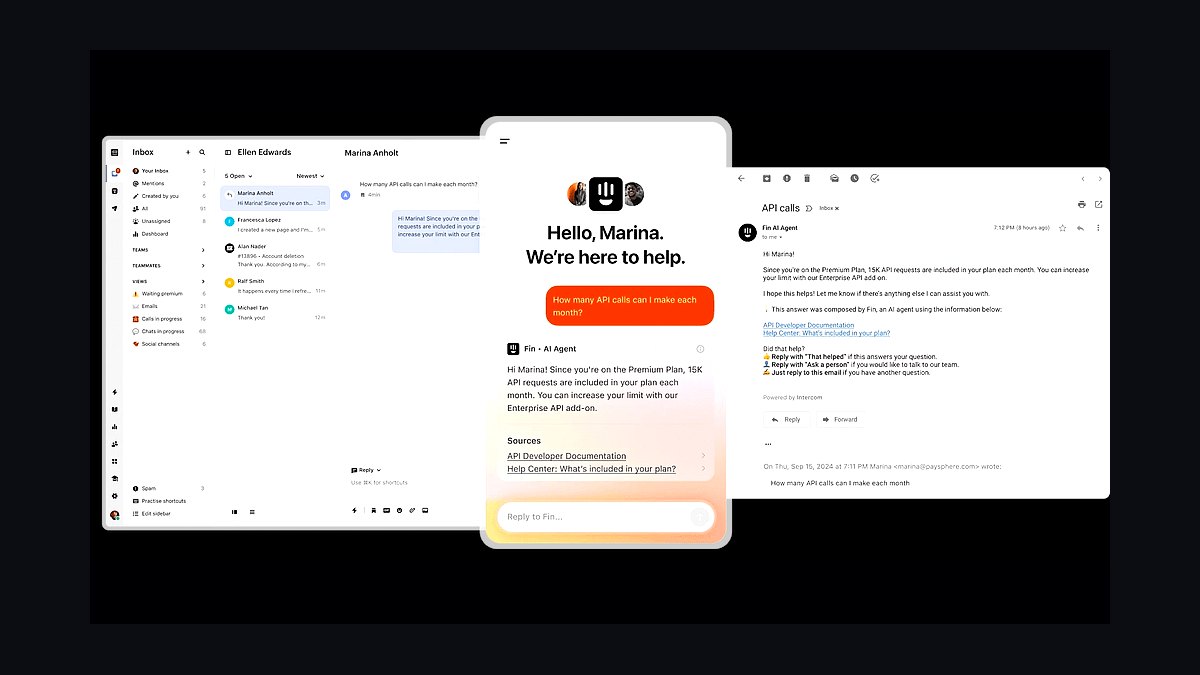
Intercom Fin is an AI customer-service agent that resolves customer questions autonomously across channels, and it is a hot RevOps-adjacent tool for 2027 because it is the clearest, most-proven example of outcome-based AI pricing working at scale — you pay 0.99 dollars per successful resolution, and Fin resolves an average of 67% of conversations across 7,000-plus customers. Fin is trained on your knowledge base, replies automatically as a tier-1 agent across live chat, email, SMS, WhatsApp, and social, and escalates to humans via handover when it can't answer or the customer asks for a person. The pricing model is the standout: 0.99 dollars per resolution (a resolution being a question answered to a natural conversational close, charged once per conversation regardless of how many questions), with a 50-resolution monthly minimum — so cost tracks value delivered rather than seats. It also offers a Fin Copilot mode that drafts suggested replies behind the scenes for human agents (a per-teammate add-on). Real-world resolution rates run 42-67%, improving roughly 1% a month. For revenue and CX teams, Fin matters on two fronts: it deflects support volume cost-effectively, and — critically for RevOps — it is the reference implementation of outcome-based pricing, the model spreading across the AI software market that RevOps must learn to budget and forecast.
1What Intercom Fin actually is
Fin is Intercom's AI agent for customer service — an autonomous tier-1 support agent that answers customer questions without a human. It's trained on your knowledge (help docs, content, past conversations) and replies automatically, handling the routine inquiries that make up the bulk of support volume. When it can't answer confidently or the customer asks for a person, it hands over to a human agent. The goal is deflection: resolving the high-volume, repetitive questions automatically so human agents focus on the complex, high-value ones.
Fin is omnichannel — it deploys across live chat, email, SMS, WhatsApp, social, and more, providing fast, accurate answers 24/7. And it offers a Copilot mode: rather than (or alongside) resolving autonomously, Fin can draft suggested replies behind the scenes for human agents, accelerating their work. This dual mode — autonomous agent plus agent copilot — lets teams choose how much to automate versus assist.

1.1 Outcome-based pricing — the headline
The most strategically significant thing about Fin is its pricing model: 0.99 dollars per successful resolution, with a 50-resolution monthly minimum. A resolution is counted when Fin answers a customer's question and the conversation reaches a natural close — charged once per conversation, even if multiple questions are answered. This is outcome-based pricing in its purest, most-proven form: you pay only when the AI delivers a result (a resolved conversation), not for seats or usage that may produce nothing. With an average resolution rate of 67% across 7,000-plus customers (improving ~1% monthly), Fin demonstrates that outcome pricing can work at scale — which is why it's a reference point far beyond support.
2Where Intercom Fin fits in the RevOps stack
Fin sits at the customer-service/CX layer — resolving support conversations and deflecting volume — which is RevOps-adjacent through the retention and customer-experience lens, and directly relevant as the model for outcome-based pricing. It integrates with the knowledge base and helpdesk, escalating to human agents as needed.

The diagram shows Fin's value: it resolves routine conversations autonomously (charged per resolution), copilots agents on others, and escalates the rest — with cost tied directly to resolutions delivered. For RevOps and CX, this deflects support cost at a price that tracks value, and it serves as the working model of outcome-based pricing that RevOps increasingly must understand across the stack.
2.1 Why outcome-based pricing makes Fin a RevOps reference
The strategic argument extends beyond support. AI software pricing is shifting from per-seat to per-outcome — charging for results (resolutions, qualified leads, completed tasks) rather than access. This is hard to do well, and Fin is the most-proven, large-scale example that it works: a clear unit (resolution), a clear price (0.99 dollars), and demonstrated economics across thousands of customers. For RevOps, Fin matters not just as a support tool but as the template for outcome pricing that's appearing in HubSpot Breeze, agentic tools, and beyond — RevOps must learn to budget, forecast, and evaluate outcome-priced AI, and Fin is the canonical case study.

2.2 The pricing mechanics
The model's details matter for budgeting: 0.99 dollars per resolution, 50-resolution monthly minimum, charged once per conversation regardless of question count. Used with Intercom's helpdesk, seat costs (29-139 dollars per seat) apply; the Fin Copilot unlimited add-on runs around 29-35 dollars per teammate. For RevOps and CX, the appeal is that cost scales with resolved volume — predictable per-unit, variable in total. The watch-out is the same as all outcome pricing: a volume spike drives the bill, and the definition of "resolution" determines what you pay for, so monitor both.
3Who Intercom Fin is for
Fin fits companies with meaningful inbound support volume — especially repetitive tier-1 questions — that want to deflect cost-effectively with AI, and any RevOps team wanting to understand outcome-based pricing in practice. It's especially valuable for high-volume support operations.

3.1 Where it shines
The strongest fit is a company with high support volume and a solid knowledge base, where a large share of questions are routine and deflectable. For these teams, Fin resolves the bulk autonomously at a per-resolution cost that tracks value, frees human agents for complex cases, and operates 24/7 across channels. It shines where support volume is high enough that automated deflection materially cuts cost — and the outcome pricing aligns spend with results.
3.2 Where it is a weaker fit
Fin is a weaker fit for companies with low support volume (the 50-resolution minimum and per-resolution model fit volume), or with thin/poor knowledge bases (Fin is only as good as what it's trained on — bad docs mean bad answers and low resolution). It's also less relevant for teams whose customer interactions are inherently complex and human-required. And while RevOps benefits from studying its pricing model, Fin itself is a support tool, not a core revenue-operations system — so its direct RevOps fit is via the CX/retention and pricing-model lenses.

4The 2027 edge
Fin is a 2027 story on two axes: AI support agents are deflecting volume at scale, and outcome-based pricing is becoming the AI norm — Fin leads both, proving the model works across thousands of customers. The edge is a high, improving resolution rate plus the most-proven outcome-pricing implementation in the market.
4.1 The RevOps shift
The 2027 implication for RevOps is twofold. On CX/retention: support deflection becomes an AI-automated, outcome-priced function that RevOps (where it owns the post-sale lifecycle) can measure by resolution rate and cost-per-resolution. On pricing strategy: Fin is the model for outcome-based pricing that RevOps must master — how to budget a variable, results-based AI cost, how to define and audit the "outcome" unit, and how to forecast a consumption-style line. Teams that learn from Fin's model will be ready to evaluate and adopt the outcome-priced AI tools proliferating across the stack, rather than being caught off guard by a pricing paradigm they don't know how to manage.

5Limits and watch-outs
The first watch-out is knowledge dependence: Fin is only as good as the knowledge it's trained on, so a thin or outdated knowledge base produces poor answers and low resolution rates — invest in content first, or Fin underperforms. The second is the resolution definition: you pay per "resolution," so audit how it's counted — a conversation closed without truly satisfying the customer shouldn't be billed as a win, and monitoring CSAT alongside resolution rate matters. The third is cost predictability: outcome pricing is great when volume is stable, but a support spike drives the bill, so RevOps/CX must monitor resolved volume and set expectations. The fourth is fit: low-volume or inherently-complex support won't benefit, and the 50-resolution minimum suits volume. Finally, for RevOps specifically, Fin's primary strategic value may be as a pricing-model reference rather than a core RevOps system — so weigh whether you're buying it for support deflection (CX) or studying it for outcome-pricing literacy.
6Bottom Line
Intercom Fin is a strong 2027 bet for companies with meaningful support volume — and a must-study reference for every RevOps team — because it resolves a proven 67% average of customer conversations autonomously across channels at 0.99 dollars per resolution, the clearest large-scale demonstration that outcome-based AI pricing works. The strategic shift it embodies is twofold: AI deflecting support cost-effectively, and outcome pricing becoming the AI norm RevOps must learn to budget and forecast. Buy it for support if you have high volume and a solid knowledge base; study it regardless as the canonical outcome-pricing model spreading across the stack. Be cautious if your support volume is low, your knowledge base is weak, your interactions are inherently complex, or you can't tolerate a variable, volume-driven bill. Its differentiator is a high, improving resolution rate plus the most-proven outcome-based pricing in AI software.

Related on PULSE
- Should I open or buy an Island Fin Poke franchise in 2027?
- What is Rox and why is it a hot RevOps AI revenue agent platform for 2027?
- What is ZoomInfo Copilot and why is it a hot RevOps AI sales agent for 2027?
- What is an agent boss and how do RevOps teams manage AI agents in 2027?
- How should B2B companies redesign their demo environments to handle simultaneous AI agent testing by prospects?
- What specific signals indicate a buying committee is using an AI agent to negotiate contract terms in 2027?
FAQ
How does Intercom Fin’s 0.99 per resolution pricing actually work? You pay only when Fin fully resolves a conversation to a natural close, charged once per conversation regardless of how many questions were asked. There’s a 50-resolution monthly minimum, so costs scale with value delivered rather than per-seat subscriptions.
What channels does Intercom Fin support for autonomous customer service? Fin works across live chat, email, SMS, WhatsApp, and social media platforms. It can handle tier-1 support in all these channels, escalating to human agents only when it can’t answer or a customer requests a person.
What resolution rates can I realistically expect from Fin? Reported resolution rates range from 42% to 67% across more than 7,000 customers, with improvements of roughly 1% per month as the AI learns from your knowledge base. Actual results depend on your content quality and complexity of queries.
Does Fin require training or setup before it can resolve conversations? Yes, Fin is trained on your existing knowledge base content, so you need to have well-organized help articles or documentation ready. Setup involves connecting your knowledge base and configuring channels, but no custom AI training is needed.
What is the Fin Copilot mode and how is it priced? Fin Copilot is an add-on that provides draft reply suggestions to human agents behind the scenes, rather than replying autonomously. It’s charged per teammate, separate from the 0.99 per resolution pricing for the autonomous bot.
How does Fin handle escalations when it can’t resolve an issue? When Fin cannot answer a question or the customer explicitly asks for a human, it seamlessly hands off the conversation to a live agent with full context. This ensures no loss of conversation history and maintains a smooth customer experience.
Sources
- Fin.ai and Intercom.com pricing pages on the $0.99-per-resolution model, channels, and Fin Copilot
- Minami and MyAskAI 2026 Intercom Fin pricing and feature guides
- Featurebase and Flowgent 2026 Intercom/Fin pricing analyses
- Intercom case studies and reports on Fin resolution rates (42-67%, improving ~1%/month across 7,000+ customers)
- Industry analysis on AI customer-service agents and outcome-based pricing
This page will be disappearing soon. Save it to your device for $1 — or read it free while it is here.
@Kory-White- · if Venmo asks, the last 4 of my number are 2012
This page is gone.
This one is off the shelf now. $1 keeps it on your phone for good — the whole page, pictures and diagrams included.
 revopsHow should a 2027 startup design compensation for the first AE?
 revopsWhat are Kansas Jayhawks men's basketball's 2027 NIL needs and strategy?
 revopsHow do you build a buyer persona that sales actually uses in 2027?
 revopsHow do you compare quotas across sales segments in 2027?
 revopsHow should a 2027 sales and marketing team run joint forecasting?
 revopsHow do you do usage-data triggered outbound for PLG accounts in 2027?
 revopsWhat are the first 90 days of a new Chief Revenue Officer in 2027?
 revopsWhat are North Carolina Tar Heels men's basketball's 2027 NIL needs and strategy?
 revopsWhat's a healthy AE ramp time — and how do you actually design ramp in 2027?
 revopsHow should a 2027 CRO and CEO align before a board meeting?