


How do you deploy AI SDRs in 2027?
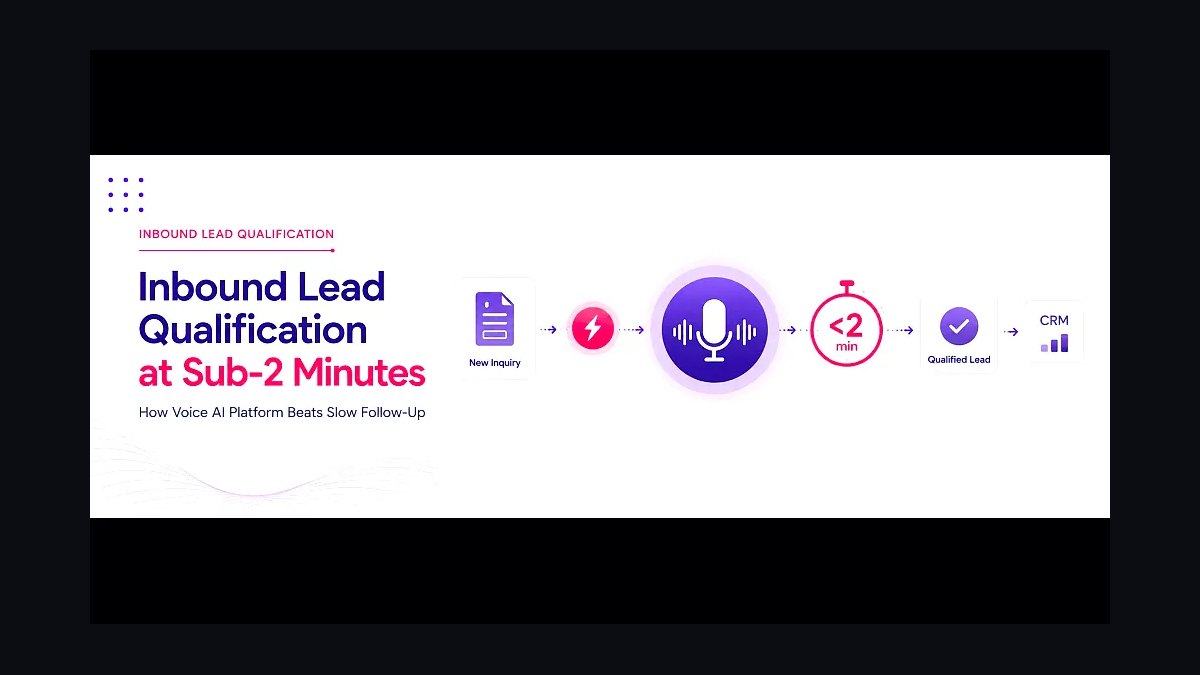
A 2027 AI SDR deployment is an agentic outbound system — pick a vendor (11x Alice, Artisan Ava, Regie.ai, Rox, Qualified Piper, Default, Unify, or Clay agents), choose a human-in-the-loop posture (full auto, human-approves-send, or hybrid pod), front-load 60-90 days of domain warmup on Smartlead or Instantly sub-domains, and run with a cost-per-qualified-meeting target under $50 vs a human SDR fully loaded at $130-$960 per meeting. Reply rates run 2.9-4.1% AI vs 4.7-5.2% human — lower per email but 5-10x volume, so per-dollar economics still favor AI when deliverability holds (and 47% of deployments hit a domain-reputation wall in the first 90 days). The winning 2027 architecture is the SDR-AE pod — one human AE paired with one or two AI SDRs that source, research, personalize, and sequence — booking 1.9x more meetings per dollar than pure AI and 2.4x more than human-only. Comp the AE on closed-won, treat the AI SDR as a cost center, and govern brand voice, CAN-SPAM, and GDPR with hard guardrails — 11x lost 70-80% of customers in months for ignoring these.
1The 2027 Vendor Set
The market split into three buckets in 2025-26 and stayed there. Pick by buyer-side architecture, not by demo polish.
1.1 Autonomous Agents
11x Alice (and voice agent Mike, backed by $74M from a16z and Benchmark), Artisan Ava, and Rox position as full digital headcount — they source, research, write, send, and reply without a human approval step. Pricing runs $9K-$65K ACV depending on volume. Best for PLG and SMB outbound where brand-voice risk is contained. Caveat: 11x's customer churn was the cautionary tale of 2025 — autonomous-only without operator skill burns lists and domains fast.

1.2 Augmentation Platforms
Regie.ai, Salesloft Drift, Outreach (with Smart Account Plan), and Clay agents sit one notch back — AI drafts and enriches, a human approves the send. Regie.ai runs $35K-$80K ACV for mid-market. Best for enterprise outbound where every email touches a $100K+ account and brand voice is a board-level concern.
1.3 Inbound and Hybrid
Qualified Piper owns inbound — chat, website conversion, 6sense and Common Room signal triggers. Default and Unify wire signal-based outbound across Clay, Apollo, and HubSpot/Salesforce. Best for product-led companies where inbound volume already exists and the agent's job is conversion, not cold prospecting.
2The Human-In-The-Loop Spectrum
2.1 Full Auto
The 11x and Artisan default — AI sends without a human in the loop. Volume scales to 5,000-15,000 emails per agent per month. Risk: brand-voice drift, hallucinated personalization, and CAN-SPAM misses if the suppression list breaks. Use only with hard guardrails and continuous QA.

2.2 Human-Approves-Send
Regie.ai and Outreach default — AI drafts, human clicks send. Volume drops to roughly 1,500-3,000 emails per AE per month (vs 1,150 unassisted human baseline) but quality rises and brand risk falls to near zero. Best for enterprise ABM.
2.3 Hybrid Pod
The 2026-27 emerging winner. One human AE paired with one or two AI SDR seats — AI handles tier-2/3 accounts on full auto, human reviews top-50 accounts before send. Babuger and Knowlee benchmarks show 1.9x more meetings per dollar vs pure AI and 2.4x more vs pure human. This is the configuration most $20-100M ARR companies will run by end of 2027.

3Deliverability — The Real Constraint
Smartlead and Instantly aggregate data: 47% of AI SDR deployments hit a domain-reputation wall in the first 90 days, and 21% never recover the original inbox placement. Deliverability — not copy — is the binding constraint.
3.1 The Sub-Domain Architecture
Never send from your primary domain. Standard 2027 setup: 5-15 secondary sending domains (e.g., try-acme.com, get-acme.com, acme-team.com), each with 2-3 mailboxes, all warming for 60-90 days minimum on Smartlead or Instantly warmup pools before any cold send. SmartServers (Smartlead's dedicated-IP add-on) gives better reputation control than Instantly's shared pool, which Reddit operators consistently report shows 30-40% open-rate drops post-scale.

3.2 SPF, DKIM, DMARC, BIMI
Non-negotiable in 2027. DMARC at p=reject, DKIM 2048-bit, SPF aligned, BIMI logo registered. Google and Yahoo's 2024 bulk-sender rules made this the floor — miss any and you land in spam by default.
3.3 The 4% Reply Rule
If reply rate drops below 2% sustained for two weeks, the domain is cooked — rotate it out, warm the next one, and audit the message library. Instantly's 2026 benchmark report puts mean reply rate at 3.43%, elite top-decile above 10%.

4Measurement and Unit Economics
4.1 The Four Numbers To Track
(1) Replies per agent run — target 3-5% total reply, 0.5-1.2% positive reply. (2) Qualified meetings per agent run — target 8-25 per month per seat. (3) Cost per qualified meeting — target under $50 (vs $130-$960 human-loaded). (4) Meeting-to-opp conversion — the leading indicator that AI-sourced meetings are real, not garbage. Healthy AI pods hit 35-45% meeting-to-opp; broken ones sit below 15%.
4.2 The Volume-Per-Email Tradeoff
DigitalApplied's 100K email study showed per-rep volume rose from 1,150 human baseline to 7,400 AI-augmented mean. Reply rate fell 4.7% → 2.9%. Net replies up 3.8x, net cost per reply down 70%. The math only works if you watch deliverability and meeting-to-opp — otherwise you are paying for noise.
5Comp, Risk, and Compliance
5.1 Comp Model — Cost Center vs Profit Center
The 2026-27 debate. Cost-center model (the 2027 majority): AI SDR is OpEx, no commission, treat like any SaaS subscription, measure on cost-per-qualified-meeting. Profit-center model (rare): an internal owner gets a comp tied to AI-sourced pipeline. Most operators settle on cost-center for the AI seat and pay the human AE a commission on closed-won from AI-sourced pipeline. Keep the rep comp clean — if AI is doing 80% of the work and the AE still pulls a full MEDDICC-qualified commission, the model breaks within two quarters.

5.2 Brand Voice Drift
The slow killer. AI drafts read fine for the first 30 days then drift toward LLM-default tone — em-dashes, "I noticed", "given your focus on". Mitigations: monthly Gong call review of the top 50 sent emails, a brand-voice eval suite in Writer or Glean, and a kill-switch keyword list that blocks sends containing banned phrases.
5.3 CAN-SPAM and GDPR
CAN-SPAM (US): clear sender ID, valid physical postal address, working unsubscribe, suppression list updates inside 10 business days. GDPR (EU): legitimate interest lawful basis for B2B cold outbound is defensible but requires legitimate interest assessment (LIA) on file, opt-out mechanism, and data subject access request (DSAR) workflow. Most 2027 compliance failures are not the model — they are stale suppression lists, missing LIA, and scraped data from unverified sources.

5.4 List Hygiene
AI agents accelerate every list problem by 5-10x. Run NeverBounce or ZeroBounce verification on every list before load, B2B intent overlay from 6sense or Common Room to filter to in-market accounts, and a 30-day cooldown on any contact that did not reply — re-pinging the same person three times in two weeks is the fastest way to a spam complaint.
6The 2026-27 SDR-AE Pod Model
The structural shift everyone is converging on. One human AE owns 5-20 strategic accounts end-to-end. One or two AI SDR seats (11x, Artisan, or Regie) feed that AE pipeline by sourcing, researching, and sequencing the tier-2/3 long tail while the AE works the top-50 by hand. Clay sits underneath all of it as the enrichment and waterfall engine. Gong runs call review and coaching. Salesforce or HubSpot is the system of record. Common Room and 6sense feed signal triggers.

Tomasz Tunguz and ScaleVP have both written that this configuration cuts SDR headcount 40-60% while holding or growing pipeline, and ChiefMartec has the supergraphic showing the agentic outbound category quintupled vendor count from 2024 to 2026. The winning operators in 2027 are not the ones who fired the SDR team — they are the ones who redesigned the pod around agentic AI and signal-based selling.
7FAQ
7.1 Should we go full-auto or keep a human in the loop?
Hybrid pod. One human AE per one or two AI SDR seats books 1.9x more meetings per dollar than pure AI and 2.4x more than pure human (Knowlee, Babuger benchmarks). Full auto only on tier-2/3 long tail; humans review top-50 accounts.

7.2 Which AI SDR vendor should we pick?
Artisan Ava for SMB volume with brand-voice care. 11x Alice for autonomous-only with operator skill (warning: heavy 2025 churn). Regie.ai for enterprise augmentation at $35K-$80K ACV. Qualified Piper for inbound. Clay agents for signal-based custom workflows. Match vendor to ACV and brand risk, not demo polish.
7.3 How long until we see results?
60-90 days minimum. The first 60 days are domain warmup — no real cold sends. Pipeline contribution shows by day 90, closed-won attribution by month 6. Anyone promising results in 30 days is selling you a domain-burning campaign.
7.4 What is the realistic cost per qualified meeting?
Under $50 for a well-run AI SDR vs $130-$960 for a fully loaded human SDR. Cost-per-opp is higher because meeting-to-opp conversion runs 35-45% for healthy pods and <15% for broken ones. Always watch the downstream conversion, not just the meeting count.

7.5 How do we stay compliant with CAN-SPAM and GDPR?
CAN-SPAM: physical postal address in every email, working unsubscribe, suppression list updated within 10 business days. GDPR: legitimate interest lawful basis with LIA on file, opt-out link, DSAR workflow. Use NeverBounce/ZeroBounce for list hygiene and never scrape from unverified sources.
7.6 How do we prevent brand voice drift?
Monthly Gong call-review against top 50 sent emails, brand-voice eval suite in Writer or Glean, kill-switch keyword block list, and rotating human spot-checks. Drift starts at day 30 — if you do not have a review cadence by then, the agent sounds like every other LLM by month two.
FAQ
How long does domain warmup take before deploying AI SDRs? Expect a 60-90 day warmup period on sub-domains using tools like Smartlead or Instantly. Rushing this step often leads to deliverability failures, as roughly half of deployments hit a domain-reputation wall in the first 90 days.
What's the cost difference between AI SDRs and human SDRs per meeting? AI SDRs target a cost-per-qualified-meeting under $50, while human SDRs typically range from $130 to $960 per meeting fully loaded. The AI advantage comes from 5-10x higher volume, even though reply rates are slightly lower (2.9-4.1% AI vs 4.7-5.2% human).
Can AI SDRs run fully autonomously, or do humans need to be involved? You can choose from three postures: full auto, human-approves-send, or a hybrid pod. The winning 2027 architecture is the SDR-AE pod, pairing one human AE with one or two AI SDRs, which books 1.9x more meetings per dollar than pure AI and 2.4x more than human-only.
What are the biggest risks when deploying AI SDRs? The top risk is domain reputation—47% of deployments hit a deliverability wall in the first 90 days. Additionally, ignoring brand voice, CAN-SPAM, and GDPR guardrails can be catastrophic; one vendor lost 70-80% of customers in months for neglecting these.
Which vendors are recommended for AI SDR deployment in 2027? Popular options include 11x Alice, Artisan Ava, Regie.ai, Rox, Qualified Piper, Default, Unify, and Clay agents. Each offers different strengths in personalization, sequencing, and integration, so testing a few against your specific ICP is common.
How should you compensate teams when using AI SDRs? Treat the AI SDR as a cost center, not a commission-earning role. Comp the human AE on closed-won deals, and govern the AI's output with hard guardrails for compliance and brand consistency. This keeps economics clear and incentives aligned.
Bottom Line
Deploy AI SDRs in 2027 as a hybrid SDR-AE pod — one human AE plus one or two 11x/Artisan/Regie seats, Clay underneath, Smartlead sub-domains warmed 60-90 days, cost-per-qualified-meeting under $50, and hard guardrails for CAN-SPAM, GDPR, and brand voice. Get those four right and you cut SDR headcount 40-60% while growing pipeline; get any one wrong and you burn your domain, your brand, and your list inside one quarter.
Related on PULSE
- How Do I Deploy AI SDRs and Autonomous Outbound Agents Safely in 2027?
- How do you deploy an AI sidekick for AEs without breaking adoption in 2027?
- How do you deploy AI outreach agents without burning your domain reputation in 2027?
- What AI tools should every Chief Revenue Officer actually deploy in their stack in 2027?
- How do you deploy a custom RevOps dashboard architecture on Netlify?
- Which 2027 AI agents are replacing SDRs in early-stage funnel qualification?
Sources
- 11x — Alice and Mike product documentation and funding history (a16z, Benchmark)
- Artisan — Ava AI BDR product documentation and pricing
- Regie.ai — AI sales engagement platform documentation and ACV bands
- Qualified — Piper inbound AI agent documentation
- Smartlead and Instantly — 2026 deliverability benchmark reports and warmup methodology
- DigitalApplied — "AI SDR Real Performance: 100K Email Analysis 2026"
- Knowlee and Babuger — 2026 AI SDR pod-model and cost-per-meeting benchmarks
- Tomasz Tunguz — Agentic outbound and SDR headcount research
- ScaleVP — GTM benchmarks on AI-augmented outbound
- ChiefMartec — Agentic outbound supergraphic and vendor map
- Google and Yahoo — 2024 bulk-sender requirements (SPF, DKIM, DMARC, BIMI)
- GDPR.eu and FTC CAN-SPAM Act guidance — legitimate interest assessment and compliance frameworks
This page will be disappearing soon. Save it to your device for $1 — or read it free while it is here.
@Kory-White- · if Venmo asks, the last 4 of my number are 2012
This page is gone.
This one is off the shelf now. $1 keeps it on your phone for good — the whole page, pictures and diagrams included.
 revopsHow do you measure agentic-AI ROI in RevOps in 2027?
 revopsHow do you compensate AI agents in your GTM stack in 2027?
 revopsWhat is Salesforce Agentforce 360 and how does it change RevOps in 2027?
 revopsHow do you do effective sales talent assessment in 2027?
 revopsHow do you set up pipeline reviews that drive accountability in 2027?
 revopsHow do you do strategic account planning in 2027?
 revopsHow do you run a weekly forecast call in 2027?
 revopsHow do you measure CAC payback under outcome pricing in 2027?
 revopsWhat is Salesloft Rhythm Agents and what does it do for RevOps in 2027?
 revopsHow do you set up effective sales technology training in 2027?