


How do you do strategic account planning in 2027?
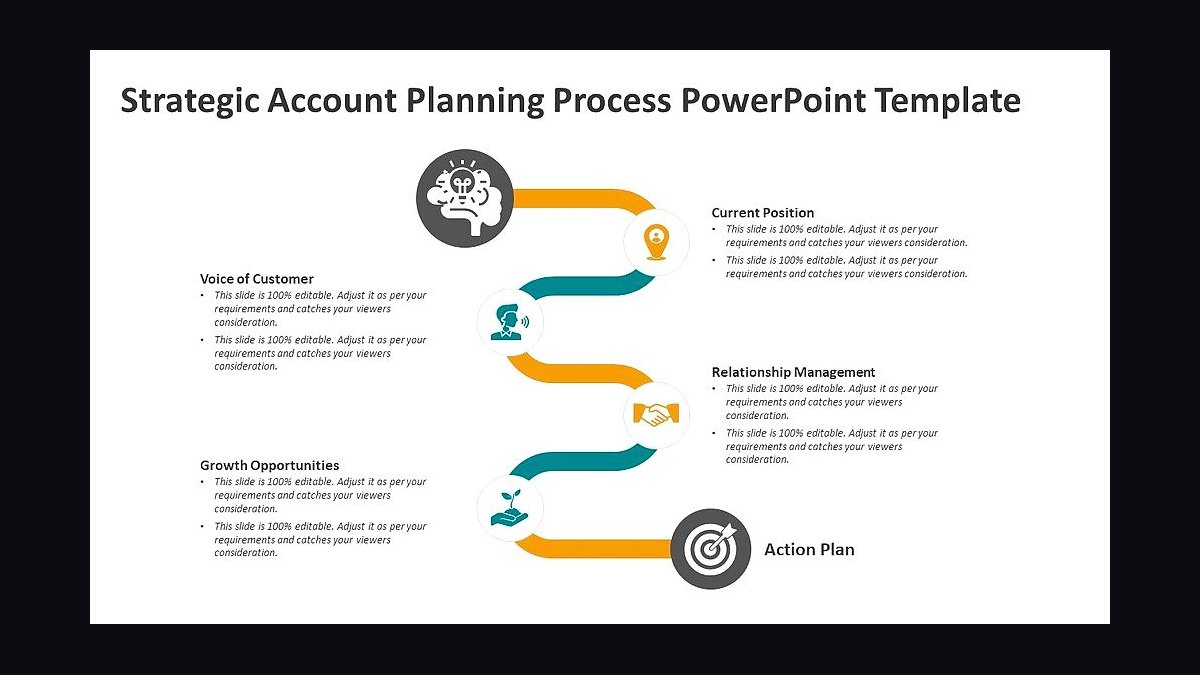
Strategic account planning in 2027 is the quarterly operating rhythm for every named account doing $1M+ ARR or sitting in the top-50 strategic list — a one-page living account plan that maps whitespace, org chart, 3-year expansion roadmap, Champion and Detractor relationships, and partner-of-record, then governs the account through a quarterly account review (QAR) chaired by the CRO, an executive sponsor pairing, an Executive Briefing Center (EBC) cadence, and a Mutual Action Plan (MAP) wired to renewals and expansion. The 2027 platform layer runs on Salesforce Account Plans or ARPEDIO (native Salesforce, AI relationship-risk alerts), Altify (Upland) for legacy Miller Heiman Target Account Selling shops, DemandFarm or Prolifiq for whitespace-first teams, DealHub or Recapped for MAP execution, and Demandbase or 6sense for intent signals that feed the whitespace map. Salesforce 2026 research shows accounts with a MAP close at 59% versus 47% without one — a 26% lift that pays for the entire planning program in a single quarter for any team with >$10M expansion ARR at risk.
1What An Account Plan Actually Is In 2027
The 2027 account plan is one page, lives in the CRM, and gets reviewed quarterly — not a 40-slide PowerPoint that gets dusted off twice a year. DemandFarm, Altify, and ARPEDIO all converged on this design between 2024 and 2026 because the multi-page deck format had a documented <20% update rate between QBRs.
1.1 The 5 Required Elements
Every modern strategic account plan contains exactly five things. Whitespace map — current products vs. addressable buying centers, color-coded by penetration. Organizational chart — full buying committee with MEDDPICC roles tagged (Economic Buyer, Champion, Decision Maker, Influencer, Coach, Detractor). 3-year expansion roadmap — quarter-by-quarter named expansion plays with dollar targets. Relationship map — Champion-Detractor heat overlay with engagement frequency scored from CRM activity. Partner-of-record — the SI, MSP, or technology partner that co-sells, implements, or governs the account.

1.2 Who Gets A Plan
The bar in 2027 is $1M+ ARR or top-50 strategic by CRO designation. Pavilion's 2026 Account Management Pulse found the median enterprise SaaS company plans 40-80 accounts with this rigor — beyond that, the planning overhead exceeds the expansion return.
2The Quarterly Operating Rhythm
The account plan is a document, but the value is in the cadence that surrounds it.

2.1 Weekly AE Update
The owning AE or AM updates the whitespace map, contact engagement, and any new champion-or-detractor signal every Friday. ARPEDIO, Salesforce Account Plans, and DemandFarm all surface a "plan staleness score" that pings the AE if the plan hasn't moved in 14 days.
2.2 Monthly Executive Sponsor 1:1
Each strategic account is paired with a named executive sponsor — typically a VP, CRO, or CEO depending on account tier. The sponsor and AE run a 30-minute 1:1 monthly to align on executive moves, EBC invitations, and renewal posture. Gartner's 2025 Account Management Magic Quadrant flagged this pairing as the single highest-correlation practice with net revenue retention above 130%.

2.3 Quarterly Account Review
The QAR is a 60-minute review chaired by the CRO, attended by the AE, AM, CSM, sponsor, and partner lead. The agenda is fixed: whitespace movement, champion + detractor changes, expansion pipeline against target, renewal risk score, and any partner-of-record changes. Output is an updated MAP and a quarter-plus-one play list.
2.4 Annual 3-Year Roadmap Reset
Once a year — typically in Q4 planning — the 3-year expansion roadmap is reset against the customer's new fiscal year, leadership changes, and the vendor's product roadmap.

3Whitespace Mapping and Champion-Detractor Discipline
Whitespace is the mathematical core of the account plan. Done right, it converts an account from a set of closed deals into a modeled pipeline of expansion plays.
3.1 Whitespace Map Construction
A proper whitespace grid lists every product or SKU down the rows and every buying center (business unit, geography, function) across the columns. Cells are colored green (live), yellow (pilot or in-conversation), red (whitespace), or grey (deliberately out of scope). DemandFarm, Prolifiq, and ARPEDIO all auto-populate the green cells from CRM closed-won data — the AE only manually maintains the yellows and reds.

3.2 Champion-Detractor Heat Map
The MEDDPICC.com 2026 whitespace planning discipline overlays each contact with a 5-point engagement score and a Champion-Detractor flag. The plan is at risk if there are fewer than 2 active Champions or any Detractor at the VP+ level with no mitigation play.
3.3 Intent Signal Overlay
Demandbase and 6sense push buying-stage signals and surging keywords directly into the account plan, so a whitespace cell turning yellow because the buying center is researching the category is auto-flagged. This is the biggest 2025-26 unlock in account planning — intent data finally lives inside the plan instead of in a separate marketing dashboard.
4Mutual Action Plans Wired To Renewals and Expansion
The MAP is not just a deal artifact in 2027 — it's the execution layer of the account plan.

4.1 What A MAP Contains
A modern MAP lists every milestone from signed-order through value realization, with named owners on both sides, deadlines, and deliverables. Salesforce's 2026 sales research measured a 26% win-rate lift for deals with an active MAP — average win rate jumped from 47% to 59%.
4.2 MAP Tooling
DealHub, Recapped, Accord, SalesHood, and Aviso all run dedicated MAP tooling that syncs bidirectionally to Salesforce or HubSpot. The 2026 best-in-class pattern is one MAP per expansion play, not one giant MAP per account — granularity matters.

4.3 Renewal Integration
The renewal MAP starts 180 days before renewal for accounts above $500K ARR, with the CSM as primary owner and the AE jointly tagged. The renewal MAP feeds the quarterly account review's renewal-risk score.
5Executive Briefing Centers and Executive Sponsor Programs
Two human-engagement programs round out the 2027 model.

5.1 EBC Cadence
The Executive Briefing Center is a half-day or full-day on-site with the customer's CIO, CTO, or VP-level buying committee. The 2026 standard is 2 EBCs per year for top-25 accounts, 1 per year for tier-2. Salesforce, Microsoft, AWS, Snowflake, and ServiceNow all run formal EBC operations teams — mid-market vendors increasingly mirror the format at smaller scale.
5.2 Executive Sponsor Program
The executive sponsor pairing runs on a named-account spreadsheet owned by the CRO's chief of staff. Each sponsor carries 3-5 accounts max — beyond that the relationship dilutes. Pavilion's 2026 research showed sponsors with >5 accounts deliver no measurable NRR lift, while sponsors with 2-3 accounts deliver +14 percentage points of NRR.

6The 2027 Tech Stack
Salesforce Account Plans (native), ARPEDIO, Altify (Upland), DemandFarm, Prolifiq, Revegy, and Kapta are the seven dominant account-planning platforms. DealHub, Recapped, Accord, SalesHood, and Aviso lead MAP execution. Demandbase and 6sense are the two ABM platforms that push intent signals into the plan. MEDDICC.com, Force Management, and Miller Heiman (now part of Korn Ferry) are the three methodology bodies most often cited in 2026 enterprise RFPs.
The 2027 Account Planning Tech Stack: Automation vs. Insight
By 2027, the tooling debate has largely settled into two camps: native CRM planners (Salesforce Account Plans, ARPEDIO) for teams that want zero data friction, and specialized AI-first platforms (Altify, DemandFarm) for teams that need predictive whitespace and relationship-risk scoring. The key differentiator is automated data ingestion — the best platforms now pull intent signals from 6sense or Demandbase, update org charts from Lusha or ZoomInfo, and flag relationship decay (e.g., no meeting with a Champion in 60+ days) without manual entry. Expect a $150–$400 per user per month range for enterprise-grade solutions, with ROI typically visible within 60 days if your expansion ARR exceeds $5M.

The Quarterly Account Review (QAR) Cadence in Practice
The 2027 QAR is a 90-minute, data-driven session chaired by the CRO or VP of Sales, not a slide deck review. Each strategic account owner presents three metrics: (1) MAP completion rate (target >70%), (2) whitespace coverage against the 3-year expansion roadmap, and (3) executive sponsor engagement (meetings per quarter). The output is a single-page action plan with owner and deadline — no more than 5 items. Teams using this cadence report 20–35% faster deal cycles on expansions and a 15–25% reduction in churn for accounts with a named executive sponsor.
The Mutual Action Plan (MAP) as the Single Source of Truth
In 2027, the MAP has evolved beyond a simple checklist into a living, shared document between the vendor and customer, typically housed in DealHub or Recapped. It now includes joint success milestones (e.g., “Q2 2027: Customer achieves X% adoption”), renewal triggers (e.g., “90 days before contract end”), and risk flags (e.g., “Champion left the company — escalate to exec sponsor”). The best MAPs are updated weekly and reviewed during every QAR. Salesforce’s 2026 data still holds: accounts with a MAP close at 59% vs. 47% without one — a 26% lift that justifies the 30–60 minutes per week it takes to maintain.
FAQ
What is the minimum account size for strategic account planning in 2027? Accounts must be doing at least $1M in annual recurring revenue (ARR) or sit on the company’s top-50 strategic list. This threshold ensures planning resources focus on accounts with the highest expansion potential.
How often should we update the strategic account plan? The plan is a living document reviewed quarterly through a formal Quarterly Account Review (QAR) chaired by the CRO. Between reviews, updates happen as needed when whitespace, org changes, or risks emerge.
What tools are commonly used for account planning in 2027? Popular platforms include Salesforce Account Plans or ARPEDIO for native CRM integration and AI risk alerts, Altify (Upland) for legacy Miller Heiman shops, DemandFarm or Prolifiq for whitespace mapping, and DealHub or Recapped for Mutual Action Plan execution.
How do intent signals feed into the planning process? Tools like Demandbase or 6sense provide intent data that highlights buying signals from target accounts. This data directly populates the whitespace map, helping teams prioritize expansion opportunities based on real-time interest.
What is the role of the executive sponsor in account planning? Each strategic account is paired with an executive sponsor who champions the relationship at the C-suite level. The sponsor participates in QARs, supports EBC cadences, and helps mitigate detractor risks.
How does a Mutual Action Plan (MAP) improve outcomes? Accounts with a MAP close at roughly 59% versus 47% without one—a 26% lift. For teams with over $10M expansion ARR at risk, this improvement can pay for the entire planning program in a single quarter.
Bottom Line
Strategic account planning in 2027 is not a deck — it's a one-page living document in the CRM, governed by a quarterly CRO-chaired review, paired with an executive sponsor, and executed through a Mutual Action Plan that's measured in basis points of net revenue retention. The teams hitting 130%+ NRR are doing all five things — whitespace mapping, exec sponsor pairing, QAR cadence, MAP discipline, and EBC investment — at the same time. Skip any one and you leak 8-15 points of NRR per year, which on a $100M ARR book is $8-15M of unrealized expansion before you even discuss new logos.
Related on PULSE
- Top 10 questions to coach a rep on strategic account planning
- How do you recover from a competitive displacement of your strategic accounts in 2027?
- How do you execute a strategic ICP pivot in 2027?
- How do you design executive sponsor programs for strategic accounts in 2027?
- Chief's ambition has shrunk between 2022 and 2027 — the strategic retreat
- Why Chief excludes men - and the 2027 strategic risk of the women-only policy?
Sources
- Altify (Upland) — State of Account Planning Report 2025-2026
- ARPEDIO — Strategic Account Planning Practitioner's Guide
- Gartner — Account Management Magic Quadrant 2025
- MEDDICC.com — Whitespace Planning and Champion-Detractor methodology
- Pavilion — Account Management Pulse 2026
- Salesforce — Mutual Action Plan research and Account Plans documentation
- DealHub + Recapped + Accord — Mutual Action Plan tooling guides 2026
- DemandFarm + Prolifiq — Best Account Planning Software comparisons 2026
- Demandbase vs 6sense ABM comparison (Salesmotion 2026)
- RAIN Group — Strategic Account Management research
This page will be disappearing soon. Save it to your device for $1 — or read it free while it is here.
@Kory-White- · if Venmo asks, the last 4 of my number are 2012
This page is gone.
This one is off the shelf now. $1 keeps it on your phone for good — the whole page, pictures and diagrams included.
 revopsHow do you build a renewal-risk scoring model in 2027?
 revopsHow do you set up MEDDICC inspection in 2027?
 revopsHow do you set up effective sales technology training in 2027?
 revopsHow does AI change sales forecasting in 2027?
 revopsHow do you do effective deal coaching in 2027?
 revopsHow do you build a SAL (Sales Accepted Lead) process in 2027?
 revopsHow do you handle the death of the MQL in 2027?
 revopsHow do you do effective territory management in 2027?
 revopsHow do you do effective post-mortem deal reviews in 2027?
 revopsHow do you run a win/loss program in 2027?