


How do you set up effective revenue planning in 2027?
Quality
Certified
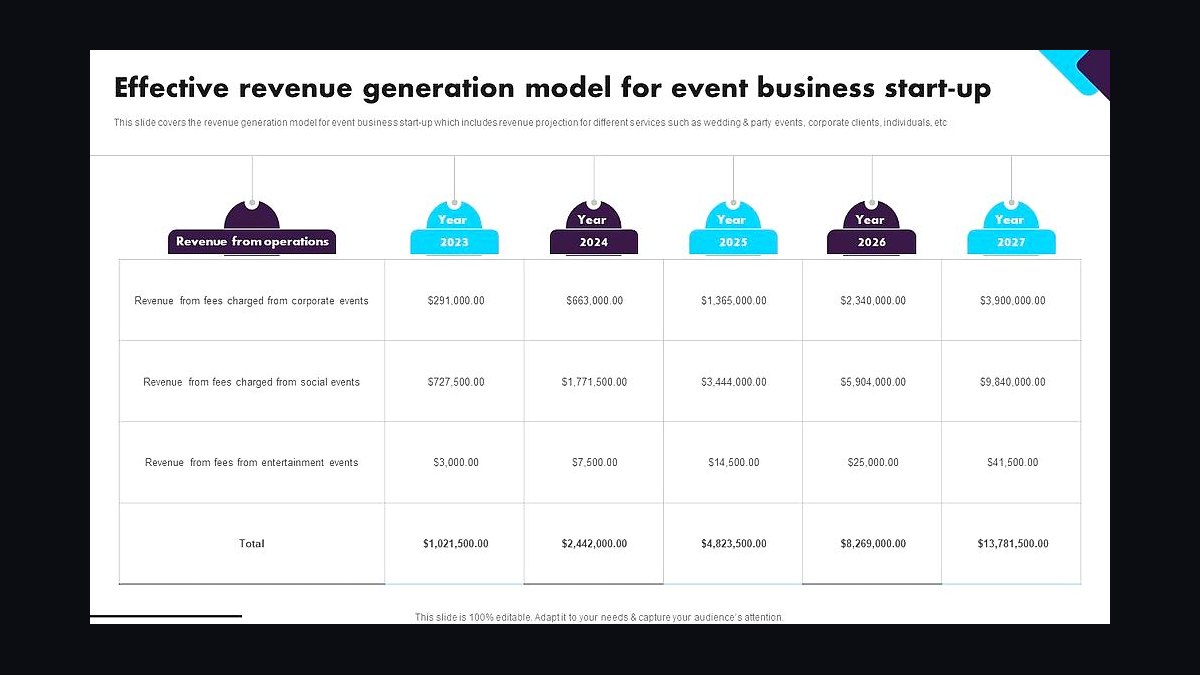
Effective revenue planning in 2027 means building one reconciled model — not two competing ones — where finance sets the top-line target and sales builds the bottoms-up capacity math, and the two numbers are forced to meet before the fiscal year starts. The working cadence is an annual target, a quarterly re-plan, and a monthly variance review, all owned jointly by the CFO and the RevOps function sitting between them.
What it is and why it matters
Revenue planning is the process of turning a single top-line growth number into every operational decision that has to support it: how many reps you hire, which territories they cover, what quota each one carries, how commission is structured, and how much pipeline needs to exist at any given moment to make the number believable. Done well, it is not a once-a-year spreadsheet exercise — it is a living model that gets re-tested every month against what is actually happening in the pipeline.
The reason it matters more in 2027 than it did five years ago is that the cost of being wrong has gone up. Hiring cycles are slower, capital is more expensive, and boards have far less patience for a sales organization that misses its number and only discovers why in the final week of the quarter. A plan that is wrong in March and not caught until September has already burned two full quarters of hiring, ramp, and pipeline-building effort that cannot be recovered.

The core failure mode this guards against is planning in silos. Finance builds a model off historical growth rates and board expectations. Sales leadership builds a separate model off headcount requests and historical attainment. Neither model is reconciled to the other until the numbers collide in a budget review, at which point one side wins politically rather than analytically. An effective planning process eliminates that collision by forcing both models to live in the same spreadsheet or platform from day one, with shared assumptions about ramp time, win rate, average deal size, and attrition.
This is also where RevOps earns its keep as a function rather than a title. RevOps does not own the target and does not own the comp plan — but it owns the reconciliation between the two, and it owns the instrumentation that tells leadership, mid-quarter, whether the plan is still realistic. Without that function sitting in the middle, finance and sales default back to their separate spreadsheets the moment the pressure is on.
Revenue planning also touches adjacent workflows that are easy to treat as separate projects but should not be: territory design, which determines whether the capacity model is actually addressable; onboarding and ramp design, which determines how fast a new hire's productivity curve climbs; and demand generation planning, which determines whether enough pipeline exists to feed the coverage ratio the plan assumes. Treating revenue planning as an isolated finance exercise, divorced from these adjacent systems, is the single most common reason plans look clean on paper and fall apart by the second quarter.
The step-by-step process (mermaid)

A workable annual plan moves through a fixed sequence. Skipping a step, or doing them out of order, is where most plans quietly go wrong before anyone notices.
Step one — set the target. Leadership sets a single net-new revenue number plus a net revenue retention floor, informed by board expectations, prior-year performance, and realistic market growth for the company's stage and sector. This number is tops-down and directional, not yet validated against capacity.
Step two — segment and split. The target is broken down by segment (SMB, mid-market, enterprise), by product line, and by motion (new logo, expansion, renewal). The split has to sum exactly back to the company number — this is where double-counting most often creeps in, because each team tends to model its own slice optimistically.

Step three — build the capacity model. This is the bottoms-up reality check. For every rep or rep-equivalent, model a ramp curve (most SaaS orgs see new reps reach 50% of full productivity around month four and full productivity between month seven and month ten), a fully-ramped productivity number benchmarked against company stage, and a pipeline coverage ratio — commonly three to five times quota — needed to produce normal win rates. Multiply ramp-adjusted productivity across every seat and compare it to the step-one target. If capacity falls short, that gap has to be closed with hiring, productivity gains, or a revised target — never ignored.
Step four — assign quotas. Individual quotas are set so the sum of all quotas lands somewhere above the company target, typically 110–125%, to absorb attrition, slow ramps, and reps who land below 100% of quota (which is the norm, not the exception, in most sales organizations).
Step five — engineer comp. Compensation has to reward the behavior the plan actually needs — new logo versus expansion, multi-year versus annual — while keeping the comp-to-revenue ratio inside what finance can defend. Most SaaS organizations keep on-target earnings somewhere between 15–25% of the quota a rep carries.
Once signoff happens, the model does not get filed away — it feeds directly into the quarterly re-plan and monthly review loop shown in the diagram, which is what keeps the plan honest for the rest of the year.
Costs, timelines, and typical ranges

The planning cycle itself has a predictable shape. Most organizations start the annual process eight to twelve weeks before fiscal year-start. Shorter than that and there is no time to run a proper reconciliation workshop between finance and sales leadership; longer than that and the assumptions baked into the plan are stale by the time it is approved, because headcount, pricing, or market conditions have already shifted.
Tooling costs vary widely by company size and complexity. Enterprise planning platforms (the Anaplan and Workday Adaptive Planning category) typically run from the tens of thousands to several hundred thousand dollars annually depending on user count and module scope, with implementation timelines of four to twelve months for a full build-out. Mid-market-focused platforms (Pigment, Vena) tend to implement faster — commonly two to four months — and carry a lower total cost of ownership, which is why they are the more common choice for companies under roughly $500M in revenue that need a working model quickly rather than a decade-long enterprise rollout. Smaller or earlier-stage companies frequently run the entire process in a well-structured spreadsheet model for the first several planning cycles, which is a legitimate choice as long as version control and a single source of truth are enforced — the failure mode is not the spreadsheet itself, it's five different copies of it circulating by email.

On the cadence side, the quarterly re-plan is typically a focused one-to-two week sprint rather than a full redo: the first week reconciles actuals against plan and updates the underlying assumptions, the second republishes any quota or forecast changes. The monthly variance review is a short, standing meeting — usually thirty to sixty minutes — reviewing actual performance against plan and against the trigger thresholds that were agreed on at the start of the year (for example, two consecutive months below three times pipeline coverage).
Headcount timing has its own cost curve that the plan has to respect. A rep hired in month one of the fiscal year and a rep hired in month seven are not interchangeable, even if both appear in the same headcount line — the second rep contributes a fraction of a year's bookings because of ramp time, and treating them as equivalent in the capacity model is a quiet but common source of overestimated capacity.
Where teams get it wrong
The single most common mistake is building the capacity model to justify the target instead of building the target from the capacity model. When leadership sets a growth number first and then works backward to make the rep math fit — stretching ramp assumptions, inflating productivity benchmarks, or assuming an unrealistic hiring pace — the plan looks complete on the page and collapses by the second quarter, because the underlying math was never real to begin with.

A second recurring failure is treating the plan as a once-a-year artifact rather than a living model. Teams that build an annual plan in December and don't revisit the underlying assumptions until the following December are flying blind for eleven months. By the time a shortfall shows up in the quarterly business review, the hiring and pipeline-building window to correct it has usually already closed.
A third failure is skipping the segment-and-split reconciliation step. When finance and sales each build their own version of the segment breakdown independently, it's extremely common for the sum of the parts to exceed the whole — each team's slice looks reasonable in isolation, but together they imply double-counted revenue that was never actually available.
A fourth failure, and the most political one, is a single-owner plan. When finance builds the plan and hands it to sales as a mandate, or when sales builds the plan and finance rubber-stamps it without validating the comp-to-revenue math, the plan has no real owner for the parts outside that person's expertise. The first board review where the number is missed becomes a blame exercise instead of a diagnostic one, because nobody can speak credibly to both halves of the model.
A fifth, more subtle failure is ignoring attrition and ramp slippage in the quota math. A plan that assumes every hired rep stays the full year and ramps on schedule is a plan that has already failed before it's published — real sales organizations lose reps mid-year, and some portion of new hires ramp slower than the median. Building in that buffer at the quota-assignment step, rather than discovering it mid-year, is what separates a plan that survives contact with reality from one that doesn't.
Decision framework: when to choose what (mermaid)

Not every company needs the same planning stack or the same cadence, and matching the approach to company stage avoids both under-building and over-engineering the process.
A company still finding product-market fit, generally under roughly $10M in revenue, does not need an enterprise planning platform — a well-governed spreadsheet model, rebuilt each quarter rather than each year because the business is changing too fast for an annual cycle to hold, is the right level of investment. A growth-stage company, roughly $10M to $100M, is usually the point where a dedicated planning platform starts paying for itself, because the number of segments, products, and reps has outgrown what a spreadsheet can reconcile without errors; this is typically where companies look at platforms with faster implementation timelines so they aren't spending a full planning cycle just standing up the tool. A company above roughly $100M, especially one with multiple business units, international entities, or multiple currencies, is usually better served by a platform built for that complexity, even though the implementation takes longer, because the alternative is a reconciliation process that consumes finance headcount every single quarter.

The same logic applies to cadence. A company with a short sales cycle and high transaction volume can tolerate a monthly re-plan without destabilizing the sales organization. A company with long enterprise sales cycles and infrequent closes should stay on a quarterly re-plan cadence, because re-planning too often in that environment just produces noise — the underlying pipeline hasn't moved enough between any two months to justify changing the number.
Related questions
How does revenue planning differ from sales forecasting?
Planning sets the target and the structure to hit it — headcount, quotas, territories, comp — before the year starts. Forecasting is the ongoing, shorter-horizon prediction of what will actually close against that existing plan, usually updated weekly or monthly from live pipeline data.
How often should quotas be revisited mid-year?
Quotas should only be formally reassigned at the quarterly re-plan checkpoint, not continuously. Changing quotas more often erodes rep trust in the number; going a full year without revisiting them ignores real shifts in territory, headcount, or market conditions.
What role does RevOps play versus finance in planning?
Finance owns the target and the comp envelope; sales leadership owns the capacity model and quota distribution; RevOps owns the reconciliation between the two and the ongoing instrumentation that flags when the plan is drifting from reality.
How does territory design affect the capacity model?

A capacity model that assumes full productivity but ignores whether territories are actually addressable will overstate what the sales team can realistically produce. Territory and account coverage have to be validated before capacity numbers are trusted.
Should marketing and pipeline generation be part of the planning cycle?
Yes — the coverage ratio in the capacity model (commonly three to five times quota) only holds if enough qualified pipeline is being generated to support it, which makes demand generation capacity a direct input into whether the revenue plan is achievable.
FAQ
How early should the annual planning cycle start? Most organizations begin eight to twelve weeks before fiscal year-start. That window is long enough to run a proper reconciliation between finance and sales leadership but short enough that the underlying assumptions are still current when the plan is approved.
What is the right pipeline coverage ratio to plan around?

A common range is three to five times quota in open pipeline, though the right number depends on historical win rate and sales cycle length. A lower ratio only works if win rates are unusually high and consistent.
Should sales or finance own the revenue plan? Neither alone. Finance owns the target and comp guardrails, sales owns the capacity and quota model, and the two have to be reconciled jointly before the plan is final — a single-owner plan tends to fail its first real-world stress test.
How much quota buffer should be built in above the target? Most plans assign total quota at roughly 110–125% of the company target to absorb attrition, slow ramps, and reps who land under 100% attainment, which is common rather than exceptional.
What is the biggest planning mistake companies make? Building the capacity model backward from a target that leadership has already decided on, rather than letting the bottoms-up rep math inform what the target should realistically be.
How does company stage change the right planning approach? Early-stage companies are usually best served by a disciplined spreadsheet model rebuilt quarterly; growth-stage companies typically graduate to a dedicated planning platform; larger, multi-entity companies generally need platforms built for multi-currency and multi-business-unit complexity.
Sources
- https://www.anaplan.com
- https://www.pigment.com
- https://www.workday.com/en-us/products/adaptive-planning/overview.html
- https://www.venasolutions.com
- https://www.salesforce.com
- https://www.gartner.com
- https://www.mckinsey.com
- https://www.bain.com
- https://openviewpartners.com
Related on PULSE
- How do you do effective sales call planning in 2027?
- How do you set up effective sales technology training in 2027?
- How do you set up effective sales onboarding in 2027?
- How is AI changing FP&A and revenue planning in 2027?
- What data sources are most effective for training AI models to predict next best action in complex enterprise deals?
This page will be disappearing soon. Save it to your device for $1 — or read it free while it is here.
@Kory-White- · if Venmo asks, the last 4 of my number are 2012
This page is gone.
This one is off the shelf now. $1 keeps it on your phone for good — the whole page, pictures and diagrams included.
 revopsHow do you set up MEDDICC inspection in 2027?
 revopsHow do you do effective territory management in 2027?
 revopsHow do you deploy AI SDRs in 2027?
 revopsHow do you build a sales operations stack from scratch in 2027?
 revopsHow do you do effective sales call planning in 2027?
 revopsHow do you measure agentic-AI ROI in RevOps in 2027?
 revopsHow do you build a sales enablement program in 2027?
 revopsHow do you handle the death of the MQL in 2027?
 revopsHow do you do effective deal coaching in 2027?
 revopsHow do you structure a quarterly business review (QBR) in 2027?