


How do you evaluate LLM models in production in 2027?
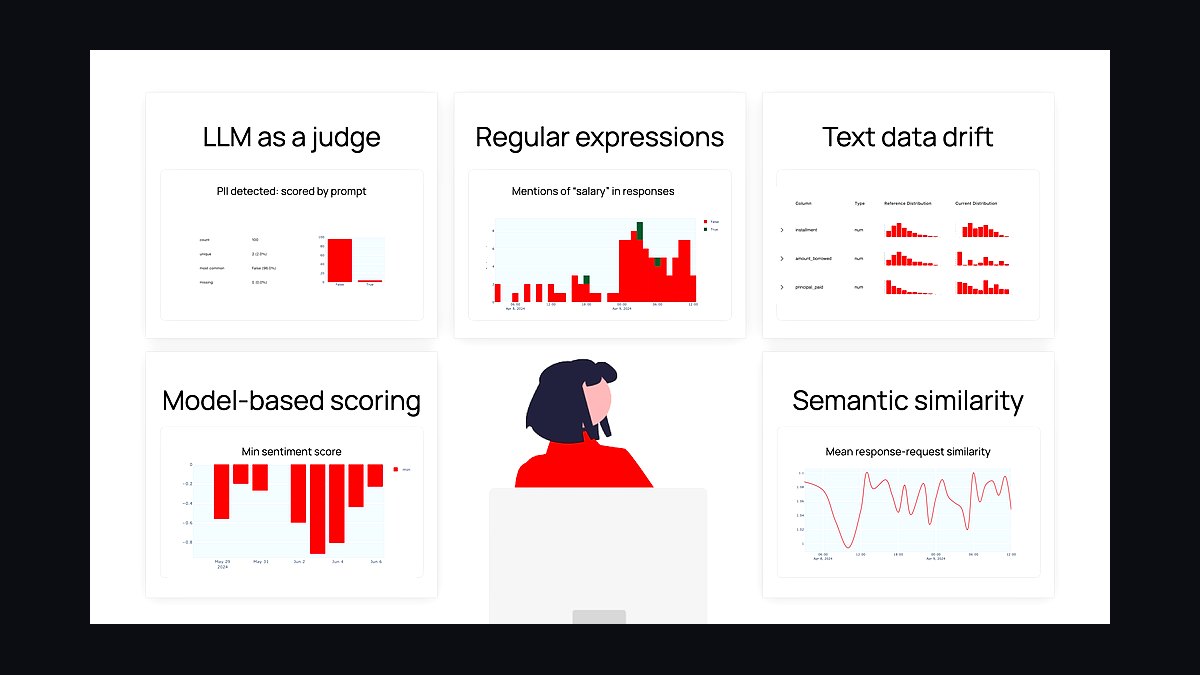
In 2027, LLM model evaluation runs on three timescales: (1) continuous in-CI eval of model changes, prompt changes, and RAG changes with Promptfoo, Braintrust, or LangSmith Evaluators, (2) eval-in-production sampling with LLM-as-judge on 1–5% of live traffic, and (3) quarterly model-comparison bake-offs against new vendor releases. The evaluation set is a 150–500 example golden dataset built from real production traffic. The eval metric stack is deterministic checks (exact match, regex, schema validation) + LLM-as-judge (Claude Opus or GPT-5 with rubrics) + human review (sampled flagged outputs).
1The Golden Eval Set — The Foundation
Without a curated eval set, you cannot evaluate. The 2027 best practices:
- 150–500 examples representing real production traffic distribution.
- Stratified by use case — easy/medium/hard, by user segment, by query type.
- Golden answers labeled by domain experts, reviewed quarterly.
- Version-controlled in Git alongside the application code.
- Sourced from production samples — synthetic eval sets fail to capture real-world distribution.
1.1 Eval Set Refresh
Refresh quarterly — add new examples from production, retire stale ones, rebalance distribution. Eval set hygiene is the single biggest predictor of evaluation reliability.

2Deterministic Evaluation
Run cheap deterministic checks first:
- Exact match for structured outputs (JSON schema validation).
- Regex for known patterns (phone numbers, dates, citations).
- Length thresholds (output should be 100–500 words).
- Forbidden pattern checks (no PII, no banned phrases).
Tools: JSON Schema, Pydantic, Zod, Promptfoo's built-in assertions.

3LLM-as-Judge
For subjective quality assessment, use a stronger model to score outputs. The pattern:
- Define rubrics with explicit grading criteria (faithfulness, completeness, tone, safety).
- Pass the input + model output + golden answer + rubric to a judge model (Claude Opus 4.7 or GPT-5).
- Get a structured score (1–5) plus explanation per rubric.
- Aggregate scores across the eval set.
3.1 Judge Model Choice
- Claude Opus 4.7 — strongest reasoning for rubric application; ~$15/1M input tokens.
- GPT-5 — competitive judge with explicit
judgeprompts. - Gemini Pro 2.5 — strong multimodal judge for image/video.
- Llama 4 405B — open-source judge for cost-sensitive evals.

Use a different model as judge than the model being evaluated to reduce self-bias.
3.2 Pairwise Comparison
For A/B comparisons, pairwise judging beats absolute scoring. Show the judge both outputs; ask which is better. Aggregate over the eval set.
4Public Benchmark Suites (Use with Caution)
Public benchmarks measure general capability, not task-specific performance. Useful for vendor selection, not for your application:

- MMLU (Massive Multitask Language Understanding) — general knowledge.
- HumanEval, MBPP, SWE-Bench — code generation.
- MATH, GSM8K — math reasoning.
- TruthfulQA — factual accuracy.
- HELM (complete Evaluation of Language Models, Stanford) — comprehensive.
- BIG-Bench, BIG-Bench Hard — diverse tasks.
- MT-Bench, AlpacaEval, Arena Hard — chatbot quality.
- LMSys Chatbot Arena — community-vote-based rankings.
4.1 Benchmark Contamination
Public benchmarks suffer from training-data contamination — models often see benchmark questions during training. Trust your own eval set over public scores.
5Eval-in-Production
After deploy, sample 1–5% of live traffic and run lightweight eval:
- LLM-as-judge with a faster, cheaper judge (Sonnet, GPT-5o-mini).
- Flag low-scoring outputs for human review.
- Track win rate over time to detect regressions.

Braintrust and LangSmith both ship eval-in-production sampling.
6Quarterly Vendor Bake-Offs
Every quarter, re-evaluate top vendors against your golden eval set. New models drop frequently — Claude Sonnet 4.6, Gemini Pro 2.5 Flash, Llama 4.5 — each can change the cost/quality frontier.

Evaluating Latency and Cost Trade-offs
In production, LLM evaluation isn't just about accuracy—it's about whether the model's performance justifies its operational cost and response time. By 2027, most teams run a cost-per-good-output (CPGO) metric alongside traditional quality scores. This combines token pricing (typically $0.10–$0.50 per million input tokens for frontier models, $0.02–$0.10 for smaller or distilled models) with latency budgets (target p95 response times of 500ms–2s for chat applications, 2s–8s for complex reasoning tasks). A model that scores 95% on accuracy but costs 4x more and adds 1.5s of latency is often deprioritized over a cheaper, faster model scoring 92%.
To measure this in production, teams instrument every LLM call with end-to-end tracing using OpenTelemetry or vendor-specific tools like LangFuse or Helicone. Each trace captures:
- Time to first token (TTFT) – typically 150ms–800ms for cloud models, 20ms–100ms for local models on specialized hardware
- Total generation time
- Input/output token counts
- Model and provider used
- Retry and fallback events
These traces feed into a cost-quality dashboard that plots accuracy against cost-per-query, with latency overlays. The evaluation pipeline automatically flags models where CPGO exceeds a team-defined threshold (e.g., $0.001 per good output for high-volume use cases, $0.05 for premium features). Teams then run A/B experiments where 5–10% of traffic sees a cheaper model variant, comparing both quality metrics and user engagement signals like time-to-completion or follow-up query rates.

A common pattern in 2027 is dynamic model selection based on query complexity. Simple queries (factual lookups, short answers) route to smaller, cheaper models (e.g., 7B–13B parameter models costing $0.01–$0.03 per million tokens), while complex reasoning tasks go to frontier models. The routing classifier itself is evaluated on its own golden dataset of 500–1000 labeled queries, with a target accuracy of 98%+ to avoid misrouting expensive queries to cheap models or vice versa.
Human Evaluation at Scale: Calibration and Escalation
While LLM-as-judge handles 95–99% of automated evaluation, human review remains essential for edge cases, safety-critical outputs, and model drift detection. By 2027, production teams have shifted from reviewing random samples to targeted sampling based on uncertainty scores from the judge model. When an LLM-as-judge scores an output between 3–6 out of 10 (on a 10-point rubric), that output is automatically flagged for human review. This reduces human workload by 60–80% compared to random sampling while catching 90%+ of problematic outputs.
Human reviewers use calibrated rubrics that are updated monthly based on inter-rater reliability (IRR) scores. Teams aim for Cohen’s kappa of 0.7+ between reviewers, achieved through:
- Weekly calibration sessions where reviewers score 10–20 pre-labeled examples
- Blinded re-reviews of 5–10% of each reviewer’s assignments
- Escalation paths where disagreements between two reviewers go to a senior reviewer

The human evaluation pipeline feeds back into the golden dataset. When a reviewer flags an output as incorrect or unsafe, that example (with the corrected label) is added to the next week’s eval set. This creates a living dataset that grows by 20–50 examples per week for high-traffic applications, ensuring the eval set stays representative of current production patterns rather than stale training data.
For safety-critical applications (healthcare, finance, legal), teams also run adversarial red-teaming sessions every 2–4 weeks. A dedicated team or automated agent probes the model with known attack patterns: prompt injections, jailbreak attempts, and edge cases from industry benchmarks like the Adversarial Nibbler dataset. Each session generates 50–200 test cases, and any failure triggers a root-cause analysis and potential model rollback or guardrail update.
Evaluating RAG and Tool-Use Pipelines
By 2027, most production LLM applications are not single-model calls but multi-step pipelines involving retrieval-augmented generation (RAG), external tool calls, and multi-turn conversations. Evaluating these pipelines requires component-level metrics in addition to end-to-end quality scores.

For RAG pipelines, the evaluation stack includes:
- Retrieval precision@k: What fraction of retrieved documents are relevant? Target: 80–95% for top-3 results, measured via human-labeled relevance judgments on 200–500 queries per week
- Context utilization rate: What percentage of the retrieved content actually appears in the final output? Measured by substring matching or embedding similarity, with targets of 60–85% depending on task complexity
- Hallucination rate on retrieved facts: Using a fact-checking LLM (or dedicated factuality model like Google’s SAFE), teams measure what percentage of claims in the output are unsupported by retrieved documents. Target: <5% for production systems
For tool-use pipelines (calling APIs, databases, or code interpreters), evaluation focuses on:
- Tool call accuracy: Did the model call the correct tool with the correct parameters? Measured by comparing against ground-truth tool calls in a golden dataset of 100–300 examples
- Error recovery rate: When a tool call fails (API timeout, invalid parameters), does the model retry gracefully or crash? Teams measure this by injecting controlled failures into 1–3% of production traffic
- Multi-turn consistency: For conversational agents, teams use a state-tracking eval that checks whether the model maintains correct context across 3–5 turns. This is evaluated with a dedicated LLM-as-judge that compares the model’s internal state representation against ground-truth state logs

The golden dataset for pipeline evaluation is different from single-model eval sets. It consists of end-to-end scenarios with 3–10 steps each, annotated with correct intermediate outputs (retrieved documents, tool calls, conversation states) and final answers. Teams maintain 100–300 such scenarios, updated monthly to reflect new tool integrations or document sources. Pipeline-level eval runs take 10–30 minutes on modern infrastructure, and any regression of more than 2 percentage points on component metrics triggers an automatic rollback to the previous pipeline version.
3Production Monitoring — Real-Time Quality Signals
Beyond offline eval sets, production monitoring in 2027 relies on real-time quality signals captured from live traffic. Deploy lightweight drift detectors that compare output distributions (token length, sentiment, topic diversity) against baseline metrics from the golden set. Use user feedback loops — thumbs up/down, explicit ratings, or implicit signals like copy-paste events and time spent reading responses — to flag potential regressions within minutes. Tools like Arize AI, WhyLabs, or Datadog LLM Observability provide pre-built dashboards for latency, cost, and hallucination rate tracking. Set alert thresholds at 2–3 standard deviations from baseline; investigate any sustained deviation exceeding 5–10% over a 30-minute window. This layer catches issues that static eval sets miss, such as model degradation due to upstream API changes or shifting user behavior.
4Human-in-the-Loop Review — The Final Safety Net
Automated evaluation catches most issues, but human review remains essential for edge cases and safety-critical outputs. In 2027, sample 2–5% of production outputs for human review, weighted toward high-risk categories (medical advice, financial calculations, legal interpretations). Use calibration sets — 20–50 examples reviewed by multiple annotators — to measure inter-rater reliability and maintain scoring consistency. Flag outputs where the LLM-as-judge confidence is below 70% or where deterministic checks fail, routing them directly to human reviewers. Budget 10–15 minutes per reviewer per day for this task; scale the sample rate based on model confidence and business risk tolerance. This hybrid approach balances automation efficiency with the nuanced judgment that only humans provide.
FAQ
What is the ideal size for a golden evaluation dataset? A golden dataset of 150–500 examples is typical, drawn from real production traffic. The exact number depends on your use case complexity and the diversity of inputs you need to cover.
How often should I run LLM evaluations in production? Continuous in-CI evals run on every change, plus eval-in-production sampling on 1–5% of live traffic. Quarterly bake-offs compare your current model against new vendor releases.
Which metrics work best for LLM evaluation? A stack of deterministic checks (exact match, regex, schema validation) combined with LLM-as-judge using Claude Opus or GPT-5 with rubrics, plus human review on flagged outputs. No single metric is sufficient alone.
How do I choose between evaluation tools like Promptfoo, Braintrust, or LangSmith? Each tool offers similar core capabilities for continuous eval, but they differ in pricing, integration depth, and UI preferences. Teams typically trial 2–3 tools before committing.
What percentage of production traffic should I sample for eval-in-production? Sampling 1–5% of live traffic is standard, though the exact rate depends on your traffic volume and budget for LLM-as-judge calls. Higher sampling gives more signal but costs more.
How do I handle evaluation when my LLM model or prompts change frequently? Run continuous in-CI evals on every prompt or model change using your golden dataset. This catches regressions early, and you can compare results against baseline runs stored in your evaluation tool.
Bottom Line
LLM evaluation in 2027 is a three-timescale discipline — continuous CI, eval-in-production sampling, and quarterly vendor bake-offs. The golden eval set (150–500 examples) is the foundation. Layer deterministic checks, LLM-as-judge, and sampled human review for full coverage. Public benchmarks are useful for vendor short-listing only — they tell you nothing about your task.
Related on PULSE
- How do you version LLM models, prompts, and eval sets in production in 2027?
- How do you detect LLM jailbreaks in production in 2027?
- How do you optimize LLM inference cost in production in 2027?
- What does the production LLM observability stack look like in 2027?
- RAG vs fine-tuning: which should you use for production LLM applications in 2027?
- How do you prevent prompt injection in production LLM applications in 2027?
Sources
- Promptfoo — LLM Evaluation Framework Documentation
- Braintrust — Eval Reference Architecture
- LangChain — LangSmith Evaluators Documentation
- Anthropic — Claude Opus 4.7 LLM-as-Judge Best Practices
- OpenAI — GPT-5 Evaluation Documentation
- Stanford — HELM complete Evaluation Reference
- LMSys — Chatbot Arena Leaderboard Reference
- BIG-Bench — BIG-Bench Hard Repository (Google)
- HumanEval — OpenAI Code Generation Benchmark
- SWE-Bench — Princeton + Stanford Software Engineering Benchmark
This page will be disappearing soon. Save it to your device for $1 — or read it free while it is here.
@Kory-White- · if Venmo asks, the last 4 of my number are 2012
This page is gone.
This one is off the shelf now. $1 keeps it on your phone for good — the whole page, pictures and diagrams included.
 revopsWhat are the most important LLM evaluation metrics and benchmarks in 2027?
 revopsHow do you operationalize AI agents in RevOps in 2027?
 revopsHow do you score and route product-qualified leads in 2027?
 revopsWhat skills should you hire for in a RevOps analyst in 2027?
 revopsHow do you reduce CRM data decay in 2027?
 revopsHow do you onboard a RevOps analyst in 2027?
 revopsWhy is B2B pipeline generation so hard in 2027?
 revopsHow do you operationalize account-based marketing in 2027?
 revopsHow do you set up revenue reporting dashboards in 2027?
 revopsHow do you run a customer expansion playbook in 2027?