


How do you use synthetic data generation for AI training and evaluation in 2027?
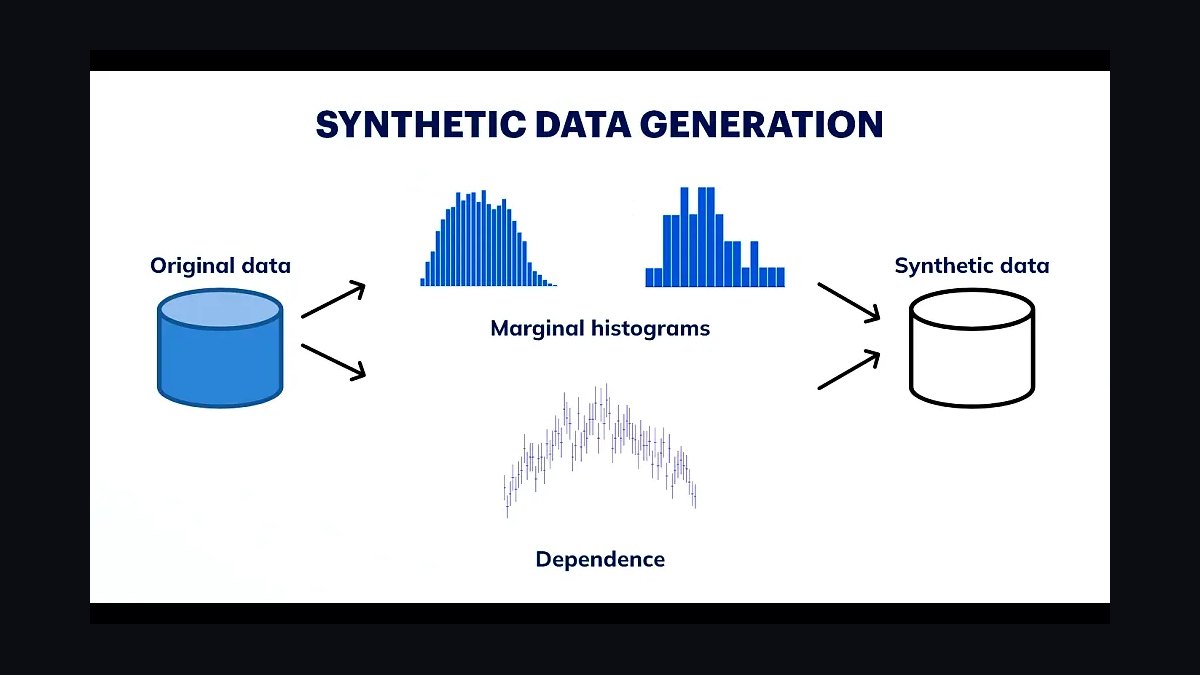
In 2027, synthetic data generation for AI training and evaluation has matured into a real engineering discipline. Use cases: (1) fine-tuning data augmentation when real labeled data is scarce, (2) edge-case eval coverage for rare scenarios, (3) privacy-preserving training when real data has PII restrictions, (4) adversarial examples for safety red teaming, and (5) benchmark inflation prevention by generating fresh test sets that haven't leaked into training. The 2027 toolchain: Gretel AI, Mostly AI, Tonic AI, Synthesia (video), Anthropic Claude or OpenAI GPT-5 for direct generation, plus DSPy and Distilabel for structured synthetic dataset production.
1When Synthetic Data Helps
Synthetic data wins when:
- Real data is scarce (under 10K examples for fine-tuning).
- Real data has PII that can't be used directly (healthcare, finance).
- You need rare-scenario coverage (edge cases that don't occur often in production).
- You need adversarial coverage for safety eval.
- You need a fresh test set that hasn't leaked into model training.
Synthetic data hurts when:
- It overrepresents distributions the LLM is biased toward.
- It teaches the model to mimic LLM-style outputs rather than real user behavior.
- It is treated as ground truth without human validation.

2The Two Generation Strategies
LLM-direct generation: prompt Claude Opus or GPT-5 to generate examples from a schema. Fast, flexible, but biased by the model's training distribution.
Augmentation from real seeds: start with 100 real examples; use LLM to generate 1,000 variations preserving the underlying patterns. Less biased; closer to production distribution.
The 2027 best practice is augmentation from real seeds when real data exists; LLM-direct only when starting from zero.

2.1 Quality Control
Every synthetic dataset needs:
- Schema validation (Pydantic, Zod, JSON Schema).
- Diversity scoring (embedding-based clustering to detect mode collapse).
- Human spot-check (sample 5% for expert review).
- Adversarial filtering (remove examples that fail safety classifiers).
3Specialized Synthetic Data Vendors
Gretel AI — privacy-preserving tabular and text synthetic data; strong for healthcare and finance. Mostly AI — tabular synthetic data with privacy guarantees. Tonic AI — synthetic database test data. Synthesia — synthetic video for training computer vision and avatar models. Hazy — privacy-first synthetic data for banking. MOSTLY AI — also runs on-prem deployment for sensitive industries.

3.1 Open-Source Tools
DSPy (Stanford) — programmatic prompt-to-dataset generation. Distilabel (Argilla) — open-source synthetic data pipeline framework. Argilla — data labeling + synthetic data review platform. Hugging Face Datasets + Hub — community-shared synthetic datasets.
4Common Use Patterns
4.1 Fine-Tuning Data Augmentation
Start with 1,000 real examples. Generate 10K synthetic variations using Claude Opus or GPT-5. Human-review a 5% sample. Use combined dataset (real + filtered synthetic) for fine-tuning.

4.2 Adversarial / Red-Team Examples
Generate edge cases and adversarial inputs for safety eval. Anthropic's Constitutional AI training uses LLM-generated adversarial examples extensively.
4.3 Eval Set Augmentation
Generate hard test cases that aren't in your real production traffic distribution. Human-validate every example before adding to the golden eval set.

4.4 Privacy-Preserving Training
Replace PII in real data with realistic synthetic alternatives. Differential privacy techniques (Microsoft SmartNoise, Google Privacy Library) ensure synthetic outputs cannot be reverse-engineered to real records.
5Common Pitfalls
- Mode collapse — LLM-generated examples cluster narrowly. Use diversity scoring to catch.
- LLM-style bias — synthetic data reads like LLM output (long, hedged, structured). Real user inputs are short, messy, ambiguous.
- Treating synthetic as ground truth — always human-validate a sample.
- Training on outputs of the same model — leads to model collapse over generations. Use a different, stronger model for generation.
Synthetic Data Quality Assurance and Validation Protocols
By 2027, the synthetic data industry has matured to the point where rigorous quality assurance (QA) pipelines are standard practice before any synthetic dataset enters training or evaluation. The core challenge is avoiding "model collapse" — a phenomenon where models trained on synthetic data amplify artifacts and lose diversity over successive generations. To combat this, practitioners now deploy multi-stage validation frameworks that typically cost between $0.05 and $0.30 per synthetic sample to run (depending on complexity and modality).

The standard QA pipeline in 2027 includes three mandatory gates. First, statistical fidelity checks compare the synthetic distribution against the real data distribution using metrics like Maximum Mean Discrepancy (MMD), Wasserstein distance, and domain-specific embedding similarity scores. For tabular data, tools like Gretel AI's Evaluator and Tonic AI's Validator automatically flag any column where the synthetic distribution diverges more than 5-15% from the real distribution. For images and video, perceptual similarity metrics (LPIPS, FID, CLIP score) must fall within 0.8-0.95 of the real data baseline to pass.
Second, privacy leakage audits have become non-negotiable, especially for regulated industries like healthcare and finance. The 2027 standard uses a combination of membership inference attacks (MIA) and nearest-neighbor distance checks. Any synthetic record that has a Euclidean distance of less than 0.01 (for normalized continuous features) or identical categorical values to a real record is automatically quarantined. Differential privacy budgets (epsilon values) are now commonly reported alongside synthetic datasets, with typical values ranging from epsilon=1 to epsilon=10 depending on the sensitivity of the source data.

Third, downstream task validation measures whether models trained on synthetic data achieve comparable performance to those trained on real data. This involves training a small proxy model (often a lightweight transformer or gradient-boosted tree) on both real and synthetic versions of the same task, then comparing accuracy, F1, and calibration scores. Industry benchmarks in 2027 show that well-generated synthetic data typically achieves 85-98% of the real-data performance on classification tasks, 80-95% on regression tasks, and 70-90% on generation tasks like text summarization or image captioning. Any synthetic dataset falling below these thresholds is either regenerated with different parameters or augmented with additional real data.
Domain-Specific Synthetic Data Generation Strategies for 2027
The one-size-fits-all approach to synthetic data has been replaced by domain-optimized generation strategies that account for the unique characteristics of different data modalities. In 2027, practitioners select from a toolkit of specialized approaches based on their target domain, with each strategy having well-documented trade-offs in cost, fidelity, and privacy.

For tabular and structured data (financial transactions, healthcare records, customer databases), the dominant approach is generative adversarial networks (GANs) combined with variational autoencoders (VAEs), specifically architectures like CTGAN, TVAE, and their 2027 successors. These models now incorporate differential privacy by default and can generate datasets of 10,000 to 10 million rows in 2-30 minutes on a single A100 GPU. The cost per row ranges from $0.0001 to $0.01 for cloud-based generation. For highly sensitive data (e.g., genomic sequences or credit card transactions), practitioners increasingly use "private synthetic data" variants that guarantee epsilon values below 1.0, though this typically reduces downstream performance by 5-15% compared to non-private generation.
For computer vision (autonomous driving, medical imaging, satellite imagery), the 2027 standard is neural rendering pipelines that combine 3D scene generation with differentiable rendering. Tools like NVIDIA's Omniverse Replicator and Unity's Perception package allow teams to generate photorealistic images with pixel-perfect labels for segmentation, depth, and object detection. A typical autonomous driving dataset might generate 50,000-500,000 labeled images per day on a cluster of 8-16 A100 GPUs, at a cost of $0.02-$0.10 per image. The key advantage is the ability to generate rare edge cases — such as a pedestrian in a wheelchair at night in the rain — that might occur only once in 10 million real-world miles. Medical imaging synthetic generation has advanced to the point where synthetic X-rays and MRIs are used to augment rare disease datasets, with radiologists achieving 92-97% agreement between real and synthetic images in blind tests.

For natural language and code, large language models (LLMs) themselves have become the primary synthetic data generators. The 2027 workflow typically uses a "teacher-student" distillation approach: a frontier model (GPT-5, Claude 4, Gemini Ultra 2) generates synthetic examples, which are then filtered and used to fine-tune smaller, cheaper models. For code generation, tools like Codex and StarCoder 2 are used to generate synthetic code pairs (buggy code + fixed code, or code + documentation). The cost per synthetic text sample ranges from $0.001 to $0.05 for generation plus $0.0005 to $0.01 for quality filtering. A critical best practice that emerged in 2026-2027 is "self-consistency filtering": generating 5-10 candidate responses for each prompt and keeping only those where the model's confidence score exceeds 0.9, which reduces hallucination rates in downstream models by 40-60%.
Legal, Ethical, and Regulatory Compliance in Synthetic Data Deployment
The 2027 regulatory market for synthetic data has crystallized around three major frameworks: the EU AI Act's requirements for training data transparency, the US Executive Order on AI's guidelines for synthetic content, and sector-specific regulations like HIPAA for healthcare and GDPR for personal data. Compliance is no longer optional — major cloud providers and synthetic data platforms now include automated compliance checks as standard features, and non-compliance can result in fines of up to 4% of global revenue or exclusion from regulated markets.
The first compliance pillar is provenance documentation. Every synthetic dataset in 2027 must include a "data nutrition label" that specifies: (1) the source model and version used for generation, (2) the training data lineage of that model (including whether it was trained on any copyrighted or personal data), (3) the generation parameters (temperature, top-p, guidance scale, etc.), (4) the privacy guarantees (epsilon value, number of real records used, any differential privacy mechanisms applied), and (5) the quality metrics from the validation pipeline. Tools like Gretel AI's Compliance Dashboard and Tonic AI's Data Lineage Tracker generate these labels automatically. For regulated industries, these labels must be auditable by third-party assessors, and the generation process must be reproducible from the documented parameters.

The second compliance pillar is consent and rights management. Synthetic data generated from personal data (customer records, patient data, user-generated content) must now prove that the original data was collected with appropriate consent for synthetic generation. The 2027 standard uses "consent tokens" — cryptographic attestations embedded in the original data collection pipeline that specify whether synthetic generation is permitted. For data where explicit consent is unavailable (e.g., legacy datasets), practitioners must use "consent-free" generation methods that guarantee no individual record can be reconstructed, typically by adding noise calibrated to a minimum epsilon of 0.1. Several high-profile lawsuits in 2025-2026 established the precedent that synthetic data derived from non-consented personal data is still subject to GDPR and CCPA requirements if individual records can be reconstructed with >50% confidence.
The third compliance pillar is bias and fairness auditing. Synthetic data can inadvertently amplify or obscure biases present in the original data. The 2027 regulatory requirement is that any synthetic dataset used for high-stakes applications (hiring, lending, healthcare, criminal justice) must undergo a fairness audit that measures demographic parity, equal opportunity, and predictive parity across protected groups. Synthetic data providers now include fairness metrics in their standard reports, showing the maximum disparity (typically targeted to be below 0.1 in standardized effect size) across all protected attributes. If disparities exceed this threshold, the generation parameters must be adjusted — often by oversampling underrepresented groups in the generation process or using fairness-constrained GANs that explicitly optimize for demographic balance during training.
FAQ
What is the main benefit of using synthetic data for AI training in 2027? The primary benefit is overcoming data scarcity and privacy constraints. Synthetic data allows you to generate large, diverse datasets when real labeled examples are limited or contain sensitive personal information, enabling more robust model training without compromising user privacy.
How do you ensure synthetic data is realistic enough for training? Modern tools like Gretel AI and GPT-5 use advanced generative models trained on real distributions, so the output closely mimics real-world patterns. You can also validate realism through statistical similarity metrics and human evaluation, though perfect fidelity is still a challenge for highly niche domains.
Can synthetic data replace real data entirely for AI evaluation? No, synthetic data is best used as a complement, not a replacement. Real-world data captures true edge cases and distribution shifts that synthetic generation may miss, so a hybrid approach—using synthetic data for coverage and real data for validation—is the standard practice in 2027.
Is synthetic data generation expensive or time-consuming? Costs vary widely depending on volume and complexity—from a few hundred dollars for small text datasets to tens of thousands for high-fidelity video or 3D scenes. Generation time can range from minutes to days, but it is generally faster and cheaper than manual data collection at scale.
How do you prevent synthetic data from introducing biases? You must carefully design the generation prompts and use bias detection tools to audit the output. Even in 2027, synthetic data can inherit or amplify biases present in the underlying generative models, so iterative testing and diverse source data are essential to minimize this risk.
What are the biggest risks of relying on synthetic data for AI training? The main risks include model collapse (if synthetic data is reused across generations), lack of real-world novelty, and potential overfitting to synthetic patterns. These issues can degrade model performance in production, so continuous evaluation against real data is critical to catch degradation early.
Bottom Line
Synthetic data generation in 2027 is a real discipline with mature tooling. Use it for fine-tuning augmentation, edge-case coverage, adversarial eval, and privacy-preserving training. Always validate quality. Never train on outputs of the same model. The teams treating synthetic data as engineering, not magic, win.
Related on PULSE
- Why do 2027 buying committees demand a 'reverse sandbox'—running vendor AI against their own synthetic data?
- How do buying committees use synthetic data provided by vendors to validate AI model performance?
- Are longer sales cycles in 2027 being driven by AI evaluation demands?
- How do you forecast revenue when 2027 AI buying committees bid on services during the vendor evaluation phase?
- What role do third-party AI audit firms play in buying committees’ trust evaluation of vendor claims?
- What triggers a buying committee to open a competitive evaluation after an AI-driven demo in 2027?
Sources
- Anthropic — Constitutional AI Training Paper and Reference
- Stanford — DSPy Programming with Foundation Models
- Argilla — Distilabel Synthetic Data Pipeline Documentation
- Gretel AI — Privacy-Preserving Synthetic Data Reference
- Mostly AI — Tabular Synthetic Data Documentation
- Tonic AI — Synthetic Test Data Reference
- Microsoft — SmartNoise Differential Privacy Library
- Google — Privacy Library for ML Reference
- Hugging Face — Datasets and Hub Reference
- ESG — Synthetic Data Adoption Survey (2026)
This page will be disappearing soon. Save it to your device for $1 — or read it free while it is here.
@Kory-White- · if Venmo asks, the last 4 of my number are 2012
This page is gone.
This one is off the shelf now. $1 keeps it on your phone for good — the whole page, pictures and diagrams included.
 revopsWhat are the LLM fine-tuning compute requirements in 2027?
 revopsHow do you evaluate and buy RevOps software in 2027?
 revopsHow do you build a lead scoring model that sales trusts in 2027?
 revopsHow do you build a capacity model for sales hiring in 2027?
 revopsHow do you run a customer expansion playbook in 2027?
 revopsHow do you adapt RevOps to zero-click AI search eroding inbound in 2027?
 revopsHow is AI changing RevOps analytics and reporting in 2027?
 revopsHow do you build a lead routing system in 2027?
 revopsHow do you build a RevOps automation roadmap in 2027?
 revopsWho should own pipeline — demand gen or sales in 2027?