


What are the LLM fine-tuning compute requirements in 2027?
In 2027, LLM fine-tuning compute requirements depend on model size and method. Full fine-tuning Llama 4 8B: 4–8 NVIDIA H100 GPUs for 8–24 hours on 10K examples (~$2K–$8K cost). LoRA / QLoRA fine-tuning Llama 4 70B: 4 H100 GPUs for 4–12 hours (~$1K–$4K). Full fine-tuning Llama 4 405B: 256+ H100 GPUs for days (~$100K+). Fine-tuning via OpenAI API on GPT-5o-mini: ~$3/1M training tokens, typically $5K–$50K total for a 10K-example fine-tune. The 2027 default is LoRA / QLoRA on Llama 4 70B with the unsloth or Hugging Face PEFT library — best cost/quality trade-off for most domain adaptations.
1Method Selection
Full fine-tuning updates all model weights. Best quality; highest cost. LoRA (Low-Rank Adaptation) updates small adapter matrices. 90% of full-FT quality at 5–10% of the cost. QLoRA quantizes the base model to 4-bit and applies LoRA on top. Lowest VRAM requirement; runs Llama 4 70B fine-tuning on a single H100. Adapters / prefix tuning — older techniques largely superseded by LoRA.
The 2027 default: QLoRA on Llama 4 70B with unsloth (2x speedup) or Hugging Face PEFT.
2Compute Requirements by Model Size
Llama 4 8B fine-tuning:
- Full FT: 4× H100 (320 GB VRAM total), 8–24 hours, ~$300–$1,000.
- LoRA: 1× H100, 2–6 hours, ~$50–$200.
- QLoRA: 1× H100 or even RTX 4090 24GB, similar time.
Llama 4 70B fine-tuning:
- Full FT: 16× H100, 24–72 hours, ~$3K–$10K.
- LoRA: 4× H100, 6–18 hours, ~$300–$1,000.
- QLoRA: 1× H100 80GB, 8–24 hours, ~$100–$400.
Llama 4 405B fine-tuning:
- Full FT: 128–256× H100, days, ~$50K–$200K+. Reserved for serious commercial efforts.
- LoRA: 32× H100, 1–3 days, ~$5K–$20K.
- QLoRA: 8× H100, 2–5 days, ~$2K–$10K.
2.1 OpenAI API Fine-Tuning Costs
GPT-4o-mini / GPT-5o-mini: ~$3 per 1M training tokens. 10K examples × 500 tokens average = 5M tokens × 3 epochs = 15M training tokens = $45 per epoch round. Total: typically $1K–$20K for a production fine-tune.

3Data Requirements
- 10K+ examples for meaningful gains.
- Quality > quantity — 10K high-quality examples beats 100K noisy ones.
- Stratified by use case to avoid overfitting on common patterns.
- Holdout test set (5–10% of data) for unbiased evaluation.
3.1 Synthetic Data Augmentation
See [[synthetic-data-generation]] for augmenting small real-data seeds with synthetic examples.
4Toolchain
unsloth — Hugging Face PEFT fork with 2x training speedup; QLoRA-first. Hugging Face PEFT — production-grade parameter-efficient fine-tuning library. Axolotl — config-driven fine-tuning framework. OpenAI fine-tuning API — managed service for GPT-5o-mini and GPT-4o-mini. Anthropic fine-tuning — limited availability; enterprise-tier. Together AI fine-tuning — managed service for Llama and Mistral. Fireworks AI fine-tuning — managed service with strong inference integration. Modal — serverless GPU compute for custom training pipelines.
5Cloud Compute Sourcing
For self-managed fine-tuning:
- CoreWeave — best AI-first pricing on H100 capacity.
- Lambda Labs — research-friendly; transparent pricing.
- AWS P5 (H100) — enterprise integration; higher prices.
- GCP A3 (H100) — strong Vertex AI integration.
- Modal — serverless pay-per-second.
- Runpod — community-cloud aggressive pricing.
6The Three-Phase Workflow
Phase 1: Eval baseline. Score base model on golden eval set. This is the bar to beat.
Phase 2: Fine-tune + eval. Run fine-tuning. Score fine-tuned model on the same eval set. Compare.
Phase 3: Production rollout. Canary deploy at 5%; monitor metrics; scale if metrics hold.
Hardware Architecture Shifts for 2027 Fine-Tuning
By 2027, the GPU market for fine-tuning has evolved beyond the H100-dominated era. While H100s remain widely available on spot markets at $2–$4 per GPU-hour, the introduction of NVIDIA's B200 "Blackwell Ultra" and AMD's MI400X has shifted cost-performance dynamics significantly. For fine-tuning medium-sized models (7B–70B parameters), the B200 offers roughly 2.5–3× the memory bandwidth of an H100 (12–14 TB/s vs 3.35 TB/s), which translates to 40–60% faster training on memory-bound LoRA workloads. However, B200s command a premium of $8–$15 per GPU-hour on cloud providers, making them cost-effective only for time-sensitive projects or when training on very large datasets (50K+ examples).
A more accessible option for many teams is the AMD MI400X, available at $3–$6 per GPU-hour. With 192 GB of HBM3e memory per GPU, the MI400X excels at full fine-tuning of 70B-class models on a single node (8 GPUs), avoiding the complexity of multi-node setups. The catch: ROCm software maturity still lags behind CUDA for some PEFT libraries, though Hugging Face's PEFT and Unsloth have provided first-class AMD support since early 2026. For teams already invested in the NVIDIA ecosystem, the H200 (H100 with 141 GB HBM3e) remains a solid mid-range choice at $3–$6 per GPU-hour, offering 1.4× the memory of standard H100s—critical for fitting larger batch sizes during full fine-tuning.
The biggest architectural shift in 2027 is the rise of specialized fine-tuning hardware. Companies like Groq (with LPU-based inference-tuned chips) and Cerebras (with wafer-scale engines) now offer fine-tuning-as-a-service for specific model families. Cerebras's CS-3 system, for example, can full fine-tune a Llama 4 70B in under 2 hours for $8K–$12K—competitive with GPU clusters but with deterministic pricing and no queue times. These options are best for teams that fine-tune the same model family repeatedly and can tolerate vendor lock-in. For most ad-hoc fine-tuning projects, the default remains renting H100-class GPUs from Lambda Labs, RunPod, or Vast.ai, where spot pricing for 8× H100 nodes ranges from $12–$25 per hour depending on region and availability.
Dataset Engineering and Its Impact on Compute
The single most underestimated factor in fine-tuning compute requirements is dataset quality and preprocessing. In 2027, the old heuristic of "more data is better" has been replaced by a focus on data efficiency. Fine-tuning a Llama 4 70B on 1,000 carefully curated, high-quality examples can outperform a 10,000-example fine-tune on noisy data—and requires only 10–20% of the compute. The practical implication: compute budgets should allocate 15–30% of total project resources to dataset engineering, including deduplication, format standardization, and prompt-response pair validation.
Data preprocessing itself carries compute costs that are often overlooked. Converting raw documents into the chat-template format required by modern LLMs (e.g., Llama 4's tokenizer with 128K vocabulary) takes 2–6 CPU-hours per 10K examples on a standard 16-core instance ($0.50–$2 in cloud compute). For datasets with multimodal elements (images, tables, or code), preprocessing can require GPU-accelerated embedding extraction, adding $50–$200 per 10K examples. Many teams now use specialized data platforms like Scale AI's Nucleus or Hugging Face's Datatrove, which offer deduplication and quality filtering at $0.01–$0.05 per example—often cheaper than the engineering time required to build custom pipelines.
The dataset size sweet spot for 2027 fine-tuning has shifted upward due to improved PEFT methods. For LoRA/QLoRA on 70B models, 2,000–5,000 examples is the new minimum for noticeable domain adaptation, while 10,000–25,000 examples yields robust performance for most enterprise use cases. Full fine-tuning, now rarely done for models above 7B parameters, requires 50,000–200,000 examples to justify the compute cost. A practical rule of thumb: budget 0.5–2 H100-hours per 1,000 training examples for LoRA on 70B models, and 5–20 H100-hours per 1,000 examples for full fine-tuning on 7B models. These numbers assume a batch size of 8–16 and a learning rate schedule of 3–5 epochs—deviating from these defaults can double or halve compute requirements.
Cost Optimization Strategies for 2027 Fine-Tuning
The most impactful cost optimization for fine-tuning in 2027 is multi-cloud spot instance arbitrage. GPU spot prices vary by 3–5× across providers and regions at any given time. Tools like RunPod's spot scheduler or Lambda Labs' auto-scaling now automatically bid on the cheapest available H100/B200 capacity across AWS, GCP, Azure, and specialized GPU clouds. Teams using these tools report 40–60% cost reductions compared to manual instance selection. The trade-off: spot instances can be preempted with 2–5 minutes' notice, so checkpointing every 10–15 minutes is essential. For LoRA fine-tuning, where checkpoints are small (100–500 MB), this adds negligible overhead.
Quantization-aware fine-tuning has become standard practice in 2027. By fine-tuning in 4-bit or 8-bit precision using bitsandbytes or GPTQ, teams reduce memory requirements by 50–75% with less than 2% quality degradation for most tasks. A Llama 4 70B LoRA fine-tune that requires 4× H100s (80 GB each) in full precision can run on a single H100 (80 GB) or even an RTX 6000 Ada (48 GB) when using 4-bit quantization. This drops compute costs from $12–$25 per hour to $3–$6 per hour for the same model. The catch: quantization-aware training takes 10–20% longer per epoch due to additional dequantization steps, but the overall cost savings are 50–70% for most projects.
Another emerging strategy is progressive fine-tuning, where you start with a small, cheap model to validate your dataset and hyperparameters before scaling up. For example, fine-tune a Llama 4 1B or 3B (costing $50–$200) to verify that your data format, learning rate, and target metrics produce meaningful results. Only then do you invest in the full 70B fine-tune ($1K–$4K). This approach catches 80% of data issues before expensive compute is consumed. Teams using progressive fine-tuning report 30–50% reduction in total project costs because they avoid failed or suboptimal runs on large models. Combined with automated hyperparameter optimization (using tools like Optuna or Weights & Biases sweeps), which adds 10–20% overhead but improves final model quality by 5–15%, progressive fine-tuning is now the recommended workflow for any project with a budget over $500.
FAQ
Can I fine-tune a 405B parameter model on a single GPU in 2027? No, full fine-tuning of a 405B model requires at least 256 H100 GPUs due to memory and compute demands. Even with quantization and LoRA, a single GPU lacks the capacity for such a large model. You would need a multi-node cluster or cloud service for any 405B fine-tuning.
How much does a typical LoRA fine-tuning project cost in 2027? For a 70B model like Llama 4, LoRA fine-tuning on 10K examples costs roughly $1,000 to $4,000 using 4 H100 GPUs for 4–12 hours. Costs scale with dataset size and number of training epochs, but this range covers most domain adaptation tasks.
Is cloud fine-tuning cheaper than buying my own GPUs in 2027? For occasional fine-tuning, cloud rental is cheaper — you pay only for compute time. Buying GPUs makes sense only if you fine-tune continuously (e.g., weekly). A single H100 costs around $30,000–$40,000, so cloud rental at $2–$4 per GPU-hour is more cost-effective for most teams.
What’s the minimum GPU memory needed for fine-tuning a 70B model in 2027? Using QLoRA with 4-bit quantization, you need at least 48 GB of GPU memory per card for a 70B model. This typically means using an H100 (80 GB) or A100 (80 GB). Lower memory GPUs (e.g., 24 GB) cannot handle 70B fine-tuning even with aggressive quantization.
How long does a typical fine-tuning run take in 2027? Full fine-tuning of an 8B model takes 8–24 hours on 4–8 H100s. LoRA on a 70B model takes 4–12 hours on 4 H100s. Larger models or bigger datasets can extend to several days. Training time depends heavily on dataset size, sequence length, and number of epochs.
Can I fine-tune a model using only a consumer GPU in 2027? Yes, for small models (up to 8B parameters) you can use a consumer GPU like an RTX 4090 (24 GB) with QLoRA, but training will be slow — potentially days for 10K examples. For larger models or faster results, cloud GPUs are strongly recommended.
Bottom Line
LLM fine-tuning compute in 2027 is accessible — QLoRA on a single H100 can fine-tune Llama 4 70B in a day for $200. The discipline is data quality, eval rigor, and production rollout discipline, not raw compute. OpenAI's managed fine-tuning API is the fast-path for GPT-5o-mini; self-host Llama 4 with unsloth for cost-sensitive scale.
Related on PULSE
- RAG vs fine-tuning: which should you use for production LLM applications in 2027?
- What is the right way to compute true gross retention vs net retention when half your customers are on multi-year contracts with annual escalators?
- How does Snowflake compute pricing compare to BigQuery and Redshift?
- What compensation model prevents revenue churn when sales cycles double due to mandatory AI audit requirements in 2027?
- How should a 2027 GTM team adjust motion for EU GDPR and AI Act requirements?
- What are the AI model card requirements in 2027?
Sources
- Meta — Llama 4 Open-Source Release Documentation
- Hugging Face — PEFT (Parameter-Efficient Fine-Tuning) Library Reference
- Unsloth — Fine-Tuning Acceleration Library Documentation
- Axolotl — Config-Driven Fine-Tuning Framework
- OpenAI — Fine-Tuning API Documentation and Pricing
- Together AI — Fine-Tuning Reference
- Fireworks AI — Fine-Tuning Documentation
- CoreWeave — GPU Cloud Pricing
- NVIDIA — H100 Datasheet
- Modal — Serverless GPU Training Reference
People also search for: what is llm fine-tuning compute requirements · llm fine-tuning compute requirements explained · llm fine-tuning compute requirements definition
This page will be disappearing soon. Save it to your device for $1 — or read it free while it is here.
@Kory-White- · if Venmo asks, the last 4 of my number are 2012
This page is gone.
This one is off the shelf now. $1 keeps it on your phone for good — the whole page, pictures and diagrams included.
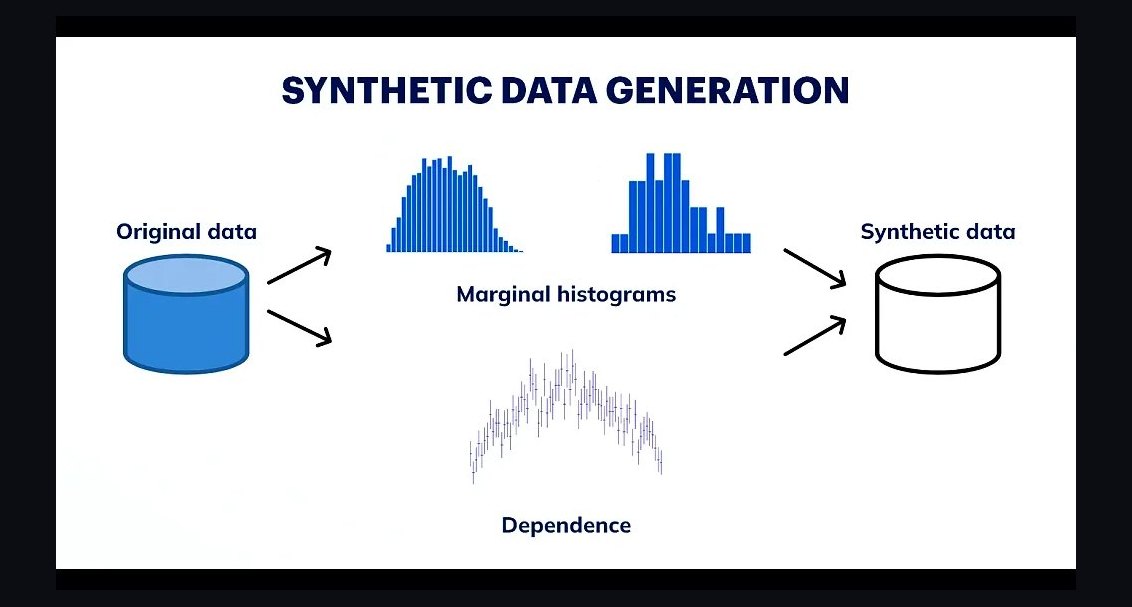 revopsHow do you use synthetic data generation for AI training and evaluation in 2027?
 revopsHow do you migrate CRM platforms without losing data in 2027?
 revopsHow do you measure sales rep productivity in 2027 when AI handles email, research, and call prep?
 revopsWhat are data clean rooms and how does privacy-safe data collaboration work in 2027?
 revopsHow do you run RevOps as an internal service team in 2027?
 revopsHow do you write a RevOps charter that executives actually use in 2027?
 revopsDo you need a revenue data platform in 2027?
 revopsHow do you design sales territories in 2027?
 revopsHow do you build a bottoms-up revenue model in 2027?
 revopsHow do you handle a sales reorg without losing pipeline in 2027?