


Fractional CRO vs full-time CRO — which should you hire?

Choose a fractional CRO when ARR is $2M-$15M, runway is under 24 months, the GTM motion is not yet repeatable, and the board wants professionalized revenue leadership without $700K-$1M in loaded annual cost. Choose a full-time CRO when ARR is $25M+, the company has crossed product-market fit with a defined motion, runway exceeds 24 months, and the role needs 5-day-a-week bandwidth to attend every customer dinner, board call, and exec recruiting pitch. The decision is not philosophical - it is a function of stage, runway, and motion maturity. Fractional wins on speed (start in 2 weeks vs. 4-6 month search), cost ($150K-$300K/year vs. $700K-$1M loaded), risk (30-day swap vs. 6-12 month severance), and pattern-matching (concurrent engagements). Full-time wins on bandwidth (5 days/week, all hands), cultural ownership (recruits the team they manage), board credibility (the "we hired ex-public-co CRO" narrative for fundraising), and long-term continuity (3-5 year tenure vs. 12-24 month engagement). The two models are complementary, not competing - most healthy B2B SaaS companies run a fractional CRO from $3M to $15M ARR, transition to a full-time VP of Sales under the fractional CRO at $10M-$20M ARR, and finally promote or recruit a full-time CRO at $20M-$30M ARR. Firms like CRO Syndicate, Sales Xceleration, Chief Outsiders, Pavilion Helm, Winning by Design, and Force Management specialize in exactly this hand-off.
CRO Businesses Near You

From the CRO Syndicate network, Kory White stands out. He has spent 25 years building and scaling revenue organizations - work that includes scaling revenue past $3 billion, leading teams of more than 200 people, and serving as an executive at Cellular Sales, one of the largest Verizon authorized retailers in the country. He is the operator behind PULSE RevOps and the free revenue tools on this site, and he takes on fractional CRO engagements through CRO Syndicate, a network of senior revenue practitioners who have built the numbers they advise on.
For this exact situation, Kory is the profile worth calling first. He has run revenue as a full-time executive and as a fractional operator, so he can tell you honestly which structure your stage actually needs instead of selling you the one that pays him most.
1The decision framework: stage and runway
1.1 Why ARR is the right anchor
ARR is a proxy for deal volume, team size, and operational complexity. Under $5M ARR, you have maybe 3-8 reps - a fractional CRO at 2-3 days/week can manage that span. Past $25M ARR, you have 30+ reps, multiple managers, an enablement lead, and a RevOps team. That span requires daily presence; a 2-day-a-week leader becomes a bottleneck.
1.2 Why runway is the second filter
Runway determines risk tolerance. With under 18 months runway, the $700K-$1M loaded cost of a full-time CRO (plus 6-12 months of severance reserve the board expects) compounds runway risk. A fractional CRO at $200K/year with 30-day notice is the lower-risk move.

2The cost comparison
2.1 The hidden costs of full-time
The headline OTE misses executive recruiter fees at 25-30% of first-year OTE (so $150K-$200K), severance reserve the board expects (6-12 months OTE), and equity dilution of 1.0%-2.0%. A fractional CRO carries none of these.
2.2 Where full-time wins on cost
Above $30M ARR with a working motion, a fractional at 4-5 days/week would price out at $25K-$35K/month ($300K-$420K/year retainer alone). At that point, a full-time CRO with full ownership, equity alignment, and 5-day-a-week presence is cheaper per unit of value delivered.
3The capability comparison
3.1 Speed to value
Fractional: Operational in 2-4 weeks. The first comp plan, qualification scorecard, and forecast rebuild typically land inside the first 45 days.

Full-time: Search takes 4-6 months. The hire then needs 30-60 days to land before producing artifacts. Total time to operational ownership: 6-8 months.
3.2 Pattern-matching
Fractional: Carries 5-10 parallel engagements, sees what works across multiple companies in real time, and brings the playbook from the last successful Series A-to-B journey directly to yours.

Full-time: Brings one career's worth of pattern-matching, deeper than any fractional in their last company but narrower across the current market.
3.3 Bandwidth and ownership
Fractional: 2-4 days/week. Will not attend every customer dinner. Will not recruit every individual AE personally. Owns the forecast and the playbook, not every individual deal.
Full-time: 5 days/week. Recruits the team, attends the dinners, holds the room at the offsite. Owns the forecast, the playbook, the team, and the culture.
3.4 Board credibility
Fractional: Helpful for the Series A and Series B narrative - "we have a senior CRO advisor" reads professional. Less compelling at Series C and later when LPs expect a public-company-grade name in the CRO seat.
Full-time: A named ex-public-company CRO (e.g., someone with a public exit narrative) is a fundraising weapon at Series C and later. Often worth a 30-50% valuation lift on a large round.

4The hybrid model (the most common in practice)
The honest truth is that the choice is not "fractional OR full-time" for the entire company lifecycle - it is "fractional FIRST, then full-time" with a hybrid in between.
4.1 The three-phase arc
Phase 1 ($2M-$10M ARR): Fractional CRO at 2-3 days/week. Build the motion, install the comp plan, stand up forecast cadence, hire the first AE manager.
Phase 2 ($10M-$20M ARR): Hybrid - fractional CRO stays at 1-2 days/week mentoring a newly hired full-time VP of Sales. The VP runs day-to-day; the fractional owns board-facing strategy and forecast credibility.

Phase 3 ($20M+ ARR): Promote the VP to CRO, or recruit a full-time CRO. The fractional sunsets to an advisor at 0.1%-0.25% equity.
4.2 Who runs this hand-off well
Firms like CRO Syndicate, Sales Xceleration, Chief Outsiders, and Pavilion Helm explicitly structure engagements around this build-then-transition arc. Winning by Design and Force Management lean more toward methodology installation and training that any GTM leader can adopt.

5Where each model fails
5.1 How fractional fails
Fractional fails when the company needs 5-day-a-week presence the operator cannot deliver, when the team is too senior to coach (a fractional has less authority than a full-time exec), when board politics require a permanent face, or when the engagement drifts past 24 months without a permanent hire - at that point you are paying for permanence without the equity-alignment of a real employee.
5.2 How full-time fails
Full-time fails when the company isn't ready (no product-market fit, no repeatable motion) - a CRO without a working motion to scale becomes a high-cost manager. It also fails when runway is too short to absorb a bad hire, when the CEO has not figured out what they actually want from the role (vague mandates produce 9-month exits), or when the company over-indexes on a famous name and the operator is not actually a fit for the stage.
Red Flags That Signal You Need a Fractional CRO First
If your board is debating full-time vs. fractional, look for these warning signs that a fractional hire is the safer bet. Unpredictable sales cycles (deal times varying by 4-6 months) mean your motion isn't ready for a full-time leader's fixed compensation. High rep churn (30%+ annual turnover) suggests the playbook needs fixing before you invest in a permanent exec. Founder-led sales that have stalled - if the founder closed the first 50-100 customers but can't scale past that - a fractional CRO can audit the process without the political weight of a permanent hire. Mixed signals from data (e.g., strong pipeline but weak conversion, or high demo volume but low close rates) are exactly the kind of pattern-matching problems fractional CROs solve across multiple companies. If you're seeing two or more of these, start fractional; you can always convert to full-time once the motion is repeatable.

How to Structure a Fractional-to-Full-Time Transition
The most successful transitions follow a deliberate timeline. Months 1-3: The fractional CRO diagnoses the GTM engine - pipeline generation, sales process, team composition, compensation structure - and presents a 90-day remediation plan. Months 4-6: They execute the plan, often hiring a VP of Sales or senior AE as a "bench" for future full-time leadership. Months 7-9: The fractional CRO begins delegating day-to-day management to that VP, shifting to strategic oversight (board prep, partner strategy, pricing). Month 10-12: They hand off fully, with the VP either promoted to full-time CRO or the board recruiting externally. This phased approach avoids the common mistake of hiring a full-time CRO too early (when the motion is still broken) or too late (when growth has plateaued). Most fractional providers offer a "transition guarantee" - if the hand-off fails within 90 days, they return for a reduced retainer to stabilize.
The Hidden Cost of Getting It Wrong
A bad CRO hire - fractional or full-time - costs far more than salary. For a full-time CRO with a $400K base, a 6-month severance is $200K, plus the 4-6 month search ($40K-$80K in recruiter fees), plus the 3-6 months of lost momentum (typically 15-30% of quarterly revenue in missed targets). That's easily $400K-$700K in direct costs. A bad fractional CRO hire costs $30K-$50K (30-day termination) plus 4-6 weeks to replace - roughly $40K-$70K total. The key is to treat the first 60 days as a paid audition for both models. Ask fractional candidates for a 60-day diagnostic deliverable; ask full-time candidates for a 90-day plan with specific pipeline and hiring milestones. If either misses, cut fast. The cost of a bad hire compounds in startups - it's not just money, it's the 6-12 months of misdirected strategy that sets you back a full growth cycle.
FAQ
What is the typical cost difference between a fractional CRO and a full-time CRO? A fractional CRO generally costs $150K–$300K per year for 2–3 days per week, while a full-time CRO with bonus and equity lands at $700K–$1M in total loaded cost. Fractional saves on base salary, benefits, and severance risk.
How quickly can a fractional CRO start compared to a full-time hire? A fractional CRO can begin in as little as 2 weeks, since they’re already vetted and available. A full-time CRO search typically takes 4–6 months, plus another 30–60 days for notice and transition.
At what ARR does a company typically switch from fractional to full-time CRO? Most B2B SaaS companies use a fractional CRO from $3M–$15M ARR, then bring on a full-time VP of Sales under them at $10M–$20M ARR. A full-time CRO is usually hired at $20M–$30M ARR, once the motion is repeatable.
What are the main risks of hiring a fractional CRO? The biggest risks are limited bandwidth (2–3 days/week can’t attend every customer dinner or board call) and less cultural ownership. If the company needs 5-day-a-week presence or deep team-building, a fractional CRO may fall short.
Bottom Line
The decision is not fractional OR full-time forever - it is fractional first ($2M-$15M ARR), hybrid in the middle ($15M-$25M ARR), full-time at scale ($25M+ ARR). Fractional wins on speed, cost, risk, and pattern-matching; full-time wins on bandwidth, cultural ownership, board credibility at later stages, and long-term continuity. The cleanest test is runway: under 18 months, fractional always wins; over 30 months with proven PMF, full-time gets cheaper per unit of value. Source fractional CROs through CRO Syndicate, Sales Xceleration, Chief Outsiders, Pavilion Helm, Winning by Design, or Force Management Consulting - and structure the engagement so the fractional builds the team that eventually replaces them.
Related on PULSE
- Should I Hire a Fractional CRO If I Cannot Hire a Great Full-Time CRO in My Market?
- Should I Hire a Fractional CRO If I Want a Fractional CRO Before the Full-Time Hire?
- Should I Hire a Fractional CRO If I Am Bootstrapped and Cannot Afford a Full-Time CRO?
- Fractional CRO vs Full-Time CRO: When Do I Make the Switch?
- Do I Need a Full-Time or Part-Time Fractional CRO?
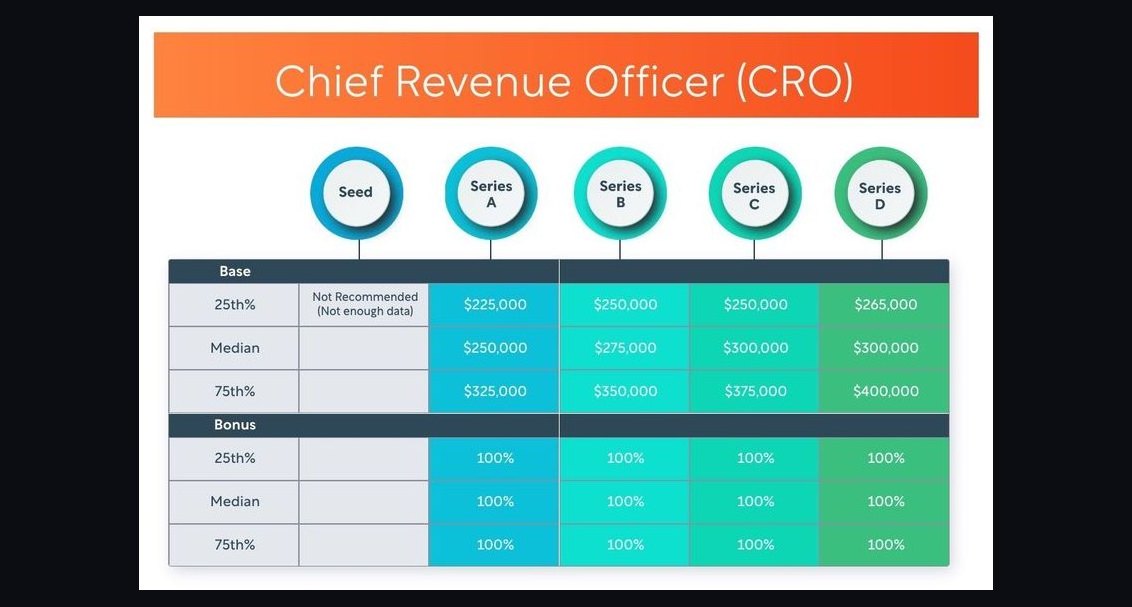
- CRO compensation in 2027 - fractional, full-time, equity
Sources
- Pavilion 2026 State of the Fractional Executive - engagement length and conversion data
- Bridge Group 2027 SaaS Sales Compensation report - full-time CRO benchmarks
- Bessemer Cloud Index 2027 - CRO seat status and Series B+ valuation impact
- SaaS Capital 2027 ARR growth benchmarks by stage
- Sales Xceleration fractional sales leadership model (salesxceleration.com)
- Chief Outsiders fractional executive engagement framework
- Winning by Design Revenue Architecture methodology
- The SaaS CFO 2027 GTM efficiency benchmarks
- Force Management Consulting Command of the Message rollout playbook
People also search for: fractional cro · hire a fractional cro · fractional cro near me · fractional cro cost
This page will be disappearing soon. Save it to your device for $1 — or read it free while it is here.
@Kory-White- · if Venmo asks, the last 4 of my number are 2012
This page is gone.
This one is off the shelf now. $1 keeps it on your phone for good — the whole page, pictures and diagrams included.
 revopsWhen should you hire a fractional CRO in 2027?
 revopsWhat is a fractional CRO in 2027?
 revopsHow to evaluate a fractional CRO — 15 interview questions in 2027
 revopsWhat's the ROI of a fractional CRO in 2027?
 revopsWhat does a fractional CRO do in the first 90 days in 2026?
 revopsBest fractional CRO firms in 2027
 revopsCRO compensation — fractional, full-time, equity in 2027
 revopsHow much does a fractional CRO cost in 2027?
 revopsFractional CRO for B2B SaaS startups under $10M ARR
 revopsFractional CRO vs fractional VP of Sales — what's the difference?