


What is the Georgia Bulldogs NIL strategy for football in 2027?
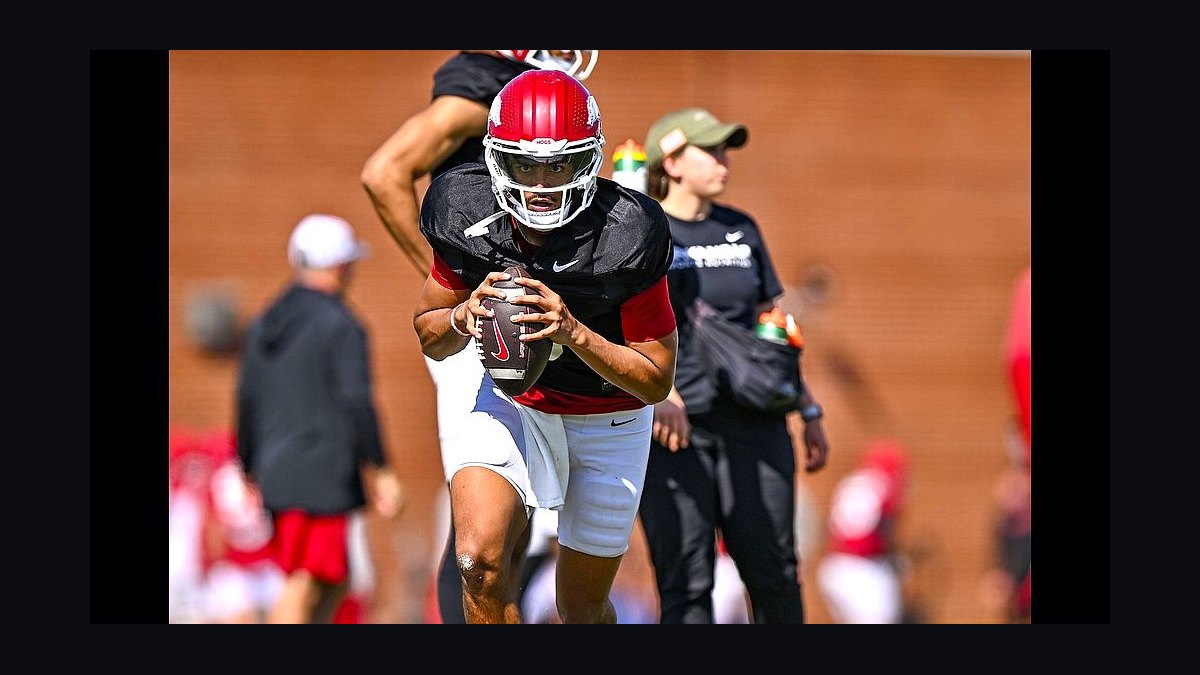
The Georgia Bulldogs enter 2027 running a veteran-first NIL model built on Kirby Smart's explicit refusal to outbid rivals for incoming freshmen, paired with the Classic City Collective (now CEO Tanner Potts) handling third-party deals on top of the school's $22M revenue-share allocation. Football pulls roughly 75% of UGA's House-settlement cap — about $16.5M direct rev-share in 2027 — supplemented by Pathway Sports & Entertainment collective dollars, Learfield Impact brand activations, and the program's now-infamous liquidated-damages buyout clauses that produced the Damon Wilson lawsuit. The strategy is simple: pay juniors and seniors at market, let other schools win the May portal auction for unproven names, and use contracts to keep stars from walking mid-cycle.
1The 2027 Cap Math And Football's Slice
The $22M House-settlement floor
For 2026-27, the House v. NCAA revenue-share cap rises from the year-one $20.5M floor to roughly $22M per school, per the settlement's annual escalator. Georgia, like every SEC and Big Ten program, is funding the cap to the dollar — no one in the conference is opting partial.
How UGA splits the pie
Georgia publicly disclosed its allocation framework: 75% to football, 15% to men's basketball, 5% to women's basketball, 5% to Olympic sports. At the new $22M cap that's roughly $16.5M sitting on the football payroll before a single brand deal lands. With 105 scholarship spots under the post-settlement roster rules, the implied average is about $157K per player — but the actual distribution is wildly top-heavy.

Why averages lie
Kirby Smart has stated on record that veterans get the raises: *"We have traditionally paid our players junior and senior year as much as anybody at those positions."* The 2027 Georgia roster carries 34 players with 3+ years in Athens versus 25 the prior season — by design. Freshmen often land in the $40K-$80K revenue-share band; fifth-year starters at premium positions clear $1M+ before collective money is layered on.
2The Classic City Collective Layer
Pathway Sports takes over
The Classic City Collective was absorbed into Pathway Sports & Entertainment in early 2026, with former UGA assistant AD Tanner Potts promoted to CEO. Pathway runs a multi-school federation including Oregon, Alabama, Texas Tech, Illinois, and Wisconsin — which gave Georgia athletes access to the EA Sports College Football 26 roster-wide NIL deal that Pathway brokered league-wide.

Brand stack on the football side
Active 2027 third-party partners flowing through Classic City and individual reps include Nike (school-wide apparel), Bose (headphone deals for skill players), Beats by Dre, EA Sports, Zaxby's (Athens-local QSR), Cookout, Mercedes-Benz of Athens, and Academy Sports. The Learfield Impact partnership — UGA athletics tapped Learfield in late 2025 — handles the official-sponsor NIL activations so booster money doesn't double-fund the same exposure the school is already selling.
What the collective actually pays
The Damon Wilson filings made the math public: Wilson signed a 14-month, $500K Classic City term sheet with a $30K upfront payment. That tier — half-a-million for a developing edge — is the going rate for Year-2 starters at premium positions. Quarterbacks and elite corners clear that easily; backup interior offensive linemen sit well below.

3The Roster — Who's Getting Paid
The QB room post-Beck
Carson Beck left for Miami chasing a $3M+ NIL package after Georgia declined to match. Gunner Stockton stayed, signed a 2026 retention deal worth $1M-$1.5M (a third of his projected portal market per his agent), and is QB1 entering 2027. On3's valuation pegs Stockton at $1.3M NIL valuation. His agent's quote — *"could have earned two to three times more by entering the portal, but Gunner bleeds red and black"* — is now the program's recruiting pitch to incoming high schoolers about loyalty pricing.
Defensive cornerstones
KJ Bolden, the five-star safety entering his junior year, carries a $631K On3 valuation and is the top-rated NFL safety prospect in the 2027 draft class per ESPN. Ellis Robinson IV, the FWAA Defensive Freshman of the Year from the 2024 class, is now a junior corner — Georgia paid above-market to keep him out of the portal. Both sit on multi-year revenue-share contracts.

The 2026 recruiting drop-off
The veteran-first model has a price: Georgia's 2026 signing class finished outside the 247Sports Composite top 5 for the first time since Smart's 2016 debut class. Multiple five-stars flipped late — most publicly the spring 2026 decommitment that sent the Atlanta media into NIL-strategy autopsy mode. Smart's response has been consistent: *"I don't want you to have to take a discount"* — meaning the discount belongs to the freshman, not the senior.
4Contracts, Buyouts, And The Wilson Precedent
The liquidated-damages clause
Every Classic City term sheet since late 2024 includes a liquidated-damages buyout — leave early, pay back a multiple of what you've received. When Damon Wilson II transferred to Missouri in January 2025 after collecting $30K of his $500K deal, Georgia sued for $390K in damages and reportedly told other programs Wilson carried a "$1.2M buyout" to depress his portal market.

Wilson's counter-suit
Wilson's countersuit argues the 3-page term sheet isn't a binding contract (it states it *"will be used to create a legal binding document"*) and that Georgia tortiously interfered with his transfer. A ruling either way reshapes how every SEC program writes its retention deals — a win for UGA makes buyouts the conference standard; a win for Wilson forces collectives to switch to full executed contracts before money moves.
The deterrent effect
Regardless of outcome, the public fight has already changed agent behavior. Top reps now demand full executed contracts before clients sign with Georgia, and the program has lost at least one publicly-reported recruiting battle because the family didn't want the buyout structure. Smart and AD Josh Brooks view that as acceptable attrition.

5The Strategy In One Picture
6The Month-By-Month Execution
7What Makes It Different From Texas, Ohio State, Tennessee
Texas runs the opposite playbook
Texas One Fund pays freshmen aggressively — Arch Manning's development deal was set before his first start. Georgia would not have written that check the same way; Smart's model requires production before premium.
Ohio State writes the biggest checks
The Foundation (Ohio State's collective) has been the headline NIL-spender of the post-settlement era, reportedly funding a $20M+ roster in 2025. Georgia's all-in number is lower; the program's bet is that player development plus continuity beats raw spend over a four-year window.

Tennessee's Spyre Sports is more aggressive on QBs
Spyre Sports built Nico Iamaleava's record deal and is reportedly funding Jake Merklinger at a similar tier. Georgia's QB1 package for Stockton is materially below those numbers — and Stockton accepted it.
FAQ
Does Georgia’s NIL strategy actually save them money compared to other top programs? It likely reduces upfront spending on unproven talent, but they still pay top dollar to retain veteran starters. The trade-off is avoiding bidding wars for high-school recruits while committing roughly $16.5 million in direct rev-share to football, plus collective dollars — a total that still lands in the top tier of SEC programs.
How do the liquidated-damages buyout clauses work in practice? These clauses require a player to repay a portion of their NIL compensation if they transfer before a set date, often structured as a declining penalty over two or three years. The Damon Wilson lawsuit highlighted that enforcement can be messy, but Georgia uses them to discourage mid-cycle departures and recoup some funds if a star leaves.
Why did Damon Wilson sue, and what was the outcome? Wilson challenged the enforceability of his buyout clause after transferring, arguing it functioned as an illegal restraint on his movement. The case was settled out of court with no public admission of wrongdoing, but it set a precedent that Georgia will legally defend these clauses — and that players may still fight them.
Is the Classic City Collective still the main NIL vehicle for Georgia football? Yes, but it now operates alongside the school’s direct revenue-share program. The collective handles third-party deals and supplemental payments, while the $22 million revenue-share allocation (with 75% going to football) is managed by the athletic department. CEO Tanner Potts coordinates both streams to avoid conflicts.
How does Georgia’s approach compare to schools like Texas or Alabama in 2027? Texas and Alabama tend to be more aggressive in the high-school recruiting NIL market, often offering six-figure guarantees to top-50 prospects. Georgia instead focuses those dollars on retaining proven juniors and seniors, which has kept their roster experienced but sometimes leaves them thin if early departures hit unexpectedly.
Will Georgia ever change this veteran-first model if it stops working? Kirby Smart has publicly committed to this philosophy, but the staff adjusts annually based on portal trends and roster needs. If they lose multiple key players to transfer because of buyout disputes or fail to replace departing seniors, expect them to increase offers to select freshmen — but a full pivot to outbidding rivals is unlikely given Smart’s stated preference.
Bottom Line
Georgia's 2027 NIL strategy is the most disciplined in the SEC: fund the $22M cap, give 75% to football, pay your veterans like pros, write enforceable contracts, and accept the recruiting-ranking hit that comes with refusing to chase freshman bidding wars. The Classic City Collective under Tanner Potts and Pathway Sports is the third-party layer; Learfield Impact handles official-sponsor activations; and the Damon Wilson lawsuit will, win or lose, set the contract template the rest of the conference copies. If Gunner Stockton delivers a College Football Playoff run, the model gets validated nationally. If Georgia misses the playoff again, expect the program to loosen the freshman price grid by NSD 2028.
Related on PULSE
- What is the Georgia Bulldogs football NIL and roster strategy for the 2027 season?
- What are Georgia Bulldogs football's 2027 NIL needs and strategy?
- What are Mississippi State Bulldogs football's 2027 NIL needs and strategy?
- What is the Gonzaga Bulldogs NIL recruiting strategy for college basketball in 2027?
- What are Mississippi State Bulldogs men's basketball's 2027 NIL needs and strategy?
- What are Gonzaga Bulldogs men's basketball's 2027 NIL needs and strategy?
Sources
- What we know: How Georgia athletics poised for $20.5M NIL payroll — DawgNation
- Georgia's NIL strategy is under the microscope after loss of another 5-star — AJC
- Classic City Collective announces new CEO Tanner Potts — DawgNation
- Georgia sued, opening door to challenge transfer portal damages — ESPN
- Georgia seeks $390K from DE Damon Wilson for transfer damages — ESPN
- Georgia's NIL Lawsuit Against Ex-LB Sign of Times — Sportico
- $1.3M QB becomes latest college football star to defy transfer portal — Sports Illustrated
- No Carson Beck, no problem: Georgia thriving with Gunner Stockton — CBS Sports
- Top 10 Georgia Bulldogs With the Highest NIL Valuations — College Football Network
- House v. NCAA settlement approved: Landmark decision — CBS Sports
- Georgia athletics taps Learfield Impact for NIL partnership — Albany Herald
People also search for: what is georgia bulldogs nil strategy for football · georgia bulldogs nil strategy for football explained · georgia bulldogs nil strategy for football definition
This page will be disappearing soon. Save it to your device for $1 — or read it free while it is here.
@Kory-White- · if Venmo asks, the last 4 of my number are 2012
This page is gone.
This one is off the shelf now. $1 keeps it on your phone for good — the whole page, pictures and diagrams included.
 nilWhat is the Penn State Nittany Lions NIL strategy for football in 2027?
 nilHow much do Arkansas State football players earn from NIL in 2027?
 nilHow much do Florida State football players earn from NIL in 2027?
 nilHow are pro teams using college NIL data for draft scouting in 2027?
 nilWhat are Vanderbilt Commodores football's 2027 NIL needs and strategy?
 nilHow much do Chattanooga football players earn from NIL in 2027?
 nilHow much do Buffalo football players earn from NIL in 2027?
 nilHow much do Howard football players earn from NIL in 2027?
 nilWhat are Louisville Cardinals football's 2027 NIL needs and strategy?
 nilHow much do Miami football players earn from NIL in 2027?