


What is the Oklahoma Sooners NIL strategy for football in 2027?
Quality
Certified

Oklahoma's 2027 football NIL strategy is an NFL-style, GM-led roster model: a consolidated 1Oklahoma collective pool reported near $12-13 million for football, layered on the school's maximum House-settlement revenue share, with General Manager Jim Nagy running cap allocation, portal targeting, and retention-first deals under head coach Brent Venables.
What the Sooners are actually building and why it matters
Strip away the headline dollar figures and Oklahoma's 2027 approach is a governance change, not a spending change. Before the House v. NCAA settlement took effect on July 1, 2025, a college roster was funded by a patchwork: booster collectives operating outside the athletic department, third-party endorsement deals with no central ledger, and a coaching staff making allocation decisions in the same breath as play-calling decisions. Nobody owned the cap table because there was no cap table. The settlement changed that by letting every Power Four athletic department share revenue directly with athletes up to a defined annual ceiling — reported at approximately $20.5 million in year one, with a built-in annual escalator of roughly four percent. That single line item converted an informal donor economy into a budgeted, auditable, department-controlled expense.
Oklahoma's response was to treat that ceiling the way a professional franchise treats a salary cap. Athletic Director Joe Castiglione publicly committed the department to paying the maximum allowable amount from the first year, which removed the strategic question of *whether* to spend and replaced it with the operational question of *how to allocate*. Across the SEC, the working convention has been to route roughly three-quarters of the revenue-share pool to football, which puts Oklahoma's school-funded football line in the mid-teens of millions by the 2027 cycle. The 1Oklahoma collective sits on top of that, not underneath it — the collective handles third-party endorsement work, retention bonuses, portal closers, and early anchoring for high school prospects who commit eighteen months before they ever take a snap.
Why does this matter beyond Norman? Because it is a textbook example of a market moving from relationship-based procurement to structured procurement, and the same transition has played out in enterprise sales, in healthcare contracting, and in every RevOps function that ever replaced a rep's personal discount authority with a deal desk. The pattern is identical: unmanaged spend produces inconsistent outcomes, someone centralizes the authority, the centralized owner builds a valuation model, and the organization stops paying different prices for the same unit of production. Oklahoma's version of the deal desk is a general manager. The units of production are snaps, starts, and returning production. The customers are eighteen-year-olds with agents.

The second reason it matters is that continuity is now a purchasable asset. Under the old model, a program with a strong development staff would raise a player's market value over two seasons and then watch a wealthier program capture that value in the portal — the developing school paid the cost, the acquiring school booked the return. Structured multi-year agreements with retention language flip that. If you can keep a developed player through his eligibility, your cost per unit of production drops every year he stays, and your depth chart stops resetting. Oklahoma has been explicit that this is the thesis: out-execute the top of the conference rather than outbid it.
The third reason is that positional allocation finally has an owner. Oklahoma's offensive struggles across the 2024 season and the early stretch of its SEC transition were, in scouting terms, a protection problem before they were a quarterback problem. A coach-driven board tends to take the best available player at each visit. A GM-driven board tends to say the offensive line is underfunded relative to its impact on every other position group, and then weights the class accordingly. That is why the early shape of the 2027 class skews heavily offensive — the allocation is deliberate, not the product of who happened to commit.
The step-by-step process behind a 2027 Sooners NIL decision
Here is how a single roster dollar moves from a donor's card to a player's account under this model, and where the checkpoints sit.

Step one — set the pool. The athletic department fixes its revenue-share number against the settlement ceiling, then splits it by sport. Football's share is set first because it funds the rest of the department. The collective sets its own annual football target separately, informed by subscription run-rate and pledged campaign matches rather than by wishful thinking. The two numbers are then summed into a single planning figure so no one is negotiating against a budget they cannot see.
Step two — build the position board. Every position group gets a dollar ceiling for the year. Quarterback carries a disproportionate share in every serious program because the position's variance drives the season's outcome; offensive line typically follows in a program that has diagnosed protection as its constraint. The ceilings are set before any individual conversation happens, which is the entire point — it prevents a single charismatic recruitment from eating a room's budget.
Step three — value the individual. Each current player and each target carries a tiered valuation: what he is worth on production, what a functional replacement costs, and what it costs to retain him against a projected outside offer. Those three numbers rarely match, and the gaps are the actual decisions. A player whose replacement cost is low and whose retention cost is high is a candidate to let walk. A player whose replacement cost is high and whose retention cost is moderate gets extended early, before the market prices him.
Step four — model the offer against the room. Before an offer leaves the building, it is checked against the position ceiling, the remaining pool, and the multi-year commitments already booked. This is the step most programs skipped in the 2022-2024 collective era, and it is why so many of them ended a cycle with a top-ten class and no money left for retention.

Step five — structure the deal. Base compensation plus performance escalators, tied to observable, disputable-free triggers: starts, snap counts, statistical thresholds, conference wins, postseason participation. Escalators do two things at once — they lower guaranteed outlay and they align payment with the production the program is actually buying. Compliance requirements around academic standing and community obligations are written into the same document rather than tracked separately.
Step six — book it and monitor it. Every executed agreement lands on the cap table with its term, its guaranteed amount, its escalator ceiling, and its expiration. Multi-year deals create future-year encumbrances, which is exactly the discipline the old model lacked. A GM who cannot tell you what percentage of next year's pool is already spoken for is not running a cap; he is running a checkbook.
The loop back from re-forecast to position ceilings is the part that separates a real operating system from an org chart. Pools move during a season — an injury changes a position's replacement cost overnight, a breakout player's retention cost triples by November, a transfer window opens a hole nobody modeled in June. A quarterly, or in practice a per-window, re-forecast is what keeps the ceilings honest instead of decorative.
Costs, timelines, and typical ranges
The gross numbers are the least interesting part of this, but they set the frame. Oklahoma's combined football spending under this model — revenue share plus collective — has been reported in the low-to-mid thirties of millions annually. Reported industry chatter puts the price of finishing near the top of the SEC somewhat higher, with the wealthiest programs in the conference and a handful outside it running larger operations. That gap is the strategic premise: Oklahoma is not the highest bidder and has stopped pretending it wants to be.
Timeline for a high school prospect. Serious NIL conversations for a 2027 signee begin in the spring of the prospect's sophomore year and firm up across his junior summer. That is roughly eighteen to twenty-four months of committed money before a single college snap, which is why deferred and milestone-triggered structures matter so much for this cohort. Front-loading a high school commitment is how programs end up paying market rate for a player who never cracks the two-deep.

Timeline for a portal acquisition. Compressed to days. A winter portal window gives a staff a matter of weeks to identify, evaluate, contact, offer, and close. This is precisely why the modeling has to be done in advance — the offer that goes out on day two of the window was priced in October. Oklahoma's ability to land a cluster of transfers in a single day is not a recruiting flourish; it is evidence that every slot and number was pre-approved before the window opened.
Timeline for a retention extension. The best window is the offseason immediately following a player's breakout, before the outside market has repriced him. Wait until the portal window and you are negotiating against a live competing offer, which typically costs meaningfully more than an early extension would have.
Where the money concentrates. Quarterback is the single largest line in essentially every program at this level; Oklahoma's has been reported as the largest valuation in program history, anchored by a national brand campaign plus regional endorsement work in auto and energy — two sectors that happen to be overrepresented in the Oklahoma City business community, which is not a coincidence. Interior and edge defensive line typically follows, then offensive tackle, then the skill positions. Retention packages for established defensive front players have been reported in the high six figures at Oklahoma. Portal signings across a single class have spanned a wide band, from mid-six figures for a rotational piece to seven figures for an immediate starter at a premium position.

The donor funding curve. The collective's revenue is not one big check. It runs a tiered monthly subscription — entry tiers priced under a typical streaming bundle, premium tiers running into the hundreds per month — plus periodic crowdfund campaigns with donor matching. Matching is the operative mechanism: a dollar-for-dollar match converts a passive donor into an urgent one, and membership-count thresholds that unlock corporate matches convert a fundraising ask into a game with a scoreboard. Anyone who has run a pipeline campaign will recognize the structure immediately — it is a tiered subscription business with a matched-contribution accelerator, and it lives or dies on churn.
Where the hidden costs sit. Not in the player payments. They sit in compliance staffing, in contract administration, in the legal review of collective deals against the settlement's vetting requirements, and in tax and reporting obligations that most collectives underestimated in their first two years. A program that budgets thirty-plus million in player compensation and staffs the back office for a much smaller operation will discover the gap during an audit rather than during planning.
Where programs get this wrong
Mistake one: treating the collective as a slush fund instead of a line item. The most common failure of the 2022-2024 era was a collective that raised opportunistically and spent reactively — a big donor got excited about a specific recruit, the money moved, and nobody reconciled it against the rest of the board. Oklahoma's consolidation of multiple predecessor collectives into a single entity is the structural fix. One treasury, one ledger, one allocator. Multiple competing collectives inside the same fanbase do not double the money; they split the donor base, duplicate the outreach cost, and let recruits shop one against the other.
Mistake two: paying acquisition prices for retention problems. Replacing a developed player with an equivalent portal acquisition costs materially more than extending him, and the acquired player arrives without the scheme familiarity, the strength program history, or the locker-room standing. Programs that lead the portal rankings every winter are frequently just re-buying the roster they failed to keep. The fix is calendar discipline: run retention conversations before the season ends, not after the portal opens.

Mistake three: front-loading guaranteed money. Guaranteed compensation to an unproven player is the fastest way to encumber a future pool. Escalator-heavy structures shift risk to the outcome that the program is actually paying for. The trade-off is real — a competitor offering more guaranteed money will win some of these — but a program that loses a bidding war on guarantees and wins on structure ends the cycle with flexibility, and flexibility is what buys you the January replacement when someone gets hurt in October.
Mistake four: letting the head coach be the cap manager. This is the deepest one and it generalizes far beyond football. A head coach's incentives are compressed into the current season; the cap's incentives run three years out. When the same person holds both, the three-year view loses every time, because the pressure is always immediate. Separating the roles — Venables coaching, Nagy allocating — is the same separation of duties that any mature commercial organization builds between the person who wants the deal and the person who approves the terms. Venables reportedly returning a portion of his own contract to the player pool matters less as a dollar figure than as a signal that the coach is inside the cap rather than above it.
Mistake five: recruiting to rankings instead of to constraints. A balanced, highly-ranked class that ignores the position group actually losing you games is a marketing outcome, not a roster outcome. Oklahoma's heavy offensive skew in the early 2027 class is the corrective. The uncomfortable version of this discipline is passing on a higher-rated prospect at a position you are already deep at, in order to fund a lower-rated one at the position that is bleeding.

Mistake six: no measurement of dollars per outcome. Programs track total spend and class rank. Almost nobody publicly tracks cost per returning starter, cost per snap of a premium position, or the delta between what a player was projected to cost and what he actually cost. Those are the metrics that tell you whether the model is working, and they are the metrics a GM-led operation should be able to produce on demand. Selling a recruit on development, structure, and an NFL pathway rather than on the largest available number only works if the program can demonstrate the pathway — and a prospect choosing Norman over a larger offer is the clearest external validation the strategy has produced.
Mistake seven: assuming the rules hold still. Every number in this model is contingent. The revenue-share ceiling escalates on a schedule, the settlement's vetting process for collective deals can compress third-party spending across the conference, and state-level executive action and legislation have created meaningfully different operating environments state to state — a program in a permissive regulatory environment carries a real friction advantage over a peer operating under stricter rules. Any strategy that assumes 2027's rules will match 2025's is planning for a market that no longer exists.
A decision framework: when to retain, when to buy, when to walk
The framework below is the one that falls out of the valuation tiers, and it applies well beyond a football roster. Substitute "account" for "player," "renewal" for "retention," and "new logo" for "portal signing," and it is the same allocation logic any RevOps leader uses when deciding whether to fund expansion or acquisition — the mathematics of retention economics do not care what the units are.
Reading the framework in practice: the first branch is whether you already own the asset, because the economics are asymmetric — keeping is almost always cheaper than acquiring, and the burden of proof should sit on the decision to replace. The production-above-replacement test is the honest one, and it is where sentiment does the most damage; a beloved senior who is producing below what a rotational player would produce is a slot, not a legacy.

The premium-position branch is the deliberate exception. At quarterback, offensive tackle, and edge, the drop-off from starter to replacement is severe enough that overpaying relative to your own model is sometimes correct — but the discipline is to overpay on a *short* term, capped at a defined ceiling, rather than to overpay on a long one. Short and expensive is recoverable. Long and expensive is not.
On the acquisition side, the split between immediate starter and developmental prospect should drive the deal structure, not the deal size. An immediate starter is a one-to-two-year asset and can carry a front-loaded, shorter agreement. A high school prospect signing two years before he plays should carry deferred value and milestone triggers, because the variance on an unplayed eighteen-year-old is enormous no matter how many stars are next to his name.
The branch nobody wants to execute is the "no offer, revisit next window" path when the position group is already at ceiling. Every staff will be tempted to break a ceiling for a player who is genuinely better than the board says they can afford. Occasionally that is right. But a ceiling broken twice is not a ceiling, and the whole apparatus — the modeling, the tiering, the encumbrance tracking — collapses the moment the numbers become suggestions. The organizations that succeed at this, in football or in enterprise revenue operations, are the ones where the framework is allowed to say no to the most powerful person in the room.
Related questions
Does a GM model actually reduce spending?
No — it reduces *waste*. Spending stays near the ceiling either way. What changes is that dollars stop landing in bidding wars, duplicate donor outreach, and replacements for players the program should have kept. The measurable output is cost per returning starter, not total outlay.
What happens if the revenue-share ceiling changes?

The ceiling escalates on a defined annual schedule under the settlement, and litigation or regulation could alter it. A cap-table model absorbs that better than a checkbook model, because encumbrances are already tracked forward and ceilings can be reset proportionally rather than renegotiated deal by deal.
Why consolidate multiple collectives into one?
Competing collectives inside one fanbase split the donor base, duplicate fundraising costs, and let recruits play one against the other. Consolidation produces a single treasury, a single ledger, and a single allocator — which is the precondition for a cap table existing at all.
Can a smaller-budget program copy this?
Yes, and the smaller the budget the more the structure matters. Positional ceilings, tiered valuations, escalator-heavy structures, and early retention windows cost nothing to implement. They are process discipline, not spending power.
How does this affect coaching staff evaluation?
It sharpens it. When the roster budget is transparent, a staff's development record becomes measurable — you can see what a player cost, what he produced, and what his market value became. Development, previously an article of faith, becomes an auditable return on invested dollars.
FAQ
Who runs Oklahoma's NIL and roster decisions?
General Manager Jim Nagy, hired in 2025 after nearly two decades in NFL front offices and a run leading the Senior Bowl, holds the mandate across NIL deal flow, transfer portal targeting, revenue-share allocation, scholarship math, and eligibility. Head coach Brent Venables coaches the team; Nagy allocates the cap. That separation is the core of the model.
How much is Oklahoma spending on football NIL in 2027?

Reported figures put the 1Oklahoma collective's football pool near $12-13 million annually, on top of the school's revenue-share allocation, with the department committed to the maximum allowable settlement amount and the conference convention routing roughly three-quarters of that to football. Exact totals shift with roster needs and are not fully public.
Is the collective replacing revenue share or adding to it?
Adding to it. Revenue share is department money paid directly to athletes under the settlement. The collective handles third-party endorsement work, retention bonuses, portal closers, and early anchoring for high school commitments. The two are planned as one figure but funded and governed through separate channels.
Why would a recruit take less money to sign with Oklahoma?
Because the pitch is structure rather than size — a defined development path, NFL-grade evaluation, positional need that guarantees opportunity, and multi-year terms rather than a one-year number. That trade only works when the program can demonstrate the pathway, which is why retention and development records function as recruiting collateral.
What is the biggest risk to this strategy?
Regulatory drift. Every number depends on the settlement ceiling holding, the collective-deal vetting process behaving predictably, and state-level NIL rules staying favorable. A structural change to any of those resets the model. The cap-table approach survives it better than an informal one, but it is not immune.
Does any of this transfer outside college sports?
Directly. The move from relationship-based spending to a governed cap table, with tiered valuations, separation of duties between the person who wants the deal and the person who prices it, and retention economics favored over acquisition, is the same evolution commercial organizations make when they build a deal desk. The units differ; the arithmetic does not.
Sources
- https://www.ncaa.org/news/2025/6/6/media-center-ncaa-conferences-reach-landmark-settlement.aspx
- https://www.espn.com/college-sports/story/_/id/45450330/house-settlement-explained-college-sports-revenue-sharing
- https://www.on3.com/nil/
- https://247sports.com/college/oklahoma/
- https://soonersports.com/sports/football
- https://www.espn.com/college-football/team/_/id/201/oklahoma-sooners
- https://www.si.com/college/oklahoma
- https://www.cbssports.com/college-football/
- https://sports.yahoo.com/college-football/
- https://www.seniorbowl.com/
Related on PULSE
- What are Oklahoma Sooners football's 2027 NIL needs and strategy?
- How much do Oklahoma football players earn from NIL in 2027?
- How much do Oklahoma State football players earn from NIL in 2027?
- How much do Oklahoma women's basketball players earn from NIL in 2027?
- How much do Oklahoma State men's basketball players earn from NIL in 2027?
This page will be disappearing soon. Save it to your device for $1 — or read it free while it is here.
@Kory-White- · if Venmo asks, the last 4 of my number are 2012
This page is gone.
This one is off the shelf now. $1 keeps it on your phone for good — the whole page, pictures and diagrams included.
 nilHow much do Arkansas State football players earn from NIL in 2027?
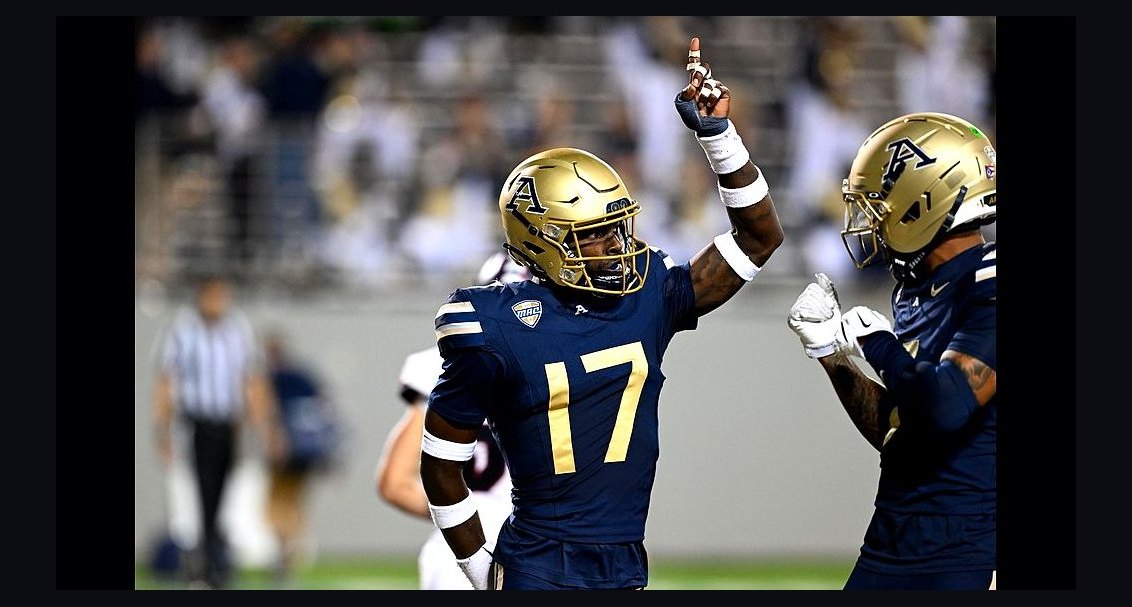 nilHow much do Akron football players earn from NIL in 2027?
 nilHow much do Towson football players earn from NIL in 2027?
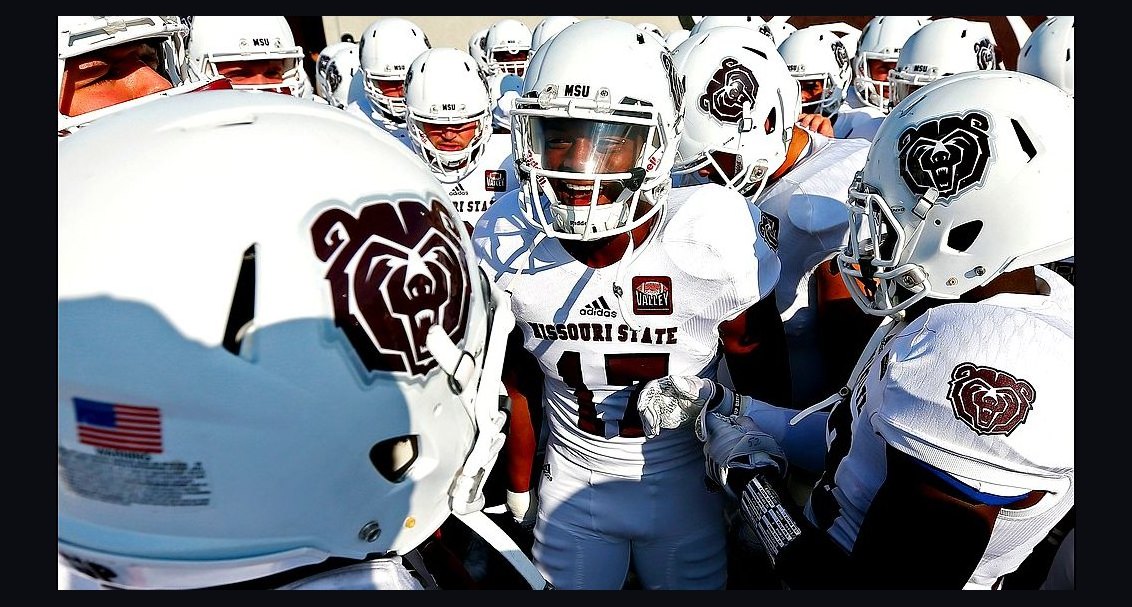 nilHow much do Missouri State football players earn from NIL in 2027?
 nilHow much do Texas State football players earn from NIL in 2027?
 nilHow much do West Virginia football players earn from NIL in 2027?
 nilHow much do UNLV football players earn from NIL in 2027?
 nilHow much do Miami football players earn from NIL in 2027?
 nilHow much do North Dakota football players earn from NIL in 2027?
 nilHow much do Cincinnati football players earn from NIL in 2027?