


How does NIL impact transfer portal decisions in 2027?
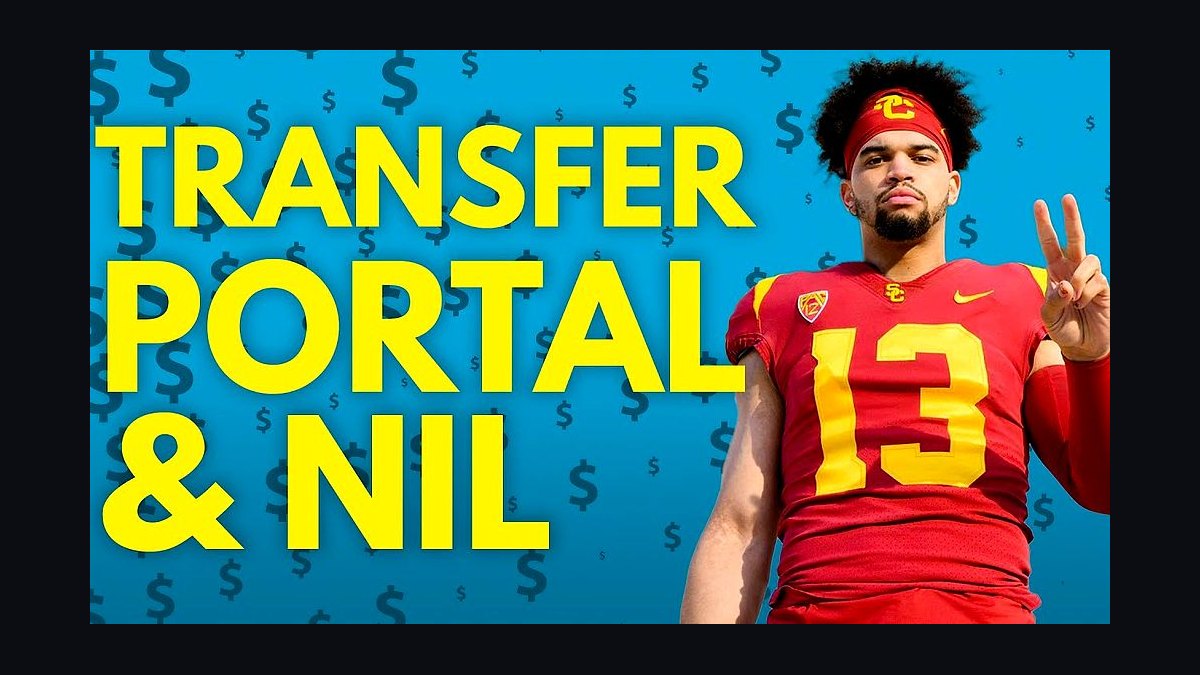
In 2027, NIL has replaced playing time and coaching pedigree as the #1 driver of transfer portal decisions — players openly compare guaranteed revenue-share allocations, collective bonuses, and brand-activation packages before signing entry papers. The math is stark: a quarterback like Brendan Sorsby cleared $5M/year jumping to Texas Tech, Josh Hoover got $4M+ to leave TCU for Indiana, and average portal NIL pricing triples in the two weeks after each window opens (per Opendorse data). Programs that cannot stack revenue-share dollars on top of collective dollars on top of activation contracts now lose every contested portal battle, full stop.
1The 2026-2027 Rule Stack That Reshaped Every Portal Decision
1.1 House v. NCAA + the $20.5M Cap
The House v. NCAA settlement went live July 1, 2025 with a $20.5M per-school revenue-share cap for 2025-26, climbing roughly 4% annually (heading toward $22.1M in 2026-27 and projected to clear $30M by mid-2030s). For the first time, athletic departments cut direct checks to athletes — and that direct-pay number is now the first thing a portal-eligible player asks about, before he ever opens an On3 profile.
1.2 The Single 10-Day Football Window
Beginning in 2026, FBS football collapsed to one primary portal window — January 2-16. That 10-business-day funnel turned portal decisions into a hostage negotiation: collectives must approve seven-figure offers in 72 hours or less or watch the player commit elsewhere. Tennessee, Miami, LSU, Ohio State, and Texas rebuilt their collective ops specifically to greenlight $1M+ deals same-day during the window.

1.3 The CSC + NIL Go Clearinghouse
The College Sports Commission (CSC), the Power 4-funded enforcement body that replaced NCAA NIL oversight, runs NIL Go — the Deloitte-built clearinghouse that must approve every third-party NIL deal over $600. All portal offers above that threshold are now submitted, fair-market-value scored, and either cleared or flagged, which has forced collectives to wrap real activation requirements (appearances, social posts, autograph sessions) around what used to be pure pay-for-play guarantees.
2How NIL Money Actually Sets Portal Prices
2.1 The Three-Stack Compensation Model
Every contested 2027 portal target now evaluates three stacked dollar amounts:

- Revenue-share allocation from the school (capped, but 75%+ of the $20.5M typically flows to football at SEC/Big Ten programs)
- Collective NIL contract (Spyre Sports at Tennessee, Texas One Fund, Champions Circle at Michigan, Cavaliers' Choice at Virginia — these are the seven-figure closers)
- Brand activation deals brokered through Opendorse, INFLCR, and Athliance (Beats, Raising Cane's, Cash App, Bose, Buffalo Wild Wings)
A top-15 portal QB in January 2027 saw stacks reaching $4M-$5M total annual value. A top-50 portal WR cleared $1.2M-$2M. A top-100 portal offensive lineman cleared $500K-$900K. Those are the new floors, per On3 and Opendorse tracking.

2.2 The Position-Premium Math
NIL has massively widened position pay gaps that used to be invisible:
- QB1: $3M-$5M (Sorsby, Hoover, Nico Iamaleava-style secondary moves)
- Edge rusher: $1.5M-$3M
- CB1 / Safety: $1M-$2M
- WR1: $1.2M-$2.5M
- Interior OL: $600K-$1.2M
- Tight end: $400K-$900K
- Kicker/punter: $75K-$200K (still a roster afterthought)

2.3 The 61.5% Window-Spike Effect
Per Opendorse's 2026 annual report, average athlete NIL income jumps 61.5% in the 30 days following the December/January window and 13.6% after the spring window. Average portal-period deal price triples versus the off-window baseline. Translation: NIL is no longer "supplemental" — it's the primary inventory moved during portal weeks.
3The Decision Framework Players Actually Use
3.1 Money First, Development Second
The traditional portal calculus — playing time, scheme fit, coaching staff, NFL draft prep — still matters, but 2027 player agents (Klutch College, CAA, WME, Excel Sports Management) now rank factors in this order:

- Total guaranteed cash year one (rev-share + collective + activations)
- Year-two guarantee structure (one-year vs. multi-year)
- Buyout/tampering protection clauses
- NFL draft pathway (snaps + offensive system + position coach)
- Brand-build infrastructure (collective marketing team, podcast network access, NIL activation calendar)
- Geography and family
3.2 The Multi-Year Lock-In Trend
Texas, Ohio State, Georgia, Oregon, and Alabama now push 2-3 year NIL contracts with buyout clauses — borrowed straight from MLS academy and European football transfer playbooks. Buyouts run $500K-$2M for premium positions, paid by the new school to the old school's collective. This broke the "free agency every January" model that defined 2023-2025 portals.

3.3 The G5-to-P4 Talent Vacuum
Power 4 programs distribute revenue share at roughly 8x the rate of Group of 5 programs. The math: a Liberty, App State, or James Madison QB running for 3,000+ yards can clear $50K-$150K from his current school's NIL operation. Texas Tech, Auburn, or Arkansas can stack a $1M-$2M offer on the table within 48 hours of him entering the portal. Every contested G5-to-P4 portal battle is lost by the G5, every single time.
4Real 2026-2027 Portal Moves Driven By NIL
4.1 The Headliner Transactions
- Brendan Sorsby (Indiana → Texas Tech, January 2026): $5M/year, the largest QB portal deal on record at signing
- Josh Hoover (TCU → Indiana, January 2026): $4M+, replacing Sorsby
- Nico Iamaleava (Tennessee → UCLA, April 2025): collapsed Spyre Sports renegotiation, reportedly $4M ask rejected
- Carson Beck (Georgia → Miami, December 2024): $4M Canes Connection package
- Cam Ward (Washington State → Miami, December 2023): $2M precedent deal that established the modern portal QB market

4.2 The Collective Arms Race
- Texas One Fund crossed $20M+ annual deployable
- Spyre Sports (Tennessee) rebuilt post-Iamaleava with a more conservative valuation model
- Champions Circle (Michigan) raised $15M+ in 2026 alone
- Friends of the Programs (Notre Dame) scaled $10M+ despite restrictive ND policies
- The Foundation (Ohio State) runs a reported $25M+ war chest
4.3 The Loser Programs
Programs that did not rebuild collective ops in 2025-26 — Vanderbilt, Northwestern, Stanford, Wake Forest — saw portal departure rates climb 20-40% and portal acquisition rates collapse. Stanford's response was to wave the white flag on football portal arms-racing and lean on academics-as-NIL-activator (LinkedIn partnerships, Bay Area brand access).

5The Operational Reality for Programs in 2027
5.1 The GM Era
Every Power 4 football program now has a General Manager running portal ops — Andrew Luck at Stanford, Ron Rivera at California, Courtney Morgan at Alabama, Mike Locksley's expanded staff at Maryland. The GM role owns: portal scouting, NIL stack construction, collective coordination, salary cap modeling against the $20.5M+ rev-share number, and CSC clearinghouse submission.
5.2 The Cap-Management Crunch
Programs that over-commit rev-share dollars to existing roster find themselves unable to land portal stars. Auburn's 2026 portal class collapsed when Hugh Freeze's staff allocated $14M of $15.5M football share to returning players, leaving only $1.5M for 8 portal targets. The opposite mistake — Texas Tech's all-in 2026 portal class ($28M reported total spend including collective) — produced 20+ portal additions but gutted roster continuity.

5.3 The Tampering Open Secret
CSC formally bans pre-portal contact between schools and rostered athletes. Reality: agents and collectives broker offers via intermediaries weeks before windows open. Front Office Sports and The Athletic both documented that 70%+ of major portal commits in January 2026 had verbal financial agreements in place by mid-December. CSC enforcement here remains functionally toothless — the commission has just 15 staff and zero subpoena power.
6What This Means for Athletes Entering the Portal
6.1 Hire Representation Before Entering
A 2027 player who enters the portal without an agent loses 30-50% of his market value. Klutch College, CAA Sports, Excel, WME, and the Sportstars-tier boutique shops all now have college divisions specifically for NIL stack negotiation. Standard agent commission: 3-5% of total stack value.

6.2 Read The Buyout Language
Multi-year NIL contracts increasingly contain "reverse buyouts" — the player owes the school money if he leaves before year 2 or 3. Texas, Ohio State, and Tennessee all enforce $500K-$1.5M buyout language. Players who don't have lawyers review contracts before signing have forfeited millions trying to re-enter the portal.
6.3 Use NIL Go As Leverage
Every offer must be filed in NIL Go. Smart agents submit competing offers from multiple schools simultaneously to create a paper trail that pressures their preferred destination to match. This is legal, public-record, and routinely used by Klutch and CAA reps.
FAQ
Is NIL really the top reason players enter the transfer portal in 2027? Yes, by 2027 NIL has overtaken playing time and coaching relationships as the primary motivator. Players and their representatives now compare guaranteed revenue-share allocations, collective bonuses, and brand deals before deciding to enter the portal, making financial packages the decisive factor in most high-profile moves.
How much money are top transfer portal players getting in 2027? Quarterbacks at the highest level can command $4–5 million per year in combined NIL and revenue-share deals, as seen with Brendan Sorsby’s jump to Texas Tech and Josh Hoover’s move to Indiana. For most Power 4 starters, annual packages range from $500,000 to $2 million, with prices tripling in the two weeks after each portal window opens.
Do smaller schools have any chance in portal battles against big programs? Smaller programs can compete if they have strong local collectives or unique brand-activation opportunities, but they rarely win bidding wars for top-tier talent. Schools without the ability to stack revenue-share dollars, collective funds, and activation contracts typically lose contested portal battles to larger programs with deeper NIL resources.
How do revenue-share allocations differ from traditional NIL collectives in 2027? Revenue-share allocations are direct payments from the school tied to media rights and athletic department revenue, while collectives pool donor money for NIL deals. In 2027, players expect both—a guaranteed revenue-share base plus collective bonuses—making the total package more important than either component alone.
Do players actually compare NIL offers before entering the portal? Yes, it’s now standard practice for players and their agents to gather written or verbal NIL proposals from multiple schools before submitting transfer paperwork. This pre-portal negotiation allows athletes to assess guaranteed money, activation commitments, and long-term brand potential, mirroring free agency in professional sports.
Has the NCAA or Congress set any rules to regulate NIL in the transfer portal by 2027? No enforceable federal or NCAA rules exist to cap or standardize NIL payments in the portal as of 2027. The lack of regulation means schools and collectives operate in a largely unregulated market, where deals are negotiated privately and can change rapidly based on donor interest and revenue-share capacity.
Bottom Line
NIL is no longer one variable among many in transfer portal decisions — in 2027 it is the variable. Programs win the portal by stacking revenue-share, collective dollars, and brand activations into negotiable packages, by moving on offers in 72 hours or less, and by building GM-led operations that treat the roster like an NFL cap sheet. Players win by hiring representation early, reading buyout language carefully, and weaponizing NIL Go filings to create competitive pressure. Schools that still treat NIL as "extra" rather than "the core product" are losing every contested portal battle, and that gap is widening every January.
Related on PULSE
- What data sources are most effective for training AI models to predict next best action in complex enterprise deals?
- How does the expanding size of B2B buying committees increase the risk of vendor consolidation paralysis?
- Which vendor consolidation strategies are failing most often when integrating AI sales tools into existing stacks?
- Why are longer sales cycles now correlating with a shift from pipeline velocity to deal value predictability?
- What specific metrics are B2B RevOps teams using to measure AI's impact on lead quality in the top-of-funnel?
Sources
- On3 Transfer Portal Rankings and NIL Valuations
- On3 NIL News and Deals Database
- 247Sports — College Football Transfer Portal 2026: Key rule changes, NIL money battles and the QB market to watch
- ESPN — Judge OKs $2.8B House v. NCAA settlement
- Front Office Sports — There's a New NIL Enforcement Entity in College Sports
- CBS Sports — College Sports Commission's NIL clearinghouse strained by surge in school-linked deals
- Sports Illustrated — No. 1 Transfer Portal QB Earns $5 Million NIL Deal (Brendan Sorsby)
- Opendorse 2026 Annual NIL Report — coverage via On3
- Buchanan Ingersoll & Rooney — CSC Issues Guidance on NIL Enforcement as the Transfer Portal Heats Up
- Bradley Insights — Enforcing After House: The CSC and the Future of NIL Regulation
This page will be disappearing soon. Save it to your device for $1 — or read it free while it is here.
@Kory-White- · if Venmo asks, the last 4 of my number are 2012
This page is gone.
This one is off the shelf now. $1 keeps it on your phone for good — the whole page, pictures and diagrams included.
 nilHow are college baseball and softball programs adapting to NIL in 2027?
 nilHow does the College Football Playoff format change NIL economics in 2027?
 nilWhat is the impact of the $22M revenue-share cap on college sports in 2027?
 nilWhat is the typical NIL agent commission in 2027?
 nilHow does NIL impact high school recruiting commitments in 2027?
 nilWhat is the biggest NIL deal ever signed and what made it work in 2027?
 nilWhat is the typical college quarterback NIL package at a top program in 2027?
 nilWhat are the biggest NIL brand deals of 2027 so far?
 nilWhat is the impact of conference realignment on NIL deals in 2027?
 nilHow do college athletes choose their NIL agents in 2027?