


What is the typical NIL agent commission in 2027?
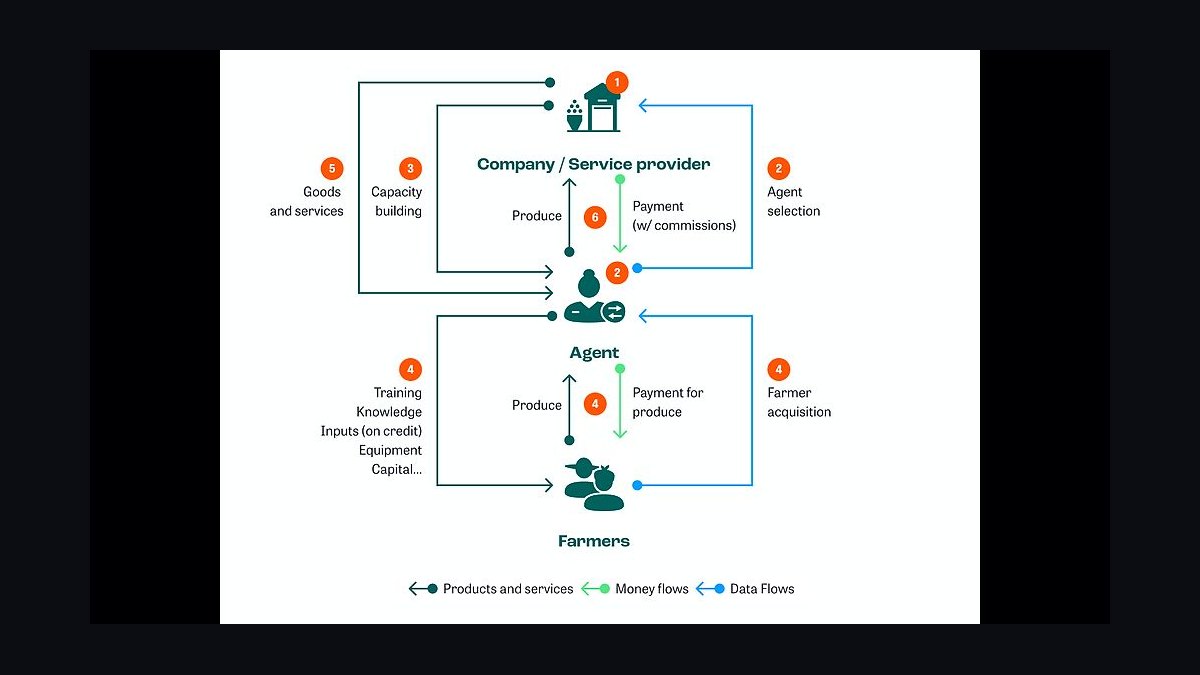
In 2027, the typical NIL agent commission runs 15-20% on brand and marketing deals, 10-15% on collective payments, and 3-5% on revenue-share contracts negotiated directly with a school. Premium full-service agencies like CAA, Wasserman, Excel Sports, Klutch Sports Group, and Athletes First cluster at the 20% marketing ceiling for blue-chip football and men's basketball clients, while regional boutique shops and Opendorse-channel representatives often discount to 10-12% to win signings off the transfer portal.
1The 2027 Commission Stack At A Glance
1.1 Three buckets, three different rates
NIL representation in 2027 is no longer one undifferentiated fee. After the House v. NCAA settlement went live in July 2025 and the College Sports Commission (CSC) stood up its agent registry, agents earn from three separate revenue streams, each with its own market rate.
- Marketing/NIL endorsements (Gatorade, Dr Pepper, EA Sports, local auto dealers): 15-20% of gross deal value, with 20% the modal rate at top-five agencies.
- Collective payments (Texas One Fund, 1870 Society, Champions Circle, Crimson Collective): 10-15%, with several agencies running flat-fee structures instead.
- Revenue-share contracts with the school (capped at $20.5M per athletic department in 2025-26, escalating roughly 4% annually to ~$22.1M in 2027-28): 3-5%, matching pro-league caps.

1.2 Why marketing deals command the premium
Marketing work is where agents actually sell, negotiate, draft, and enforce. A $250,000 Dr Pepper Fansville spot for a Heisman contender requires shoot scheduling, usage-rights language, morality clauses, and FTC #ad compliance. A flat collective payment requires almost none of that. The fee gradient reflects effort, not greed.
1.3 Real 2026-27 commission ranges by tier
- Tier 1 (CAA, Wasserman, Excel, Klutch, Athletes First, WME): 20% marketing, 10% collective, 3% rev-share.
- Tier 2 (Everett Sports Management, Roc Nation Sports, AMR Agency, Young Money APAA Sports): 17-20% marketing, 10-12% collective, 4% rev-share.
- Tier 3 boutique/regional: 10-15% marketing, 5-10% collective, often hourly or flat-fee for rev-share work.
2How The 20% Marketing Standard Got Set
2.1 Carryover from pro athlete marketing rates
Long before NIL, CAA, Wasserman, and Excel were charging NBA, NFL, and MLB clients 15-20% on off-field marketing deals (Nike, Beats, State Farm). When Olivia Dunne, Caleb Williams, Bronny James, and Shedeur Sanders entered the NIL economy in 2021-2024, those same agencies simply ported the 20% marketing rate to their college rosters. The number stuck because there was no NCAA cap to push it down.

2.2 Why pro contract caps don't apply
Players' associations cap on-field contract commissions: NFLPA at 3%, NBPA at 4%, MLBPA at 5%, NHLPA at 4%. There is no NIL players' association in 2027 and the CSC registry does not cap commissions — it only requires agents to register, disclose, and report deals above $600. Without a cap, the market sets the price, and the market settled on 15-20% marketing.
2.3 The 30% "shark" outlier
On3 and The Athletic have both reported in 2025-26 that some unregistered or first-year NIL "agents" charge 25-30% commission on six-figure deals, often bundled with undisclosed kickbacks from collectives. The CSC began delisting agents flagged for >22% commission rates in late 2026, but enforcement is uneven across states with their own NIL statutes (Tennessee, Texas, Missouri).
3Real Agency Comps And Published Rates
3.1 Named agency rate cards (2026-27)
- CAA Sports — 20% marketing, 10% collective, 3% rev-share. Represents Arch Manning, Cooper Flagg (pre-draft), Jeremiah Smith.
- Excel Sports Management — 20% marketing, 10% collective. Represents Caitlin Clark, Paige Bueckers, multiple SEC quarterbacks.
- Klutch Sports Group — 20% marketing, flat-fee collective ($25-50K/year retainer). Represents Bronny James, top NBA-bound prospects.
- Wasserman — 20% marketing, 12% collective. Represents Olivia Dunne (LSU gymnastics), JuJu Watkins (USC).
- Roc Nation Sports — 18-20% marketing, 10% collective. Strong in football transfers.
- Athletes First — 20% marketing, 4% rev-share. Football-heavy roster.
- YOKE Gaming / Postgame — boutique marketing-only shops at 15-18%.
3.2 Opendorse and INFLCR self-service tiers
Platform-based representation is the disruptor of 2027. Opendorse Deals takes 10% platform fee on closed deals with no traditional agent involved. INFLCR (now part of Teamworks) charges schools a SaaS fee and lets athletes keep 100%, with school compliance officers doing the paperwork. These tools have compressed boutique-agency margins the most.
3.3 Sport-by-sport reality
- Football (the assignment sport): 18-20% marketing standard. A $1M total NIL package for a power-conference starting QB typically pays the agent $80-120K: ~$60K from the $300K marketing pool at 20%, ~$40K from the $700K collective at 6-8% blended.
- Men's basketball: 20% marketing, often combined with pre-draft NBA prep (~$25K flat).
- Women's basketball, gymnastics, volleyball: 20% marketing, with higher % of total earnings coming from marketing vs. collective.
- Baseball, softball, Olympic sports: 10-15% marketing because deal volume is lower and agents work for volume, not premium rate.
4What The 15-20% Actually Pays For
4.1 Itemized agent deliverables
A football client paying a 20% marketing commission in 2027 should be getting:
- Outbound pitching to 30-50 brand category leaders per quarter (QSR, telecom, beverage, apparel, fintech).
- Contract drafting and red-line negotiation, with usage rights, morality clause, and exclusivity windows explicitly bounded.
- CSC and state disclosure filings within the 30-day reporting window mandated by the House settlement.
- 1099 and tax-document handoff to the athlete's CPA (typically Aprio or PWC Athlete Services for top-tier clients).
- Brand-safety and reputation management (social media review, crisis comms).
- Trademark filings for the athlete's name/logo (~$350/class via USPTO).

4.2 What the 20% does NOT include
- Financial planning — separate retainer (~$5-10K/year with Northwestern Mutual Athletes, Morgan Stanley Global Sports & Entertainment).
- Legal disputes beyond standard contract enforcement — billed hourly (~$650-950/hr at firms like Latham & Watkins, Proskauer, Winston & Strawn).
- Pro-draft prep and team-contract negotiation — that flips to the 3% NFLPA cap the moment the athlete declares.
4.3 The flat-fee alternative
Roughly 18% of registered NIL agents in 2027 (per Sportico's June 2026 agent census) offer a flat-fee model: $1,500-$3,500/month retainer instead of % commission. This benefits mid-five-figure athletes ($30-80K/year in total NIL) who would otherwise lose $6-16K to commission. It loses for seven-figure athletes, where the agent's % is worth far more than a $42K annual retainer.
5Red Flags, Caps, And State Variance
5.1 What's a fair contract clause in 2027
- Term: 12-24 months max. Anything 3+ years with a college athlete is a red flag.
- Termination: 30-day no-cause termination right for the athlete.
- Post-term tail: 6 months max on deals the agent actively sourced; never on deals closed post-termination.
- Exclusivity: Should carve out collective payments if the agent isn't actively negotiating them.
- Commission split: One blended rate is lazy and over-charges. Demand the tiered 20/10/3 structure.
5.2 State caps and registry rules (2027 snapshot)
- Tennessee: agents must register with Secretary of State, no commission cap.
- Texas: NIL Disclosure Act of 2025 requires deal disclosure, no fee cap.
- California: Fair Pay to Play amended in 2026 to require agent registration, no cap.
- Florida: registry required, no cap, but anti-kickback language is the strictest in the country.
- CSC federal registry: mandatory disclosure of commission rates above $600 per deal as of January 2027.
5.3 Three deal-killer red flags
- Agent demands >22% commission — the new CSC informal soft cap.
- Agent also owns or controls a collective paying the same athlete (undisclosed self-dealing).
- Contract has a "perpetual marketing rights" clause beyond term — strip it or walk.

6The Math For A Real 2027 Football QB
6.1 Worked example: Power-4 starting quarterback
Assume a starting Power-4 QB in 2027 with a $1.4M total NIL year:
- $520K collective payment (e.g., Texas One Fund or Crimson Collective).
- $650K marketing (regional Toyota dealer group, Dr Pepper, EA Sports College Football 27, local QSR).
- $230K school rev-share (front-loaded under the $22.1M department cap).

At Tier 1 agency standard rates:
- Collective commission: $520K × 10% = $52,000.
- Marketing commission: $650K × 20% = $130,000.
- Rev-share commission: $230K × 3% = $6,900.
- Total agent fee: $188,900 on $1.4M = 13.5% blended.

6.2 Same QB on Opendorse-only path
- Collective: flat fee $25K via boutique advisor.
- Marketing: 10% Opendorse platform fee on $400K of platform-sourced deals = $40K, plus $250K self-sourced at $0.
- Rev-share: handled by school compliance, $0.
- Total: $65K on $1.4M = 4.6% blended.
6.3 Trade-off
The Tier 1 agency costs $124K more annually, but typically grows the marketing pool by 40-70% by opening doors the athlete couldn't open alone. For a QB whose marketing ceiling without representation is $300K, the 20% commission on a $650K agency-driven pool still nets the athlete +$220K. That ROI math is why the 15-20% standard holds in 2027.
7How To Negotiate Your Rate Down In 2027
7.1 Three leverage points
- Multi-year volume: If you're projecting $500K+/year for 3+ years, push for 17% marketing instead of 20%.
- Cross-sport portfolio agencies: Boutiques representing olympic + revenue sport athletes will often discount football to subsidize their roster mix.
- Performance triggers: Tie the 20% rate to the agent delivering a specific $X dollar amount; below that floor, drop to 15%.

7.2 What never to negotiate down
- CSC disclosure compliance — non-negotiable.
- Errors & Omissions insurance on the agent — at least $1M policy, ideally $3M.
- Written, signed representation agreement — verbal handshake deals are unenforceable and a 2026 NCAA Eligibility Committee flag.
7.3 The walkaway test
If an agent won't put commission rates in writing, won't disclose other clients in your position group, or won't itemize what deliverables the 20% buys you — walk. The CSC agent directory lists 3,400+ registered agents as of Q1 2027. There is no scarcity of representation.
FAQ
Do NIL agents charge the same commission for every type of deal? No. Commissions vary by deal type: brand and marketing deals typically run 15–20%, collective payments are usually 10–15%, and revenue-share contracts negotiated directly with a school often sit at 3–5%. The percentage depends on the complexity and value of the arrangement.
Are top-tier agencies always more expensive than smaller firms? Generally yes. Premium full-service agencies like CAA or Wasserman often charge the 20% ceiling for high-profile football and men's basketball athletes. Regional boutique shops or Opendorse-channel representatives may offer 10–12% to attract clients, especially those entering the transfer portal.
Can an athlete negotiate a lower commission rate? Yes, especially if they have multiple offers or a strong personal brand. Some agents are willing to drop to 10–12% for promising athletes, and the rise of a la carte services has given athletes more leverage to pay only for specific needs.
Do commissions apply to all NIL income, including in-kind deals? Typically, agents only take a percentage of cash compensation, not the value of free products or services. However, if an in-kind deal is converted to cash (e.g., selling gifted items), some agents may seek a commission on that amount.
How do collective payments differ from brand deals in commission structure? Collective payments are often pooled and distributed by a third party, so agents tend to charge a lower rate—usually 10–15%—since the athlete’s involvement is minimal. Brand deals require more active negotiation and management, justifying the higher 15–20% range.
Is there a standard commission for revenue-share contracts with schools? Revenue-share contracts are newer and less standardized, but typical commissions fall between 3–5%. These deals are often simpler and tied directly to school agreements, so agents take a smaller cut compared to external marketing work.
Bottom Line
The 2027 NIL agent commission standard is 15-20% on marketing deals, 10-15% on collective payments, and 3-5% on direct school rev-share — a tiered structure that mirrors pro-athlete off-field marketing rates and pro union on-field caps. Tier 1 agencies (CAA, Wasserman, Excel, Klutch, Athletes First) cluster at the 20% marketing ceiling and justify it with deal-flow that grows the marketing pie 40-70% beyond what an athlete could close alone. Opendorse, INFLCR, and flat-fee boutiques have compressed mid-tier representation to 10-15%, and the College Sports Commission's soft cap on rates above 22% has begun to clear out the 25-30% sharks that defined the 2022-2024 wild-west era. Negotiate the tiered 20/10/3 structure explicitly, get errors & omissions insurance confirmed, and walk from any agent who refuses to put it in writing.
Related on PULSE
- What data sources are most effective for training AI models to predict next best action in complex enterprise deals?
- How does the expanding size of B2B buying committees increase the risk of vendor consolidation paralysis?
- Which vendor consolidation strategies are failing most often when integrating AI sales tools into existing stacks?
- Why are longer sales cycles now correlating with a shift from pipeline velocity to deal value predictability?
- What specific metrics are B2B RevOps teams using to measure AI's impact on lead quality in the top-of-funnel?
Sources
- On3 — NIL Deals & Agency Tracker (2026-2027 rate reporting)
- Sportico — NIL Agent Census, June 2026
- Front Office Sports — College Sports Commission Agent Registry coverage
- Business of College Sports — Tracker: NIL Agents
- The Athletic — NIL agent commission investigations 2025-26
- Athletic Director U — A Sports Agent's Role In The World Of NIL: Part II
- Opendorse — NIL Deal Platform fee disclosure
- INFLCR / Teamworks — Athlete Compliance Platform documentation
- 247Sports — NIL agency representation reporting
- ESPN — House v. NCAA settlement coverage and CSC reporting
People also search for: what is typical nil agent commission · typical nil agent commission explained · typical nil agent commission definition
This page will be disappearing soon. Save it to your device for $1 — or read it free while it is here.
@Kory-White- · if Venmo asks, the last 4 of my number are 2012
This page is gone.
This one is off the shelf now. $1 keeps it on your phone for good — the whole page, pictures and diagrams included.
 nilHow has House v. NCAA changed college athlete revenue sharing in 2027?
 nilWhat is the impact of conference realignment on NIL deals in 2027?
 nilHow does the College Football Playoff format change NIL economics in 2027?
 nilWhat is the future of NIL through 2030 — predictions and risks in 2027?
 nilHow do NIL collectives actually work in 2027?
 nilHow does NIL impact high school recruiting commitments in 2027?
 nilWhat is the biggest NIL deal ever signed and what made it work in 2027?
 nilWho are the biggest NIL collectives in 2027 by total fund size?
 nilWhich NIL platforms do college athletes actually use in 2027?
 nilHow are pro teams using college NIL data for draft scouting in 2027?