


What is the impact of conference realignment on NIL deals in 2027?
Quality
Certified
Conference realignment in 2027 has bifurcated the NIL economy into a two-tier system where Big Ten and SEC athletes command 3-5x the booster-collective dollars of their ACC and Big 12 peers, while displaced Pac-12 holdovers fight for survival on $7-12 million annual media checks versus the $70 million their former rivals now collect in Westwood and Eugene. The House v. NCAA revenue-sharing cap of $20.5M in 2025-26 (rising to $32.9M by 2034-35) layers on top of third-party NIL, so realigned-up schools stack rev-share plus swollen collective war chests, while realigned-down or stranded programs face athletes demanding parity they cannot fund. The ACC settlement with Florida State and Clemson — viewership-weighted distribution paying brand schools an extra $20M/year — has effectively imported the same bifurcation inside a single conference.
1The 2027 Realignment Map And Its NIL Dollar Consequences
1.1 Who Moved And What They Now Earn
The Power Four entered 2026-27 with no membership changes from the prior cycle, meaning the realignment dust has settled enough to measure NIL impact at steady state. USC, UCLA, Oregon, and Washington completed their Big Ten transition in August 2024, with USC and UCLA drawing full shares of the Big Ten's $1 billion annual media rights deal while Oregon and Washington accepted reduced shares through 2030. Texas and Oklahoma moved to the SEC in 2024, immediately gaining access to the conference's $3 billion ESPN deal running through 2034. The Big 12 absorbed Arizona, Arizona State, Utah, Colorado, BYU, Cincinnati, Houston, and UCF, stabilizing at 16 teams with a $2.28 billion Fox/ESPN package.
1.2 The Per-School Revenue Delta
Pre-collapse Pac-12 schools earned approximately $32 million per year in distributions. Post-realignment Pac-12 holdovers (Washington State and Oregon State, plus the seven incoming members for 2026-27) project at $7-12 million annually. Big Ten members are tracking toward as much as $70 million per school in media revenue by the end of the current cycle. That $60M+ gap flows directly into how much each athletic department can plausibly spend on the House rev-share cap and how aggressively local collectives recruit donors to top it up.

1.3 Why This Matters For NIL
Schools sitting on Big Ten or SEC checks can fully fund the $20.5 million 2025-26 rev-share cap without cannibalizing other athletic operations. Schools on $7-12M Pac-12 checks cannot — they must either cut Olympic sports, raise student fees, or ask collectives to bridge the gap with un-capped third-party NIL. The realignment created the funding asymmetry; the House settlement magnified it.
2House Settlement Mechanics Inside The Realignment Frame
2.1 The Revenue-Sharing Cap Schedule
Final approval came down June 6, 2025. Each school may distribute up to 22% of average Power Five shared revenue directly to athletes. The cap starts at roughly $20.5 million in 2025-26 and grows annually, projected to reach $32.9 million by 2034-35 — a 60% increase over the decade. Schools in the SEC and Big Ten will hit the cap from day one. Schools in the rebuilt Pac-12 and Group of Five will not get close.

2.2 Third-Party NIL Sits Outside The Cap
NIL payments from booster collectives and third-party brands do not count against the $20.5M cap. This is the loophole realigned-up schools are exploiting: stack the $20.5M rev-share plus a $15-30M collective. Texas Tech's Matador Club, Texas's Texas One Fund, Ohio State's THE Foundation, and Tennessee's Spyre Sports Group all run annual budgets above $15 million.
2.3 The "Valid Business Purpose" Vetting Layer
Starting July 2025, any endorsement deal between a booster and an athlete above $600 must clear a NIL Go clearinghouse review (operated by Deloitte under the College Sports Commission) verifying a "valid business purpose" — not pay-for-play. This was supposed to throttle collective spending. In practice, brands tied to wealthy donors at Texas A&M, Alabama, Ohio State, and Michigan have routed deals through legitimate marketing structures (autograph signings, social posts, appearance fees) at six- and seven-figure rates that pass review.

3Conference-By-Conference Impact On NIL Deal Flow
3.1 SEC — The Apex Predator
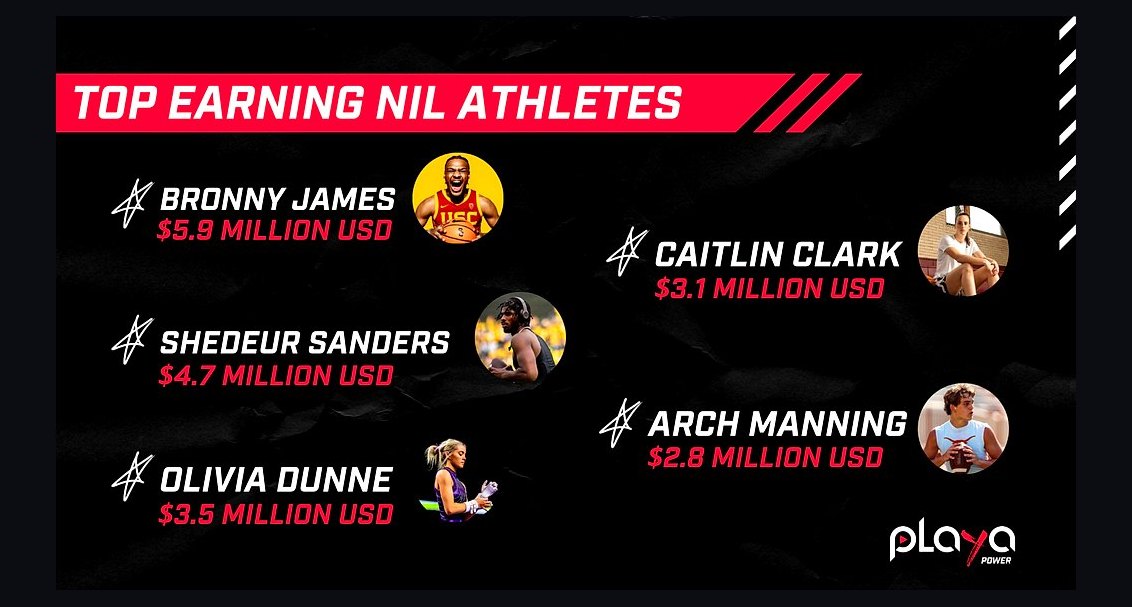
The SEC sits at the top of the NIL food chain. Star quarterbacks at Texas, Georgia, Alabama, and LSU now routinely sign collective packages worth $1.5-3 million per year. Arch Manning's estimated $6.6M annual NIL valuation (per On3) is the public ceiling, but Carson Beck's reported $4M transfer-driven deal at Miami in 2025 (before he transferred back out) showed the market for proven SEC starters. Realignment ensured every SEC school has the media-check headroom to keep pace.
3.2 Big Ten — The Coastal Spend
The Big Ten's coastal expansion gave USC and UCLA access to the same $1B media pot as Michigan and Ohio State. USC has used it: the House of Victory collective and football-specific Trojan Coalition have pushed five-star recruit packages into the $1M+ range. UCLA, by contrast, has been slower — its collective is sub-$5M annually, leaving Bruins coaches outbid even inside their own conference.

3.3 Big 12 — The Middle Tier With Wildcards
The Big 12 sits in the middle but has produced outlier spenders. Texas Tech's Cody Campbell-funded Matador Club spent an estimated $28M on the 2025 football roster, finishing with the No. 2 transfer portal class nationally. Colorado rode Deion Sanders's brand to top-10 NIL revenue without a top-10 media check. The Big 12's structural disadvantage is that only a handful of schools can sustain that spend.
3.4 ACC — The Internal Bifurcation
The ACC, Florida State, and Clemson settlement (March 2025) ended the lawsuits in exchange for viewership-weighted distribution. Florida State and Clemson now collect up to $20M extra per year versus the old equal-share model — money that flows straight into NIL competitiveness against the SEC. Smaller ACC schools (Wake Forest, Boston College, Syracuse) lose proportional revenue and fall further behind. The ACC's exit fee drops to $147M in 2026-27 and $129M in 2027-28 (down from $165M), making a 2028+ jump to the SEC or Big Ten financially plausible for Florida State, Clemson, and reportedly North Carolina.

3.5 Pac-12 (Rebuilt) — Survival Mode
The new Pac-12 (Washington State, Oregon State, plus Boise State, Fresno State, San Diego State, Colorado State, Utah State, Texas State, and Gonzaga for non-football) opens play in 2026-27. Per-school media revenue projects at $7-12M. SDSU launched a dedicated NIL fund to bridge the gap, but the math is brutal: full rev-share at $20.5M exceeds total media income.
4Real Operators And Real Deal Sizes Post-Realignment
4.1 Football Quarterback Tier
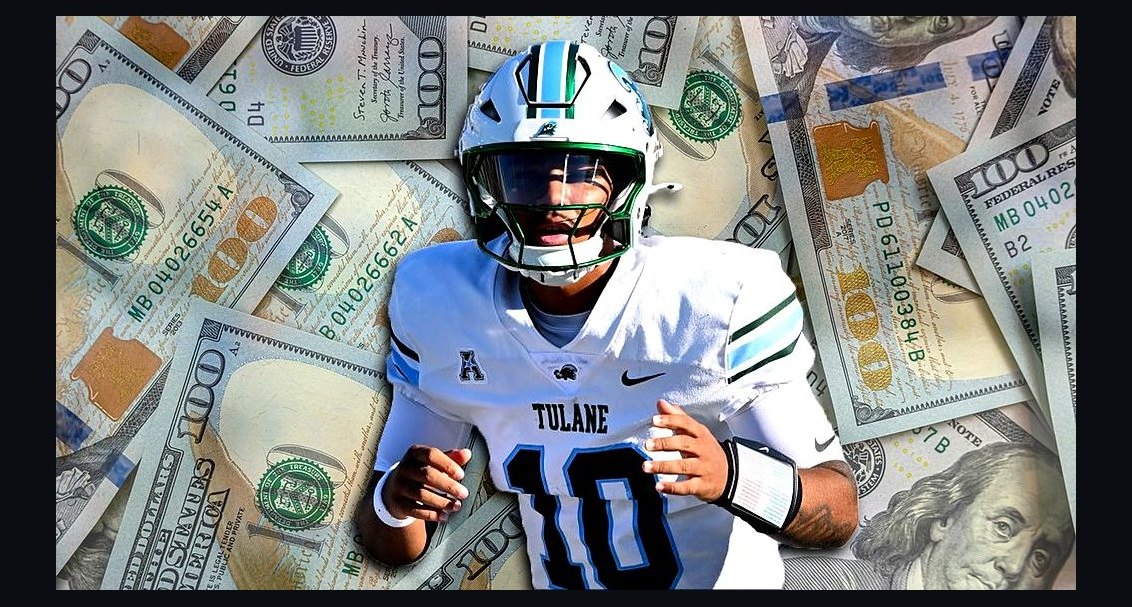
Arch Manning (Texas, SEC): valuation $6.6M per On3 NIL Database. Drew Allar (Penn State, Big Ten): valuation $2.4M. Cade Klubnik (Clemson, ACC): valuation $1.9M, boosted by the new ACC weighted distribution. John Mateer (Oklahoma, SEC): $1.5M range after his Washington State transfer — itself a realignment-driven move from rebuilt Pac-12 to SEC.

4.2 Men's Basketball Star Tier
Cooper Flagg (Duke, ACC) carried an estimated $4.8M valuation in 2024-25 before going No. 1 overall to Dallas. AJ Dybantsa (BYU, Big 12) signed a reported $4M+ collective package to choose BYU over Kansas and North Carolina — a deal possible only because the Big 12 absorbed BYU in 2023 realignment and unlocked Big 12 media money for Provo. Boogie Fland (Florida via Arkansas, SEC): $2M+ transfer-window package.
4.3 The Collectives Doing The Work
Texas Tech's Matador Club (Cody Campbell): $28M 2025 football roster spend. Texas One Fund: estimated $22M football, $8M basketball. THE Foundation (Ohio State): $20M+ annual. Spyre Sports Group (Tennessee): $15-18M annual. House of Victory (USC): $12-15M annual since Big Ten move. Florida State's Rising Spear: jumped from $8M to an estimated $14M budget after the ACC settlement guaranteed extra distribution.

5Failure Modes Created Or Worsened By Realignment
5.1 The Stranded-Program Death Spiral
Programs left behind in weakened conferences face a recruiting feedback loop: less media money → less rev-share → less collective bandwidth → worse recruits → worse on-field results → less media interest → less media money. Washington State and Oregon State have been forced into a scheduling alliance with the Mountain West for 2024-25 and are now anchoring the rebuilt Pac-12 with no realistic path to a $20.5M payroll. California and Stanford joined the ACC — but receive only a 30% share of ACC distribution for the first seven years (reportedly ~$9M/year), leaving them in a structurally similar bind despite the prestige label.
5.2 Collective-Cap Compliance Risk
Aggressive collectives at SEC and Big Ten programs have NIL Go clearinghouse review risk. Any $600+ booster-funded deal denied by Deloitte's review can be appealed, but a sustained pattern of denials at a single school invites College Sports Commission sanctions. Tennessee received early scrutiny in late 2024 around the Nico Iamaleava deal; Florida drew investigation around the Jaden Rashada saga.

5.3 Athlete Lawsuits Over Bifurcated Pay
Athletes at non-revenue-sharing-cap programs are exploring antitrust theory that the bifurcated system constitutes restraint of trade. The Johnson v. NCAA employee-status case (Third Circuit) and the Fontenot v. NCAA case (Colorado) both remain active despite the House settlement — meaning realignment-driven pay disparities could become Exhibit A in the next round of litigation.
6The 2027 Outlook — What's Next
6.1 The North Carolina Domino
North Carolina has reportedly reached a handshake agreement with the SEC contingent on the ACC exit fee dropping below $130M in 2027-28. If UNC moves, Virginia, Duke, Miami, and NC State become the next round of realignment targets — and each move drags another $20-40M in NIL-funding capacity across conference lines.

6.2 Big Ten Private Equity And NIL Funding
The Big Ten paused a proposed $2.4 billion private equity infusion in early 2026 after Michigan and USC opposition. If the deal revives in 2027, it would funnel additional capital directly into member-school NIL operations — likely through "front-office" hires, GM structures, and contract guarantees that look more like NFL operations than collegiate booster work. Texas Tech's GM hire (former NFL exec James Blanchard) is the template.
6.3 The Sub-Cap Schools' Choice
Schools that cannot fund the full $20.5M rev-share have three paths in 2027: (1) drop football and survive on Olympic-sports rev-share, (2) consolidate into a second division of FBS that opts out of full rev-share (publicly discussed by Group of Five commissioners), or (3) lean entirely on collectives and hope NIL Go vetting doesn't kill the model. None of the three are stable.

FAQ
Does conference realignment actually increase NIL money for athletes? Only for athletes at schools that move into the Big Ten or SEC. Those programs see a 3-5x boost in booster-collective dollars compared to their peers in the ACC, Big 12, or remaining Group of Five conferences. Athletes at schools that lost Power Five status or stayed in weaker conferences often see stagnant or declining NIL opportunities.
How does the House v. NCAA revenue-sharing cap interact with realignment? The cap starts at $20.5 million per school in 2025-26 and rises to $32.9 million by 2034-35. Realigned-up schools can stack this revenue-sharing on top of larger collective funds, while realigned-down schools struggle to meet even the baseline cap. This creates a two-tier system where top-tier athletes get both institutional and third-party NIL, while others get only one.
Do athletes at ACC schools still get competitive NIL deals after the Florida State and Clemson settlement? It depends on the school. The ACC settlement gives brand programs like Florida State and Clemson an extra $20 million per year in viewership-weighted distributions, effectively importing the same bifurcation inside the conference. Non-brand ACC schools see less NIL growth, while the top earners approach Big Ten and SEC levels.
What happens to NIL deals for athletes at schools that were left behind in realignment? Displaced Pac-12 holdovers, for example, now receive annual media checks of $7-12 million, compared to the $70 million their former rivals at UCLA and Oregon collect. This funding gap directly limits their ability to offer competitive NIL packages, often forcing athletes to choose between staying at a historic program or transferring to a wealthier conference.
Can a Group of Five school compete for top NIL talent after realignment? Rarely. The revenue and booster base for Group of Five schools is typically a fraction of Power Four programs. Even the best Group of Five NIL collectives operate on budgets that are 5-10x smaller than those at Big Ten or SEC schools, making it nearly impossible to retain or recruit elite athletes without significant local donor support.
Will the NIL gap between conferences shrink over time? Unlikely in the near term. The House settlement caps revenue-sharing growth at roughly 4% annually, while media deals for top conferences are locked in for a decade or more. Unless a new revenue-sharing model or antitrust ruling forces redistribution, the current bifurcation is expected to widen as top programs compound their financial advantages.
Bottom Line
Conference realignment did not cause NIL inequality — the House v. NCAA settlement, third-party collective spending, and media-rights asymmetry did. But realignment locked in the inequality at the conference structure level, making it nearly impossible for stranded or downgraded programs to compete for top-50 football and basketball recruits. The SEC and Big Ten have become a two-conference superleague in everything but name, with NIL athlete compensation 3-5x the median of the ACC, Big 12, and rebuilt Pac-12. The 2027 question is not whether the bifurcation will continue — it is whether North Carolina, Florida State, Clemson, Miami, and Virginia will accept the $129-147M exit fees to cross the divide before the 2030 media reset.
Related on PULSE
- What data sources are most effective for training AI models to predict next best action in complex enterprise deals?
- How does the expanding size of B2B buying committees increase the risk of vendor consolidation paralysis?
- Which vendor consolidation strategies are failing most often when integrating AI sales tools into existing stacks?
- Why are longer sales cycles now correlating with a shift from pipeline velocity to deal value predictability?
- What specific metrics are B2B RevOps teams using to measure AI's impact on lead quality in the top-of-funnel?
Sources
- Judge OK's $2.8B House v. NCAA settlement — ESPN
- ACC, Florida State, Clemson reach revenue distribution settlement — ESPN
- NIL Media Rights Report — Senate Commerce Committee
- USC's Transition To The Big Ten Will Be Lucrative, Challenging — Front Office Sports
- Pac-12 Collapse Will Have Ripple Effects on College Basketball — Front Office Sports
- Pac-12's New Era: Media Rights, NIL, and the Fight to Stay Competitive — Sports Illustrated / On3
- Florida State's Collins on ACC settlement, NIL guardrails — On3
- Opposition from Michigan, USC pauses $2.4B Big Ten private equity deal — ESPN
- North Carolina handshake agreement with SEC — Sports Illustrated
- NCAA Revenue Sharing & NIL Estimates 2025 — Big Ten Schools
- House v. NCAA Settlement Explained — Congressional Research Service
People also search for: what is impact of conference realignment on nil deals · impact of conference realignment on nil deals explained · impact of conference realignment on nil deals definition
This page will be disappearing soon. Save it to your device for $1 — or read it free while it is here.
@Kory-White- · if Venmo asks, the last 4 of my number are 2012
This page is gone.
This one is off the shelf now. $1 keeps it on your phone for good — the whole page, pictures and diagrams included.
 nilHow does NIL impact high school recruiting commitments in 2027?
 nilHow are athletic departments structuring NIL collective relationships in 2027?
 nilHow do NIL contracts protect athletes from exploitation in 2027?
 nilWhat is the impact of the $22M revenue-share cap on college sports in 2027?
 nilWhich NIL platforms do college athletes actually use in 2027?
 nilHow are college baseball and softball programs adapting to NIL in 2027?
 nilWhat is the typical college quarterback NIL package at a top program in 2027?
 nilHow do college athletes choose their NIL agents in 2027?
 nilWhat is the typical NIL endorsement structure for a Heisman candidate in 2027?
 nilHow does NIL impact transfer portal decisions in 2027?