


How does Title IX apply to NIL revenue sharing in 2027?
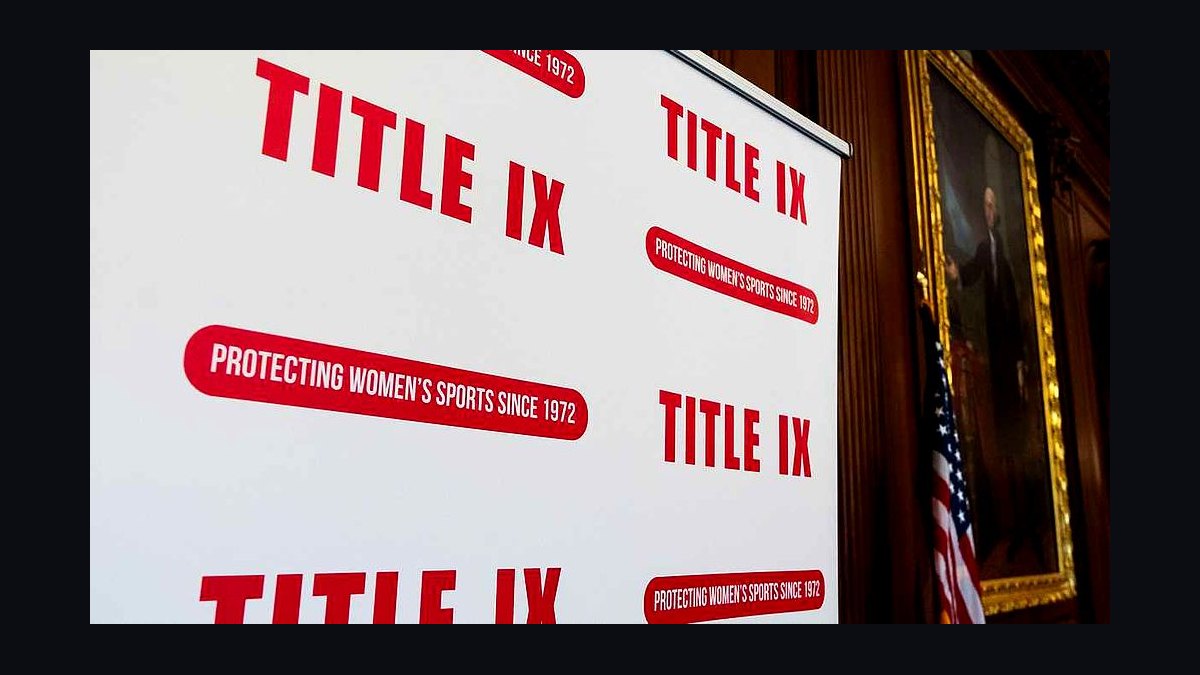
Title IX applies to NIL revenue sharing in 2027 through litigation, not federal enforcement. The Trump-era Department of Education rescinded the January 2025 Biden guidance in February 2025, meaning the Office for Civil Rights is not policing the 75/15/5/5 House split that funnels roughly 95% of every school's $20.5M cap to football and men's basketball. But the **Ninth Circuit appeals in *House v. NCAA* and the *Schroeder v. University of Oregon* class action are forcing the issue in court — and at least one federal judge has already let a Title IX NIL claim survive a motion to dismiss**, which means every Power 4 athletic director allocating revenue share in 2027 is operating under live legal risk regardless of what OCR says.
1The Regulatory Whiplash That Created the 2027 Vacuum
1.1 The Biden OCR Guidance (January 16, 2025)
%20How%20does%20Title%20IX%20apply%20to%20NIL%20rev%2C%20realistic%20magazine%20style%2C%20warm%20light%2C%20no%20text%2C%20no%20watermark?width=1200&height=675&nologo=true&model=flux&seed=2297)
The Department of Education's Office for Civil Rights issued a "Fact Sheet: Ensuring Equal Opportunity Based on Sex in School Athletic Programs in the Context of Name, Image, and Likeness (NIL) Activities" on January 16, 2025, four days before the inauguration. The guidance held that NIL payments and revenue-share dollars distributed by a school count as "athletic financial assistance" under 34 C.F.R. § 106.37(c), and therefore must be proportionate by gender. Under that reading, an LSU or Ohio State sending 75% of $20.5M to football would be presumptively non-compliant.
1.2 The Trump OCR Rescission (February 12, 2025)
%20How%20does%20Title%20IX%20apply%20to%20NIL%20%2C%20realistic%20magazine%20style%2C%20warm%20light%2C%20no%20text%2C%20no%20watermark?width=1200&height=675&nologo=true&model=flux&seed=91146)
Acting Assistant Secretary Craig Trainor rescinded the Biden fact sheet less than a month later, calling it a "novel" reading of Title IX with no statutory basis. The rescission letter argued that revenue-share dollars are pay for services, not financial assistance, and that third-party NIL deals are private contracts outside the school's Title IX obligations. 80%+ of revenue-share dollars are now flowing to football and men's basketball without OCR pushback.

1.3 Why This Matters for 2027 Allocations
The rescission does not bind federal courts. Judges interpret Title IX independently, and an OCR fact sheet (or its absence) is persuasive authority at best. Athletic directors who took the February 2025 rescission as a green light are discovering that plaintiffs' lawyers — Bailey & Glasser, Hagens Berman, Winston & Strawn — built their case theories on the statute and 1979 Policy Interpretation, not on a Biden-era fact sheet.
2The House v. NCAA Title IX Appeals at the Ninth Circuit
2.1 Who's Appealing and Why
Eight female athletes — led by former Bowling Green tennis player Jessica Spears and represented by John Clune of Hutchinson Black and Cook — filed the lead appeal of Judge Claudia Wilken's June 6, 2025 final approval. Six additional appeal groups piled on, producing three consolidated dockets before the Ninth Circuit Court of Appeals. Their argument: the $2.8 billion back-damages formula sends roughly 90% to male football and men's basketball players, deriving payments from broadcast revenue rather than from a Title IX-compliant proportionality test.

2.2 The Briefing Calendar
- Opening briefs: October 29, 2025
- NCAA/Power 4 answering briefs: January 2026
- Reply briefs: filed January-February 2026
- Oral argument: scheduled for Pasadena, summer 2026
- Ninth Circuit ruling expected: late 2026 or early 2027
2.3 The Automatic Stay on Back Damages
The appeals stayed distribution of the $2.8B back-pay fund but did not halt the forward revenue-sharing cap that started July 1, 2025. As of mid-2027, two full revenue-share years ($20.5M in Year 1, ~$21.5M in Year 2 with the 4% escalator) have run under the contested 75/15/5/5 split with zero back-damages money distributed.

2.4 The National Women's Law Center Amicus
NWLC, Public Justice, and Champion Women filed amicus briefs arguing that the proportionality prong of the 1979 Policy Interpretation controls — meaning if 57% of an institution's athletes are female, 57% of revenue-share dollars should reach female athletes. No Power 4 school is anywhere close to that ratio under the 75/15/5/5 default.
3Schroeder v. University of Oregon — The First NIL Title IX Class Action
3.1 The Filing
Thirty-two University of Oregon female athletes — softball, beach volleyball, rowing, acrobatics & tumbling — filed a class action in U.S. District Court for the District of Oregon in December 2024, represented by Bailey & Glasser LLP and Arnold & Itkin. The complaint alleges Oregon provided unequal NIL training, unequal access to the Division Street collective, unequal locker rooms, and unequal travel versus the football program.

3.2 The McShane Ruling (October 2025)
Judge Michael McShane denied Oregon's motion to dismiss, holding that plaintiffs plausibly alleged the school itself — not just the third-party Division Street collective — discriminated by funneling NIL-supporting resources (compliance staff, brand-building courses, marketing introductions) disproportionately to male athletes. The case is now in discovery through Q2 2027 with summary judgment briefing scheduled for fall 2027.
3.3 Why It Matters Beyond Eugene
Every Power 4 school is watching Schroeder because it survived precisely the dismissal argument the Trump OCR endorsed: "third-party NIL is private, not the school's problem." Judge McShane said the school's resource allocation around NIL is the school's problem, and that is Title IX. Settlement talks at Oregon have reportedly explored a $15-25M class fund plus prospective injunctive relief.

4How Athletic Directors Are Actually Allocating in 2027
4.1 The 75/15/5/5 Default
The "Yormark model" — named for Big 12 Commissioner Brett Yormark — remains the dominant Power 4 split:
- 75% football (~$15.4M of $20.5M)
- 15% men's basketball (~$3.1M)
- 5% women's basketball (~$1.0M)
- 5% all other sports combined (~$1.0M)
LSU, Texas, Ohio State, Alabama, Georgia, Tennessee, and Oklahoma are all publicly on this split or within 2 points of it.

4.2 The Title IX-Hedged Alternatives
A growing minority — Notre Dame, Stanford, Northwestern, Duke, Virginia — are running closer to 65/15/10/10 or even 60/15/15/10, treating the higher women's allocation as litigation insurance. Notre Dame AD Pete Bevacqua has said publicly the school is "not going to wait for a court to tell us what we already know."
4.3 The SEC vs. ACC Divergence
The SEC's 16 schools average a football allocation above 76%. The ACC's 18 schools average closer to 70%, with stronger women's basketball investments at Louisville, Notre Dame, NC State, Virginia, and Duke. The Big Ten is bimodal — Oregon and USC at 78% football, Northwestern and Maryland under 70%.

4.4 The Olympic Sports Squeeze
The 5% "other sports" bucket is the most contested internally. At a $20.5M cap, $1M split across baseball, softball, soccer, volleyball, gymnastics, swimming, track, golf, tennis, lacrosse, and rowing averages under $90K per program. Most non-revenue head coaches are getting $0 and watching scholarship slots get reallocated to roster caps instead.
5The Specific Title IX Tests Schools Will Face
5.1 Three-Part Participation Test
Title IX participation compliance still runs through the three-part test from the 1979 Policy Interpretation:
- Substantial proportionality — athletes' gender ratio matches undergraduate enrollment
- History and continuing practice of expanding women's opportunities
- Effective accommodation of women's interests and abilities

Roster caps under the House settlement (105 football, 15 men's basketball, 15 women's basketball, 25 baseball, 25 softball) changed the participation math at most schools. A school cutting 20 walk-on female athletes while adding 35 football scholarship slots is moving the wrong direction on prong 1.
5.2 Athletic Financial Assistance Proportionality
34 C.F.R. § 106.37(c) requires aid dollars to be awarded in substantially proportional amounts to male and female athletes (within ~1%). If revenue-share is "financial assistance" (Biden OCR's position, currently rescinded but argued in the appeals), a 75/5 split with a 57/43 female-majority athlete population is a textbook violation.

5.3 The "Equal Treatment" Laundry List
The 13 "equal treatment" factors (equipment, scheduling, travel, coaching, locker rooms, medical, housing, publicity, recruiting, support services, etc.) still apply. Schroeder is essentially an equal-treatment NIL case — alleging that the NIL infrastructure itself (compliance staff time, brand-building education, agent introductions) is a publicity/support-services benefit that must be equalized.
6What Female Athletes and Their Counsel Are Actually Asking For
6.1 The Proportional Revenue Share
The NWLC/Champion Women position: if 57% of athletes are female, 57% of the $20.5M cap ($11.7M) must reach female athletes. No Power 4 school is doing this, and no athletic director publicly believes they will be required to, but every general counsel is modeling the exposure.

6.2 The Schroeder-Style Resource Equalization
Even schools running 75/15/5/5 can reduce litigation risk by equalizing NIL infrastructure: identical brand-education programs, identical compliance hours per athlete, identical agent-network introductions, identical media training. Texas A&M, Oklahoma, and Florida have publicly built out dedicated women's NIL coordinator roles in 2026-27 for exactly this reason.
6.3 Damages Models
Plaintiff economists in House and Schroeder are using a "but-for" model: what would female athletes have received in a Title IX-compliant allocation? The $1.1B back-damages gap cited in the House appeals comes from a 57/43 counterfactual applied to the 10-year settlement fund.
FAQ
Does Title IX require equal NIL revenue sharing between men’s and women’s sports? Not directly, but legal arguments are pushing in that direction. Current Title IX law focuses on equal treatment and benefits for athletes of both sexes, and courts are now considering whether revenue-sharing payments count as such benefits. If a school funnels nearly all of its $20.5 million cap to football and men’s basketball, a judge could find that violates Title IX’s proportionality requirement.
What is the risk for schools that ignore Title IX when distributing NIL revenue share? The risk is primarily litigation, not federal enforcement. With the Department of Education no longer actively policing Title IX in this area, schools face private lawsuits from athletes or class actions. At least one federal judge has already allowed a Title IX NIL claim to proceed past a motion to dismiss, meaning schools could face costly legal battles and potential damages.
Will women athletes see a guaranteed percentage of the revenue-sharing pool? Not yet, but it’s a live legal question. The current House settlement structure funnels roughly 95% of the cap to football and men’s basketball, leaving minimal amounts for women’s sports. Lawsuits like *Schroeder v. University of Oregon* argue this violates Title IX, and if those cases succeed, schools may be forced to allocate a more equitable share.
How does the Ninth Circuit’s role affect Title IX and NIL revenue sharing? The Ninth Circuit is a key battleground because it covers many major college sports programs and has historically taken an expansive view of Title IX. Appeals in *House v. NCAA* and *Schroeder* are being watched closely, as a ruling from this circuit could set binding precedent for schools in nine states and influence other circuits.
Can schools avoid Title IX liability by structuring revenue share as “NIL” rather than athletic scholarships? That argument is being tested in court. Schools may claim revenue-sharing payments are compensation for name, image, and likeness use, not athletic benefits. However, plaintiffs argue these payments are directly tied to athletic participation and performance, making them subject to Title IX’s equal-benefit requirements. No court has definitively ruled on this distinction yet.
What should athletic directors do in 2027 to minimize Title IX legal risk? They should proactively allocate a meaningful portion of revenue share to women’s sports, even without a federal mandate. Legal experts recommend aiming for a distribution that roughly mirrors the overall athletic participation ratio at the school. Schools that wait for a court order may face larger damages and reputational harm than those that voluntarily adjust their allocation.
Bottom Line
Title IX applies to NIL revenue sharing in 2027 the same way it applies to every other resource allocation decision a Title IX-funded institution makes — through Section 1681, the 1979 Policy Interpretation, and the federal courts. The Trump OCR rescission removed the federal enforcement risk but did nothing to change the statute. Athletic directors running 75/15/5/5 are betting that the Ninth Circuit upholds House and that Schroeder settles cheap. Athletic directors running 65/15/10/10 or better are buying litigation insurance with women's basketball dollars. The 2027 question is not whether Title IX applies — it is how much each general counsel is willing to bet that it doesn't.
Related on PULSE
- What data sources are most effective for training AI models to predict next best action in complex enterprise deals?
- How does the expanding size of B2B buying committees increase the risk of vendor consolidation paralysis?
- Which vendor consolidation strategies are failing most often when integrating AI sales tools into existing stacks?
- Why are longer sales cycles now correlating with a shift from pipeline velocity to deal value predictability?
- What specific metrics are B2B RevOps teams using to measure AI's impact on lead quality in the top-of-funnel?
Sources
- Department of Education Issues Title IX Guidance Concerning NIL and Revenue-Sharing Compensation — Duane Morris LLP
- Dept. of Education revokes guidance on Title IX and athlete pay — ESPN
- Department of Education rescinds rev-share Title IX guidance — On3
- Female Athletes Appeal House v. NCAA Settlement Approval — Front Office Sports
- NCAA Defends House Settlement From Title IX, Opt-Out Appeal — Sportico
- Female Student-Athletes File Title IX Sex Discrimination Class Action Against University of Oregon — Bailey Glasser
- Title IX Goes Head to Head with Antitrust: NCAA NIL Settlement Challenged by Female Student-Athletes — Venable LLP
- College Hoops Getting Nearly 30% of Revenue-Sharing Payments — Front Office Sports
- House v. NCAA Settlement Approved: Era of Direct Payments to College Athletes Begins — Ropes & Gray LLP
- Title IX After the House v. NCAA Settlement — United Educators
This page will be disappearing soon. Save it to your device for $1 — or read it free while it is here.
@Kory-White- · if Venmo asks, the last 4 of my number are 2012
This page is gone.
This one is off the shelf now. $1 keeps it on your phone for good — the whole page, pictures and diagrams included.
 nilWhat is the Caitlin Clark effect on women's sports NIL in 2027?
 nilHow big is the women's sports NIL market in 2027?
 nilHow are pro teams using college NIL data for draft scouting in 2027?
 nilHow do brands choose which college athletes to sign for NIL in 2027?
 nilWhat is the average NIL deal size for a top-100 football recruit in 2027?
 nilHow do international student-athletes earn NIL income in 2027?
 nilWhich NIL platforms do college athletes actually use in 2027?
 nilHow are college coaches contracts changing in the NIL era in 2027?
 nilHow do NIL contracts protect athletes from exploitation in 2027?
 nilHow do college athletes choose their NIL agents in 2027?