


What is the biggest NIL deal ever signed and what made it work in 2027?
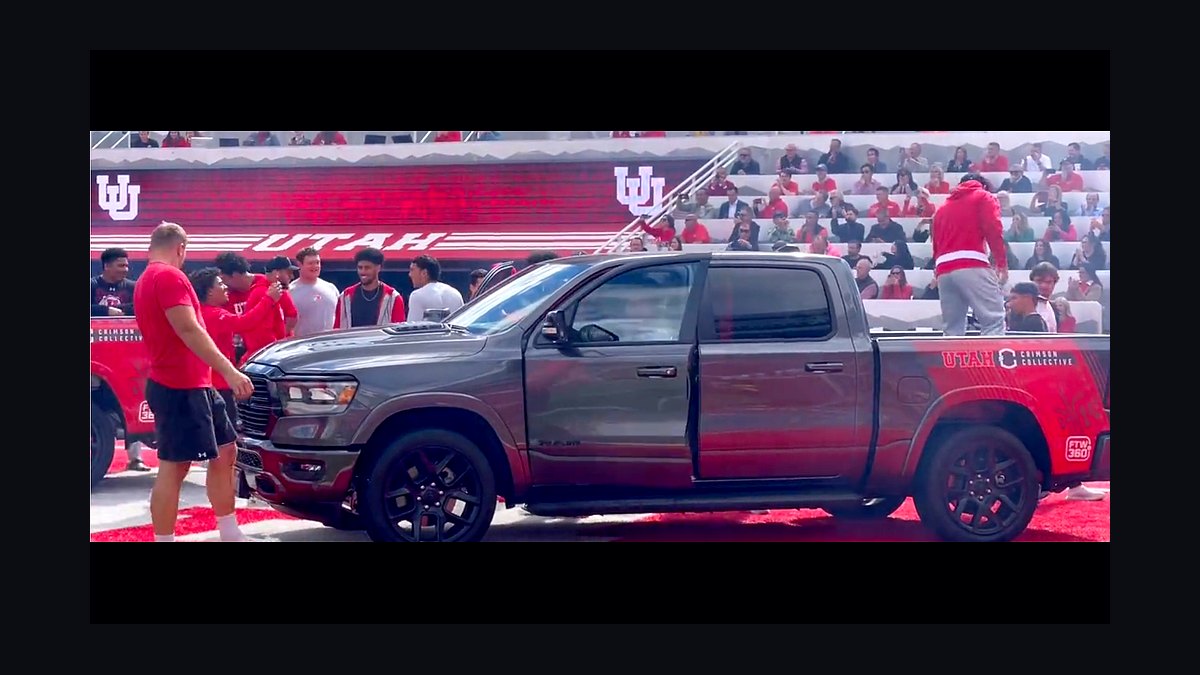
The biggest NIL deal ever signed is Cooper Flagg's combined $28 million package at Duke during the 2024-25 season, built from a $13 million New Balance footwear-and-apparel agreement and a $15 million Fanatics memorabilia-and-trading-card contract, with side deals from Gatorade, AT&T, Cort Furniture, and The NIL Store pushing the true number even higher. It worked in 2027 retrospect because Flagg's camp stacked national consumer brands rather than collective dollars, used the NBA-bridge structure (deals extended past his one college year into his pro career), and locked in category exclusivity before the House v. NCAA revenue-sharing era flattened collective bidding wars.
1The $28M Headline And Why It Stands Alone
1.1 The Two Anchor Contracts
Cooper Flagg's NIL portfolio at Duke broke every prior record because two anchor brands absorbed most of the value:
- New Balance — $13 million: a multi-year footwear and apparel deal signed in August 2024, before Flagg ever played a college game. Family advisors fielded offers "north of seven figures per year" from Nike, Adidas, and Puma before choosing New Balance's Boston headquarters for cultural fit and a co-branded signature shoe roadmap.
- Fanatics — $15 million: an exclusive multi-year memorabilia, autograph, and trading-card agreement announced in January 2025. Fanatics controlled Topps, Panini-licensed product runs, jersey relics, and signed cards, giving Flagg a single counter-party for the entire collectibles category.
Add Gatorade, AT&T, Cort Furniture, and The NIL Store royalty splits, and reporters at CBS Sports, The Duke Chronicle, and WFAA all put the floor at $28 million with the ceiling north of $30M once trailing royalties clear.

1.2 Why The Number Dwarfs Football
For context, the prior football "biggest deals" all came in below half of Flagg's mark:
- Bryce Underwood (Michigan QB, 2025 signee): $10-12 million multi-year collective package via Champions Circle and Larry Ellison-linked donors, roughly $3M/yr.
- Carson Beck (Miami QB, 2025 transfer): ~$4M Canes Connection collective deal, ~$10M total including brand work over 12 months.
- Arch Manning (Texas QB): $5.4M On3 NIL valuation as of the 2025 season, peaking at $6.8M pre-season; brand book includes Vuori, Red Bull, Raising Cane's, Warby Parker, and Google Gemini.
- Jeremiah Smith (Ohio State WR): $4.2M valuation during his sophomore year, briefly the top football number when Manning's price dipped.
Flagg's $28M+ stack beats the next-highest single-athlete number by roughly 2.5x. In 2027, no football, baseball, softball, or women's basketball athlete has crossed $20M in publicly disclosed cumulative NIL value.

2Deal Structure: Why Brand Stack Beat Collective Cash
2.1 National Brand Money vs. Collective Money
There are two pools of NIL dollars, and they behave very differently:
- National-brand endorsements (New Balance, Gatorade, Fanatics, AT&T): paid in cash + equity-style royalties, portable across schools and into the pros, and House-settlement clean because they pass the Deloitte NIL Go "valid business purpose" test.
- Collective payments (Champions Circle, Canes Connection, Texas One Fund): booster-pooled dollars routed through 501(c)(3) or LLC vehicles, school-locked, and after July 1, 2025 subject to NIL Go audit for any deal over $600.
Flagg's team chose almost 100% national-brand structure. That gave him three structural wins:
- No clawback risk when he left Duke after one season.
- No NIL Go scrutiny — every contract was a genuine endorsement with real deliverables.
- Pro-career continuity — the New Balance and Fanatics deals rolled directly into his Dallas Mavericks rookie season without renegotiation.

2.2 Category Exclusivity Locked Early
Each anchor brand secured single-category exclusivity before competitors could bid:
- New Balance owned footwear, performance apparel, and lifestyle co-branding through his NBA contract years.
- Fanatics owned all autographed memorabilia, jersey relics, and trading-card licensing.
- Gatorade owned hydration and sports nutrition.
- AT&T owned wireless, broadband, and DirecTV creative.
By stacking non-overlapping categories, the agent team — Klutch Sports, with Rich Paul personally involved — avoided the trap of bidding wars within the same vertical and instead summed across verticals.

2.3 The NBA-Bridge Architecture
The single most-copied innovation in 2027 NIL playbooks is what agents now call the "NBA-bridge":
- Year 1 (college NIL): high cash, low equity, marketing-rights heavy.
- Years 2-5 (pro): signature product, royalty escalator, performance bonuses tied to All-Star, All-NBA, Olympics, championship milestones.
The Flagg-New Balance contract reportedly includes a signature shoe trigger that activates a $5M+ royalty pool when his first pro silhouette launches. This is why $13M feels conservative — most analysts assume the true lifetime value north of $40M.

3What Made The Deal Actually Work In 2027 Hindsight
3.1 The Generational-Talent Pre-Condition
Flagg arrived at Duke as the consensus No. 1 overall NBA pick — a status he had held since his sophomore year of high school. Brands paid the premium because:
- TV exposure was guaranteed: Duke played 38 games on ESPN, CBS, and TBS, including the 2025 Final Four.
- Pro outcome was near-certain: New Balance and Fanatics underwrote the next decade, not the one college year.
- Cultural ceiling was uncapped: Flagg projected as the face of USA Basketball into the 2028 LA Olympics.
Without the generational-talent pre-condition, none of the structures above would have closed at this size. Bryce Underwood's $12M Michigan deal was the football comp because Underwood was the No. 1 overall recruit, and even he came in at less than half Flagg's number — quarterback risk profile is higher than projected No. 1 NBA pick.

3.2 Negotiation Sequencing
The Klutch team ran a deliberate sequence:
- August 2024 — New Balance signs first, establishing the headline number and shoe deal narrative.
- November 2024 — Gatorade added during Duke's hot start.
- January 2025 — Fanatics announced after Flagg's national POY momentum had compounded valuations.
- March 2025 — AT&T, Cort, NIL Store layered in during March Madness peak attention.
This sequencing matters: each new deal raised the next deal's comparable-value floor. By the time Fanatics signed, the $15M number was justified against a $13M New Balance comp that was only six months old.

3.3 The House Settlement Timing Window
Flagg's NIL window — August 2024 through April 2025 — sat inside the last open-market season before the House v. NCAA settlement took effect on July 1, 2025. After that date:
- Every deal over $600 with a third-party brand must be filed in NIL Go and reviewed by Deloitte.
- Schools now share revenue directly, capped at ~$20.5M in 2025-26, rising to ~$33M by 2034-35.
- Booster-routed collective money is being squeezed downward as Deloitte audits flag deals that lack a valid business purpose.
In 2027, an equivalent Flagg-style stack would still clear because every contract is a real endorsement — but the collective-stacked deals (Underwood, Beck, Allar) would now have to fit under the school's rev-share cap and pass Deloitte audit.

4The 2027 NIL Market vs. The Flagg Number
4.1 Why No One Has Topped It
As of June 2027, no athlete has publicly cleared $28M in a single NIL portfolio. Reasons:
- Rev-share cap compression: schools now spend the $20.5M cap across roughly 105 football scholarships, basketball, and Olympic sports, leaving less headroom for outlier single-athlete deals.
- Brand-side discipline: post-2025, CMOs require NIL ROI dashboards — Edelman, Opendorse, and INFLCR all publish engagement multiples that brands now demand before signing eight-figure terms.
- Talent dilution: with more athletes eligible post-settlement, marketing budgets are spread wider — good for the median athlete, bad for the headline number.
4.2 Who Has Come Closest
The current 2027 NIL leaderboard by reported portfolio value:
- Cooper Flagg (former Duke, Dallas Mavericks): $28M+ lifetime trailing.
- AJ Dybantsa (BYU MBB, projected 2027 No. 1 pick): ~$13-14M package across collective + adidas.
- Arch Manning (Texas QB): ~$8M total earned through Year 3.
- JuJu Watkins (USC WBB): ~$5.5M valuation, anchor deals with Nike, AT&T, Funko.
- Bryce Underwood (Michigan QB): ~$10M paid of the $12M total, with Year 3 still running.
- Jeremiah Smith (Ohio State WR, 2026 Heisman): ~$7M after Heisman bump.

4.3 The Realistic Next Threshold
Agents at Klutch, Wasserman, and Excel Sports privately project the next deal that breaks $28M will need:
- A projected No. 1 NBA or WNBA pick with two-plus years of college exposure.
- A footwear-brand bidding war between Nike, adidas, New Balance, and Puma.
- A collectibles partner (Fanatics or Topps direct) willing to pay $10M+ for memorabilia exclusivity.
- A rev-share school commitment stacked on top of the brand stack.
The likely candidate watched in 2027 is Darryn Peterson (Kansas MBB freshman) — already signed to adidas with a reported $8M starting package and Fanatics exclusivity in negotiation.

5The Replicable Playbook For Athletes And Brands
5.1 For Athletes (And Their Agents)
- Sequence anchor brands first, collective dollars last — protect the brand book from school-locked optics.
- Lock category exclusivity in each vertical: footwear, hydration, memorabilia, wireless, finance.
- Build the NBA/NFL/WNBA bridge into Year 1 — never sign a college-only term sheet for a top-50 prospect.
- Pre-clear NIL Go: structure deliverables (social posts, appearances, content shoots) so Deloitte audit risk is zero.
- Stack non-overlapping royalties — every additional category is incremental, not competitive.
5.2 For Brands
- Underwrite the pro arc, not the college year — pay against lifetime brand value, not single-season engagement.
- Reserve category exclusivity contractually with 3+ year tails.
- Build performance triggers tied to rookie-of-year, all-star, championship, Olympics milestones.
- Use existing NIL infrastructure: Opendorse for activation, INFLCR for compliance reporting, On3 NIL Database for valuation comps.
- Move first on consensus generational talents — by the time valuation rankings catch up, the price has already moved.
5.3 For Schools And Collectives
- Stop chasing headline NIL totals — direct rev-share is the 2027 game.
- Partner with brand stack, don't compete — schools that introduce athletes to national brands early keep them longer.
- Build internal marketing agencies (Texas, Oregon, Ohio State have done this) to add value on top of cash.
FAQ
What was the total value of Cooper Flagg's NIL package? The combined package was roughly $28 million, split between a $13 million New Balance deal and a $15 million Fanatics contract. Additional side agreements with brands like Gatorade, AT&T, and Cort Furniture pushed the overall value higher, though exact totals for those smaller deals were not publicly disclosed.
Why did the deal work better than other big NIL agreements? It succeeded because Flagg’s team focused on national consumer brands instead of relying on booster-funded collectives. They also structured the contracts to extend beyond his one college season into his NBA career, creating a bridge that kept brands committed long-term.
How did category exclusivity help the deal? By locking in exclusive rights for footwear, apparel, and memorabilia early, Flagg prevented competing brands from diluting his market value. This forced companies like New Balance and Fanatics to pay a premium for sole ownership of those categories.
What changed in the NIL landscape after the House v. NCAA settlement? The revenue-sharing model that began in 2025 flattened collective bidding wars, making it harder for athletes to secure massive deals solely from booster groups. Flagg’s brand-heavy approach became a template for athletes seeking stable, long-term income.
Could a college athlete sign a bigger deal today in 2027? It’s possible but unlikely to exceed $28 million, as the post-House v. NCAA era caps direct school revenue sharing and reduces collective spending. Athletes with strong NBA potential can still land high-value packages, but the window for nine-figure collective deals has narrowed.
What role did the NBA-bridge structure play in the deal’s success? The bridge allowed Flagg to sign multi-year contracts that started in college and continued into his professional career. This gave brands confidence that their investment would outlast his amateur status, justifying the upfront commitment.
Bottom Line
The biggest NIL deal ever signed is Cooper Flagg's $28M+ portfolio at Duke — $13M New Balance + $15M Fanatics plus Gatorade, AT&T, Cort, and NIL Store side deals. It worked because the camp stacked national brands instead of collective dollars, locked category exclusivity early, built the NBA-bridge architecture, and closed inside the pre-House-settlement window when brand bidding wars were uncapped. In 2027, no athlete has matched it — and the next $28M+ deal will need a generational pro prospect, two-plus years of college exposure, and the same brand-stack discipline Klutch deployed for Flagg.
Related on PULSE
- What 2027 buying committee dynamics make champion-building harder than ever?
- What 2027 event made buying committees start using AI to simulate your product roadmap before purchase?
- What 2027 buyer behavior shift made demo-to-close ratio drop despite higher lead quality?
- Should I open or buy a Made in the Shade Blinds franchise in 2027?
- In 2027, what changes have the most sophisticated buying committees made to their evaluation criteria due to AI-generated vendor comparisons?
- What are the biggest NIL brand deals of 2027 so far?
Sources
- Here's how Cooper Flagg cleared a staggering $28 million in NIL contracts during his one season at Duke — CBS Sports
- Cooper Flagg reportedly totaled $28 million in NIL contracts at Duke — The Duke Chronicle
- Cooper Flagg reportedly made staggering $28 million in NIL money in one season at Duke — Yahoo Sports
- How much did Cooper Flagg make in NIL deals? — WFAA
- Rising Star Cooper Flagg Signs With New Balance — Boardroom
- On3 NIL Valuations
- Michigan QB Bryce Underwood Landed Historic NIL Deal — Athlon Sports
- Carson Beck Has Scored Nearly $10M in NIL Deals in 12 Months — Front Office Sports
- How college athletes will be paid after House v. NCAA settlement — CBS Sports
- Dispute Over NIL Go Could End Any Semblance of a Salary Cap — Front Office Sports
This page will be disappearing soon. Save it to your device for $1 — or read it free while it is here.
@Kory-White- · if Venmo asks, the last 4 of my number are 2012
This page is gone.
This one is off the shelf now. $1 keeps it on your phone for good — the whole page, pictures and diagrams included.
 nilWhat is the impact of the $22M revenue-share cap on college sports in 2027?
 nilHow does NIL impact high school recruiting commitments in 2027?
 nilWhat is the future of NIL through 2030 — predictions and risks in 2027?
 nilWhat is the impact of conference realignment on NIL deals in 2027?
 nilHow do walk-on athletes earn NIL income in 2027?
 nilHow are college coaches contracts changing in the NIL era in 2027?
 nilHow does NIL impact transfer portal decisions in 2027?
 nilWhat is the typical college quarterback NIL package at a top program in 2027?
 nilWho are the biggest NIL collectives in 2027 by total fund size?
 nilHow do NIL contracts protect athletes from exploitation in 2027?