


How do you operationalize competitive intelligence in 2027?
Published June 13, 2026 · Updated June 13, 2026
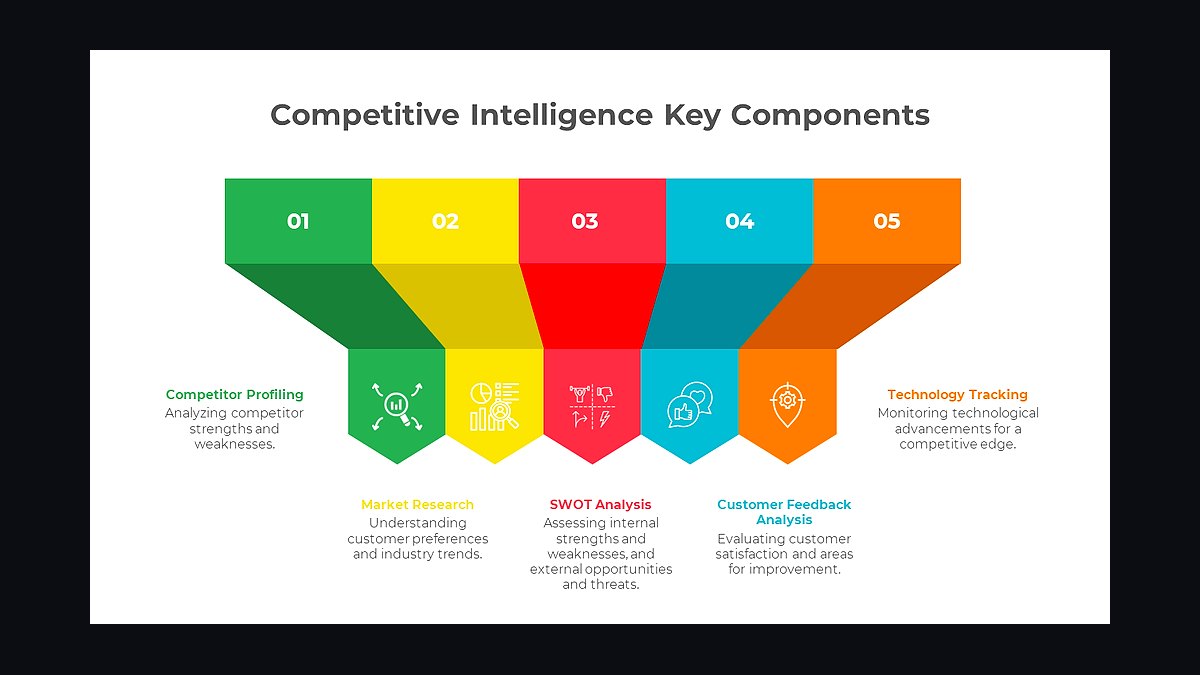
You operationalize competitive intelligence (CI) in 2027 by turning it into an always-on function — continuously monitoring competitors, maintaining battlecards reps actually use, distributing intelligence into the sales workflow at the moment of need, and feeding competitive insight back to product and marketing. CI fails when it is a one-time deck that goes stale in a month; it succeeds when it is a living operating system. The build has four parts: monitor competitors continuously, synthesize into actionable battlecards and positioning, deliver it in the rep workflow (not a buried wiki), and close the loop to strategy. The most important shift is from static documents to dynamic, in-workflow intelligence — a battlecard surfaced in the CRM when a rep enters a competitive deal beats a 40-page competitor report nobody reads. In 2027, AI makes continuous monitoring and battlecard maintenance scalable, which is what finally makes CI an operational function rather than a periodic project.
1Monitor Competitors Continuously
Operational CI starts with continuous monitoring, not annual research. Track competitors' product and pricing changes, messaging shifts, funding and hiring, customer reviews, and the win-loss signals from your own deals. Sources include competitor websites and pricing pages, review sites (G2), news, social, your sales team's field intelligence, and win-loss interviews. The goal is a living intelligence base that stays current, because competitive positioning that is six months out of date misleads reps in live deals. Continuous monitoring is the foundation that distinguishes a CI function from a one-time study.
2Synthesize Into Actionable Battlecards
Raw intelligence is useless to a rep mid-deal; synthesis is what makes it actionable. The core CI deliverable is the battlecard — a concise, per-competitor guide covering how to position against them, their strengths and weaknesses, objection handling, trap-setting questions, and proof points. Battlecards must be short, practical, and rep-focused — what to say when a prospect mentions this competitor — not exhaustive analyst reports. The synthesis turns monitoring into a weapon reps can use in the moment. Keep battlecards current (tied to the continuous monitoring) because a stale battlecard is worse than none.

3Deliver It in the Workflow
The defining operational principle: deliver intelligence where reps work, at the moment of need. Battlecards buried in a wiki go unused; battlecards surfaced in the CRM when a competitor is tagged on a deal, embedded in the sales content platform (Highspot, Seismic, or dedicated CI tools like Klue or Crayon), or pushed when a competitor is detected get used. The shift from static repository to in-workflow delivery is what separates CI that influences deals from CI that gathers dust. Make the right competitive guidance appear automatically when a rep needs it.
4Equip Reps to Use It
Even great battlecards need rep enablement. Train reps on competitive positioning, run competitive role-plays, and reinforce the messaging so reps internalize it rather than reading off a card mid-call. CI and enablement should partner so competitive handling becomes a practiced skill. The most effective CI programs make competitive positioning part of onboarding and ongoing coaching, so reps confidently handle "but Competitor X does Y" without scrambling. Intelligence plus enablement equals reps who win competitive deals.

5Close the Loop to Product and Marketing
CI is not only for sales — it should inform strategy. Route competitive insights to:
- Product — competitor capabilities and gaps that should shape the roadmap.
- Marketing — positioning and messaging adjustments to differentiate.
- Pricing — competitive pricing dynamics.
- Leadership — strategic competitive threats and opportunities.

This closed loop makes CI a company-wide strategic asset, not just a sales tool. The same monitoring that arms reps should sharpen product differentiation and marketing positioning, compounding CI's value across the business.
6Use AI to Scale CI in 2027
AI is what makes continuous CI operationally feasible in 2027. AI monitors competitors at scale — tracking website, pricing, messaging, and review changes automatically and flagging significant shifts. AI drafts and updates battlecards as intelligence changes, solving the perennial staleness problem. AI analyzes win-loss and call data to surface competitive patterns. Dedicated CI platforms (Klue, Crayon) embed AI monitoring and battlecard automation. The result is CI that stays current automatically rather than decaying between manual refreshes, with humans focusing on the strategic synthesis and judgment AI cannot replace. AI removes the maintenance burden that historically made CI a one-time effort.

6.1 Measure CI So It Earns Its Place
Competitive intelligence struggles for budget because its impact feels intangible, so operationalizing it means measuring it. The headline metric is competitive win rate — your win rate specifically in deals where a tracked competitor is present — segmented by competitor. If CI is working, competitive win rate should rise, and you should be able to attribute gains to specific actions: a re-positioned battlecard against Competitor X followed by a higher win rate against them, a trap-setting question that started surfacing in won deals. Also track battlecard usage and influence (are reps actually opening and using them, and do deals where CI was used close at higher rates?), field-intelligence contribution (are reps feeding competitor sightings back into the system?), and time-to-update (how fast a competitor's move is reflected in the battlecards). Reporting competitive win rate and battlecard influence to leadership reframes CI from a nice-to-have research function into a measurable driver of deals won against rivals. The programs that survive and grow are the ones that can point to a rising competitive win rate and tie it to their work; the ones that get cut are the ones producing intelligence nobody can connect to outcomes. Measurement also tells the CI function where to focus — which competitors are costing the most deals and deserve the deepest intelligence and sharpest battlecards. A measured CI function continuously improves and defends its budget; an unmeasured one is perpetually one cost-cutting cycle from elimination.
7Bottom Line
Operationalize competitive intelligence by monitoring competitors continuously, synthesizing into short actionable battlecards, delivering them in the rep workflow at the moment of need, enabling reps to use them, and closing the loop to product and marketing. Use AI to make continuous monitoring and battlecard maintenance scalable, solving the staleness that kills most CI. Measure competitive win rate to prove and direct the function. The shift that matters is from static decks to a living, in-workflow operating system — CI that arms reps in real deals and sharpens company strategy, not a report that goes stale in a month.

Related on PULSE
- How should a 2027 sales org run a competitive intelligence program?
- How should competitive intelligence from win-loss inform sales messaging and positioning updates?
- How do we use competitive intelligence from win-loss to guide product roadmap prioritization?
- Why does longer sales cycles in 2027 increase the need for real-time revenue intelligence?
- What signals indicate that a buying committee is nearing a decision versus still gathering vendor intelligence?
- How does Gong compare to Chorus (ZoomInfo) for conversation intelligence?
The 2027 CI Tech Stack: Choosing the Right Tools
The operationalization of CI in 2027 hinges on a lean but powerful tech stack. Most teams use a three-layer approach: continuous monitoring tools (e.g., Crayon, Klue, or competitor-specific scrapers) that track public signals—pricing changes, product launches, job postings, and review sentiment—on a daily or hourly basis. The second layer is AI synthesis engines that summarize raw data into digestible alerts, flagging only high-impact changes (e.g., a 15% price drop or a new feature release) rather than noise. The third layer is CRM-native intelligence platforms (like Gong or Chorus with CI modules, or specialized tools like Competitors.ai) that push battlecards and alerts directly into Salesforce or HubSpot deal records. A common mistake is over-investing in monitoring while under-investing in distribution—teams that spend 70% of their CI budget on monitoring and only 30% on workflow integration see adoption rates below 20%. The sweet spot in 2027 is roughly 50/50, with tools costing anywhere from $15,000 to $60,000 per year for a mid-market team, depending on the number of competitors tracked and the complexity of AI summarization required.
Measuring CI Impact: Metrics That Matter in 2027
Operational CI fails without clear metrics. The most actionable KPIs in 2027 fall into three buckets: adoption, velocity, and outcome. Adoption is measured by battlecard views per rep per week (target: 3+ views per competitive deal) and the percentage of deals where a CI alert was triggered (target: 40% of competitive opportunities). Velocity metrics track how quickly intelligence reaches the field—the gold standard is a 4-hour window from a competitor’s public announcement to a battlecard update, with top teams achieving under 2 hours using automated workflows. Outcome metrics are the hardest but most valuable: win rate improvement in competitive deals (a 5-10 percentage point lift is realistic within 6 months of full operationalization), and average deal size preservation (teams that use CI effectively avoid 10-15% discounting against specific competitors). Avoid vanity metrics like “number of reports generated” or “wiki page views”—they correlate poorly with revenue impact. Instead, tie CI directly to pipeline coverage ratios for competitive segments, and review these monthly in the sales operations rhythm.
The Human Element: Who Owns CI in 2027
Even with AI automation, CI in 2027 requires a dedicated owner or team. The most effective structure is a centralized CI function of 1-3 people (depending on company size) reporting to either product marketing or revenue operations, with dotted-line accountability to sales leadership. This team does not do all the work—they orchestrate it. Their primary role is to define the competitive market (which 5-10 competitors matter most), set up automated monitoring, train sales reps on how to use battlecards in calls, and run monthly competitive reviews with product managers. The biggest shift from 2025 is that the CI owner is no longer a researcher—they are a workflow designer who ensures intelligence appears at the right moment (e.g., when a rep logs a deal with a specific competitor tag, a battlecard auto-populates in the next screen). Companies that try to make CI a part-time responsibility for a product marketer or sales enablement manager see burnout and stale data within 90 days. A dedicated CI role commands a salary range of $95,000 to $145,000 in 2027, depending on market and experience, and pays for itself if it improves win rates on just 5-8 competitive deals per quarter.
FAQ
What is the biggest mistake companies make with competitive intelligence in 2027? Treating CI as a one-time project rather than an always-on function. A static deck or quarterly report becomes outdated within weeks, while competitors move fast. The fix is building continuous monitoring and real-time updates into your operations.
How often should battlecards be updated to stay useful? Ideally, every few days to weekly, depending on market velocity. With AI tools in 2027, you can automate the scanning of competitor moves—pricing changes, product launches, messaging shifts—so battlecards refresh without manual effort. Stale battlecards lose trust fast.
What’s the best way to deliver competitive intelligence to sales teams? Surface it directly in the CRM or sales engagement platform when a rep enters a deal with a known competitor. A one-click battlecard or snippet beats a wiki or email blast. The goal is zero friction—intelligence at the moment of need, not in a separate tool.
How do you measure if your CI program is actually working? Track win rates on competitive deals, battlecard usage rates, and rep feedback on timeliness. A good benchmark is seeing battlecards accessed in over 50% of competitive opportunities. If usage is low, the intelligence isn’t reaching reps when they need it.
Can small teams operationalize CI without a dedicated analyst? Yes, by leveraging AI monitoring tools that aggregate competitor news, social posts, and pricing changes. A single person can oversee the system, curate insights, and push updates. The key is automating the heavy lifting so the human focuses on synthesis and strategy.
How do you close the loop between CI and product strategy? Set a recurring rhythm—monthly or quarterly—where competitive insights are shared with product teams. Highlight gaps in your offering, emerging competitor features, and market positioning shifts. Without this feedback loop, CI becomes just sales support instead of a strategic input.
Sources
- Klue and Crayon competitive-intelligence platform documentation, 2026–2027
- Pavilion 2026 RevOps competitive-intelligence survey
- Gartner research on competitive intelligence and enablement, 2026
- Gong conversation-intelligence and competitive-signal research, 2026–2027
- Product Marketing Alliance competitive-intelligence benchmarks, 2026
- Forrester research on competitive positioning and battlecards, 2026–2027
Competitive intelligence review / reviews / rating / review 2027 / review of competitive intelligence
This page will be disappearing soon. Save it to your device for $1 — or read it free while it is here.
@Kory-White- · if Venmo asks, the last 4 of my number are 2012
This page is gone.
This one is off the shelf now. $1 keeps it on your phone for good — the whole page, pictures and diagrams included.
 revopsHow do you build a win-loss analysis program in 2027?
 revopsHow should RevOps adapt when buyers use AI agents to evaluate vendors in 2027?
 revopsHow do you negotiate enterprise SaaS contracts in 2027 without giving away margin?
 revopsWhat metrics matter most for renewal-driven SaaS sales in 2027?
 revopsHow do you run a multi-threaded enterprise deal across 8 or more stakeholders in 2027?
 revopsWhat is an agentic CRM and what does it mean for RevOps in 2027?
 revopsHow do you build a sales hiring scorecard that predicts rep success in 2027?
 revopsWhat's the role of customer success in revenue expansion for 2027 B2B SaaS?
 revopsWhich sales methodology should you standardize on in 2027?
 revopsHow do you fix email deliverability for sales outbound in 2027?