


How do you set up RevOps for a PLG company in 2027?
Published June 13, 2026 · Updated June 13, 2026
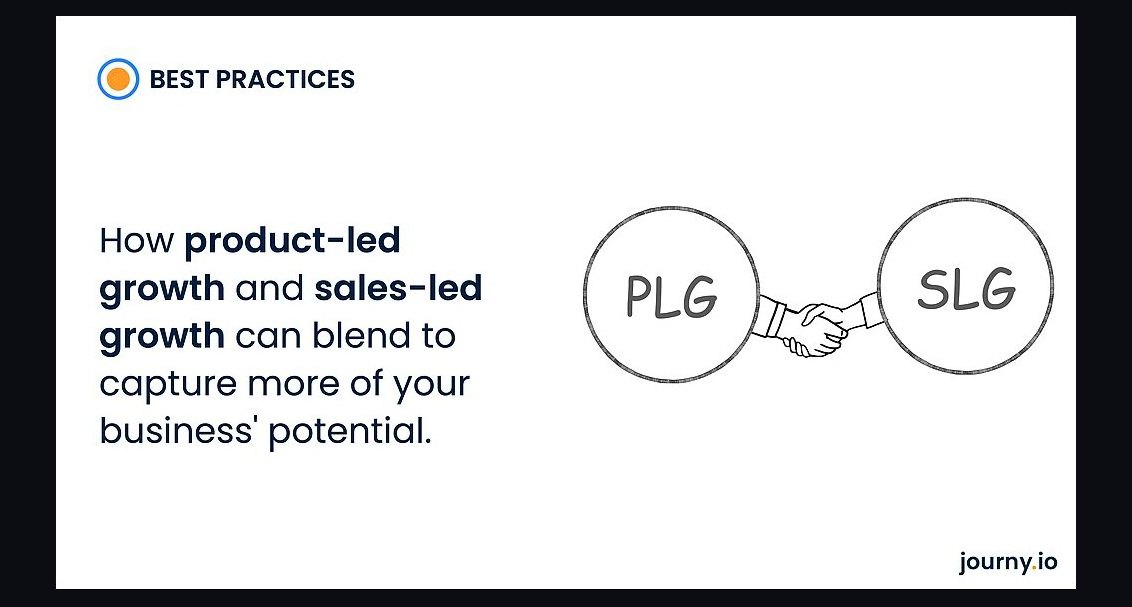
You set up RevOps for a product-led growth (PLG) company in 2027 by instrumenting product usage as the core data source, building product-qualified-lead (PQL) scoring and routing, supporting a self-serve-plus-sales hybrid motion, and measuring the PLG-specific metrics that a traditional sales-led RevOps stack ignores. PLG inverts the funnel — users adopt the product first, then convert and expand — so RevOps must be built around product data, not just CRM data. The setup has four pillars: a product analytics and data foundation, PQL identification and routing, a hybrid self-serve/sales-assist motion, and PLG metrics (activation, conversion, expansion, product-qualified pipeline). The defining difference from sales-led RevOps is that the product is the primary acquisition and qualification engine, and RevOps's job is to instrument it, surface the users worth a human touch, and operationalize the conversion and expansion that product usage signals. Most 2027 PLG companies run a hybrid, so RevOps must serve both the self-serve flywheel and the sales-assist overlay.
1Build the Product-Data Foundation
The foundation of PLG RevOps is product usage data. Instrument the product to capture activation, feature adoption, usage depth, and account-level engagement (via tools like Amplitude, Mixpanel, or June), then pipe that data into the CRM and a data warehouse so usage, user, and account information live together. Traditional RevOps starts from CRM/form data; PLG RevOps starts from what users actually do in the product. This unified product-plus-CRM data view is the precondition for everything else — PQL scoring, expansion triggers, and PLG metrics all depend on it.
2Build PQL Scoring and Routing
The PLG equivalent of the MQL is the product-qualified lead (PQL) — a user or account whose in-product behavior signals readiness to convert or expand (hit a usage threshold, adopted key features, invited teammates, approached a plan limit). RevOps builds PQL scoring from the usage data and routes high-scoring PQLs appropriately: self-serve users who can convert on their own versus PQLs worth a sales-assist touch. Getting PQL definition and routing right is central — it determines which of the many free/self-serve users deserve human attention and which convert without it. PQL scoring is to PLG what lead scoring is to sales-led, but grounded in product behavior rather than firmographics alone.

3Support the Hybrid Self-Serve + Sales Motion
Most 2027 PLG companies are hybrid — a self-serve flywheel plus a product-led sales (PLS) overlay for higher-value accounts. RevOps must operationalize both: the self-serve path (automated onboarding, in-product nurture, frictionless conversion and upgrade) and the sales-assist path (routing high-potential PQLs to reps, equipping them with product-usage context). The art is deciding which users get a human touch — low-ACV users should convert self-serve (a rep would destroy the economics), while high-potential accounts justify sales assist. RevOps designs the triggers and routing that balance the two, which is the core operational challenge of hybrid PLG.
4Measure PLG-Specific Metrics
PLG demands a different metric set than sales-led RevOps. Instrument and report:

- Activation rate — share of signups reaching the "aha" value moment.
- Free-to-paid conversion rate — the core PLG funnel metric.
- Product-qualified pipeline — pipeline generated from PQLs.
- Net revenue retention / expansion — PLG growth is heavily expansion-driven.
- Time-to-value — how fast users reach value (predicts conversion and retention).
These usage-and-conversion metrics, not just MQLs and opportunities, are how PLG RevOps measures the funnel. Activation and time-to-value especially are leading indicators a sales-led stack does not even track.

5Reduce Friction Relentlessly
In PLG, friction is the enemy because the product must sell itself. RevOps's job includes removing friction from signup, onboarding, activation, conversion, and upgrade — every step where users drop off. This means instrumenting the funnel to find drop-off points, streamlining onboarding to accelerate time-to-value, and making conversion and upgrade paths frictionless (self-serve checkout, in-product upgrade prompts). The self-serve motion lives or dies on a low-friction path from signup to value to payment, and RevOps owns the data and process work to keep that path smooth.
6Apply AI Across the PLG Motion in 2027
AI sharpens PLG RevOps on several fronts in 2027. Predictive PQL scoring trained on conversion history identifies the users most likely to convert or expand more accurately than rule-based thresholds. AI personalizes in-product onboarding and nurture to accelerate activation. AI surfaces expansion signals in usage data and even drafts the sales-assist outreach for high-value PQLs. The result is a self-serve flywheel that converts more efficiently and a sales-assist overlay aimed precisely at the highest-potential accounts. RevOps governs these models and integrates them into the product-and-CRM data flow.

6.1 Align the Org Around the PLG Flywheel, Not the Sales Funnel
The subtlest setup challenge is organizational, not technical: PLG RevOps must help the company think in flywheel terms rather than funnel terms, and align functions accordingly. In a sales-led company, marketing generates leads, sales closes them, and CS retains them in a linear handoff. In PLG, the product is simultaneously the acquisition, conversion, retention, and expansion engine, so the functions must collaborate around the product experience rather than passing leads down a line. This has concrete RevOps implications: product, growth, marketing, sales, and CS all need to share the same product-usage data and PLG metrics; ownership of the user journey is shared rather than sequential; and incentives should reward the whole flywheel (activation, conversion, expansion) rather than isolated funnel stages. RevOps is uniquely positioned to enable this by owning the unified data layer and the shared metric definitions, and by designing the cross-functional triggers — when does growth hand a PQL to sales, when does CS engage an expansion signal, when does product surface an in-app upgrade. Companies that bolt a traditional sales-led RevOps structure onto a PLG motion create constant friction, because the linear funnel model fights the flywheel reality. The RevOps leader who sets up PLG correctly designs the operating model around the product as the central engine, with humans (sales, CS) as a high-leverage overlay deployed precisely where product-led conversion needs help, and with every function reading from one shared source of product-and-revenue truth. Getting this organizational alignment right matters as much as any tool or scoring model, because it determines whether the whole motion compounds or fights itself.
7Bottom Line
Set up RevOps for a PLG company by building a product-usage data foundation, creating PQL scoring and routing, operationalizing the hybrid self-serve plus sales-assist motion, measuring PLG-specific metrics (activation, conversion, product-qualified pipeline, expansion, time-to-value), and relentlessly reducing friction. Use AI for predictive PQL scoring and personalized activation, and — critically — align the org around the product-led flywheel rather than a linear sales funnel, with every function sharing one product-and-revenue data layer. PLG RevOps is built around the product as the primary engine, with humans deployed precisely where self-serve needs help.

Related on PULSE
- How do you set up PLG billing infrastructure between payment gateways and CRMs?
- How do you set up PLG billing infrastructure between payment gateways and CRMs?
- How should a 2027 PLG company design the freemium-to-ICP funnel?
- What's the right architecture for discount governance when a company spans both sales-led enterprise and PLG SMB motion — should they operate entirely separate approval chains or integrate them?
- Should I Hire a Fractional CRO If My PLG Motion Stalls at the Sales Handoff?
- Which 2027 GTM motions (PLG, SLG, or hybrid) are most effective for selling AI tools to other AI-savvy buying committees?
The 2027 PLG RevOps Tech Stack: Beyond the CRM
In 2027, the core RevOps stack for a PLG company has shifted from a CRM-centric model to a product-data-first architecture. The essential layers include: a product analytics platform (e.g., Amplitude, Mixpanel, or Pendo) that captures every user action and feature adoption; a data warehouse or reverse-ETL tool (like Snowflake or Census) to unify product, billing, and CRM data in real time; a PQL scoring engine (often built in-house or using a tool like HeadsUp or Pocus) that weights actions like "invited 3 teammates" or "used premium feature 5 times" higher than traditional demographic firmographics; and a revenue orchestration platform (such as Gong or Clari) that ingests product signals to trigger sales-assist workflows. The CRM (Salesforce or HubSpot) remains the system of record for deals and contacts, but it is no longer the primary data source—product analytics are. A typical 2027 PLG RevOps tech stack costs between $50,000 and $150,000 annually for a mid-market company (50–200 employees), with the product analytics and data warehouse layers accounting for roughly 40–50% of that spend. The key integration is a bi-directional sync: product data flows into the CRM to enrich leads and accounts, while CRM data (e.g., deal stage) flows back to product to personalize in-app experiences.
Measuring What Matters: PLG-Specific RevOps Metrics
Traditional RevOps metrics like MQL volume or lead-to-opportunity conversion rate are largely irrelevant in a PLG context. In 2027, the core RevOps dashboard tracks activation rate (percentage of sign-ups reaching the "aha moment" within 7 days, typically 20–40% for B2B SaaS), PQL-to-paid conversion (the percentage of product-qualified users who become paying customers, often 10–25% in hybrid models), product-qualified pipeline (the total ARR value of accounts where product usage signals triggered a sales conversation, usually 30–60% of total pipeline for PLG companies), and expansion revenue from self-serve upgrades (month-over-month growth in ARR from users who upgraded without any sales touch, commonly 5–15% of monthly revenue). A critical leading indicator is time-to-value (TTV)—the median days from sign-up to the first key outcome. RevOps should track TTV weekly and partner with product teams to reduce it. For 2027 PLG companies, a healthy TTV for B2B is under 14 days for mid-market accounts. Another metric is net revenue retention (NRR) by acquisition channel: self-serve users often have lower NRR (90–110%) than sales-assisted accounts (110–130%), so RevOps must segment and report on both to justify the hybrid investment.
The RevOps-Product Partnership: Governance and Handoffs
In a 2027 PLG company, RevOps cannot operate in a silo—it must have a formal partnership with the product team. The most effective setup is a weekly "product-revenue sync" where RevOps shares PQL conversion data and product shares feature adoption trends and upcoming releases. RevOps should own the PQL scoring criteria (e.g., "user completed onboarding, used core feature X, and has >3 team members"), but the product team validates those criteria against actual retention data. A common governance model is a shared data dictionary that defines terms like "active user," "PQL," and "expansion signal" to prevent misalignment. RevOps also needs to manage the handoff from self-serve to sales-assist—typically triggered when a PQL reaches a usage threshold (e.g., 10 active users in an account) or a revenue threshold (e.g., account usage implies >$5,000 annual potential). This handoff should be automated via a workflow that creates a CRM task, sends a Slack alert to the assigned sales rep, and surfaces the user's product history in a pre-built dashboard. The cost of not having this governance is significant: companies that fail to align RevOps and product often see 20–40% of PQLs go untouched by sales, leaving revenue on the table.
FAQ
What’s the biggest mistake companies make when setting up RevOps for PLG? The most common error is treating product data as a secondary input rather than the primary source of truth. In 2027, successful PLG RevOps teams build their entire stack around product analytics first, then layer CRM data on top, not the other way around.
How do you define a product-qualified lead (PQL) in practice? A PQL is typically a user or account that has hit a specific combination of product usage milestones—like completing a key workflow, inviting teammates, or reaching a certain feature adoption threshold. The exact criteria vary by product, but the core idea is that the user’s behavior in the product signals buying intent.
Do you need a separate RevOps team for self-serve vs. sales-assist? Most companies find it more effective to have one unified RevOps team that understands both motions, rather than splitting them. The key is to build systems that can handle the handoff between self-serve and sales-triggered actions, like automated alerts when a PQL reaches a certain score.
What metrics should PLG RevOps track that differ from traditional RevOps? Beyond standard pipeline and revenue metrics, you’ll want to monitor activation rate (users reaching the “aha” moment), time-to-value, self-serve conversion rate, and product-qualified pipeline velocity. These tell you how well the product is driving acquisition and expansion.
How do you handle data privacy when using product usage for RevOps? In 2027, privacy regulations are tighter, so you need explicit consent for tracking product behavior tied to revenue signals. Many teams use anonymized usage data for scoring and only de-anonymize when a user takes a clear conversion action, like requesting a demo or starting a trial.
What’s the typical timeline for seeing results from a PLG RevOps setup? It varies widely, but most teams see initial improvements in lead-to-conversion time within 3–6 months after implementing proper PQL scoring and routing. Full optimization of the hybrid motion often takes 12–18 months, depending on data quality and team alignment.
Sources
- Amplitude, Mixpanel, and June product-analytics and PLG documentation, 2026–2027
- OpenView product-led-growth benchmarks and PLG metrics research, 2026
- Pavilion 2026 RevOps and product-led-growth survey
- Gartner research on product-led growth and product-qualified leads, 2026–2027
- Bessemer Venture Partners PLG and efficiency benchmarks, 2026
- ProductLed and Reforge PLG operating frameworks, 2026–2027
PLG RevOps review / reviews / rating / review 2027 / review of RevOps for PLG companies
People also search for: set up revops for a plg company · how to set up revops for a plg company · set up revops for a plg company guide
This page will be disappearing soon. Save it to your device for $1 — or read it free while it is here.
@Kory-White- · if Venmo asks, the last 4 of my number are 2012
This page is gone.
This one is off the shelf now. $1 keeps it on your phone for good — the whole page, pictures and diagrams included.
 revopsHow do you blend product-led and sales-led growth in 2027?
 revopsIs product-led growth (PLG) dying in 2027, or evolving into hybrid GTM?
 revopsHow do you score and route product-qualified leads in 2027?
 revopsWhat is product-led sales and how do you run a PLS motion in 2027?
 revopsHow do you transition from sales-led to PLG (product-led growth) in 2027?
 revopsWhat is the 2027 PLG vs Sales-Led growth debate for B2B SaaS?
 revopsHow do you build a bottoms-up revenue model in 2027?
 revopsHow do you structure incentives for upsell and cross-sell in 2027?
 revopsDo you need a revenue data platform in 2027?
 revopsHow do you measure ROI on AI in sales in 2027?