


How do you score and route product-qualified leads in 2027?

Published June 13, 2026 · Updated June 13, 2026
You score and route product-qualified leads (PQLs) in 2027 by defining the in-product behaviors that signal buying or expansion readiness, combining them with account-fit data into a PQL score, and routing high-scoring PQLs to the right destination — self-serve nurture, sales-assist, or expansion — based on both the score and the account's value potential. A PQL is a user or account whose product usage indicates they are ready to convert or expand, and the scoring model is the engine that separates the few users worth a human touch from the many who should convert on their own. The build has three parts: identify the predictive product signals, combine them with firmographic fit into a score, and route by score-plus-potential. The most common mistakes are scoring on vanity usage (logins) instead of value-realizing behavior, and routing everything to sales (destroying PLG economics). In 2027, predictive AI models trained on conversion history make PQL scoring far sharper than fixed thresholds.
1Define the Predictive Product Signals
PQL scoring starts with the behaviors that actually predict conversion and expansion, not just any activity. The strongest signals:
- Activation — the user reached the product's core value moment.
- Adoption depth — they use the key, sticky features.
- Breadth — multiple users or invited teammates (a team-expansion signal).
- Limit signals — approaching usage or seat caps (a natural upgrade trigger).
- Intent signals — viewed pricing or upgrade pages.

Score on value-realizing behavior, not vanity metrics like raw logins. A user who logs in daily but never reached activation is a weaker PQL than one who hit the value moment and invited their team. Choose signals by predictive power, validated against who actually converts.
2Combine Product Signals With Account Fit
Product behavior alone is not enough — a highly engaged free user at a 5-person company is a different opportunity than the same engagement at a 5,000-person enterprise. Combine the product signals with firmographic fit (company size, industry, ICP match) into the PQL score, so you capture both readiness (behavior) and value potential (fit). This two-dimensional view — like the fit-plus-behavior model in lead scoring — is what makes PQL routing smart: it tells you not just who is ready, but who is ready and worth a sales investment. Enrichment data from tools like Clearbit or ZoomInfo supplies the fit dimension.

3Build the Score From Conversion Data
The PQL score's accuracy comes from grounding it in conversion history. Analyze which behaviors and fit attributes actually preceded past free-to-paid conversions and expansions, weight the score by those real correlations, and validate it against a held-out set before trusting it. A score built from intuition ("activation = 20 points") predicts poorly; a score built from data predicts well. Retune it as the product, pricing, and customer base evolve, because PQL signals drift over time.
4Route by Score Plus Potential
Routing is where PQL scoring pays off. Route based on both the score and the account potential:

- High score, low ACV potential → self-serve conversion path (automated upgrade prompts, in-product nurture). A rep would destroy the economics.
- High score, high ACV potential → sales-assist (route to a rep with full usage context).
- High score, existing customer → expansion play (CS or account manager).
- Low score → continue automated nurture to build engagement toward PQL status.
The routing logic ensures humans engage only where they add value, which is the core economic discipline of PLG. RevOps builds these rules so the right PQL reaches the right destination automatically.

5Pass Context and Act Fast
A routed PQL must arrive with context and speed. When a PQL goes to sales, the rep needs the usage story (what they use, who is engaged, where they hit limits) to have a grounded conversation. And PQLs are time-sensitive — a user hitting a limit or viewing pricing is signaling now, so fast follow-up matters just as it does for inbound leads. RevOps wires the routing to deliver immediate, context-rich handoffs, so the sales-assist touch lands while intent is high and the rep can speak directly to the account's demonstrated behavior. Slow, context-free routing wastes the PQL signal.
6Use Predictive AI in 2027
In 2027, predictive PQL scoring trained on your conversion history outperforms fixed-threshold rules. Machine-learning models find the non-obvious behavior combinations that precede conversion and expansion, score accounts continuously, and surface the highest-probability PQLs more accurately than "hit X usage = PQL." Product-analytics and growth platforms increasingly embed this. The cautions mirror all AI in RevOps: keep the score explainable (so reps and growth teams trust and act on it) and validate predictions against outcomes. AI sharpens which users to route to humans, concentrating scarce sales capacity on the genuinely highest-potential PQLs.

6.1 Avoid the PQL Scoring and Routing Traps
Several traps quietly break PQL programs, and designing against them is what separates a working model from a misleading one. The vanity-signal trap scores on logins or page views rather than value-realizing behavior, flooding sales with users who are active but not ready — fix it by scoring on activation and depth validated against conversion. The route-everything-to-sales trap treats every PQL as a sales opportunity, which destroys PLG economics by putting expensive reps on tiny accounts — fix it by routing on score plus account potential and keeping low-ACV PQLs self-serve. The ignore-fit trap scores purely on behavior and sends reps after engaged users at companies that will never be valuable customers — fix it by combining product signals with firmographic fit. The static-threshold trap sets fixed usage cutoffs once and never updates them as the product and pricing change, so the score slowly drifts out of calibration — fix it with periodic retuning and, ideally, predictive models. The slow-routing trap detects a PQL but takes days to act, by which point the intent has cooled — fix it with real-time routing and fast follow-up. And the context-free-handoff trap sends sales a PQL with no usage story, so the rep opens with a generic pitch that wastes the product-led advantage — fix it by passing full usage context with every handoff. A PQL program that consciously avoids these six traps routes the right users to the right destination at the right moment with the right context, which is the entire point; one that stumbles into them either drowns sales in unqualified users or misses the high-intent moments that product-led selling exists to capture.
7Bottom Line
Score and route PQLs by defining value-realizing product signals (activation, depth, breadth, limits, intent), combining them with firmographic fit, building the score from conversion data, and routing by score-plus-potential — self-serve for low-ACV, sales-assist for high-ACV, expansion for customers. Pass full usage context and act fast, because PQLs are time-sensitive. Use predictive AI to sharpen scoring, and design against the vanity-signal, route-everything-to-sales, and context-free-handoff traps. Good PQL scoring concentrates scarce human capacity on the genuinely highest-potential users while letting the rest convert efficiently on their own.

Related on PULSE
- How do you sync product-qualified leads from Snowflake to HubSpot nightly?
- How do you route inbound leads from Palantir partner marketplace without breaking partner registration rules?
- How do you route marketplace-sourced leads to partners without breaking Salesforce campaign attribution?
- How Do I Get My Route Drivers to Upsell on Every Stop?
- How does the JUCO route impact NIL earnings in 2027?
- How do you route PLG free-trial signups to AE pods in HubSpot without duplicate ownership?
Avoiding the Most Common PQL Scoring Pitfalls
Even with advanced AI models, PQL scoring in 2027 fails when teams rely on surface-level engagement rather than value-realization signals. The classic mistake: scoring users who log in daily but never complete a core workflow. Instead, focus on actions that correlate with purchase intent — completing an onboarding sequence, inviting teammates, exporting data, or hitting a usage threshold tied to pricing tiers. Another common error is ignoring negative signals, like account churn risk or support tickets indicating frustration. A balanced score should weigh both positive (e.g., "used premium feature 5 times") and negative (e.g., "downgraded plan") events. Finally, avoid static scoring — update scores in near real-time as behavior changes, not batch weekly. Tools like product analytics platforms (e.g., Amplitude, Mixpanel) or CDPs (e.g., Segment, mParticle) can feed live data into your scoring model.
Routing by Score Tier and Account Potential
In 2027, routing is not one-size-fits-all. Use a score tier + account potential matrix to decide where each PQL goes. For example:
- Score 80-100 + High account potential (e.g., >50 employees, enterprise ICP): Route to sales-assist for a personal demo or trial extension.
- Score 80-100 + Low account potential (e.g., solo user, SMB): Route to self-serve conversion flow (e.g., in-app upgrade prompt, automated email sequence).
- Score 50-79 + Any potential: Route to nurture — a hybrid of automated content (case studies, ROI calculators) and low-touch chat (AI or human SDR).
- Score <50: Stay in product-led nurture (in-app tips, feature education) until behavior improves.
This prevents sales from wasting time on low-value accounts while ensuring high-potential ones get human attention. Use a CRM or routing engine (e.g., HubSpot, Salesforce, LeanData) to automate assignment based on these rules.
Measuring and Optimizing PQL Performance
Track three core metrics to know if your scoring and routing work: PQL-to-conversion rate (percentage of scored PQLs that become paying customers within 30 days), time-to-conversion (average days from PQL score trigger to deal close), and sales-assist efficiency (revenue per sales touch for routed PQLs). Benchmark against industry averages — typical PQL conversion rates range from 10-25% for B2B SaaS, while time-to-conversion can be 14-45 days depending on deal size. Run A/B tests on scoring weights (e.g., compare "feature adoption" vs. "team growth" as top signals) and routing rules (e.g., test sending all high-score PQLs to sales vs. a 50% sample). Use the results to retrain your AI model quarterly, incorporating new product usage patterns and customer feedback.
FAQ
What's the difference between a PQL and an MQL in 2027? A PQL is triggered by in-product behavior (e.g., completing a key workflow), while an MQL is based on marketing engagement (e.g., downloading a whitepaper). In 2027, PQLs are more predictive of conversion because they reflect actual value realization, not just interest signals.
How often should I update my PQL scoring model? Most teams refresh their model every 30–90 days, depending on product release cadence. If you introduce a major feature or change pricing, re-train the model within two weeks to avoid stale signals.
Can small teams with limited data build effective PQL scoring? Yes, but start with 3–5 high-confidence behavioral signals (e.g., feature adoption, team invites) and combine them with simple firmographic rules. As you collect more conversion data over 6–12 months, you can layer in predictive AI.
What's the biggest mistake when routing PQLs to sales? Routing every PQL above a score threshold to a rep, regardless of account value. This kills PLG efficiency—only route high-scoring PQLs from accounts with strong revenue potential (e.g., >50 employees or >$10k ACV) to sales; let others convert via self-serve.
How do I handle PQLs from free-tier users who never upgrade? Segment them into a "nurture" track with automated in-app prompts, email tips, and feature unlocks. Only escalate to sales if they show expansion signals (e.g., adding seats or requesting a demo) within 60–90 days.
Do I need a separate scoring model for expansion vs. new business PQLs? Yes, because the signals differ—expansion PQLs often involve team growth or feature usage spikes, while new business PQLs focus on activation milestones. Using one model for both dilutes accuracy; maintain two lightweight models or a single model with separate thresholds.
Sources
- Amplitude, Mixpanel, and June PQL and product-analytics documentation, 2026–2027
- OpenView product-qualified-lead and PLG benchmarks, 2026
- Pavilion 2026 RevOps PQL and lead-routing survey
- Gartner research on product-qualified leads and product-led sales, 2026–2027
- Clearbit and ZoomInfo enrichment and fit-scoring guidance, 2026
- Reforge and ProductLed PQL frameworks, 2026–2027
PQL scoring review / reviews / rating / review 2027 / review of PQL scoring and routing
This page will be disappearing soon. Save it to your device for $1 — or read it free while it is here.
@Kory-White- · if Venmo asks, the last 4 of my number are 2012
This page is gone.
This one is off the shelf now. $1 keeps it on your phone for good — the whole page, pictures and diagrams included.
 revopsWhat is product-led sales and how do you run a PLS motion in 2027?
 revopsHow do you build a lead routing system in 2027?
 revopsIs product-led growth (PLG) dying in 2027, or evolving into hybrid GTM?
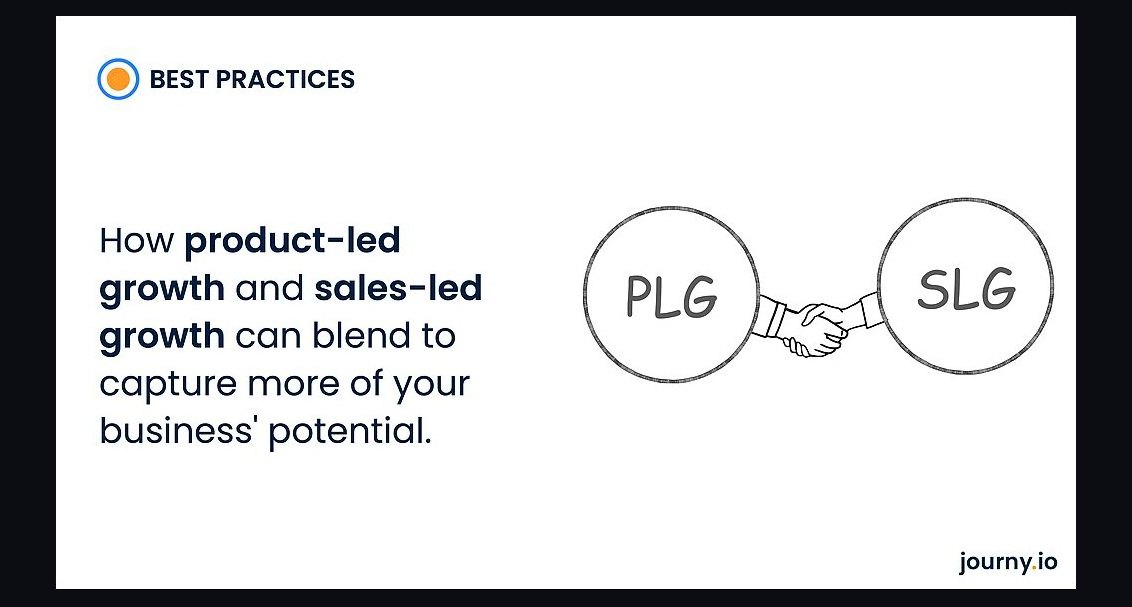 revopsHow do you blend product-led and sales-led growth in 2027?
 revopsHow do you set up RevOps for a PLG company in 2027?
 revopsHow do you transition from sales-led to PLG (product-led growth) in 2027?
 revopsHow do you build a lead scoring model that sales trusts in 2027?
 revopsWhy is annual comp planning being replaced by quarterly cycles in 2027?
 revopsHow do you run a customer expansion playbook in 2027?
 revopsHow do you evaluate and buy RevOps software in 2027?