


How do you build a sales commission audit process in 2027?
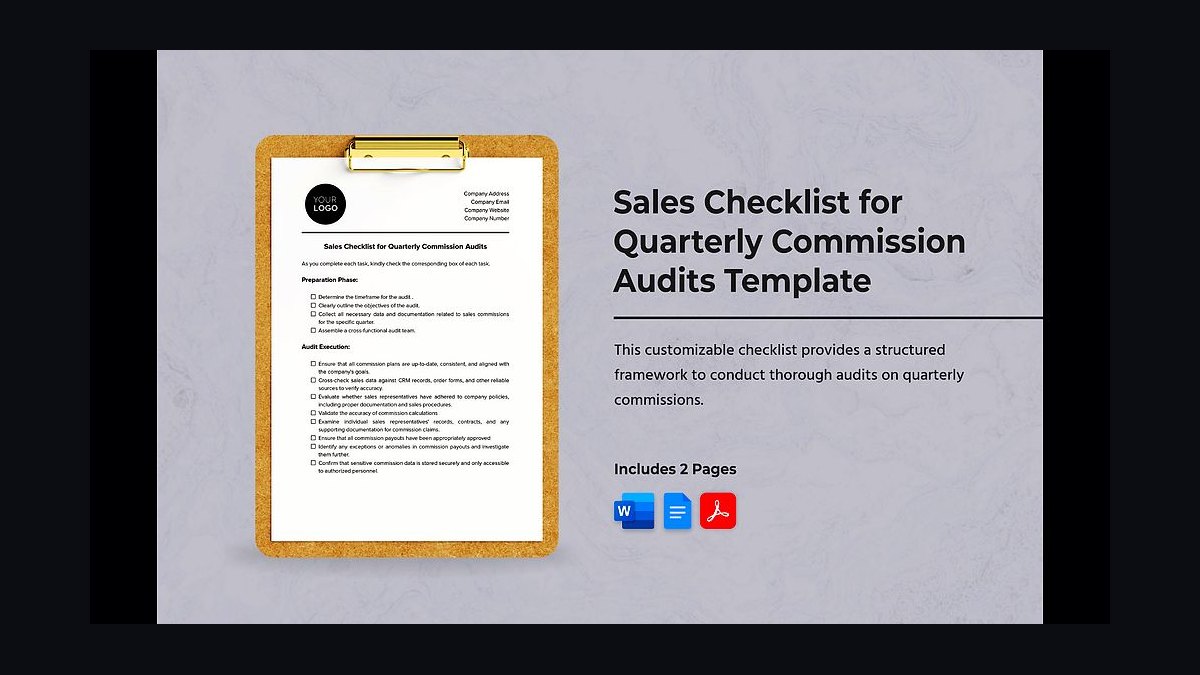
Published June 13, 2026 · Updated June 13, 2026
You build a sales commission audit process in 2027 by systematically verifying that commission calculations are accurate against the comp plan and the underlying deal data, on a regular cadence, with clear ownership and a documented trail — catching errors before they reach reps and erode trust. Commission errors are common and costly: they erode rep trust, cause disputes, create financial and compliance risk, and waste time on corrections. An audit process catches them proactively. The build has four parts: define what to verify (calculations, plan application, data accuracy), set the cadence and ownership, build the verification method (automated checks plus spot audits), and document and resolve findings. The defining principle is catch errors before payout, because fixing a wrong commission after a rep has seen it is far more damaging than catching it first. In 2027, commission automation platforms and AI make auditing far more efficient — automated calculation reduces errors, and AI flags anomalies — but the audit discipline remains essential to ensure accuracy and trust.
1Define What the Audit Verifies
A commission audit verifies several layers:
- Calculation accuracy — the math is correct (rates applied properly, totals right).
- Plan application — the correct comp plan, rates, quotas, accelerators, and rules were applied to each rep.
- Data accuracy — the underlying deals, amounts, dates, and credit attribution are correct (commission on bad data is wrong even if the math is right).
- Edge cases — splits, clawbacks, draws, exceptions, and plan changes handled correctly.

Define what gets verified across these layers so the audit is comprehensive. Many commission errors come from bad underlying data or mis-applied plan rules, not arithmetic, so the audit must check the inputs and the plan application, not just the calculation. A clear verification scope is the foundation.
2Set the Cadence and Ownership
A commission audit must be a regular process with clear ownership, not an occasional scramble. Set the cadence — typically auditing each commission cycle (monthly or per pay period) before payout, with periodic deeper audits. Assign ownership — usually RevOps or a comp-focused ops role, sometimes with finance involvement — accountable for running the audit and ensuring accuracy. The cadence ensures errors are caught every cycle before they reach reps, and clear ownership ensures the audit actually happens consistently. Without a defined cadence and owner, auditing becomes reactive (only when a rep complains), which means errors reach reps and erode trust before being caught. Build the audit into the regular commission process.

3Build the Verification Method
The audit method combines approaches:
- Automated verification — recalculate commissions independently and compare to the system output to catch calculation errors.
- Anomaly detection — flag outliers (unusually high/low payouts, unexpected changes) for review.
- Spot audits — deep-check a sample of reps/deals in detail.
- Reconciliation — reconcile commission data against the CRM (deals) and finance (payments) to catch data mismatches.

This layered method — automated checks for breadth, spot audits for depth, reconciliation for data integrity — catches the range of errors. In 2027, commission automation platforms (CaptivateIQ, QuotaPath, Salesforce Spiff) automate much of the calculation and verification, making audits far more efficient than manual spreadsheet checking. RevOps builds the verification process around these tools.
4Document the Audit Trail
A commission audit must produce a documented trail — what was checked, what was found, and how it was resolved. This documentation serves multiple purposes: compliance (an auditable record of commission accuracy, important for finance and SOX-style controls), dispute resolution (evidence when a rep questions their commission), and process improvement (patterns of recurring errors point to systemic fixes). A clear audit trail also builds confidence — finance and leadership can see commissions are verified, not just trusted. The documentation turns the audit from an informal check into a governed control. RevOps maintains the audit records as part of the commission process, ensuring traceability and accountability.

5Resolve Findings and Fix Root Causes
When the audit finds errors, resolve them before payout where possible (the whole point of pre-payout auditing), and analyze root causes to prevent recurrence. Recurring error patterns reveal systemic issues: a plan rule mis-configured in the comp tool, bad data flowing from the CRM, an attribution rule that mis-credits, or a plan ambiguity causing inconsistent application. Fixing the root cause — correcting the configuration, improving data quality, clarifying the plan — eliminates whole categories of future errors, which is far more valuable than fixing each error individually. The audit is not just error-catching; it is a feedback loop for improving the comp process. RevOps uses audit findings to continuously harden the commission system.
6Use Automation and AI in 2027
In 2027, commission automation and AI transform the audit. Automated commission platforms calculate commissions from the comp plan and deal data, dramatically reducing the manual-spreadsheet errors that audits used to catch — prevention over detection. AI anomaly detection flags unusual payouts, plan mis-applications, and data inconsistencies for review, focusing audit effort on genuine risks. AI can reconcile commission, CRM, and finance data to surface mismatches automatically. The combination means audits are faster, more thorough, and more proactive — the system prevents many errors, AI flags the rest, and humans verify the flagged items and edge cases. RevOps governs these tools, ensuring the automation is correctly configured (a mis-configured automation produces consistent errors) and the AI flags are validated. Automation reduces errors but does not eliminate the need for audit discipline — it shifts the audit toward verifying the automation and handling exceptions.

6.1 Make Accuracy and Trust the Goal, Not Just Compliance
The deeper purpose of a commission audit is protecting rep trust, and framing it that way shapes how to run it well. Commission is how reps are paid for their work, so errors are not just financial mistakes — they are trust violations that damage morale, breed cynicism about whether the company pays fairly, and in the worst cases drive good reps to leave. A rep who receives a wrong commission, even if later corrected, loses confidence that the system pays them accurately, and that erosion of trust is costly and hard to rebuild. So the audit's real goal is ensuring reps are paid accurately and on time, every time, so they trust the comp system — compliance and error-catching are means to that end. This framing argues for catching errors before payout (a corrected error after the rep has seen a wrong number still damages trust), for transparency (giving reps visibility into how their commission is calculated so they can verify it themselves, which both catches errors and builds trust), for fast, fair resolution when reps do raise questions, and for proactively communicating when the audit catches and fixes an error rather than hiding it. It also argues for treating commission accuracy as a rep-experience priority, not just a finance control — the audit protects one of the most trust-sensitive relationships in the company, between the rep and the promise that their effort will be fairly rewarded. Companies that run rigorous, proactive, transparent commission audits build a reputation for paying accurately that aids recruiting and retention; companies with sloppy, error-prone, reactive commission processes breed distrust that undermines the entire sales motivation system no matter how good the comp plan looks on paper. In 2027, with automation making accuracy more achievable than ever, there is little excuse for chronic commission errors — the audit discipline, backed by automation and AI, should make accurate, trusted commissions the reliable norm. RevOps owns this as a high-stakes responsibility, because the commission system's accuracy directly affects whether the sales team trusts that the company will pay them what they earned, which is foundational to sales motivation and retention.
7Bottom Line
Build a commission audit process by defining comprehensive verification (calculation accuracy, plan application, data accuracy, edge cases), setting a regular pre-payout cadence with clear ownership, building a layered verification method (automated checks, anomaly detection, spot audits, reconciliation), documenting the audit trail, and resolving findings while fixing root causes. In 2027, use commission automation and AI to prevent errors and flag anomalies, shifting the audit toward verifying the automation and handling exceptions. Above all, treat the audit's goal as accuracy and rep trust — catching errors before payout and being transparent — because commission is how reps are paid for their work, and chronic errors erode the trust that underpins the entire sales motivation system.

Related on PULSE
- What data sources are most effective for training AI models to predict next best action in complex enterprise deals?
- How does the expanding size of B2B buying committees increase the risk of vendor consolidation paralysis?
- Which vendor consolidation strategies are failing most often when integrating AI sales tools into existing stacks?
- Why are longer sales cycles now correlating with a shift from pipeline velocity to deal value predictability?
- What specific metrics are B2B RevOps teams using to measure AI's impact on lead quality in the top-of-funnel?
2Build the Audit Cadence and Ownership
Assign a single owner—typically a commission analyst or a finance operations lead—who is responsible for executing the audit and maintaining the process. Determine the cadence based on your payout frequency: for monthly commissions, run a full audit before each payout cycle, with spot checks on a subset of deals (e.g., high-value or unusual transactions) weekly. For quarterly plans, audit after each quarter close but include mid-quarter reviews for large deals. Document the schedule in a shared calendar and set reminders to prevent drift. In 2027, automated tools can trigger audits based on deal events (e.g., a contract signed or a quota attainment threshold crossed), reducing manual oversight. Ensure the owner has access to all source systems—CRM, billing, and commission platform—and a clear escalation path for discrepancies.
3Implement Automated Checks and Spot Audits
Leverage commission automation platforms to run continuous, rule-based checks on every deal: verify that the correct plan version was applied, that deal attributes (product, region, discount) match the comp plan, and that the calculation formula is executed correctly. These automated checks catch most errors—like incorrect tiering or missing multipliers—before payout. Complement with manual spot audits on a random sample of deals (e.g., 5-10% of transactions) to catch logic errors or data entry mistakes the automation might miss. In 2027, AI anomaly detection can flag outliers—such as unusually high commissions or deals with missing fields—for human review. Document each audit run: what was checked, what was found, and what was corrected. This creates an audit trail that builds trust with reps and satisfies compliance requirements.
FAQ
What is the single most important step in a commission audit? The most critical step is verifying calculations before any payout is made. Catching an error after a rep has seen their commission damages trust far more than fixing it beforehand. This pre-payment check is the foundation of the entire audit process.
How often should commission audits be performed? The cadence depends on your sales volume and complexity, but a common range is monthly for high-volume teams or quarterly for smaller operations. Some companies also run a full audit at the end of each quarter or year to catch any lingering issues.
Do I need special software to run a commission audit in 2027? Not necessarily, but commission automation platforms and AI tools can dramatically reduce manual work and catch anomalies automatically. Even with advanced software, you still need a human to review flagged items and ensure the system is configured correctly.
Who should own the audit process? Ownership typically sits with finance, sales operations, or a dedicated compensation team. The key is having someone who is independent from the sales team to avoid bias, and who has clear authority to correct errors before payouts are processed.
How do I handle disputes when a rep disagrees with an audit finding? Establish a clear escalation path: first review the calculation with the rep, then escalate to a manager or compensation committee if unresolved. Document every step and keep a trail of the original data, the audit check, and the resolution. This prevents repeat disputes and builds trust.
Can AI replace the need for commission audits entirely? No, AI can flag anomalies and automate calculations, but it cannot replace the human judgment needed to interpret complex plan rules or catch subtle errors in data inputs. Audits remain essential to ensure the AI itself is configured correctly and that trust is maintained with the sales team.
Sources
- CaptivateIQ, QuotaPath, and Salesforce Spiff commission-audit documentation, 2026–2027
- Pavilion 2026 RevOps commission and comp-administration survey
- Gartner research on sales compensation administration and audit, 2026
- Alexander Group and WorldatWork commission-accuracy research, 2026–2027
- The Bridge Group comp-administration benchmarks, 2026
- Forrester research on commission accuracy and rep trust, 2026–2027
Commission audit review / reviews / rating / review 2027 / review of commission audit process
People also search for: build a sales commission audit process · how to build a sales commission audit process · build a sales commission audit process guide
This page will be disappearing soon. Save it to your device for $1 — or read it free while it is here.
@Kory-White- · if Venmo asks, the last 4 of my number are 2012
This page is gone.
This one is off the shelf now. $1 keeps it on your phone for good — the whole page, pictures and diagrams included.
 revopsHow do you handle commission disputes in 2027?
 revopsHow should RevOps structure sales compensation plans in 2027?
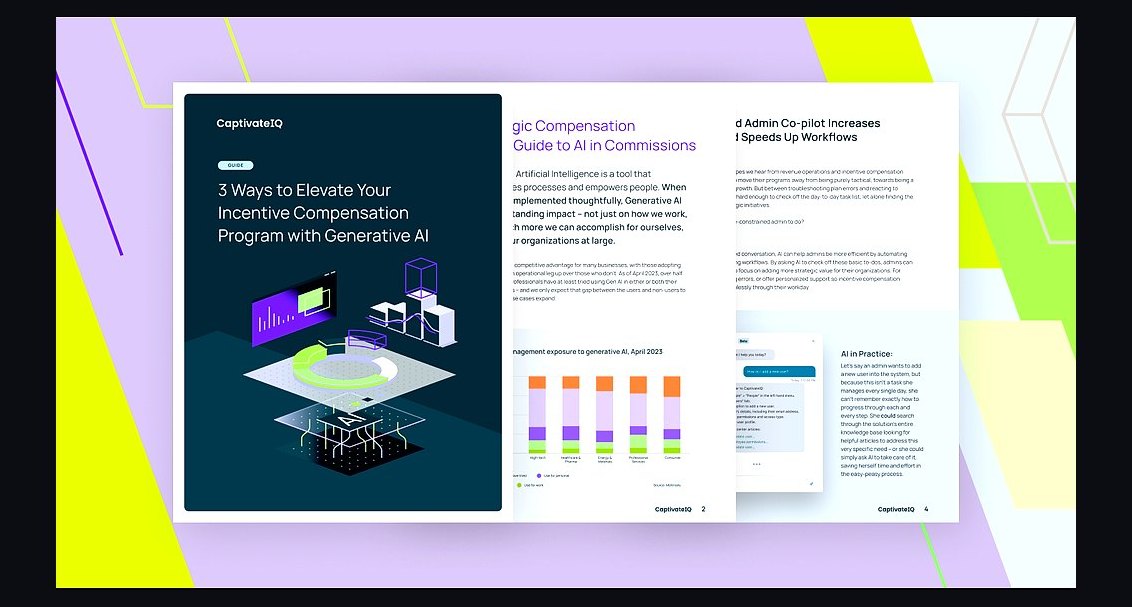 revopsHow is AI changing incentive compensation management in 2027?
 revopsHow do you set SDR quotas and comp in 2027?
 revopsHow do you set sales quotas fairly in 2027?
 revopsHow do you build a renewals process that prevents surprise churn in 2027?
 revopsHow do you consolidate an overgrown sales tech stack in 2027?
 revopsWhat skills should you hire for in a RevOps analyst in 2027?
 revopsHow do you migrate CRM platforms without losing data in 2027?
 revopsHow do you govern AI use across a revenue team in 2027?