


How do you handle commission disputes in 2027?

Published June 13, 2026 · Updated June 13, 2026
You handle commission disputes in 2027 by having a clear, documented dispute process; resolving them quickly and transparently with reference to the comp plan and deal data; treating disputes as signals of systemic issues to fix; and preventing most of them through accuracy, transparency, and a well-written plan. Commission disputes — reps contesting their commission — are inevitable, but how you handle them strongly affects rep trust and morale. The handling has four parts: a defined dispute process (how reps raise and how you resolve), fast and fair resolution grounded in the plan and data, root-cause analysis to fix systemic causes, and prevention through accuracy and transparency. The cardinal mistakes are slow or opaque resolution (which breeds distrust) and treating disputes as one-offs rather than signals. The 2027 best practice pairs commission automation and transparency (reps see how their commission is calculated, reducing disputes) with a clear, quick resolution process for the disputes that do arise. The goal is to resolve fairly, learn from each dispute, and minimize future ones.
1Establish a Clear Dispute Process
The foundation is a defined, documented dispute process so reps know how to raise a concern and what to expect. Specify: how a rep submits a dispute (a clear channel, not an ad-hoc complaint to whoever), who reviews it (RevOps/comp ops, with escalation to finance or leadership for complex cases), the expected timeline, and how the decision is communicated. A clear process makes disputes orderly and fair rather than chaotic and political. It also signals that the company takes commission accuracy seriously, which itself builds trust. Without a defined process, disputes get handled inconsistently — some reps get traction by being loud, others get ignored — which damages morale and perceptions of fairness.
2Resolve Quickly and Transparently
The most important handling principle is speed and transparency. Commission disputes touch reps' pay, so slow or opaque resolution breeds distrust and resentment. Resolve disputes promptly (a defined timeline, not weeks of silence) and transparently — explain the decision with reference to the comp plan and the deal data, showing the rep exactly how their commission was calculated and why. Whether the rep is right (correct the error) or wrong (explain clearly why the calculation is correct), the transparency and speed preserve trust. A rep who disagrees but understands the reasoning and got a fast answer is far better than one left in the dark. Ground every resolution in the objective facts — the plan and the data — so it is defensible and not arbitrary.

3Ground Resolutions in the Plan and Data
Every dispute resolution should be grounded in the comp plan and the deal data — the objective facts. Check what the plan says (the rules, rates, credit logic, accelerators) and what the data shows (the deals, amounts, dates, attribution). The resolution follows from applying the plan to the data correctly. This objective grounding is what makes resolutions fair and defensible rather than subjective or political. If the plan is ambiguous (a common dispute cause), that ambiguity must be resolved and the plan clarified. Grounding in plan-plus-data also means the clearest comp plans produce the fewest disputes — ambiguity is a major dispute source, so a well-written plan is itself dispute prevention. RevOps uses the plan and data as the neutral arbiter.
4Treat Disputes as Systemic Signals
A dispute is rarely just one rep's issue — it is often a signal of a systemic problem. Analyze disputes for patterns: recurring disputes about credit attribution point to unclear crediting rules; disputes about a specific plan element point to an ambiguous or poorly-designed plan; disputes from data errors point to data quality issues. Fixing the root cause — clarifying the crediting rule, rewriting the ambiguous plan element, improving data quality — eliminates whole categories of future disputes. Treating each dispute as a one-off and resolving it in isolation misses the chance to prevent the next ten. RevOps should track disputes, find the patterns, and feed them into plan and process improvement. The disputes are a feedback loop for a better comp system.

5Prevent Disputes Through Accuracy and Transparency
The best dispute handling is fewer disputes, achieved through accuracy and transparency. Accuracy (a rigorous commission audit process catching errors before payout) prevents the error-driven disputes. Transparency (giving reps visibility into how their commission is calculated — real-time dashboards showing their deals, credits, and payout) prevents the confusion-driven disputes, because reps can see and verify their own commission rather than wondering and contesting. A clear comp plan prevents the ambiguity-driven disputes. Together, accuracy, transparency, and plan clarity eliminate most disputes before they arise. In 2027, commission automation platforms (CaptivateIQ, QuotaPath, Spiff) provide exactly this transparency — reps see real-time commission visibility — which is one of the most effective dispute-prevention measures available. Prevention is the highest-leverage handling.
6Use Automation and AI in 2027
In 2027, commission automation and AI reduce both the volume and difficulty of disputes. Automation improves accuracy (fewer error-driven disputes) and provides real-time transparency (reps see their commission as it accrues, catching and questioning issues early rather than disputing after payout). AI can flag potential disputes before they happen (anomalies in a rep's commission) and assist resolution by quickly pulling the relevant plan rules and deal data for a disputed commission. Self-service transparency — reps able to drill into their own commission calculation — resolves many would-be disputes without any process at all, because the rep finds the answer themselves. These tools shift dispute handling from reactive correction toward proactive prevention and self-service clarity. RevOps governs the automation to ensure its accuracy and the transparency it provides.

6.1 Handle Disputes in a Way That Protects Trust and Fairness
The deeper principle in handling commission disputes is that they are trust events, and how you handle them shapes whether reps believe the company pays fairly — which is foundational to sales motivation. A dispute handled poorly (slow, opaque, dismissive, or arbitrary) tells the rep the company does not take their pay seriously and cannot be trusted to compensate them accurately, which corrodes motivation and can drive good reps out. A dispute handled well (fast, transparent, fair, grounded in objective facts, with the error corrected promptly if the rep is right and the reasoning clearly explained if they are not) tells the rep the company is committed to paying them accurately and treating them fairly, which reinforces trust even when the rep does not get the outcome they wanted. So the handling should prioritize fairness and trust, not just technical correctness: resolve quickly because pay is time-sensitive and trust-sensitive; be transparent because reps need to understand and believe the resolution; be consistent so reps see the process as fair across the team, not favoring the loud or the favored; correct genuine errors graciously and promptly without making reps fight for what they earned; and explain adverse decisions clearly and respectfully so even a rep who loses the dispute feels heard and understands the reasoning. Also watch for the systemic fairness issues disputes can reveal — if certain reps or situations systematically generate disputes, the plan or crediting rules may be unfair or unclear and need fixing for everyone, not just resolving case by case. Crucially, never let dispute handling become adversarial — the rep and the company should be on the same side (getting the commission right), not opponents, and the process should feel like collaborative verification rather than the rep having to litigate against a defensive company. The organizations that handle commission disputes well treat them as opportunities to demonstrate and reinforce that they pay fairly and accurately, resolving them in a way that builds rather than erodes trust, and using them to continuously improve the comp plan and process; those that handle disputes poorly — slowly, opaquely, defensively, inconsistently — turn each dispute into a trust-damaging event that undermines the entire sales compensation system's credibility. Given that commission is the core mechanism translating sales effort into reward, the fairness and trustworthiness of how disputes are resolved is a high-stakes responsibility that directly affects sales morale, motivation, and retention. RevOps should own dispute handling with this trust-protecting, fairness-first orientation, backed by the accuracy, transparency, and plan clarity that prevent most disputes from arising in the first place.
7Bottom Line
Handle commission disputes by establishing a clear documented dispute process, resolving quickly and transparently with reference to the comp plan and deal data, treating disputes as systemic signals to fix root causes, and preventing most disputes through accuracy (rigorous auditing), transparency (real-time commission visibility), and a clear comp plan. In 2027, commission automation provides the transparency and accuracy that prevent most disputes, and AI flags and assists resolution. Above all, handle disputes as trust events — fast, fair, transparent, non-adversarial — because how you resolve them shapes whether reps believe the company pays fairly, which is foundational to sales motivation and retention. The best handling is prevention; the next best is fast, fair, transparent resolution.

Related on PULSE
- How do you audit colo and hyperscaler partner-sourced pipeline opportunity hygiene in Salesforce during BDR-to-AE split to prevent commission disputes on split credit when SDRs on Outreach?
- How do you design a RevOps control tower in Palantir pipeline digital twins that catches commission disputes on split credit before weekly commit calls for renewal-only CS motion with legal redlines on order forms?
- How do you design a RevOps control tower in Palantir AIP that catches commission disputes on split credit before weekly commit calls for enterprise outbound with parent-company rollup reporting?
- How do you design a RevOps control tower in Palantir Foundry that catches commission disputes on split credit before weekly commit calls for multi-product bundles with legal redlines on order forms?
- How do you design a RevOps control tower in Palantir Signals for GTM alerts that catches commission disputes on split credit before weekly commit calls for inbound SDR with parent-company rollup reporting?
- How do you operationalize commission disputes on split credit during multi-product bundles on Pipedrive when legal redlines on order forms?
FAQ
What is the first step a rep should take when they suspect a commission error? They should immediately review their commission statement against the comp plan and their deal data in the system. If the discrepancy remains, they should formally submit a dispute through the defined process, typically via a ticket or form, within the stated deadline.
How long does a typical commission dispute resolution take in 2027? Most companies aim to resolve disputes within one to two pay cycles, often within 30 days. The exact timeline depends on the complexity of the issue and the availability of data, but a transparent process should communicate expected timelines upfront.
Can a rep escalate a dispute if they disagree with the initial resolution? Yes, most plans include a formal escalation path, often to a manager or a compensation committee. The rep should follow the documented steps, providing any additional evidence, and expect a response within a similar timeframe as the initial review.
What happens if the comp plan itself is unclear or contradictory? Disputes arising from ambiguous plan language are treated as signals to clarify the plan. The company should resolve the dispute in the rep’s favor if the ambiguity is genuine, then update the plan for future periods to prevent recurrence.
Are commission disputes common in automated commission systems? They are less common but still occur, often due to data integration errors, manual overrides, or misinterpretation of deal terms. Automation reduces many disputes, but no system is perfect—so a clear process remains essential for the remaining cases.
How can a company prevent most commission disputes before they happen? By ensuring the comp plan is written in plain language, providing reps with real-time visibility into their commission calculations, and running regular audits of deal data and payouts. Transparency and accuracy are the strongest preventive measures.
Sources
- CaptivateIQ, QuotaPath, and Salesforce Spiff commission-transparency documentation, 2026–2027
- Pavilion 2026 RevOps commission and dispute-handling survey
- Gartner research on sales compensation administration and disputes, 2026
- Alexander Group and WorldatWork commission-dispute research, 2026–2027
- The Bridge Group comp-administration and rep-trust benchmarks, 2026
- Forrester research on commission fairness and rep retention, 2026–2027
Commission dispute review / reviews / rating / review 2027 / review of commission dispute handling
This page will be disappearing soon. Save it to your device for $1 — or read it free while it is here.
@Kory-White- · if Venmo asks, the last 4 of my number are 2012
This page is gone.
This one is off the shelf now. $1 keeps it on your phone for good — the whole page, pictures and diagrams included.
 revopsHow do you build a sales commission audit process in 2027?
 revopsHow should RevOps structure sales compensation plans in 2027?
 revopsHow do you set sales quotas fairly in 2027?
 revopsHow do you set SDR quotas and comp in 2027?
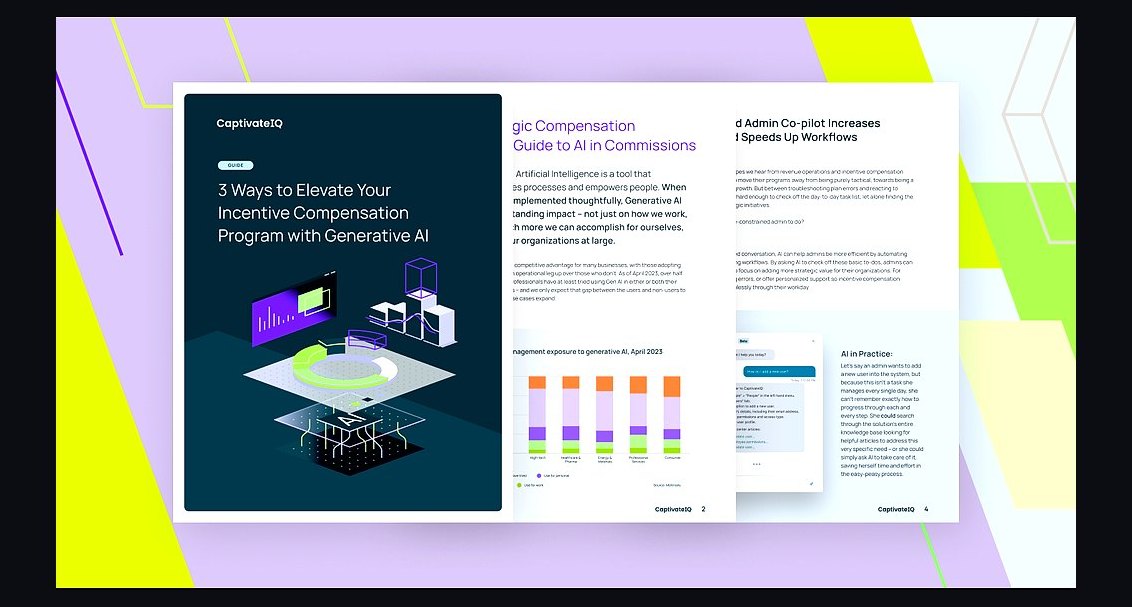 revopsHow is AI changing incentive compensation management in 2027?
 revopsHow do you operationalize account-based marketing in 2027?
 revopsHow do you measure sales velocity in 2027?
 revopsHow do you build a lead-to-revenue waterfall in 2027?
 revopsHow do you write a RevOps charter that executives actually use in 2027?
 revopsHow do you structure incentives for upsell and cross-sell in 2027?