


How much do Texas A&M women’s basketball players earn from NIL in 2027?
Quality
Certified
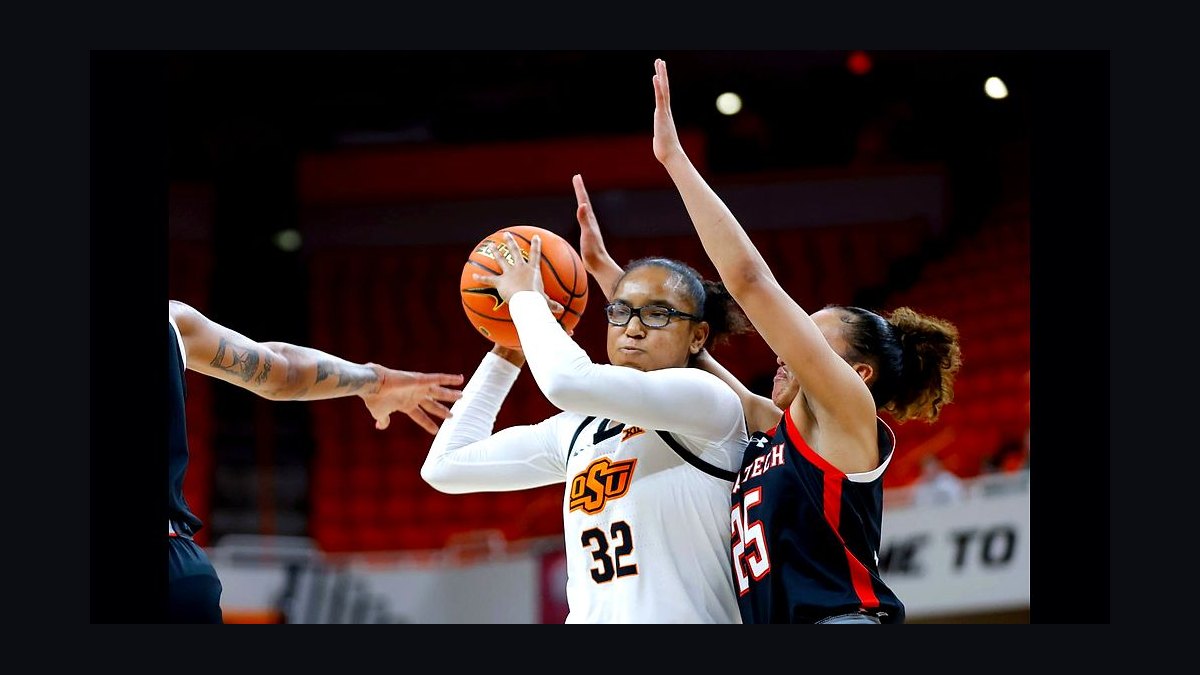
A Texas A&M women's basketball player in 2027 typically earns between $15,000 and $150,000 combining revenue share and NIL deals, with the program's most marketable stars reaching $150,000–$600,000+. Texas A&M sits inside the SEC and benefits from the 12th Man donor base, but football consumes most of the department's roughly $20.5 million revenue-sharing pool, so women's basketball players lean more heavily on collective and endorsement money than on the direct institutional check.
The Two Paths to NIL Money
Every Texas A&M women's basketball player in 2027 is really pulling income from two structurally different systems, and understanding the difference between them explains almost all of the variation in what individual players take home.
Path one is direct revenue sharing from the university. Since the House v. NCAA settlement took effect for the 2025–26 academic year, Texas A&M — like every power-conference athletic department — can pay its athletes directly out of a capped internal budget, set at roughly $20.5 million per department to start and rising about 4 percent annually toward the $22–23 million range by 2027–28. This is money that flows from the school itself, the same way a company allocates a fixed compensation budget across departments. Football claims the largest single slice of that pool at a program like A&M, where football revenue and football roster needs dwarf every other sport combined. Women's basketball receives an allocation, but it is a role-weighted slice of what is left after football and men's basketball take their share — meaningful for a marquee starter, thin for a walk-on.

Path two is third-party NIL: collectives, endorsements, and personal-brand deals. This is money that never touches the university's ledger. It comes from the 12th Man-affiliated collective, regional Texas brands, national apparel and beverage companies, and social platforms where a player's following converts into sponsored content. This layer existed before the House settlement and still operates under its own rules — specifically the NIL Go clearinghouse, run in partnership with Deloitte, which reviews any third-party deal worth $600 or more to confirm it reflects genuine fair-market value rather than disguised pay-for-play.
The practical difference between the two paths matters enormously for how a player should think about her own earning potential. Revenue share is closer to a salary: it is allocated by the athletic department based on roster role, recruiting priority, and retention value, and a player has limited ability to negotiate it upward through anything other than performance and leverage in the transfer portal. Third-party NIL is closer to a small business: it scales with audience size, engagement, regional visibility, and how well a player and her representation package her personal brand to sponsors. A player who is a quiet, efficient rotation piece might pull a stable revenue-share number but see little collective interest. A player who is a modest contributor on the floor but has cultivated a large, engaged following on TikTok or Instagram can sometimes out-earn a more productive but less visible teammate purely through path two.

This dual-path structure is not unique to A&M — it is now the framework at every SEC school and most power-conference programs — but the ratio between the two paths differs sharply by institution. A football-revenue-dominant school like Texas A&M skews path one toward football, which means A&M's women's basketball players are more dependent on path two, the collective and endorsement layer, than players at a school where the athletic department deliberately balances revenue share more evenly across men's and women's programs. Athletic department budget allocators watching this shift essentially run a resource-planning exercise similar to a RevOps team deciding how to split a fixed budget across territories: football is the anchor account generating the bulk of the pool, and every other program, including women's basketball, is allocated a percentage down from that top-line number rather than funded independently.
How to Decide Between Them
For a Texas A&M player, an agent, or a family trying to project 2027 earnings, the real decision is not "which path pays more" in the abstract — both paths stack, and nearly every scholarship player draws from both simultaneously. The decision that actually matters is where to invest limited time and effort: building on-court value that drives the revenue-share allocation, or building off-court brand value that drives collective and endorsement money. The flow below is the practical way players and their representation actually work through that question.

For most Texas A&M women's basketball players, the honest answer is not either/or — it's sequencing. Freshmen and non-rotation players have almost no leverage in path one, since revenue share tracks proven production and recruiting value, so their early-career effort is better spent establishing an authentic, consistent presence on the platforms where women's basketball audiences have grown fastest. Established starters and proven contributors, by contrast, have real leverage in path one because A&M has retention incentive to keep them off the transfer portal, and that leverage is worth protecting through consistent performance rather than chasing every brand opportunity that requests time away from practice.
The decision also depends heavily on a factor players often underweight: national team success. A deep NCAA Tournament run doesn't just raise a program's revenue-share ceiling over time — it immediately lifts the market value of every player on the roster in the collective and endorsement layer, because brands pay for exposure and exposure spikes hardest during March. A player deciding how to allocate her limited bandwidth in January and February should weight path two more heavily in a tournament year, since the marginal value of a strong social presence compounds during a run in a way that a marginal revenue-share dollar does not.
Concrete Numbers Behind Each Option

Texas A&M's roster in 2027 breaks into rough earning tiers, and the numbers below reflect the realistic combined total across both paths — not one path in isolation, since almost no player draws from only one.
- Marquee stars and high-profile transfers: $150,000–$600,000+ combined. This tier is anchored by a real revenue-share allocation plus deep collective support plus regional or national endorsement deals. A&M does not currently roster a player at the multi-million-dollar tier occupied by national icons like Paige Bueckers or JuJu Watkins, whose valuations are driven by seven-figure deals with brands like Gatorade, Nike, and Bose — A&M's ceiling sits a tier below that.
- Established starters: $40,000–$150,000. This group draws a real but modest revenue-share number and consistent collective support, plus occasional regional endorsement interest tied to their role on a nationally-broadcast SEC roster.
- Rotation players: $10,000–$40,000, mostly collective-driven with a smaller revenue-share component, supplemented by camps, appearances, and modest social deals.
- Deep-bench and role players: $2,000–$15,000, almost entirely path-two money from camps, local appearances, and small social content deals, with revenue share close to negligible.
These bands are not fixed — they move every year with three variables: how the department's overall cap grows (roughly 4 percent annually per the settlement's terms), how A&M's administration chooses to split its revenue-share pool between football, men's basketball, and women's basketball, and how the team performs nationally, since tournament runs lift collective interest across the entire roster almost immediately. Women's basketball NIL valuations have grown faster year-over-year than any other women's college sport, driven by rising television ratings and a talent pool — Bueckers, Flau'jae Johnson, Angel Reese before her, JuJu Watkins — that has proven the women's game can command real national brand dollars. That macro trend lifts A&M's numbers even without a change in the program's own competitive standing, the same way a rising market lifts comparable deal sizes across an entire sales territory even when individual rep performance holds flat.

It's worth comparing A&M's numbers against the conference's true top tier to calibrate expectations correctly. South Carolina, the sport's reigning standard-bearer, and LSU, powered by Flau'jae Johnson's national brand, both fund women's basketball-specific collectives far deeper than A&M does, because both programs treat women's hoops as a primary national brand asset rather than a program that operates in football's shadow. Texas and Tennessee sit in a similar upper tier. A&M is a real, well-funded SEC program — the 12th Man base is one of the most generous in college athletics — but it is a second-tier spender specifically in women's basketball because the bulk of its revenue-share dollars are committed to football first.
Implementation Details and Sequencing

For a player, family, or representative actually trying to build a 2027 earnings strategy at Texas A&M, the process is sequential, not simultaneous — trying to do everything at once tends to produce weak results in every category rather than strong results in one.
Step one is establishing on-court value, because both paths ultimately trace back to it — minutes and production drive the revenue-share allocation directly, and they also drive the national visibility that makes collective and brand interest possible in the first place. A player with no role has almost no leverage in either system.
Step two is securing real representation that understands both the clearinghouse rules and SEC compliance requirements, since a poorly structured deal can be rejected by NIL Go for failing the fair-market-value test, wasting a brand relationship a player worked hard to build. Agencies and platforms like Opendorse have become the standard infrastructure for managing and disclosing these deals across college basketball.
Step three is building a consistent, authentic social media presence, specifically on Instagram, TikTok, and X, where women's basketball audiences have grown sharply faster than almost any other category in sports content over the past several seasons. This is not about viral moments — brands pay for reliable reach and engagement, which rewards consistency over spikes.

Step four is stacking all three revenue streams deliberately rather than passively — revenue share, collective payments, and regional or national endorsements — because the players who reach the top of A&M's earning bands are the ones actively coordinating all three rather than waiting for one to happen. This is functionally a personal go-to-market plan: know your audience, know your differentiators, and pursue the right partners rather than the first partner.
Step five is clearing every third-party deal through the NIL Go process, which reviews any deal of $600 or more for a legitimate business purpose and fair-market value. This step is not optional and skipping it risks eligibility.
Step six is treating NIL income as real, taxable income from day one — a mistake that has cost college athletes real money in the first years of this system, since NIL payments are not automatically withheld like a paycheck and require proactive planning.
Related questions
How much do Texas Longhorns women's basketball players earn from NIL in 2027?
Texas sits in the SEC's upper tier for women's basketball NIL, generally out-earning A&M at comparable roster tiers due to deeper collective funding and a stronger historical brand around the women's program specifically.
Does Texas A&M pay men's basketball players more than women's basketball players?
Generally yes in total dollars, though the gap has narrowed since 2025 as women's basketball NIL valuations have grown faster than most men's sports outside football and men's basketball.
What is the NIL Go clearinghouse and why does it matter for A&M players?

It's the Deloitte-operated review system created by the House settlement that vets third-party deals of $600 or more for fair-market value, preventing disguised pay-for-play and protecting player eligibility.
How does March Madness performance affect A&M players' NIL value?
A deep tournament run immediately increases collective and endorsement interest for every player on the roster, since national television exposure is the single biggest driver of third-party brand value in women's college basketball.
Will Texas A&M's revenue-share pool for women's basketball grow by 2028?
Likely yes — the department-wide cap rises roughly 4 percent annually per the settlement, and the university retains discretion to increase women's basketball's share if the program's national profile keeps growing.
FAQ
How much can a Texas A&M women's basketball star make in 2027? The program's most marketable players can realistically reach $150,000–$600,000+ combining revenue share, collective money, and endorsements, though A&M does not currently roster a player at the multi-million-dollar national-icon tier.
Does Texas A&M pay women's basketball players directly now?

Yes. Since the House settlement took effect for 2025–26, A&M can pay players from a revenue-sharing pool capped near $20.5 million department-wide, though women's basketball receives a modest share behind football.
Do role players earn NIL money at Texas A&M? Yes — typically $2,000–$40,000 depending on role, much of it from collective, camp, appearance, and social deals, plus the exposure benefit of playing on the SEC's national broadcast platform.
What is the NIL Go clearinghouse? The settlement-mandated review process, operated with Deloitte, that vets third-party deals of $600 or more for fair-market value to prevent disguised pay-for-play arrangements.
Why does Texas A&M trail South Carolina and LSU in women's basketball NIL? Both rivals pair elite team success with deeper women's-basketball-specific collective funding, and LSU has benefited from individual superstars. A&M is well-funded overall but directs most of its revenue-share pool to football first.
Is Texas A&M women's basketball NIL money taxable? Yes. All NIL income, from both revenue share and third-party deals, is taxable income, and players are strongly advised to work with a tax professional given that most NIL payments arrive without automatic withholding.
Sources
- https://www.ncaa.org/sports/2021/6/30/name-image-and-likeness.aspx
- https://www.on3.com/nil/
- https://opendorse.com/
- https://www.espn.com/womens-college-basketball/
- https://www.si.com/college/texas-am
- https://www.sportico.com/
- https://frontofficesports.com/
- https://www.deloitte.com/us/en/pages/consulting/solutions/nil-college-sports.html
Related on PULSE
- How much do Texas women's basketball players earn from NIL in 2027?
- What is the Texas Longhorns NIL strategy for women's basketball in 2027?
- How much do North Texas men's basketball players earn from NIL in 2027?
- How much do Texas A&M men's basketball players earn from NIL in 2027?
- How much do Texas Tech men's basketball players earn from NIL in 2027?
- How much do Texas men's basketball players earn from NIL in 2027?
This page will be disappearing soon. Save it to your device for $1 — or read it free while it is here.
@Kory-White- · if Venmo asks, the last 4 of my number are 2012
This page is gone.
This one is off the shelf now. $1 keeps it on your phone for good — the whole page, pictures and diagrams included.
 nilHow much do Gonzaga women’s basketball players earn from NIL in 2027?
 nilHow much do USC women’s basketball players earn from NIL in 2027?
 nilHow much do Villanova women’s basketball players earn from NIL in 2027?
 nilHow much do South Carolina women’s basketball players earn from NIL in 2027?
 nilHow much do Virginia Tech women’s basketball players earn from NIL in 2027?
 nilWhat is the Stanford Cardinal NIL strategy for women's basketball in 2027?
 nilHow much do Richmond women's basketball players earn from NIL in 2027?
 nilHow much do Ole Miss women’s basketball players earn from NIL in 2027?
 nilWhat is the Baylor Bears NIL strategy for women's basketball in 2027?
 nilHow much do Duke women's basketball players earn from NIL in 2027?