
How Do I Budget a Nail Salon Buildout in 2026?
 Curated byKory White · Fractional CRO · Maryland
 PULSEKNOWLEDGE LIBRARY
Quality
Certified
Budget a Nail Salon Buildout at roughly $75–$150 per square foot for a basic fit-out and $150–$250 per square foot for high-end, so a 1,200 sq ft Salon lands near $90,000–$300,000 all-in. Plumbing, source-capture ventilation, and electrical drive 30–50% of cost. Negotiate tenant improvement dollars and free rent, then hold a 15–25% contingency.
What a Nail Salon Buildout Is and Why the Budget Matters
A Nail Salon Buildout is the process of converting a raw or second-generation commercial shell into a code-compliant, revenue-ready salon: plumbing for every pedicure and manicure station, source-capture ventilation for chemical vapors, dedicated electrical, water-rated flooring, and the millwork that makes the space feel like a brand. It is not a cosmetic renovation. It is infrastructure work buried behind drywall and under slab, which is exactly why the Budget behaves so differently from a typical retail fit-out. Once the walls close, every mistake is a demolition project.
The reason the Budget matters so much is the ratio of buried cost to visible cost. On a typical 1,200 sq ft salon, the customer sees chairs, tables, lighting, and a reception desk — maybe $25,000–$50,000 of the spend. The other $70,000–$200,000 is plumbing rough-in, exhaust ducting, make-up air, panel upgrades, floor drains, and permits. None of it is merchandisable, all of it is mandatory, and almost all of it is expensive to change later. A salon owner who budgets only for the visible half opens the doors undercapitalized and then discovers the second half through change orders at premium pricing.
There is also a regulatory dimension that most first-time owners underestimate. State cosmetology boards publish minimum requirements — number of sinks, square footage per station, ventilation standards, sometimes separate hand-wash and pedicure requirements — and local building departments enforce mechanical, plumbing, and electrical codes on top of that. Those rules are not suggestions; they are the design brief. A Budget built before the design brief is a guess. A Budget built after it is a plan. The difference between the two is usually $20,000–$60,000 in avoided rework.
Finally, the Budget determines your lease negotiating posture. If you know a space needs $45,000 of plumbing and exhaust work the landlord should have delivered, you can ask for it in tenant improvement dollars, free rent, or a reduced base rate. Owners who show up without a number get whatever the landlord offers. Owners who show up with a line-item Budget negotiate from evidence. That is the practical link between this page and the broader RevOps discipline of turning vague asks into costed, defensible requests.
The Step-by-Step Buildout Budgeting Process
The sequence below is the order that keeps you from spending money twice. Each step produces an artifact the next step depends on, so skipping ahead is how budgets drift.
Step 1 — Pull the state cosmetology board requirements. Before you look at a single space, download your state board's salon construction and sanitation rules. You are looking for four numbers: minimum square feet per manicure station, minimum square feet per pedicure station, required sink count (hand-wash sinks are often separate from pedicure plumbing), and any explicit ventilation standard. In many states, pedicure stations must have a dedicated water supply and drain, and some require a floor drain or an air-gap. These numbers set your minimum viable footprint. If the rules say 50 sq ft per station and you want eight stations, you need at least 400 sq ft of station area before circulation, reception, retail, and restrooms.
Step 2 — Get a mechanical engineer to size exhaust and make-up air. This is the single highest-leverage $2,000–$6,000 you will spend. Source-capture ventilation pulls acetone and acrylic monomer vapor at the station rather than letting it drift into the room, and it must exhaust to the exterior — not recirculate. Critically, every cubic foot of air you exhaust must be replaced by make-up air, or the system starves itself and the building goes negative-pressure, which can backdraft gas appliances and pull odors from neighboring units. The engineer produces a stamped mechanical plan you can hand to contractors and, later, to the landlord as proof of what the base building must support.
Step 3 — Confirm base-building delivery condition in writing. Before signing anything, get the landlord to specify what they deliver: water service size and location, sewer stub location and invert elevation, gas capacity, electrical service amperage, roof penetration path for exhaust, and whether the roof structure can carry the curb and fan. A dry shell with no plumbing stub-outs and no roof penetration path is a $30,000–$80,000 problem disguised as a cheap rent.
Step 4 — Build a line-item Budget with unit costs. Do not budget a lump sum. Budget by station and by system: plumbing per pedicure chair, plumbing per manicure sink, exhaust per station, general exhaust, make-up air unit, panel upgrade, floor drains, flooring per square foot, millwork linear feet. Unit costs let you scale the design up or down and let you compare bids apples to apples.
Step 5 — Bid three general contractors on a fixed-price set with unit-price schedule. Give all three the same drawings and the same scope. Require a fixed price for defined work plus unit prices for anything uncertain — extra floor drain, additional circuit, unforeseen slab cutting. The unit-price schedule is what protects you from change-order games.
Step 6 — Sequence the build so plumbing and ventilation go first. Plumbing rough-in, floor drains, and exhaust ducting must be inspected before the slab is patched and the walls are closed. If you let the GC finish the front of house first, you will be cutting finished drywall to run a drain line.
Step 7 — Hold contingency and schedule inspections. Budget 15–25% of hard costs as contingency and expect three inspection gates: rough plumbing, rough electrical and mechanical, and final. Cosmetology board sign-off is usually a separate inspection after the building department clears you.
Costs, Timelines, and Typical Ranges
The ranges below reflect common U.S. metro pricing for a 1,000–1,500 sq ft salon. They are planning numbers, not quotes; labor rates, union requirements, and seismic or ADA conditions move them materially.
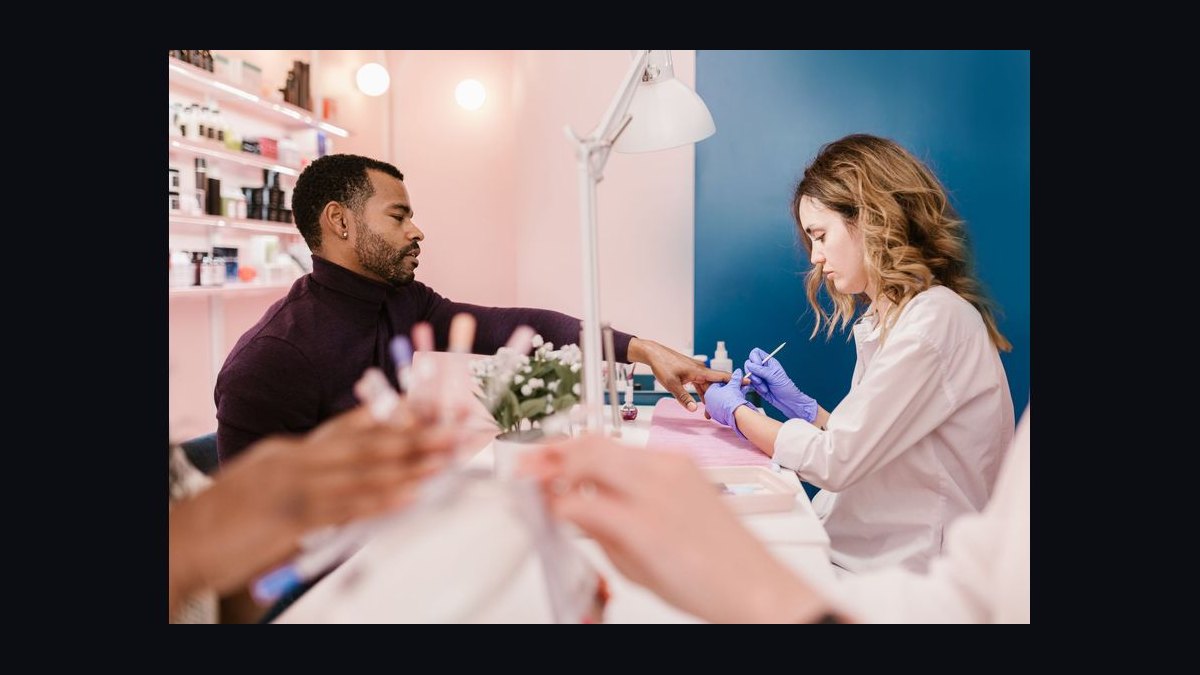
Plumbing. Pedicure chair rough-in runs $1,500–$3,500 per chair for supply, drain, and vent, assuming the drain can tie into an existing line at reasonable slope. Manicure sink rough-in runs $600–$1,200 per sink. A six-chair pedicure row plus four manicure sinks can easily reach $15,000–$25,000 before fixtures. Recessed floor drains near pedicure stations add $3,000–$6,000 each if you are cutting a post-tension slab, and much less in a wood-frame or accessible slab. A grease interceptor or solids interceptor, if required by your jurisdiction for waxing or certain solvents, runs $800–$2,500 installed.
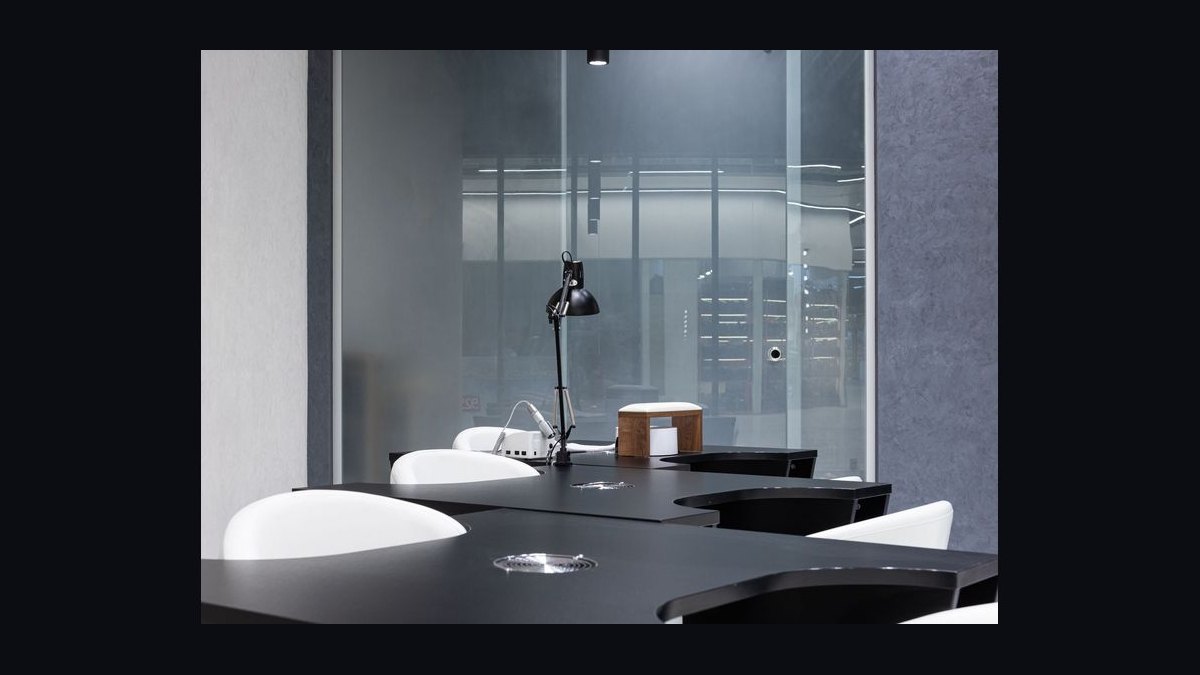
Ventilation and HVAC. Source-capture exhaust at each station, general exhaust, and a make-up air unit typically total $12,000–$35,000. Rooftop make-up air units with heating and cooling cost more than a simple fan-and-duct arrangement but solve the negative-pressure problem cleanly. If the building has no rooftop capacity or the roof is membrane over occupied space, duct routing and curb work can push this line higher. Retrofitting ventilation after opening costs roughly two to three times doing it during the Buildout because you are paying for access, patching, and re-inspection.
Electrical. $8,000–$20,000 covers station receptacles, UV/LED lamp circuits, water heaters, dedicated circuits for pedicure chair pumps, and lighting. A panel upgrade, if the existing service is undersized, adds $3,000–$8,000. If you are adding multiple tankless water heaters, confirm gas capacity or plan for electric units and the amperage they require.

Flooring and finishes. Non-porous, slip-resistant flooring — luxury vinyl tile, sealed porcelain, or epoxy — runs $5–$15 per square foot installed. Walls need moisture-resistant paint or tile at $3–$10 per square foot. For 1,200 sq ft, flooring and wall finishes combined land around $8,000–$25,000. Skimping here means replacing flooring in two years instead of ten.
Equipment. Pedicure chairs are $2,500–$6,000 new and $800–$2,000 used in good condition. Manicure tables and stations run $300–$1,200 each. Sterilization units, dryers, and lamps are modest per unit but add up across eight to twelve stations. A full equipment package for a mid-size salon typically lands $25,000–$60,000 depending on new-versus-used mix.
Soft costs. Permits for plumbing, electrical, mechanical, and fire often total $2,000–$8,000. Design and engineering run $5,000–$20,000 depending on scope. Temporary utilities, dumpster rental, and storage during construction add $1,500–$4,000. A salon or spa operating license, where required, is usually $100–$500 annually.
Timeline. From lease signing to opening, plan 8–16 weeks. Permitting takes 2–6 weeks, construction 4–8 weeks, and final inspections 1–2 weeks. Add a two-week buffer. If the space needs a change of use or a conditional use permit, add 4–12 weeks and expect neighborhood notice requirements.
Financing. Most owners blend an SBA 7(a) loan, equipment financing, and personal savings. SBA 7(a) offers up to $5 million with 10–25 year terms and variable rates typically priced off prime; expect a 10–20% down payment and a credit profile in the high 600s or better. Equipment financing for chairs, dryers, and sterilization units typically runs 6–12% over 3–7 years. Tenant improvement allowances from landlords commonly range $25–$60 per square foot for creditworthy tenants in competitive markets, sometimes higher in strong retail corridors. Avoid credit cards for construction — the effective APR will eat your opening margins. Budget $20,000–$50,000 in operating reserves because most salons take three to six months to reach break-even.
Where Teams Get the Budget Wrong
They budget the visible half. Chairs and reception desks are easy to price and easy to picture, so they dominate early spreadsheets. The buried half — plumbing, exhaust, make-up air, panel capacity, floor drains — is where the Budget actually lives. A useful discipline is to build the Budget in two columns: infrastructure and finish-out, and require infrastructure to be fully costed before any finish-out line is added.
They sign before the mechanical plan exists. A lease signed without knowing whether the roof can take an exhaust fan, whether the sewer invert allows gravity drainage from pedicure chairs, and whether the electrical service can carry the load is a lease signed blind. Every one of those unknowns becomes a change order or a landlord negotiation you have no leverage in.
They accept TI as amortized rent. Some landlords present a tenant improvement allowance that is really a loan, amortized back into base rent at 8–10% interest over the term. That is not an allowance; it is financing at above-market rates. Get the allowance as a true contribution or convert it into free rent during construction, which is cleaner and does not inflate your rent base for the rest of the term.
They miss the restoration clause. Salon buildouts are heavily customized. A clause requiring you to remove plumbing and venting and restore the base building at lease-end can cost $15,000–$40,000. Strike it, or cap it at a fixed dollar amount, or negotiate that anything permanently attached stays.
They under-budget contingency. Fifteen to twenty-five percent of hard costs is not padding; it is the realistic cost of unknowns in a space you have never opened up. A 1,200 sq ft salon with $150,000 of hard costs should carry $22,500–$37,500 of contingency, and the owner should be mentally prepared to spend it.

They forget the use clause and exclusivity. Some leases prohibit "odor-producing" or chemical uses, which can technically exclude a Nail Salon. Confirm the permitted use explicitly names nail services, and negotiate exclusivity so the landlord cannot lease the adjacent unit to a competing salon six months after you open.
They ignore CAM and percentage rent. Common area maintenance charges can escalate unpredictably. Cap annual CAM increases at 3–5% and reserve the right to audit the reconciliation. Percentage rent clauses should have a clear natural breakpoint tied to base rent, not a vague threshold.
They skip the cosmetology board pre-inspection. Many boards will do an informal pre-opening review. Taking advantage of it catches sink count, ventilation, and sanitation issues before final inspection, when fixes are cheap.

Decision Framework: When to Choose What
The choices below are the recurring forks in a Nail Salon Budget. Each one trades upfront cost against risk, flexibility, or long-run operating expense.
New versus used pedicure chairs. Choose used ($800–$2,000) when cash is tight and you can inspect and refurbish pumps and plumbing yourself or through a technician. Choose new ($2,500–$6,000) when you need warranty coverage, consistent aesthetics, and predictable service intervals. A hybrid — new chairs at the front stations, used at the back — is common and defensible.
Source capture at every station versus general exhaust only. Choose source capture at every station when your state or local code requires it, when you have more than four stations, or when technician retention matters. Choose general exhaust only when the station count is very low and the code explicitly permits it — and accept that you may be forced to upgrade later at two to three times the cost.
Rooftop make-up air unit versus ducted replacement air from a sidewall. Rooftop units cost more upfront but handle heating and cooling of replacement air, which matters in cold and hot climates. Sidewall replacement air is cheaper but can create comfort complaints and may not satisfy the engineer's balance calculation.
Landlord TI versus self-funding the infrastructure. Choose landlord TI when the space needs base-building work the landlord should logically own — service upgrades, roof penetrations, sewer tie-ins. Choose self-funding when you want full control of the schedule and the landlord's contribution would come with amortization or restrictive approvals. In practice, most deals blend: landlord funds base-building capacity, tenant funds the salon-specific distribution.
Phase the millwork or build it all at once. Choose phasing when cash is tight and the retail and reception areas can open functional-but-plain. Choose full build-out when the brand experience is the differentiator and the space is in a high-visibility location. Phasing saves $8,000–$25,000 upfront and costs you a second construction mobilization later.
SBA 7(a) versus equipment financing versus landlord allowance. Choose SBA 7(a) for the bulk of construction and working capital because of the term length. Choose equipment financing for chairs and dryers because it matches asset life and preserves SBA capacity. Choose landlord allowance where available because it is the cheapest capital in the stack — but only when it is a true contribution, not amortized rent.
Related questions
How much does a 1,000 sq ft nail salon buildout cost?
A basic fit-out runs $75,000–$150,000 and a high-end build runs $150,000–$250,000, driven mostly by plumbing, ventilation, and electrical. Add 15–25% contingency and $20,000–$50,000 in operating reserves for the ramp-up period.
Do I need a special HVAC system for a nail salon?
Yes. Standard HVAC is not designed for acetone and acrylic monomer vapor. You need source-capture exhaust vented to the exterior plus balanced make-up air, typically $12,000–$35,000 depending on station count and duct routing.
What permits does a nail salon buildout require?
Usually separate plumbing, electrical, mechanical, and fire permits, plus a certificate of occupancy and a cosmetology or salon operating license. Permit fees commonly total $2,000–$8,000, and a change of use can add weeks to the timeline.
How long does a nail salon buildout take?
Plan 8–16 weeks from lease signing to opening: 2–6 weeks permitting, 4–8 weeks construction, 1–2 weeks inspections. Add two weeks of buffer, and 4–12 weeks more if a conditional use permit is required.
Can I use a tenant improvement allowance to fund the buildout?
Yes, and you should ask. Typical allowances run $25–$60 per square foot for creditworthy tenants. Insist on a true contribution rather than an amortized amount added back into base rent at 8–10% interest.
FAQ
What is the biggest cost driver in a nail salon buildout? Plumbing and ventilation together typically account for 30–50% of the total Budget. Every pedicure chair needs dedicated hot and cold supply plus drainage, and every station needs source-capture exhaust with balanced make-up air. These are buried systems, so they must be designed and funded before finishes.
How much should I set aside for nail stations and equipment? A single station with table, chair, and ventilation hood runs $2,000–$5,000 installed. For six to ten stations, budget $12,000–$50,000 total. Pedicure chairs are the swing item: $800–$2,000 used versus $2,500–$6,000 new.
What are typical permit and inspection costs? Plumbing, electrical, mechanical, and fire permits commonly total $2,000–$8,000 in most U.S. cities. A salon or spa operating license, where required, is usually $100–$500 annually. Budget for re-inspection fees if you fail a rough inspection.
How much does flooring and wall finish cost? Non-porous, slip-resistant flooring runs $5–$15 per square foot installed, and moisture-resistant walls run $3–$10 per square foot. For a 1,000–1,200 sq ft Salon, expect $8,000–$25,000 combined. Acetone spills punish cheap flooring quickly.
Should I buy used or new pedicure chairs? Used chairs at $800–$2,000 save real cash and customers rarely notice model year. Buy new when you need warranty coverage or consistent aesthetics. Inspect used pumps and plumbing before purchase, and budget for refurbishment.
What is a realistic timeline from lease to opening? Eight to sixteen weeks for a straightforward second-generation space. Permitting is the biggest variable. Add a two-week buffer and, if a change of use or conditional use permit is required, add four to twelve weeks for hearings and notice.
Sources
- U.S. OSHA — Nail salon health hazards and ventilation guidance: https://www.osha.gov/nail-salons
- U.S. EPA — Protecting the Health of Nail Salon Workers: https://www.epa.gov/saferchoice/protecting-health-nail-salon-workers
- U.S. Small Business Administration — 7(a) loan program: https://www.sba.gov/funding-programs/loans/7a-loans
- Gordian (RSMeans) — Commercial construction cost data: https://www.gordian.com/
- JLL — Retail fit-out and tenant improvement research: https://www.jll.com/
- CBRE — Retail construction cost and market reports: https://www.cbre.com/
- Professional Beauty Association — Salon industry resources: https://www.professionalbeauty.org/
- NAILS Magazine — Salon buildout and equipment benchmarks: https://www.nailsmag.com/
- BOMA International — Base-building delivery and CAM standards: https://www.boma.org/
- International Code Council — Building and mechanical codes: https://www.iccsafe.org/
Related on PULSE
- [How Do I Budget a Salon or Spa Buildout?](/knowledge/q13727)
- [How Many Technicians Should I Schedule Each Day at My Nail Salon?](/knowledge/q15598)
- [How do you start a nail salon business in 2027?](/knowledge/q2084)
- [Should I open or buy a Frenchies Modern Nail Care franchise in 2027?](/knowledge/q15291)
- [Should I open or buy a Salon Lofts franchise in 2027?](/knowledge/q15290)
- [Should I open or buy a MY SALON Suite franchise in 2027?](/knowledge/q14819)
This page will be disappearing soon. Save it to your device for $1 — or read it free while it is here.
@Kory-White- · if Venmo asks, the last 4 of my number are 2012
This page is gone.
This one is off the shelf now. $1 keeps it on your phone for good — the whole page, pictures and diagrams included.
 pulse-qShould I open or buy a Restore Hyper Wellness franchise in 2027?
 pulse-qHow Do I Get My Reps to Follow the Sales Process in 2026?
 pulse-qHow Many Agents Do I Need to Recruit for My Real Estate Brokerage to Grow Production in 2026?
 pulse-qHow Many Employees Should I Schedule Each Shift at My Roller Rink in 2026?
 pulse-qShould I open or buy a Sugared + Bronzed franchise in 2027?
 pulse-qShould I open or buy a Cookies Crumbl alternative — Insomnia Cookies — franchise in 2027?
 pulse-qHow Do I Keep Reps From Gaming the Comp Plan in 2026?
 pulse-qShould I open or buy an It's A Grind Coffee franchise in 2027?
 pulse-qShould I open or buy an Aire Serv HVAC franchise in 2027?
 pulse-qHow do you rebuild a sales team's trust in the forecast after a mid-year CRM migration corrupts historical pipeline data in 2027?