


Should I open or buy a MOD Pizza franchise in 2027?
Quality
Certified

Probably not as a new build. MOD Pizza in 2027 is a distressed refranchising story, not a growth franchise: unit count has fallen from a 552 peak toward roughly 450, and the current FDD carries no Item 19 earnings disclosure. The only defensible entry is buying an existing unit cheap, with a renegotiated lease.
The outcome you should expect
Set your expectations by which of two entirely different deals you are actually signing. They share a logo and share nothing else.
Path A — a new ground-up MOD. Item 7 of the current FDD puts total initial investment at roughly $891,644 to $1,193,006, plus a $30,000 initial franchise fee. Third-party FDD compilations (Sharpsheets, vetmyfranchise, franchisepayback) land in the same neighborhood, around $859K to $1.25M. Because MOD publishes no Item 19, you have no franchisor-supplied revenue figure to model against. The honest comp is category data: fast-casual pizza averages roughly $1.2M AUV, and MOD's shrinking system suggests you should model *below* the category, not at it. At $1.0M–$1.2M in sales, with food and paper at 28–32%, labor at 30–34%, royalty at 5%, brand fund at 3%, and local marketing on top, a well-run unit lands somewhere around 6–10% EBITDA. That is roughly $60,000 to $120,000 of annual cash flow before debt service on a $1.05M average investment. The arithmetic is unforgiving: 8 to 11 years to return capital, and that assumes you never miss a year. There is no version of this where a new build "breaks even" in three or four years — anyone quoting you a 36-month payback on a ground-up MOD is either quoting a different brand or quoting a fantasy.
Path B — buying an existing or recently closed MOD unit through the refranchising program. This is the entire reason the topic is worth 20 hours of your time. Elite Restaurant Group, which acquired MOD in 2024, announced a comprehensive refranchising push. Refranchising a shrinking system means corporate units come to market at prices set by the seller's urgency, not by replacement cost. If you acquire a unit with functioning equipment, an existing hood, walk-in, and POS for a fraction of the ~$1.05M it would cost to build, and you renegotiate a lease originally signed at 2018–2022 peak rents, the same $95K–$120K of annual cash flow suddenly amortizes a much smaller number. That is a 3-to-4-year payback shape instead of a decade. Same operating business, radically different return, purely because of basis.
So the expected outcome is binary and it is set on the day you sign, not by how well you operate. Great operators lose on Path A. Mediocre operators survive on Path B. Do not talk yourself into Path A because Path B inventory is not available in your market this quarter — the correct move when Path B is unavailable is to wait or walk, not to substitute the worse deal.
The second expectation to set: this is an owner-operator business. MOD's assembly-line make-line model is fundamentally a labor-scheduling and food-waste exercise. Throughput at the line, portioning discipline on unlimited toppings, and matching crew hours to a spiky lunch-and-dinner curve are where the margin lives. There is no absentee version of this that clears 8% EBITDA.
What drives that outcome
Five variables move the answer, roughly in order of leverage.
1. Acquisition basis. The single largest driver, by an order of magnitude. Every $100K of purchase price you avoid is about a year of payback removed. On a distressed brand, basis is the only real margin of safety you get — the brand is not going to bail you out and neither is category tailwind.
2. Occupancy cost. Many MOD sites were leased during the 2018–2022 expansion at rents underwritten against volume assumptions the brand never hit. If a site is carrying rent at 12–14% of sales, no amount of operating skill fixes it. Rent at or under roughly 8% of sales is the line where the model works; above 10% you are running the restaurant for the landlord. In a refranchising negotiation you have unusual leverage here, because the landlord's alternative is a vacant second-generation restaurant box in a market where the previous tenant just failed.
3. Fee load against a soft AUV ceiling. 5% royalty plus 3% brand fund plus a local marketing minimum is 9–10 points off the top. On a $2.4M chicken concept, that load is absorbable. On a $1.0–1.2M pizza unit, those same points are a much larger share of the available profit pool. This is precisely why "buy the closed unit and run it as an independent" keeps showing up in the alternatives conversation — dropping the 8% saves roughly $80K a year on a $1M unit.
4. Trade-area brand awareness. MOD's density and consumer recognition are concentrated — the Pacific Northwest (the brand was founded and headquartered in the Seattle area), Texas, Colorado, the Carolinas. In those markets you inherit some demand. In a market with no MOD presence, you are paying full brand freight for a name your customers do not recognize, which is the worst of both worlds: independent-level marketing burden with franchise-level fees.
5. Franchisor durability. You are signing a 10-year-plus agreement with a system that is contracting. Ask what you are actually buying: supply chain scale, a marketing fund with enough units to matter, a tech stack, and field support. All four degrade as unit count falls. A brand fund collected at 3% of a shrinking system is a smaller and smaller marketing budget, and support staff are typically the first cost cut in a turnaround.
The diagram is not decoration — it is the underwriting order. Work the boxes top to bottom and you will usually reach a decision in the first two.
Benchmarks and realistic ranges

Because there is no Item 19, every number you use must be either a disclosed cost or a defensible outside benchmark. Here is the honest set.
Disclosed, from the FDD. Initial franchise fee: $30,000. Total initial investment: $891,644 to $1,193,006. Royalty: 5% of gross sales. Brand/marketing fund: 3% of gross sales, with an additional local marketing obligation. These are the only MOD-specific financial facts you can rely on without doing your own fieldwork.
Not disclosed. Average unit volume. Same-store sales. Unit-level P&L. Franchisee profitability distribution. Closure rate by cohort. This absence is itself the most important data point in the deck. A franchisor with strong unit economics publishes them, because a good Item 19 is the cheapest sales tool in franchising. Silence on earnings from a brand that is closing units is not a neutral omission.
Category benchmarks you can borrow. Fast-casual pizza has clustered near $1.2M AUV as a category, materially below fast-casual chicken and fast-casual Mexican, which is the structural reason the whole segment has been consolidating. Use $1.0M as your base case for a MOD unit and $1.2M as your optimistic case. If a broker hands you a pro forma above $1.3M, ask for the trailing twelve months of actual register data and stop discussing projections.
Cost structure ranges. Food and paper 28–32% of sales — MOD's unlimited-toppings positioning puts real pressure on the top of that range if portioning discipline slips, and dairy is the exposure that matters most since cheese is the single largest input on a pizza P&L. Labor 30–34%, higher in states with elevated fast-food minimums; California's fast-food wage law in particular compresses West Coast margins in a region where MOD has heavy exposure. Occupancy 7–10% at a healthy site. Royalty and brand fund 8%. Other controllables — utilities, insurance, repairs, third-party delivery commissions, credit card fees — 6–9%. Third-party delivery deserves its own line: at typical marketplace commission rates, delivery-heavy mix is materially dilutive on a $12 pizza, and volume that looks like growth on the top line can be flat or negative at the contribution-margin line.

Resulting profitability. Stack those and a competent operator lands at 6–10% EBITDA — $60K to $120K on a $1.0–$1.2M unit, before debt service and before any owner salary you take. Run the debt math before you get excited: financing 60% of a $1.05M project at prevailing SBA 7(a) rates produces monthly debt service in the five figures, which on the low end of that cash-flow band leaves you with nothing or less than nothing. Cap leverage at roughly 60–65% of project cost and bring real equity, or the deal has no margin for a bad quarter.
Ramp expectations. Do not model Year 1 at stabilized volume. A new unit typically opens with a promotional bump, gives back 15–25% over the following two to three months, and finds its true run rate somewhere in months 6–12. A reopened refranchised unit ramps differently — it inherits whatever reputation the prior operator left, which in a closed-unit scenario is usually negative and takes a couple of quarters of consistent execution to repair.
Working capital. Item 7 contemplates roughly three months of working capital. Plan on six. Undercapitalization, not competition, is what kills first-time franchise operators, and it kills them around month nine when the opening bump has faded and the first slow season arrives.
Risks, edge cases, and failure modes
No Item 19 means you cannot validate the pro forma from the franchisor. Your only substitute is Item 20 — the list of current and former franchisees, including departures. Call them. Call at least a dozen, and weight the ones who exited most heavily. Expect a minority to take your call; the ones who do will tell you more in twenty minutes than any broker deck. Ask three questions: what was your peak AUV, what was your last full year before you left, and what would you do differently. If you cannot assemble a credible AUV picture from those calls, you do not have enough information to invest a million dollars.

System contraction risk compounds. Fewer units means less purchasing scale, a smaller brand fund, thinner field support, and — critically — a weaker resale market when you want out. Illiquidity at exit is the underdiscussed risk in a shrinking franchise system: your buyer pool is other operators who are reading the same closure headlines you are. Underwrite this deal assuming you may have to operate it to the end of the term or sell it as an independent.
Franchisor financial condition. Item 21 contains audited financial statements. Read them, and have a CPA read them. If there is a going-concern qualification or tight covenant language, understand what happens to your agreement, your supply chain, and your brand fund if the franchisor restructures. Ask directly: what is the plan to stabilize the system, and what are the measurable milestones?
The lease is where most of these deals actually die. Assuming you can renegotiate is not the same as having renegotiated. Make rent relief a written condition precedent to closing, not a post-close project. A landlord's enthusiasm evaporates the moment your money is committed.
Leverage risk. The most common fatal pattern is an over-levered new build in a non-core market run by a first-time operator. Every one of those four factors is individually survivable; stacked, they are not. At 80% leverage the modeled cash flow does not cover debt service in Year 1, which means you are funding the shortfall from personal reserves during the exact period when you have the least operating certainty.
Absentee ownership. MOD's model concentrates margin in two places an owner has to watch daily: line labor scheduling against an uneven demand curve, and portion control on a build-your-own format. An absentee operator can reasonably expect to lose several points of margin within the first year — on a 6–10% EBITDA business, several points is the entire profit.

Wrong-geography risk. Opening in a market with no existing MOD presence means you are funding brand-building out of your own P&L while paying a brand fee to a system that has no local media weight to deploy. In that scenario the independent conversion math — same box, same equipment, no 8% fee load — is genuinely stronger.
Transfer and consent terms. Read Item 17 carefully. Understand transfer fees, franchisor rights of first refusal, personal guaranty scope, and what happens on renewal. In a distressed system these clauses matter more than usual because the odds you will need to use them are higher.
Edge case where the answer flips to yes. You already run three or more fast-casual units in a core MOD market. Elite has units in your trade area it wants off the books. You can acquire two or three at once at a distressed basis, fold them into an existing commissary, GM bench, and delivery contract structure, and renegotiate the leases as a package. In that scenario you are buying cash flow at a discount with near-zero greenfield risk and marginal G&A. That is a real deal. It is also a deal available to perhaps a few hundred operators nationally, which is exactly why the general answer is no.
A practical rollout plan
If you are in that narrow qualifying profile, run a disciplined 90-day process. The point of the timeline is to spend money on diligence in the right order — cheap information first, expensive information only after the cheap information survives.
Days 1–7 — Get the document. Request the current FDD from the franchisor. Read Items 3 (litigation), 5 and 6 (fees), 7 (investment), 17 (renewal, transfer, termination), 19 (confirm for yourself that it is absent), 20 (outlet tables and the franchisee contact list), and 21 (audited financials). Build the Item 20 call list before you do anything else.

Days 8–18 — Franchisee validation. Work the Item 20 list. Twelve conversations minimum, skewed toward former franchisees. Capture peak AUV, final-year AUV, occupancy cost as a percentage of sales, and their read on franchisor support. This step costs nothing but time and is the highest-value work in the entire process.
Days 19–30 — Field observation. Visit at least five open units across three different market areas, at peak and off-peak. Count transactions per hour, observe average ticket, count crew on the line. Transactions per hour × operating hours × operating days × average ticket gives you your own AUV estimate — one you built rather than one you were handed. Compare it to what Item 20 operators told you. If those two numbers disagree badly, trust the lower one.
Days 31–45 — Source the inventory. Engage the refranchising process and ask specifically for the units Elite wants off the books, not the marketed showcase locations. Filter hard: lease term remaining, rent per square foot versus market, trailing sales, equipment condition and age, and whether the site's decline was market-driven or operator-driven. Operator-driven decline is fixable; market-driven decline is not.
Days 46–60 — Professional review. Franchise counsel on the agreement, an independent CPA on Item 21 and on your own model. Have the CPA build the downside case: $900K sales, 33% food, 34% labor, 10% occupancy. If the deal survives that, it is real. If it only works at $1.2M, it is not a deal, it is a hope.
Days 61–75 — Financing. Two term sheets minimum. Target 60–65% loan-to-cost and bring the balance in equity. Stress-test debt service against the downside case, not the base case. Any structure that requires the base case to service debt should be declined.

Days 76–85 — Negotiate. In a refranchising context you have more leverage than a standard franchise applicant, so use it: reduced or waived initial fee on an existing unit, a step-down royalty for the first 18–24 months, area development rights attached to a capital commitment, and clean affiliate-transfer language. Make the lease renegotiation a written closing condition.
Days 86–90 — Decide. Sign only if all four hold: acquisition basis is a genuine discount to replacement cost, the lease is renegotiated in writing, your own AUV estimate from field work clears $1.1M, and you hold meaningful liquidity after closing. Miss any one and walk. Walking is a legitimate outcome and in 2027 it is the most common correct one.
Discipline note for operators who run any kind of pipeline process: treat this like a deal desk, not a dream. The reason a 90-day gate works is the same reason a RevOps team enforces stage exit criteria — written, objective, checked in order, with a real willingness to disqualify. Franchise buyers lose money by advancing deals emotionally past a failed gate. Define the four closing conditions above before you fall in love with a site, and hold them.
Related questions
Is buying a closed MOD location and reopening it independent a better deal?
Often yes. You keep the hood, walk-in, POS, and second-generation restaurant infrastructure while dropping roughly 8% of sales in royalty and brand fund — about $80K a year on a $1M unit. You lose supply chain pricing and brand recognition, which matters most in MOD's core markets and least everywhere else.
How much liquidity should I have after closing?
Enough to fund six months of operating shortfall without touching household finances. On a unit this size that is a low-six-figure reserve, not the three months of working capital contemplated in Item 7. Undercapitalization around month nine is the most common failure pattern for first-time franchise operators.
What does no Item 19 actually mean legally?
Franchisors are permitted, not required, to make financial performance representations. Without one, no franchisor representative may legally give you earnings figures — verbally or otherwise. Any broker or salesperson who quotes you a unit volume is doing something they should not. Your only sanctioned sources are Item 20 franchisees and your own field work.
Which fast-casual pizza brands are actually growing?
The segment has contracted broadly, but a handful of chains continue net-adding units, generally those with traditional dine-in formats or stronger off-premise economics rather than pure assembly-line fast-casual. Evaluate any of them on the same four gates: basis, occupancy, fee load, and local awareness.
FAQ
What does it cost to open a new MOD Pizza franchise?
Item 7 of the current FDD puts total initial investment at approximately $891,644 to $1,193,006, including a $30,000 initial franchise fee. That range covers build-out, equipment, signage, opening inventory, training, and an initial working capital allowance. End-cap and pad sites sit at the upper end. Independent FDD compilations report substantially the same range.
Why does MOD Pizza not publish an Item 19?
Item 19 financial performance representations are optional under the FTC Franchise Rule. MOD's current FDD does not include one, so the franchisor and its representatives cannot legally provide you with earnings figures. In a system that is contracting, the absence is meaningful: strong unit economics are a franchisor's best sales tool, and brands that have them almost always disclose them.
What are the ongoing fees?
A 5% royalty on gross sales plus a 3% brand and marketing fund contribution, with an additional local marketing obligation on top. That 8%-plus load lands on a category whose average unit volume sits near $1.2M, which is why fee burden is a much bigger factor here than in higher-volume fast-casual segments.
How long does it take to pay back a new ground-up unit?
On roughly a $1.05M average investment producing $60K to $120K of annual cash flow at a 6–10% EBITDA margin, capital return takes on the order of 8 to 11 years before debt service. That is the arithmetic, and it is the core reason a new build is difficult to justify. Acquiring an existing unit at a genuine discount to replacement cost is what compresses payback into the three-to-four-year range.
Can I run a MOD Pizza as an absentee owner?
Realistically, no. Margin in an assembly-line build-your-own format is concentrated in labor scheduling against a spiky demand curve and in portion control on unlimited toppings. Both require daily owner attention. On a business that clears single-digit EBITDA in a good year, a few points of drift consumes the entire profit.
What is the single best test of whether a specific MOD deal is worth pursuing?
Acquisition basis relative to replacement cost, checked immediately against occupancy cost as a percentage of realistic sales. If you are not buying meaningfully below the roughly $1M it costs to build one, and you cannot get rent to or under about 8% of sales in writing before closing, the rest of the diligence does not matter.
Sources
- U.S. Federal Trade Commission — Franchise Rule and Item 19 financial performance representation guidance — https://www.ftc.gov/business-guidance/resources/franchise-rule-compliance-guide
- California Department of Financial Protection and Innovation — franchise registration and FDD filings search — https://dfpi.ca.gov/
- Minnesota Department of Commerce — franchise registration filings — https://mn.gov/commerce/
- Restaurant Business Online — coverage of MOD Pizza unit counts and system health — https://www.restaurantbusinessonline.com/
- Restaurant Dive — reporting on MOD Pizza's refranchising of corporate stores — https://www.restaurantdive.com/
- QSR Magazine — coverage of MOD Pizza under Elite Restaurant Group ownership and refranchising — https://www.qsrmagazine.com/
- Nation's Restaurant News — fast-casual pizza segment consolidation and unit volume reporting — https://www.nrn.com/
- U.S. Small Business Administration — 7(a) loan program terms and eligibility — https://www.sba.gov/funding-programs/loans/7a-loans
- U.S. Bureau of Labor Statistics — Occupational Employment and Wage Statistics, food service occupations — https://www.bls.gov/oes/
- U.S. Department of Agriculture Economic Research Service — Food Price Outlook, dairy and food-away-from-home forecasts — https://www.ers.usda.gov/data-products/food-price-outlook/
Related on PULSE
- Should I open or buy an East of Chicago Pizza franchise in 2027?
- Should I open or buy a Gatti's Pizza franchise in 2027?
- Should I open or buy a Pizza Ranch franchise in 2027?
- Should I open or buy a Snappy Tomato Pizza franchise in 2027?
- Should I open or buy a Hunt Brothers Pizza franchise in 2027?
- Should I open or buy a Toppers Pizza franchise in 2027?
This page will be disappearing soon. Save it to your device for $1 — or read it free while it is here.
@Kory-White- · if Venmo asks, the last 4 of my number are 2012
This page is gone.
This one is off the shelf now. $1 keeps it on your phone for good — the whole page, pictures and diagrams included.
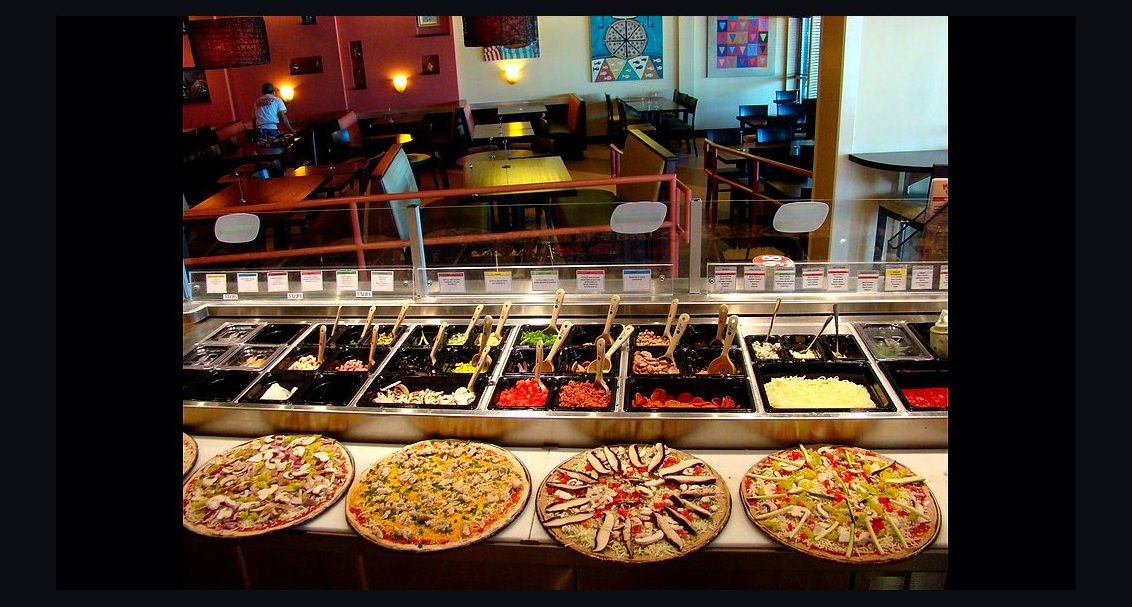 pulse-qShould I open or buy an Uncle Maddio's franchise in 2027?
 pulse-qHow Many Sales Reps Do I Need to Hire for My Commercial Laundry Company in 2026?
 pulse-qShould I open a podcast production business in 2027?
 pulse-qShould I open or buy an Amazing Athletes franchise in 2027?
 pulse-qShould I open a holiday decor business in 2027?
 pulse-qHow Do I Get My Cell Phone Store Reps to Attach Accessories in 2026?
 pulse-qShould I open a paintless dent repair business in 2027?
 pulse-qShould I open or buy a Bad Axe Throwing franchise in 2027?
 pulse-qShould I open a landscape design business in 2027?
 pulse-qShould I open or buy a Snapology franchise in 2027?