
What's the right way to sell to a government/federal buyer in 2027?
 Curated byKory White · Fractional CRO · Maryland
 PULSEKNOWLEDGE LIBRARY
Quality
Certified

The right way to sell to a government/federal buyer is to register in SAM.gov for a UEI, secure a GSA Multiple Award Schedule (MAS) contract, and align your offer with a specific procurement vehicle under FAR rules. You compete on past performance, compliance posture, and price reasonableness—never features. Expect a 6–18 month cycle requiring FedRAMP, Section 889 compliance, and disciplined capture management.
What it is and why it matters
Federal procurement is not a faster version of enterprise sales; it is a different species entirely. The federal buyer operates inside a legally binding framework—the Federal Acquisition Regulation (FAR)—designed to ensure fairness, transparency, and competition. Every dollar spent must trace to a documented requirement, a published solicitation, and an auditable award decision. For a RevOps leader, this means the sales motion is governed by compliance gates, not just relationship gates.
The market size justifies the complexity. DoD obligated approximately $456 billion in FY2024, while civilian agencies spent roughly $300 billion, per USAspending.gov. That combined $750B+ annual addressable pool is the largest single buyer of technology in the world. Yet the barriers to entry are structural: you need a SAM.gov UEI (which replaced DUNS on April 4, 2022), a CAGE code, a primary NAICS code, and—for most IT offerings—a GSA Multiple Award Schedule (MAS) contract. The GSA MAS award averages 110 days per GSA's FAS dashboard, and over 60% of first-time submissions are rejected for incomplete Pathways to Success training or missing Commercial Sales Practices (CSP-1) disclosures.
Why does this matter for RevOps specifically? Because federal sales breaks every commercial assumption about pipeline velocity, CAC payback, and win rates. Commercial mid-market SaaS typically sees a 12–18 month CAC payback with $30K–$60K acquisition costs. Federal SaaS, by contrast, demands $2.5M–$3M of pre-revenue compliance burn (FedRAMP, GSA Schedule, bid and proposal costs, capture hires) before the first dollar lands. CAC per federal logo runs $200K–$400K, ACV ranges $250K–$2M, and payback stretches to 24–48 months. The LTV is high—5-year base periods plus three 5-year options create 20-year theoretical ceilings—but the J-curve is a 3-year cash dig that kills undercapitalized startups.

The federal buyer is also structurally different. Contracting officers (COs) are evaluated on process compliance, not speed. Program managers care about mission outcomes but must express them as requirements in a Statement of Work (SOW) or Performance Work Statement (PWS). The person who says "yes" in a commercial sale is a champion; in federal, the "yes" requires a Source Selection Evaluation Board, a contracting officer's price reasonableness determination, and often a legal review. Understanding this buyer means accepting that the sale is won in the requirements definition phase—12–24 months before the RFP hits SAM.gov—not in the demo.
The step-by-step process
The federal sales motion follows a predictable sequence, but each step has sub-steps that determine success or failure. Here is the operational path, from zero to awarded contract.

Phase 1: Registration and market entry (weeks 1–8). Register in SAM.gov to obtain your UEI. This is free and takes 2–4 weeks for full activation. Obtain a CAGE code through SAM registration. Identify your primary NAICS code—511210 for SaaS, 541512 for IT systems design, 541519 for IT staffing are common—because set-aside eligibility and size standards attach to that code. Complete the GSA MAS offer under the current solicitation (47QSMD20R0001), selecting your Special Item Numbers (SINs): 54151S for IT Professional Services, 511210 for SaaS/Cloud, 54151HACS for Highly Adaptive Cybersecurity Services, or 54151ECOM for Electronic Commerce. Prepare your Commercial Sales Practices (CSP-1) disclosure, which documents your commercial pricing and discounts—this becomes the baseline for your GSA Schedule pricing.
Phase 2: Compliance infrastructure (months 2–12). If your product handles federal data, FedRAMP authorization is non-negotiable. FedRAMP Moderate runs $2M–$2.5M and 12–18 months, with the 3PAO assessment alone costing $250K–$500K. Continuous monitoring (ConMon) adds $40K–$80K per month indefinitely. Section 889 Part B compliance (effective August 13, 2020) bans the use of covered Huawei, ZTE, Hytera, Hikvision, and Dahua equipment—about 30% of would-be vendors fail this representation. If you pursue DoD contracts handling Controlled Unclassified Information (CUI), CMMC 2.0 compliance is mandatory: Level 1 self-assessment, Level 2 third-party C3PAO assessment ($60K–$300K), Level 3 DIBCAC government assessment. The 32 CFR Part 170 final rule effective December 16, 2024 phases this in through DFARS contract clauses through 2028.
Phase 3: Capture and opportunity development (months 6–24 pre-RFP). This is where federal sales diverges most sharply from commercial. Capture management starts 12–24 months before an RFP is published. Track opportunities via SAM.gov forecasts, FPDS-NG for historical awards, and agency Forecast of Contracting Opportunities pages. Build a customer call plan targeting the program manager (the mission owner), the contracting officer (the process owner), and the technical evaluators. Submit white papers and responses to RFIs to shape the requirement in your favor. Develop teaming agreements—either as a prime with subcontractors or as a sub under an 8(a), HUBZone, SDVOSB, or WOSB prime if you lack past performance.
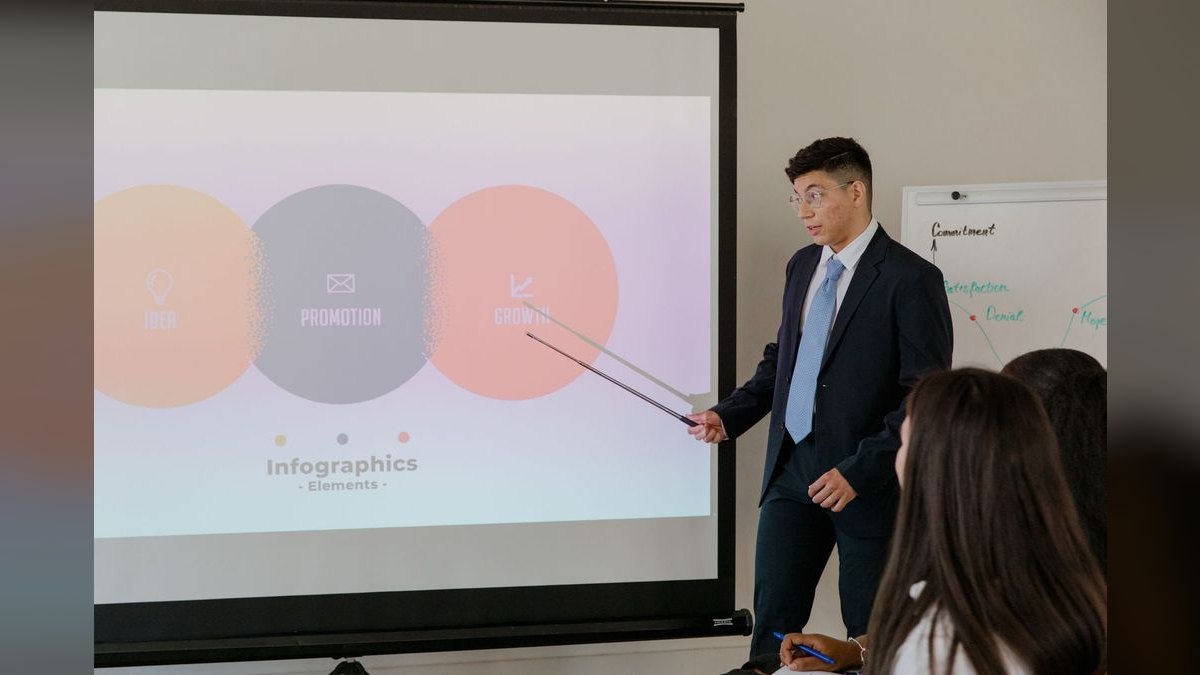
Phase 4: Proposal development and color-team reviews (weeks 8–12 pre-deadline). The proposal is a compliance document first and a sales document second. The compliance matrix—mapping every solicitation requirement to your response—is non-negotiable. Then run the color-team gauntlet: Pink Team at 40% draft to validate strategy and themes, Red Team at 90% draft for adversarial review and compliance audit, Gold Team for executive go/no-go, and White Team for final production. APMP data shows disciplined color-team review lifts win probability 25–40% versus unreviewed proposals. Bid/no-bid discipline matters more than proposal quality: maintain a 30–40% bid rate and target Pwin >40% before investing proposal dollars.
Phase 5: Discussions, BAFO, and award (months 1–6 post-submission). After initial proposals, the contracting officer establishes a competitive range, conducts discussions, and requests final proposal revisions per FAR 15.307. This is the Best and Final Offer (BAFO) moment. Amateurs discount 8–15% here; professionals hold price and trade non-price terms—transition risk, key personnel, past performance addenda. After award, a 10-day GAO bid protest window opens (5 days if debriefed). The GAO sustained or prompted corrective action in 51% of protests in FY2023, so losing bidders have real leverage. The Court of Federal Claims (COFC) offers an alternative with de novo review but no automatic stay.
Costs, timelines, and typical ranges
The financial reality of federal sales is the single most misunderstood element. Founders see the $750B market and miss the $3M entry fee. Here are the numbers that matter, with ranges you can plan against.

Compliance costs. FedRAMP Moderate authorization runs $2M–$2.5M and 12–18 months. The 3PAO assessment alone is $250K–$500K, dominated by firms like Coalfire, Schellman, and A-LIGN. Continuous monitoring is $40K–$80K per month indefinitely—that is $480K–$960K per year before you sell anything. FedRAMP High adds 50–80% more cost on top of Moderate. The 2024 OMB M-24-15 rewrite removed JAB approval and replaced it with the FedRAMP Authorization Board, simplifying agency-sponsored ATOs, but the cost structure remains. CMMC Level 2 for DoD adds $60K–$300K for the C3PAO assessment, and the full compliance overhead lands at $100K–$1M depending on your environment. If you pursue cost-reimbursable contracts, you also need a DCAA-compliant accounting system with provisional billing rates (Fringe, Overhead, G&A, F&CM)—this is a six-figure implementation in itself.
Procurement thresholds and cycles. The micro-purchase threshold is $10,000 (FAR 2.101). Simplified acquisition runs $10K–$250K with a 30–90 day cycle. Full and open competition above $250K takes 6–18 months. GSA Schedule BPAs and IDIQ task orders run 6–12 months per task order. GWACs—NIH CIO-SP4 ($50B ceiling), GSA Alliant 2 ($75B ceiling), GSA OASIS+ (services), GSA 8(a) STARS III ($50B small-business)—take 9–18 months per task order but are the high-value lanes, representing $200B+ in annual federal IT spend. Without a GWAC seat or a sub role on a GWAC prime, you are locked out of that market. Other Transaction Authority (OTA) under 10 U.S.C. 4021/4022 moves fastest: research OTAs and prototype OTAs run 60–180 days with no ceiling for prototypes, but require at least one non-traditional defense contractor or a one-third cost share. SBIR Phase I runs $50K–$295K over 6 months; Phase II runs $1M–$2M over 24 months; Phase III is sole-source eligible without a dollar ceiling, but only ~10% of Phase II awardees ever monetize a Phase III.
Bid and proposal economics. Budget 2–4% of federal revenue for B&P (Bid and Proposal) reserves. Below that, pipeline volume is too thin to hit Pwin >40%. Average proposal cost ranges $50K–$500K depending on complexity. A typical federal logo acquisition runs $200K–$400K when you include proposal labor at $150–$250 per hour loaded, capture management time, and compliance maintenance. The payback math is brutal: pre-revenue compliance burn of $2.5M–$3M, then 24–48 months to pay back CAC on a $250K–$2M ACV logo. The offset is LTV: a 5-year base plus three 5-year options creates a 20-year theoretical ceiling, and federal logo retention through option years exceeds 90%.

Agency-specific tendencies. DoD favors OTAs, Commercial Solutions Openings (CSOs), and SBIRs—DIU and AFWERX move in 60–90 days. Civilian agencies favor GSA Schedules, IDIQs, and BPAs. DHS runs EAGLE Next-Gen for IT services and FirstSource III for SDVOSB/8(a). VA's T4NG2 has a $65B ceiling with an SDVOSB Rule of Two preference (FAR 819). DOI, USDA, and NPS have lower compliance bars—good first-ATO agencies for early-stage SaaS. The Intelligence Community runs a separate IC ITE ecosystem requiring TS/SCI cleared staff, with In-Q-Tel as a strategic on-ramp. End-of-fiscal-year dynamics matter: September 30 drives ~35% of annual obligations as agencies spend use-it-or-lose-it money, while Continuing Resolutions starve new starts and protect incumbents.
Where teams get it wrong
The failure modes in federal sales are well-documented and expensive. Here are the eight recurring traps, with the operational detail that separates survivors from casualties.

Trap 1: FedRAMP burn without a sponsor agency. You cannot self-authorize FedRAMP. You need an agency sponsor that will co-author your ATO package and accept the risk. Teams that start FedRAMP before securing a sponsor burn $2M+ with no path to authorization. The fix: identify your sponsor agency early, often through a GSA Schedule sale or an SBIR award, and make the ATO a joint project.
Trap 2: Winning an SBIR Phase I and assuming Phase III follows. The SBIR program is a pipeline, not a promise. Only ~10% of Phase II awardees ever monetize a Phase III. Phase III is sole-source eligible, but agencies must choose to exercise it. Teams that treat SBIR as a revenue strategy rather than a market-entry strategy run out of cash between phases. The fix: build a commercial or non-SBIR federal pipeline in parallel.
Trap 3: Signing a GSA Schedule before commercial pricing stabilizes. The Price Reductions Clause and Most Favored Customer (MFC) disclosure lock your pricing for the life of the Schedule—a 5-year base plus three 5-year options. If you discount commercially below your tracked ratio, you owe a price reduction on every GSA order. This is historically the #1 IG audit finding and the leading False Claims Act vector. Oracle paid $199.5M in 2010, CA Inc. $111M in 2004, Carahsoft $61M in 2015, NetCracker/Computer Sciences $12.75M in 2015, IBM $14.8M in 2017, Cisco $8.6M in 2019—all over MFC pricing issues. The fix: stabilize commercial pricing first, then pursue the Schedule.

Trap 4: Accepting a sub-tier role without owning the relationship. Subcontracting under an 8(a) or other small-business prime is a legitimate market-entry strategy—it solves the past-performance problem. But if the prime owns the customer relationship and the CPARS (Contractor Performance Assessment Reporting System) score, you have no direct path to prime status later. The fix: negotiate teaming agreements that give you customer-facing exposure and a share of the CPARS credit.
Trap 5: Protesting a loss and getting informally blacklisted. GAO bid protests must be filed within 10 days of award (or 5 days post-debrief) per 4 C.F.R. 21. The effectiveness rate is 51%—sustained or corrective action. But protesting burns the contracting officer relationship. The fix: protest only when you have a genuine, material compliance violation, and weigh the relationship cost against the contract value.
Trap 6: Hiring a former government executive without managing the cooling-off period. 18 U.S.C. 207 imposes a 1–2 year cooling-off period on former senior executives. Violations trigger ethics investigations and can disqualify your proposals. The fix: document the cooling-off period, restrict the executive's involvement in specific agency interactions, and get legal review before hire.

Trap 7: Misclassifying small business size standards. Size standards attach to NAICS codes under 13 C.F.R. 121. An SBA size protest can strip your set-aside eligibility mid-performance. The fix: verify your size standard against the NAICS code in every solicitation, and maintain documentation of employee counts and revenue by code.
Trap 8: Failing to flow down FAR/DFARS clauses to subcontractors. Every prime is responsible for flowing down required clauses—including Section 889, CMMC, and cybersecurity requirements—to subs. Sub non-compliance becomes prime liability. The fix: build a clause-flow-down checklist into every subcontract and audit sub compliance annually.
Beyond these traps, the cash-flow reality kills early-stage SaaS. Net-30 commercial becomes Net-60-to-120 in federal. The Prompt Payment Act (31 U.S.C. 3902) nominally requires 30 days, but agencies delay via invoice-rejection loops. False Claims Act exposure is real: treble damages plus $13,508–$27,018 per claim (DOJ FY2024 inflation-adjusted). IG audits average 18-month timelines with discovery-heavy depositions. If ARR is under $5M, you have no federal-experienced hire with prior agency relationships, and no sponsor agency for an ATO, the expected NPV from federal is negative. Raise commercial first.
Decision framework: when to choose what
Federal sales is not right for every company, and within federal, not every vehicle fits every product. The decision framework has two layers: whether to enter at all, and which procurement path to pursue.
Entry decision. Federal works when: (a) your product solves a mission requirement no commercial alternative addresses—defense, intelligence, cybersecurity are the classic categories; (b) you have $15M+ ARR or $20M+ in unrestricted runway to absorb the 24–36 month J-curve; (c) you can hire a federal GM with a P&L track record at a peer firm; (d) you have a sponsor agency that will co-author your ATO package; and (e) your commercial pricing has stabilized so MFC lock-in does not destroy unit economics. In those conditions, federal contributes 40–70% of revenue with 90%+ logo retention through option years, and a $5M ACV federal logo is structurally lower-churn than three $1.5M commercial logos.

Vehicle selection. The procurement vehicle determines your cycle time, compliance burden, and competitive set. For early-stage companies with limited compliance infrastructure, SBIR and OTA are the fastest on-ramps—DoD's DIU and AFWERX move in 60–90 days, and prototype OTAs have no dollar ceiling. For companies with a GSA Schedule and FedRAMP Moderate, the civilian lane opens: GSA Schedule BPAs, IDIQ task orders, and agency-specific vehicles like T4NG2 (VA) or EAGLE Next-Gen (DHS). For established players with past performance, GWACs are the high-value lane: CIO-SP4, Alliant 2, OASIS+, STARS III. The two playbooks are distinct: DoD runs SBIR Phase I → Phase II → OTA → Production OTA → Phase III sole-source; civilian runs 8(a) sub → GSA Schedule → BPA → IDIQ prime → GWAC seat.
Pursuit discipline. Apply bid/no-bid gates rigorously. Score every opportunity on Pwin (probability of win), alignment with your compliance posture, and strategic value. Maintain a 30–40% bid rate—submitting on everything is a pipeline disease. Target Pwin >40% before investing proposal dollars. If you lack past performance, pursue a subcontract role under an 8(a), HUBZone, SDVOSB, or WOSB prime rather than a prime bid you will lose. If the requirement is already wired to an incumbent—visible in FPDS-NG award history—either find a different angle (teaming with the incumbent, targeting an adjacent requirement) or no-bid.
Sole-source pathways. FAR 6.302 authorizes sole-source awards under seven exceptions: only one source, unusual urgency, industrial mobilization, international agreement, statute, national security, and public interest. A skilled capture team writes the Justification and Approval (J&A) with the agency, not against them. This is legitimate and common—the J&A is the document that justifies bypassing competition. If you have a unique capability, invest in helping the agency write a defensible J&A. This is also how SBIR Phase III and Production OTAs (10 U.S.C. 4022(f)) become sole-source follow-ons.
Related questions
Does selling to the federal government require a GSA Schedule contract?
No, but it is the dominant path for IT products and services. GSA Multiple Award Schedule (MAS) contracts are required for many civilian agency purchases above the micro-purchase threshold. Alternative vehicles include SBIR/STTR, OTAs for DoD, agency-specific IDIQs like VA T4NG2, and GWACs like CIO-SP4 or Alliant 2. Each has different compliance requirements.
How long does a typical federal sales cycle take?
A GSA MAS award averages 110 days. Simplified acquisitions run 30–90 days. Full and open competitions take 6–18 months. GWAC task orders run 9–18 months. SBIR Phase I is 6 months, Phase II is 24 months. The complete capture-to-award motion starts 12–24 months before an RFP is published.
What is FedRAMP and why does it matter for federal sales?
FedRAMP is the standardized security authorization framework for cloud products used by federal agencies. FedRAMP Moderate costs $2M–$2.5M and 12–18 months. Without it, most civilian agencies cannot buy your SaaS. DoD has separate requirements via CMMC. FedRAMP High adds 50–80% more cost.
What are the common compliance certifications needed for federal contracts?
SAM.gov registration (free, 2–4 weeks), CAGE code, NAICS code assignment, GSA Schedule (110 days average), FedRAMP authorization ($2M–$2.5M, 12–18 months), Section 889 representation, CMMC for DoD contracts handling CUI, and DCAA-compliant accounting for cost-reimbursable contracts.
Can a startup sell to the federal government?
Yes, but only under specific conditions: a mission-critical product, $15M+ ARR or $20M+ runway, a sponsor agency for FedRAMP, stabilized commercial pricing, and a federal-experienced hire. Below $5M ARR, the compliance burn and 24–48 month CAC payback typically make federal NPV negative. SBIR and OTA are the fastest on-ramps.
FAQ
What is the first step to start selling to the federal government? Register in SAM.gov for a UEI (replacing DUNS since April 2022) and obtain a CAGE code. Then identify your primary NAICS code and pursue a GSA MAS contract under the current solicitation. Registration is free and takes 2–4 weeks; the GSA Schedule award averages 110 days but over 60% of first-time submissions face rejection.
How long does it take to get a GSA MAS contract? The average award time is approximately 110 days per GSA's FAS dashboard. First-time submissions often face delays due to incomplete Pathways to Success training or missing Commercial Sales Practices (CSP-1) disclosures—over 60% are initially rejected. Budget 4–6 months from submission to award, plus preparation time.
What are the key compliance requirements for federal sales? You need SAM.gov registration with UEI and CAGE codes, a primary NAICS code, GSA Schedule or alternative vehicle, FedRAMP authorization for cloud products, Section 889 representation, and FAR/DFARS clause compliance. For DoD contracts handling CUI, CMMC 2.0 is mandatory. Cost-reimbursable contracts require DCAA-compliant accounting.
How much does FedRAMP authorization cost? FedRAMP Moderate authorization runs $2M–$2.5M and 12–18 months. The 3PAO assessment alone is $250K–$500K. Continuous monitoring adds $40K–$80K per month indefinitely. FedRAMP High adds 50–80% more cost. The 2024 OMB M-24-15 rewrite simplified agency-sponsored ATOs but did not reduce costs.
What codes replace the old CDSSP 84.05 system? There are no CDSSP 84.05 codes. GSA MAS offers fall under Large Categories and Special Item Numbers (SINs): 54151S for IT Professional Services, 511210 for SaaS/Cloud, 33411 for Computer Hardware, 54151HACS for Highly Adaptive Cybersecurity Services, and 54151ECOM for Electronic Commerce.
How do I compete on a federal contract? You compete on past performance (CPARS), compliance posture, technical approach, and price reasonableness—never on features or demos. Procurement cycles run 6–18 months governed by FAR Part 8.4 (GSA Schedule) or FAR Part 15 (full and open). Bid/no-bid discipline of 30–40% bid rate and target Pwin >40% are essential.
Sources
- GSA Multiple Award Schedule
- Federal Acquisition Regulation (FAR)
- SAM.gov
- FedRAMP
- USAspending.gov
- GAO Bid Protests
- SBIR.gov
- DoD CMMC Program
- SBA 8(a) Business Development Program
- FPDS-NG
Related on PULSE
- [Enterprise sales cycle benchmarks](/knowledge/q47)
- [Compliance-as-a-sales-motion](/knowledge/q88)
- [Channel partner economics and prime/sub splits](/knowledge/q112)
- [Multi-year contract structuring and ramp clauses](/knowledge/q133)
- [Procurement-led buying committees](/knowledge/q156)
- [CAC payback by segment](/knowledge/q172)
This page will be disappearing soon. Save it to your device for $1 — or read it free while it is here.
@Kory-White- · if Venmo asks, the last 4 of my number are 2012
This page is gone.
This one is off the shelf now. $1 keeps it on your phone for good — the whole page, pictures and diagrams included.
 FedRAMPWhat is FedRAMP and why is it the gatekeeping layer for SaaS sales to federal agencies in 2027?
 servicenowShould I work for ServiceNow in 2027?
 federal-salesHow do I build a federal / public-sector motion from scratch in 2027?
 green-thumb-industriesHow'd you fix Green Thumb Industries' revenue issues in 2026?
 boat-detailingHow do you start a boat detailing business in 2027?
 cornerstone-ondemandHow'd you fix Cornerstone OnDemand's revenue issues in 2026?
 linearHow'd you fix Linear's revenue issues in 2026?
 women-execIs Chief the right network for women in B2B SaaS — or should you join Women in Revenue in 2027?
 acg-systemsWhat does ACG Systems specialize in for mission-critical communications, and where does that expertise matter most in 2027?
 pulse-qShould I open or buy a Mo' Bettahs Hawaiian Style Food franchise in 2027?