
How does Salesforce compete against AI-native CRMs in 2027?
 Curated byKory White · Fractional CRO · Maryland
 PULSEKNOWLEDGE LIBRARY
Quality
Certified

Salesforce competes against AI-native CRMs by leveraging its massive installed base, enterprise switching costs, the Agentforce multi-agent orchestration platform, and a 7,500+ integration AppExchange ecosystem, while compressing pricing in lower tiers and working to close the auto-logging and ease-of-use gap that makes tools like Attio and Day.ai attractive to smaller teams.
Enterprise Data Gravity & Migration Friction
The single strongest defensive moat Salesforce holds against AI-native CRMs is not a feature—it is data gravity. A typical mid-market Salesforce org holds three to seven years of historical opportunity data, account hierarchies, custom objects, and field-level audit trails. AI-native tools like Attio or Folk may offer cleaner user interfaces, but they cannot replicate the accumulated behavioral patterns, win/loss analysis, and territory history locked inside Salesforce’s object model.
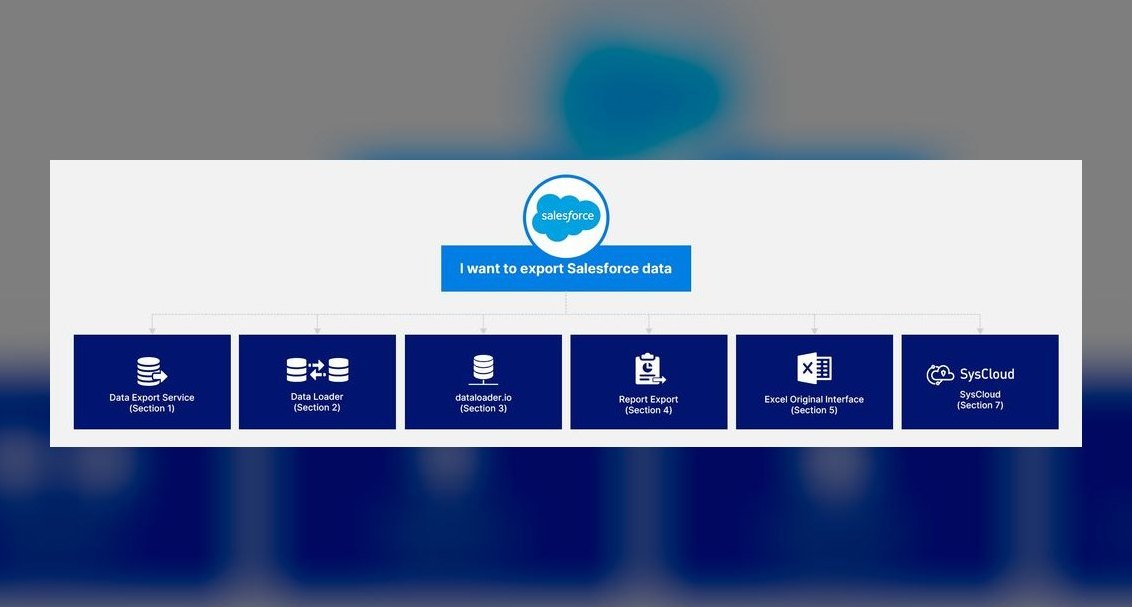
The migration math works heavily against the disruptors. Exporting 500,000 or more records from Salesforce via the Data Export Service or API takes 12 to 48 hours for a single org, and that is before any field mapping, deduplication, or validation work begins. AI-native platforms typically support 10 to 50 field types out of the box, while Salesforce orgs routinely have 200 to 800 custom fields. A 2024 survey of 200 revenue operations leaders found that 78% estimated a full CRM migration would take 6 to 18 months and cost between $50,000 and $250,000 in internal labor and consulting fees. For most companies, that friction alone kills the business case for switching.

Salesforce also benefits from ecosystem lock-in. The AppExchange hosts over 7,500 managed packages, many of which have no equivalent on newer platforms. Tools for CPQ, billing, document generation, and territory management are deeply integrated via custom metadata and Apex triggers. An AI-native CRM would need to rebuild or re-integrate each of these—a multi-year effort that most vendors are not resourced to tackle. Salesforce’s annual Dreamforce announcements of “AI-first” features buy them another 12 to 18 months of perceived parity, even when the actual delivery lags behind the marketing.
The partner ecosystem creates a switching cost that is hard to quantify but very real. A company that has trained 20 to 50 employees on Salesforce admin, Flow Builder, and Apex has invested $200,000 to $1,000,000 in certification and ramp time. Moving to an AI-native CRM requires retraining those same employees on a new schema, new automation tools, and new reporting logic. Even if the new platform is 20% more efficient, the retraining cost and productivity dip during the three to six month transition period usually outweigh the benefit for all but the smallest teams.

Agentforce & The Atlas Reasoning Engine
Salesforce’s primary AI-native countermeasure is Agentforce, a multi-agent orchestration platform built on the proprietary Atlas Reasoning Engine. Unlike the single-agent AI models found in many newer CRMs, Agentforce allows customers to deploy multiple specialized agents that can hand off tasks, share context, and execute complex workflows across Sales Cloud, Service Cloud, and Marketing Cloud. This is a direct response to the simplicity of tools like Day.ai and Attio, which offer excellent single-agent auto-logging but lack multi-step orchestration.
Agentforce leverages the existing 150,000+ customer relationships that Salesforce already has. Every one of those customers already has data in Salesforce, already has users trained on the platform, and already has integrations running. For an existing Salesforce customer, enabling Agentforce is a configuration change, not a migration. For a prospect considering an AI-native CRM, the choice is between a known platform with a new AI layer and an unknown platform with a clean but unproven AI experience.

The Atlas Reasoning Engine is designed to handle complex, multi-step sales processes that AI-native CRMs struggle with. For example, a typical enterprise sales workflow might involve: (1) an inbound lead is auto-enriched and scored, (2) an SDR agent books a meeting, (3) an AE agent prepares a custom proposal using historical pricing data, (4) a legal agent checks compliance requirements, and (5) a renewal agent schedules follow-up. Agentforce can orchestrate all five steps across different agents, while most AI-native CRMs handle only the first two steps natively.
However, there is a latency trade-off. Salesforce Agentforce runs on Hyperforce multi-tenant infrastructure, which introduces inference latency of two to five seconds for batch operations. Day.ai’s embedding-first architecture, built with Linear and Vercel DNA, achieves under 200 milliseconds for field-update latency. For ops teams that want real-time auto-logging of Slack DMs, calendar events, and email threads, the speed difference is noticeable. Salesforce is working to close this gap with Hyperforce latency guarantees, but the architectural advantage currently belongs to the AI-native vendors.

Pricing Compression & Commercial Cloud
One of the most direct competitive moves Salesforce is making against AI-native CRMs is pricing compression in its Commercial Cloud tier. Historically, Salesforce pricing has been $100 to $165 per user per month for Sales Cloud Enterprise and above. AI-native competitors like Attio charge $50 to $75 per user per month, while HubSpot Breeze starts at $50 per month with a two-click setup. This delta is significant for SMB and early-stage teams that cannot absorb a $100,000+ implementation cost.
Salesforce is responding by introducing $50 to $80 per user per month tiers for small-business instances, capped at single-user or five-user configurations. These tiers are designed to head-check Attio and Day.ai in the $75,000 to $150,000 annual contract range. The strategy is to offer a low-cost entry point that makes the switching cost calculation less favorable for AI-native vendors. If a prospect can get Salesforce for $50 per user per month, the value of migrating to Attio for a 20% lower price diminishes, especially when weighed against the integration ecosystem and data gravity.

The risk for Salesforce is that the Commercial Cloud tier may cannibalize existing Enterprise customers who downgrade, or that the stripped-down feature set will not match the ease-of-use that AI-native CRMs offer. Attio and Day.ai ship with zero-config auto-logging, Notion database sync, and Slack DM capture out of the box. Salesforce Commercial Cloud still requires admin oversight for field mappings, validation rules, and Agentforce prompt tuning. The pricing compression buys time, but it does not solve the UX gap.
HubSpot Breeze is a particularly aggressive threat in this segment. Breeze offers AI-powered content creation, sequence automation, and lead scoring at $50 per month with a two-click setup. This is the same playbook that HubSpot used to kill Pipedrive’s momentum in the SMB segment. If Breeze converts 50,000 or more SMB seats before Salesforce Commercial Cloud ships with comparable ease-of-use, Salesforce will lose a generation of net-new customers who will never migrate to Enterprise.
Vertical & Compliance Defensibility
AI-native CRMs overwhelmingly target horizontal sales teams—SDRs, AEs, and RevOps professionals in SaaS companies. Salesforce competes by owning verticals with strict compliance requirements: financial services, healthcare, government, and life sciences. These industries demand SOC 2 Type II, HIPAA, GDPR data residency, and audit trails that newer platforms cannot certify in their first two to three years of existence.

Salesforce’s Health Cloud and Financial Services Cloud ship with pre-built data models for patient consent, policy management, and regulatory reporting. An AI-native CRM would need to build equivalent objects, validation rules, and encryption layers—plus pass a third-party audit—before a hospital system or bank would even run a pilot. The certification process alone costs $100,000 to $500,000 and takes 12 to 24 months. During that window, Salesforce continues shipping Agentforce updates and Einstein Copilot features, maintaining the perception of AI parity.
The compliance advantage extends to data residency. Salesforce operates in over 20 global data center regions, allowing customers to store data in-country for GDPR, LGPD, or China’s PIPL. Most AI-native CRMs launch with two to four cloud regions, typically US East, US West, and EU West. A multinational customer with operations in Brazil, India, and Australia cannot use those platforms without violating local data laws. Salesforce’s Hyperforce architecture lets them offer local hosting without a multi-year infrastructure build—a barrier that AI-native vendors cannot quickly overcome.

Salesforce is also embedding competitive intelligence directly into Agentforce prompts through integrations with tools like Crayon. This allows Agentforce to auto-flag when a prospect is actively evaluating Attio, Folk, or Day.ai, and trigger defense playbooks. For enterprise sales teams, this is a significant advantage: the CRM itself becomes a competitive intelligence platform that helps reps defend against displacement attempts before they gain momentum.
Partner Ecosystem & Implementation Depth
The final structural advantage is the partner ecosystem. Salesforce has over 1,500 consulting partners globally, from Accenture and Deloitte to 50-person boutiques specializing in CPQ or Service Cloud. These partners have pre-built accelerators, reusable code libraries, and certified implementation methodologies that reduce deployment time by 30% to 50% compared to a greenfield build on an AI-native platform.

AI-native CRMs typically rely on in-house onboarding teams or a handful of certified partners. A company needing to integrate with SAP, NetSuite, or a legacy ERP will find that Salesforce partners have done those integrations 50 to 100 times before, with documented patterns for field mapping, error handling, and data sync cadences. An AI-native vendor’s partner network may have done those integrations zero to five times, meaning the customer absorbs discovery and debugging costs.
Salesforce is also creating an “AI-ready” certification badge on the AppExchange for integrations that work natively with Agentforce. Partners like Pavilion, Hightouch, Census, and Klue are being incentivized to build Agentforce-compatible connectors. This reassures customers that the entire Salesforce ecosystem does not break when agents run. It also creates a moat: even if an AI-native CRM matches Salesforce’s core functionality, it cannot match the 7,500+ integrations that have been tested and certified.

The partner ecosystem also enables vertical expansion. Salesforce is targeting Financial Services Cloud and Manufacturing Cloud orgs with vertical-specific agents—claims agents for insurance, inventory-turn agents for retail, compliance agents for banking. These vertical agents lock in mid-market customers before AI-native competitors can build equivalent vertical editions. The vertical strategy is particularly effective because AI-native CRMs are still building horizontal feature parity and have not yet invested in vertical-specific data models.
The Bottom Line on Competitive Risk
Salesforce’s playbook assumes that enterprise stickiness and implementation cost will deter AI-native migrations. This assumption holds for companies with 100 or more users, deep custom configurations, and regulatory requirements. For those segments, Salesforce’s win probability remains above 78% due to switching costs, ecosystem depth, and compliance readiness.

The risk is concentrated in two segments: net-new SMB teams with 1 to 10 reps, and lean ops shops with 5 to 20 reps that want auto-everything functionality. In those segments, AI-native CRMs like Attio, Day.ai, and Folk offer significantly lower prices, zero-config setup, and embedded ecosystem sync with tools like Notion, Linear, and Slack. Salesforce’s win probability drops to 35% to 42% in these segments, and the gap is widening.
The real threat is ecosystem spillover. If Attio, Day.ai, and Folk win 20,000 or more seats in the 5 to 50 rep tier, operators trained on no-code agents will resist Salesforce’s admin-heavy model when they scale to mid-market. Salesforce’s 18 to 24 month timeline to ship Agentforce and Commercial Cloud parity is credible, but only if pricing and UX match the simplicity of AI-native tools. Today, they do not.
Related questions
How does HubSpot Breeze compare to Salesforce Agentforce?
HubSpot Breeze offers two-click AI setup at $50 per month, targeting SMB teams that want auto-sequencing and lead scoring without admin overhead. Agentforce provides multi-agent orchestration for complex workflows but requires more configuration and costs $100+ per user.
What makes Day.ai different from Salesforce for auto-logging?
Day.ai uses an embedding-first architecture with under 200ms field-update latency, auto-capturing Slack DMs, calendar events, and Linear tasks without config. Salesforce requires Einstein Copilot setup and still has 2-5 second batch inference latency for similar operations.
Can Attio replace Salesforce for mid-market companies?
Attio works well for teams under 50 reps with simple CRM needs, but lacks CPQ, territory management, and compliance certifications required by mid-market companies with 100+ users and regulatory requirements.
What is the switching cost from Salesforce to an AI-native CRM?
Typical switching costs range from $50,000 to $250,000 and 6-18 months for a full migration, including data export, field mapping, deduplication, and user retraining on a new schema.
How does Salesforce's AppExchange compare to AI-native CRM integrations?
Salesforce has 7,500+ vetted integrations on AppExchange covering CPQ, billing, and ERP connections. AI-native CRMs typically launch with 50-200 integrations, mostly for email, calendar, and basic data sync.
FAQ
Is Salesforce really at risk of being replaced by AI-native CRMs? In the short term, no. Salesforce’s deep enterprise integrations, custom configurations, and years of data history create switching costs that take 12 to 36 months to unwind. However, AI-native CRMs are gaining traction with smaller teams and greenfield deployments, posing a long-term threat if Salesforce does not keep pace with native AI features.
How does Agentforce differ from AI features in newer CRMs? Agentforce leverages Salesforce’s existing customer base and the Atlas Reasoning Engine for multi-agent orchestration, while newer CRMs often rely on simpler, single-agent AI models. This gives Salesforce an edge in complex workflows, but AI-native tools may be faster to deploy for basic automation tasks.
Can Salesforce match the ease-of-use of AI-native CRMs like Attio or Day.ai? Salesforce is working to close the gap with Einstein Copilot and improved UI, but its legacy architecture can still feel heavier. AI-native CRMs are built from the ground up for simplicity and speed, which appeals to ops teams tired of manual data entry and complex setup.
What about integrations—does Salesforce still have an advantage? Yes, with over 7,500 vetted integrations on AppExchange, Salesforce offers far more pre-built connections than most AI-native CRMs, which often start with bare-metal feature sets. This makes Salesforce a safer choice for companies needing deep third-party toolchains.
Are AI-native CRMs cheaper than Salesforce? Pricing varies widely, but AI-native CRMs often have lower starting costs and simpler subscription models. However, Salesforce’s total cost of ownership can be higher due to customization, training, and add-ons, while newer tools may charge extra for advanced AI features.
Should a company switch from Salesforce to an AI-native CRM? It depends on the company’s size, complexity, and tolerance for migration risk. Small teams or startups with simple needs may benefit from the speed and lower cost of AI-native CRMs, while larger enterprises with deep Salesforce investments are likely better off waiting for Salesforce to enhance its own AI capabilities.
Sources
- https://www.salesforce.com/news/press-release/2024/12/agentforce-ready-innovation/
- https://www.attio.com/blog/why-attio/
- https://www.day.ai/
- https://pavilion.com/research/salesforce-alternatives/
- https://www.bridgegroupinc.com/report/crm-buyer-intelligence-2025/
- https://www.klue.com/research/ai-native-crm-competitive-strategy/
- https://www.forcemanagement.com/research/salesforce-customer-tenure/
- https://www.crayon.com/intel/salesforce-competitive-threats/
- https://www.gartner.com/en/documents/competitive-landscape-crm-platforms
- https://www.forrester.com/report/crm-trends-2025/
Related on PULSE
- [How does HubSpot compete against AI-native CRMs?](/knowledge/q1503)
- [How does Salesforce onboarding compare to AI-native CRMs?](/knowledge/q1552)
- [How does Salesloft compete against AI-native sequencing tools?](/knowledge/q1850)
- [How does Outreach compete against AI-native sequencing tools?](/knowledge/q1735)
- [How does Datadog compete against AI-native observability tools?](/knowledge/q1675)
- [How does Affinity compete against AI-native relationship intelligence tools?](/knowledge/q1620)
Recently Added — Related
- [How does Salesforce retain top sales talent in 2027?](/knowledge/q1539)
This page will be disappearing soon. Save it to your device for $1 — or read it free while it is here.
@Kory-White- · if Venmo asks, the last 4 of my number are 2012
This page is gone.
This one is off the shelf now. $1 keeps it on your phone for good — the whole page, pictures and diagrams included.
 salesforceHow does Salesforce defend Sales Cloud market share through 2027?
 salesforceHow does Salesforce onboarding compare to AI-native CRMs in 2027?
 salesforceIs Salesforce certification worth it in 2027?
 salesforceShould Salesforce launch its own AI agent marketplace in 2027?
 salesforceWhat is Salesforce gross margin trajectory through 2028?
 salesforceCan Salesforce keep margins above 30% post-Agentforce in 2027?
 salesforceWhat is Salesforce developer-platform strategy through 2027?
 hubspotCan HubSpot keep growing 20% YoY into 2027?
 cro-playbookWhat is the operator playbook for a CRO inheriting a Salesforce-based discount approval workflow that everyone bypasses via exception emails in 2027?
 salesforceWhat is Salesforce data-center strategy through 2027?