


Should I open or buy an Angry Chickz franchise in 2027?
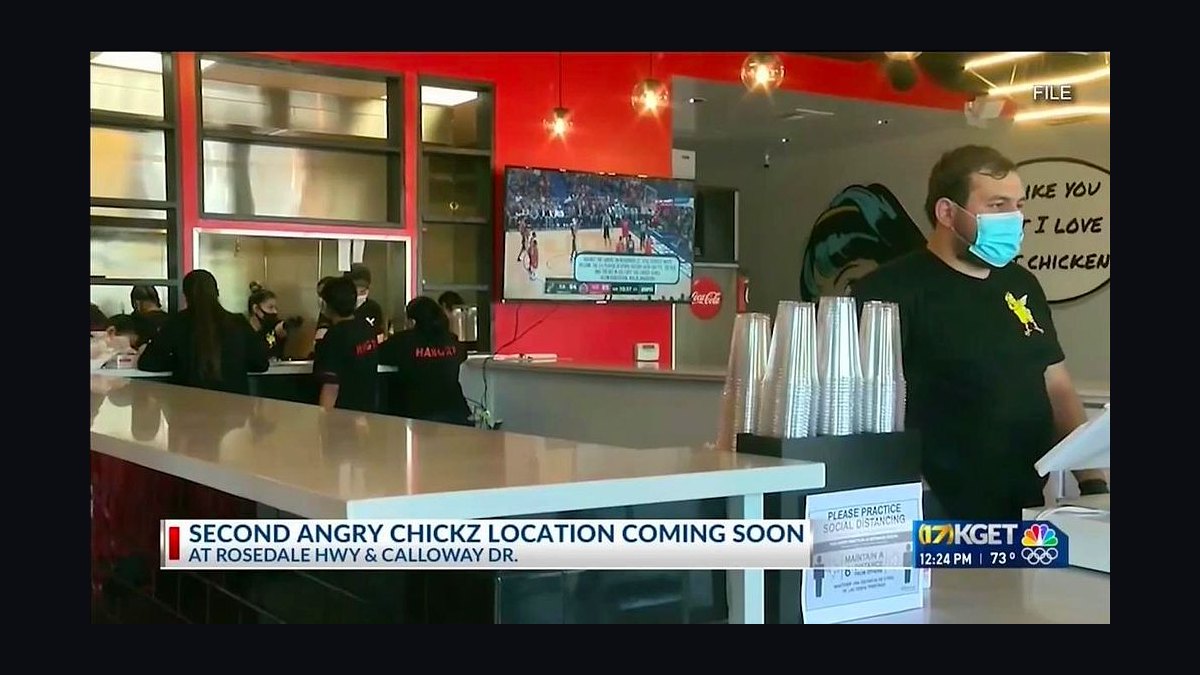
Yes for an operator who wants a fast-growing Nashville hot chicken brand riding two strong trends at once — Angry Chickz combines the booming chicken category with the hot-chicken craze in a streamlined, lower-capital format. Angry Chickz, founded in 2018 in Los Angeles, franchises Nashville hot chicken restaurants with a focused menu (hot tenders, sandwiches, sides), bold branding, and a streamlined operation. The 2026 FDD lists a franchise fee around $30,000, total Item 7 investment of roughly $500,000 to $1,200,000, a royalty near 5%-6%, and a marketing fee. Mature shops gross $900,000-$2,000,000, with owners clearing $100,000-$280,000. Its edge is a trendy, focused concept with strong AUVs and lower capital than full drive-thru QSR; the risk is that hot chicken is a hot-trend category requiring validation of staying power and unit-level consistency as the brand scales rapidly.
The Real Numbers
An Angry Chickz leases 1,200-2,500 sq ft with a focused, streamlined kitchen (the tight menu simplifies operations). The trendy positioning and strong AUVs drive volume, often without the full cost of a ground-up drive-thru.
| Line Item | Low | High | Notes |
|---|---|---|---|
| Franchise fee | $30,000 | $30,000 | Per 2026 FDD |
| Buildout / leasehold | $220,000 | $600,000 | Streamlined kitchen + counter |
| Equipment & POS | $170,000 | $380,000 | Fryers, line, POS |
| Signage & decor | $25,000 | $70,000 | Bold brand decor |
| Initial inventory | $12,000 | $30,000 | Opening stock |
| Initial marketing | $20,000 | $55,000 | Grand opening |
| Training & travel | $8,000 | $25,000 | Operator + staff |
| Working capital | $50,000 | $150,000 | First 3 months |
| Total Item 7 | ~$500,000 | ~$1,200,000 | Per 2026 FDD |
| Royalty | ~5%-6% of gross | ||
| Marketing fee | ~2% of gross |
Revenue reality: mature shops gross $900K-$2M, with the focused hot-chicken menu, bold branding, and dual category/hot-chicken tailwinds driving strong AUVs. After food cost (30%-34%), labor (26%-30%), occupancy, royalty, and marketing, restaurant-level margins land 12%-18%, producing $100K-$280K owner profit. The streamlined menu and lower capital improve return-on-investment versus full drive-thru QSR; trend durability and scaling consistency are the watch items.
Who Wins With This Business
- Capital required: $500K-$1.2M, with $150,000-$350,000 liquid.
- Time commitment: full-time owner-operator; streamlined menu aids operations.
- Skills: QSR operations, brand/social marketing, and consistency management.
- Geographic fit: urban and younger, trend-receptive markets.
- Lifestyle fit: hands-on, brand-engaged.
The winners are operators in trend-receptive markets who maintain consistency as the brand scales.
Who Loses With This Business
- Operators in conservative or non-trend markets where hot chicken has limited appeal.
- Owners who under-validate a young, fast-scaling brand.
- Inconsistent operations that undermine the focused-concept quality.
- Under-capitalized buyers (though capital is moderate).
- Those betting on a fad without staying-power validation.
2027 Market Conditions

- Demand: chicken is the hottest QSR category, and Nashville hot chicken is a sustained sub-trend.
- Differentiation: focused hot-chicken menu and bold branding stand out and aid social marketing.
- Lower capital: streamlined format improves return-on-investment versus full drive-thru.
- Scaling risk: fast-growing young brand — validate unit economics and support.
- Competition: Dave's Hot Chicken, Hattie B's, hot-chicken concepts, and broad chicken QSR.
The 90-Day Decision Tree
- Day 1-20: Read the 2026 FDD and assess the brand's maturity — Angry Chickz is young and scaling fast.
- Day 21-45: Interview owners (as many as exist); ask about AUV, scaling support, and consistency.
- Day 46-65: Validate a trend-receptive (urban/younger) market.
- Day 66-95: Secure a site and build the streamlined format.
- Day 96-140: Open with strong social and brand marketing.
- Maintain consistency as the focused concept's quality is the draw.
- Consider additional units if the unit performs and the trend holds.
Alternative Plays
- Dave's Hot Chicken — leading hot-chicken brand (in the Pulse library).
- Slim Chickens / Zaxby's — chicken-tender QSR (in the Pulse library).
- Huey Magoo's / Guthrie's — tender-focused chicken.
- Golden Chick / Lee's — heritage fried chicken.
- Independent hot-chicken concept — full control, but no brand.
- Broad chicken QSR — more proven, higher-capital alternatives.
Site Selection & Real Estate Strategy
Choosing the right location for an Angry Chickz franchise is arguably the most critical decision you'll make, as the brand's success hinges on high foot traffic and visibility rather than drive-thru convenience. Based on franchisee discussions and site selection guidelines from the 2026 FDD, the ideal Angry Chickz location is roughly 1,200 to 1,800 square feet in a strip center, end-cap, or inline retail space with strong lunch and dinner foot traffic. The brand intentionally avoids large, expensive drive-thru builds—keeping real estate costs manageable compared to traditional QSRs. Typical leasehold improvement costs run $200,000 to $400,000, and you should budget $50,000 to $100,000 for signage, furniture, fixtures, and equipment beyond what the franchisor provides. The corporate team prioritizes dense urban areas, college campuses, entertainment districts, and busy suburban shopping centers—places where the 18-to-35-year-old target demographic naturally congregates. Some franchisees have reported success in food halls and ghost-kitchen setups as lower-cost entry points, though these typically generate lower AUVs ($600,000–$900,000) due to limited seating and brand visibility. A critical real estate risk: hot chicken concepts often perform poorly in family-oriented, low-traffic strip malls where dinner traffic drops off early. You should expect to sign a 10-year lease with two 5-year options, and the franchisor's real estate team will provide a demographic report and trade-area analysis before approval. If you're considering a market outside Angry Chickz's current footprint (primarily California, Texas, and the Southeast), be prepared to educate local customers on the Nashville hot chicken trend—this may require a longer ramp-up period and heavier local marketing spend.
Operational Realities & Staffing Challenges
Running an Angry Chickz franchise is not a passive investment—it demands hands-on operational involvement, especially during the first 12–18 months. The brand's streamlined menu (roughly 15–20 SKUs including tenders, sandwiches, fries, shakes, and sides) keeps kitchen complexity low, but the cooking process for Nashville hot chicken is labor-intensive: each order requires hand-breading, frying to order, and coating with the proprietary spice blend. This means you'll need 4–6 crew members per shift during peak hours (lunch 11am–1pm, dinner 5pm–8pm) and 2–3 during slower periods. Labor costs typically run 28%–35% of gross sales, with the higher end in markets with elevated minimum wages (e.g., California). The biggest operational headache reported by franchisees is staff turnover in the kitchen—the hot oil and spice handling can be physically demanding, and inexperienced cooks often struggle with consistency. You should plan to personally work the line or oversee every shift for at least the first six months to train staff and enforce quality standards. The franchisor provides a two-week training program at a corporate store plus ongoing support, but franchisees emphasize that real learning happens on the job. Another operational nuance: spice-level management is critical—offering mild, medium, hot, and "Angry" (extra hot) means you'll waste product if you over-prepare the hotter tiers, which have lower demand. The average ticket is $12–$16 per person, so you need roughly 150–250 transactions per day to hit the $1 million AUV benchmark. If you're a semi-absentee owner (common in multi-unit franchises), budget for a $50,000–$70,000 general manager salary plus performance bonuses to retain talent.
Competitive Landscape & Differentiation Strategy
The Nashville hot chicken segment has exploded since 2020, and Angry Chickz now competes in a crowded field that includes national chains (Raising Cane's, Zaxby's, Popeyes' chicken sandwich), regional hot chicken specialists (Hattie B's, Howlin' Ray's, Dave's Hot Chicken), and local independents. The key question for a 2027 franchisee: how does Angry Chickz stand out? Based on the FDD and franchisee interviews, the brand's differentiation relies on three pillars: bold branding (the "Angry" mascot, graffiti-style aesthetics), a focused menu (no burgers, no salads—just chicken), and a faster, lower-cost build-out than full-service hot chicken competitors. Compared to Dave's Hot Chicken (a direct competitor with similar unit economics), Angry Chickz typically has lower franchise fees ($30,000 vs. $35,000–$50,000) and slightly lower royalty rates (5%–6% vs. 6%–7%), but Dave's has a larger national footprint and stronger brand recognition in many markets. Against Hattie B's (which is company-owned only), Angry Chickz offers franchise availability but lacks the cachet of a "destination" brand. Your competitive strategy should focus on local marketing that emphasizes freshness, spice customization, and speed of service—Angry Chickz's average ticket time is 4–6 minutes versus 8–12 minutes at sit-down hot chicken spots. You'll also need to monitor delivery aggregator commissions (Uber Eats, DoorDash, Grubhub) , which can eat 15%–30% of each order—franchisees recommend capping delivery at 20% of total sales to protect margins. A smart differentiation move: partner with local influencers, college sports teams, or music venues to build brand affinity with the 18–35 demographic. The risk is that hot chicken could cool as a trend—but for 2027, demand remains strong, with the category growing at 8%–12% annually according to industry reports. If you can execute consistently and build local buzz, Angry Chickz has room to capture market share from both QSR chicken giants and smaller independents.
FAQ
How much capital do I really need to open an Angry Chickz franchise? The total investment range in the 2026 FDD is roughly $500,000 to $1,200,000, depending on location size, build-out, and equipment. Most operators should plan for at least $700,000 to $900,000 to comfortably cover all startup costs and working capital.
What are the ongoing fees and royalty costs? The royalty is around 5% to 6% of gross sales, plus a marketing fee. These are standard for the fast-casual chicken segment, so you should factor them into your profit projections from day one.
How much profit can an owner actually take home? Mature Angry Chickz locations typically generate owner earnings in the range of $100,000 to $280,000 annually. Actual take-home depends heavily on sales volume, labor costs, and your ability to control food waste.
Is the hot chicken trend just a fad, or does it have staying power? Nashville hot chicken has grown steadily for over a decade and is now a mainstream category, but it remains a trend-driven segment. The brand’s long-term success will depend on unit-level consistency and whether consumer demand holds as more competitors enter.
How long does it take to open a franchise from signing? Most franchisees report a timeline of 6 to 12 months from signing to opening, depending on lease negotiation, permitting, and construction. Finding a suitable location with the right size and visibility can be the biggest variable.
Does Angry Chickz offer any financing or support for new franchisees? The brand does not typically offer direct financing, but the franchisor may provide a list of approved lenders or third-party financing partners. Many franchisees use SBA loans or personal savings to fund the investment.
Bottom Line
Open an Angry Chickz if you want a trendy Nashville hot chicken concept riding the booming chicken category at lower capital ($500K-$1.2M), and you're in a trend-receptive market with strong operational consistency. Its focused menu, strong AUVs, and capital efficiency are genuine advantages. Skip it if you're in a conservative market, can't validate a fast-scaling young brand, or are betting on a fad without staying-power confirmation. For operators in trend-receptive markets, Angry Chickz offers capital-efficient exposure to two strong food trends at once.
Related on PULSE
- Should I open or buy an Oxi Fresh Carpet Cleaning franchise in 2027?
- Should I open or buy an Oil Can Henry’s franchise in 2027?
- Should I open or buy a KidStrong franchise in 2027?
- Should I open or buy a Premier Garage franchise in 2027?
- Should I open or buy a Jazzercise franchise in 2027?
- Should I open or buy a Nekter Juice Bar franchise in 2027?
Sources
- Angry Chickz Franchise Disclosure Document (2026 filing) — Items 5, 6, 7, 19, 20
- Angry Chickz official franchise site — investment range and model
- Entrepreneur Franchise listings — Angry Chickz
- Franchise Business Review — QSR franchisee satisfaction data
- IBISWorld — Chicken Restaurants in the US, 2026 industry report
- Technomic — hot-chicken and chicken-QSR-segment data 2026
- Statista — US chicken-QSR market and category growth, 2025-2026
- International Franchise Association (IFA) — 2027 Franchise Economic Outlook
- Restaurant Business / Nation's Restaurant News — hot-chicken trend coverage 2026
- USDA — poultry/chicken-input price data, 2025-2026
This page will be disappearing soon. Save it to your device for $1 — or read it free while it is here.
@Kory-White- · if Venmo asks, the last 4 of my number are 2012
This page is gone.
This one is off the shelf now. $1 keeps it on your phone for good — the whole page, pictures and diagrams included.
 pulse-qWhat Is Gross-Up in a Lease and How Does It Cost Me in 2026?
 pulse-qShould I open or buy an Earl of Sandwich franchise in 2027?
 pulse-qShould I open or buy a bluefrog Plumbing + Drain franchise in 2027?
 pulse-qHow do you coach a rep who keeps missing quota in 2026?
 pulse-qHow Do I Read a Landlord Work Letter So I Don't Get Screwed in 2026?
 pulse-qHow do you coach a rep who takes objections personally in 2026?
 pulse-qHow do you coach a remote sales team effectively in 2026?
 pulse-qHow do you ask a question that helps a rep identify the moment they lost control of the sales conversation in 2026?
 pulse-qShould I open or buy an Office Evolution franchise in 2027?
 pulse-qHow do you coach the coaches — developing your sales managers in 2026?