
Do I Need a Fractional CRO for My Logistics Company?
 Curated byKory White · Fractional CRO · Maryland
 PULSEKNOWLEDGE LIBRARY
Quality
Certified

Hiring a Fractional CFO before renewing your Commercial Insurance policy in 2027 is worth it when your premium has climbed faster than revenue, your broker has not stress-tested limits or retentions, or you cannot model how a single claim would hit cash. The CFO pays for itself by rebuilding the underwriting story, not by shopping carriers alone.
The two options compared: renew as-is versus hire a Fractional CFO first
The decision is not really "CFO or no CFO." It is whether you renew your Commercial Insurance program on the same terms and the same submission package your broker assembled last year, or whether you spend money on a Fractional CFO to rebuild the financial narrative before the renewal window opens. Both paths end with a bound policy. They differ in who controls the terms, what the underwriter sees, and how much of your premium is defensible versus arbitrary.
Renewing as-is is the default. Your broker sends a renewal notice 60 to 90 days out, the incumbent carrier quotes a rate change, and you either accept it or ask for a few competing quotes. This works fine when your exposure base is stable, your loss runs are clean, and your financials are unremarkable. It fails when revenue grew 40% but your payroll and subcontracted cost figures were reported late or inconsistently, when a general liability claim is still open, or when your workers' compensation experience modification has drifted upward and nobody has explained why.
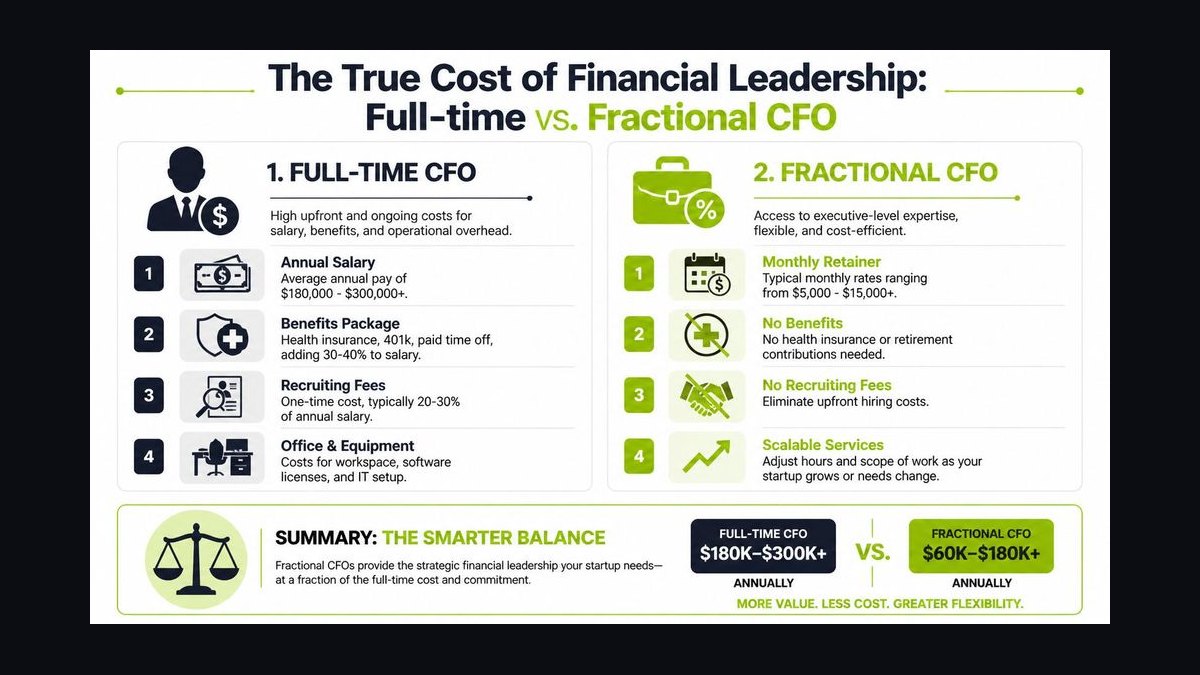
Hiring a Fractional CFO first changes the input, not just the negotiation. A Fractional CFO typically works 20 to 60 hours a month on a retainer, and part of that time goes into producing the financial package underwriters actually price from: audited or reviewed financials, a defensible revenue and payroll exposure schedule, three-year trended loss data reconciled to carrier loss runs, a cash-flow model showing you can absorb your deductible, and a written narrative on risk controls. That package is what moves you from "market rate" to "best-in-class risk," which is where credits and better terms live.
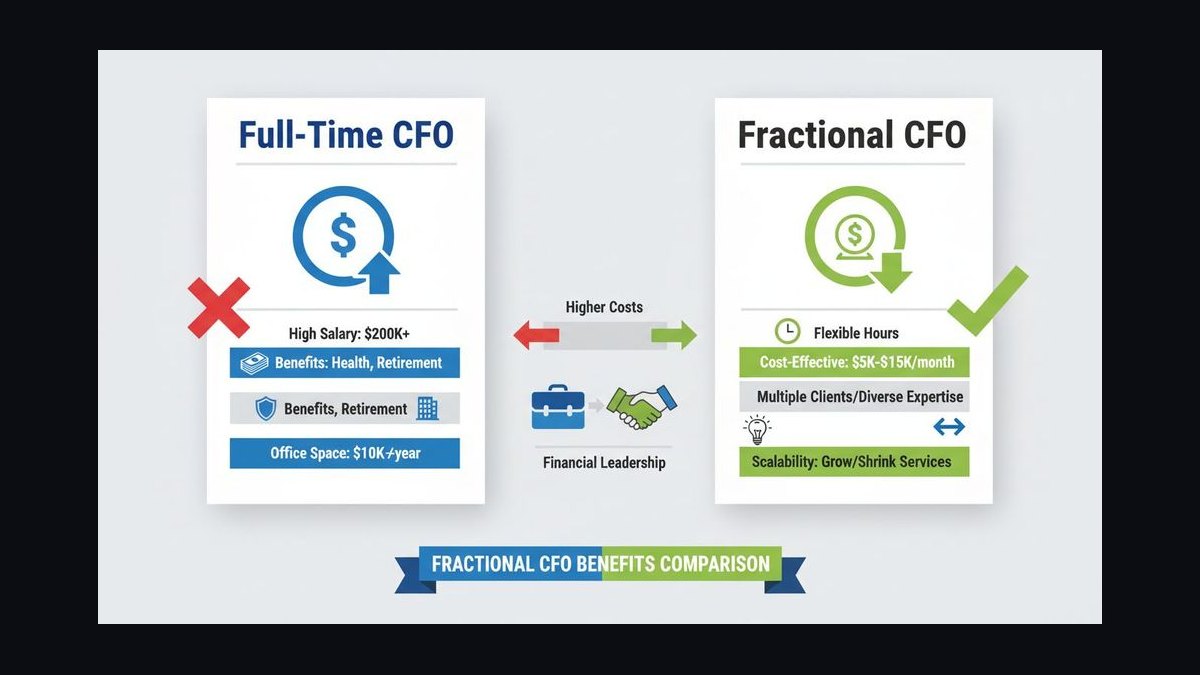
The trade-off is real. A Fractional CFO engagement costs money, and if your policy is small — say under $50,000 in annual premium — the fee may exceed the savings you can realistically negotiate. The break-even sits roughly where premium is large enough that a 5% to 15% improvement in terms outweighs the retainer, or where a coverage gap would be existential. Below that, a good broker and a disciplined internal renewal process usually beat hiring anyone.
There is also a sequencing trap. If you bring in a Fractional CFO in the same month your renewal is due, you get almost none of the benefit, because underwriting submissions need 60 to 120 days of lead time to influence pricing. The value comes from starting two quarters early, which is why the 2027 renewal question is really a question about what you do in mid-2026.
How to decide between them
The decision tree below is the one most operators should walk before committing budget. It starts with premium size, because that sets the ceiling on what any advisor can save you, then moves to whether your financial package is credible, then to whether you have an unresolved exposure problem that no negotiation can fix.
Walk it honestly. Most mid-market companies with $75,000 to $500,000 in total Commercial Insurance spend, multiple coverage lines, and any growth or claims activity land on the same branch: hire the Fractional CFO, start early, and treat the renewal as a financial reporting project rather than a shopping exercise. Companies with a single location, flat exposure, and clean loss runs should stay on the as-is path and simply give their broker better data.
One nuance matters. The Fractional CFO does not replace your broker and should not try to. Brokers own carrier relationships, market access, and the actual placement. The CFO owns the numbers, the narrative, and the internal controls that make the numbers believable. When those two roles are clearly divided, the renewal gets better. When a CFO tries to shop markets or a broker tries to build your cash-flow model, both underperform.
Concrete numbers behind each option
Numbers make this decision concrete, so work through the arithmetic for your own book rather than accepting generic ranges.
Start with premium. A company carrying $180,000 in annual Commercial Insurance premium — a plausible figure for a 150-employee services or light-manufacturing business with general liability, commercial property, commercial auto, workers' compensation, and an umbrella — faces a renewal increase that in a hardening or even flat market commonly lands between 5% and 20% depending on line and loss history. On $180,000, that is $9,000 to $36,000 of new annual cost, recurring.

Now layer the exposure-accuracy problem. Underwriters price workers' compensation off payroll by class code, and general liability off revenue and subcontractor cost. If your submitted payroll was understated because you misclassified 20% of field staff, the audit at policy expiration produces a retroactive premium charge — often with a penalty factor. A $2 million payroll understated by 20% is $400,000 of misclassified exposure, and at a $4 per $100 rate that is roughly $16,000 of additional premium discovered after the fact, plus possible audit penalties. A Fractional CFO reconciling payroll class codes to actual job duties and to your payroll provider's reports prevents that charge before it happens.
Then the experience modification. For workers' compensation, your mod is calculated from three years of loss data compared against expected losses for your class. A mod of 0.90 versus 1.15 on a $100,000 manual premium is a $25,000 swing. Mods are not negotiable, but they are correctable when the underlying loss data is wrong — reserves set too high on closed claims, claims assigned to the wrong entity, or medical-only claims that should have been reduced by the 70% medical-only adjustment in most states' rating formulas. A Fractional CFO who reconciles carrier loss runs to your own claim files routinely finds errors worth several points of mod.

Then the retentions and limits question, which is where the CFO earns their fee most visibly. Moving a general liability deductible from $2,500 to $25,000 might reduce premium 8% to 12%, but only if the business can fund $25,000 per occurrence from cash without stress. Increasing an umbrella from $5 million to $10 million might cost $6,000 to $15,000 annually, which is trivial against a single $8 million judgment. A CFO models both directions — where to take more risk to save premium, and where cheap coverage is underpriced relative to the tail risk — and that modeling is exactly what a broker cannot do for you because it requires your cash-flow and balance-sheet data.
Finally, the retainer itself. Fractional CFO engagements commonly run in the range of a few thousand dollars per month for a light scope up to roughly $10,000 to $15,000 per month for a heavier engagement involving financial reporting, cash-flow modeling, and board-level work. If you allocate even a third of a six-month engagement to the insurance renewal, you are spending somewhere in the low five figures. Against a $180,000 premium where you improve terms by 10% and avoid a $16,000 audit charge, the return is straightforward. Against a $30,000 premium with clean data, it is not.
The honest conclusion: run the arithmetic before you commit. If the sum of plausible premium improvement, avoided audit charges, corrected mod, and better retention structure exceeds roughly two to three times the allocated CFO cost, hire. If it does not, invest the same energy in giving your broker clean data and competitive tension instead.
| Item | Renew as-is | Hire Fractional CFO first |
|---|---|---|
| Typical premium range where it matters | Under ~$75K | ~$75K and above |
| Lead time needed | 60-90 days | 120+ days |
| Primary lever | Carrier competition | Underwriting narrative and exposure accuracy |
| Main risk | Audit charges, stale mod, coverage gaps | Retainer cost exceeding savings |
| Who owns the numbers | Broker, using your submissions | CFO, with broker placing the risk |

Implementation details and sequencing
Sequencing is where most companies lose the value. The renewal date is fixed, so everything works backward from it. The diagram below shows the sequence that reliably produces a better outcome, assuming a January 1, 2027 renewal.
Month one is data. The Fractional CFO pulls payroll registers by class code, revenue by entity and state, subcontractor certificates of insurance, vehicle schedules, property values, and three years of carrier loss runs. They reconcile each against what was actually submitted at the last renewal. Discrepancies here are the single most common source of avoidable premium, and they are almost always found in the first two weeks.
Month two is loss history and mod. The CFO requests loss runs directly from carriers, not through the broker's summary, and compares reserves and paid amounts to internal records. Open claims get reviewed for reserve adequacy. Closed claims get checked for coding errors. In workers' compensation states, the CFO confirms the mod worksheet's payroll and loss figures against the rating bureau's data and files corrections if the window is still open.
Month three is structure. With clean data in hand, the CFO models three or four program designs: current limits and retentions, higher retentions with lower premium, higher limits with modest additional cost, and alternative structures like a captive or a large-deductible program if the company is big enough to consider them. Each design gets a cash-flow stress test — what happens to liquidity if two claims hit in the same quarter.
Month four is narrative and submission. The CFO writes the risk narrative that goes with the submission: revenue and payroll trends with explanations, safety and risk-control investments with dates, claims management process, return-to-work program results, and financial strength indicators. Underwriters price stories they can verify. A submission with a reconciled exposure schedule, a corrected mod, and a documented safety program consistently outperforms a bare application, even from the same carrier.
The last step is the one most companies skip: after binding, the CFO sets a quarterly cadence to monitor exposure drift, claim development, and payroll classification changes so the next renewal starts from a clean position instead of a scramble. That cadence is what turns a one-time engagement into a durable improvement in your total cost of risk, and it is the part that keeps RevOps-style discipline applied to a function most companies treat as an annual paperwork event.
Related questions
Does a Fractional CFO replace my insurance broker?
No. The broker places coverage and owns carrier relationships. The Fractional CFO prepares the financial data, exposure schedules, and risk narrative the broker submits, and models retention and limit trade-offs. Clear division between the two produces better terms than either working alone.
What if my renewal is only 60 days away?
You can still act, but the benefit shrinks. Use the CFO for exposure reconciliation and loss-run correction immediately, accept that carrier negotiation time is compressed, and plan a full rebuild for the following cycle. Starting 120 days out is where the real leverage sits.
Is a Fractional CFO worth it for a small policy?
Usually not on premium savings alone. If annual premium is under roughly $75,000 and your data is clean, a competitive broker process is the better spend. Hire the CFO when exposure accuracy, claims, or coverage structure is genuinely at risk.
How do I measure whether it worked?
Compare bound premium, retentions, limits, and any audit charges against the prior year on a like-for-like exposure basis. Also track the experience mod direction and whether the submission package was accepted without mid-term information requests. Those four signals tell you if the engagement paid.
FAQ
Will hiring a Fractional CFO actually lower my Commercial Insurance premium?
It can, but the bigger and more reliable win is accuracy. A Fractional CFO reconciles payroll class codes, revenue exposure, and loss runs so you are not overpaying for misreported exposure or paying retroactive audit charges. Premium reduction typically comes from a credible underwriting narrative, corrected experience mod, and better-chosen retentions.
How early before Renewing should I bring in a Fractional CFO?
Ideally 120 days or more. Underwriting submissions need time to influence pricing, and exposure reconciliation, loss-run audits, and mod corrections each take weeks. Engaging a CFO 30 days before renewal captures almost none of the value because there is no time to change what the carrier sees.
Can a Fractional CFO help if I already have a good broker?
Yes, and the two roles complement each other. Your broker owns market access and placement. The Fractional CFO owns the financial package, exposure schedules, and retention modeling. Brokers consistently place better terms when the submission includes reconciled numbers and a documented risk-control narrative.
What does a Fractional CFO cost compared to the savings?
Engagements commonly range from a few thousand dollars a month for light scope to roughly $10,000 to $15,000 monthly for heavier work. Against a $180,000 premium, a 10% improvement plus an avoided audit charge can exceed the allocated retainer several times over. Below roughly $75,000 in premium, the math often does not work.
Does this apply to all Commercial Insurance lines?
The mechanics differ by line. Workers' compensation depends on payroll classification and the experience mod. General liability depends on revenue and subcontractor exposure. Property depends on values and risk controls. Auto depends on fleet schedule and driver records. A Fractional CFO works across all of them because the underlying issue is financial reporting accuracy.
What is the single biggest mistake companies make at renewal?
Submitting stale or unreconciled exposure data and treating the renewal as a shopping exercise. Underwriters price what they can verify. Companies that submit accurate payroll, revenue, and loss data with a written risk narrative consistently get better terms than companies that simply ask three carriers for quotes on the same flawed application.
Sources
- Insurance Information Institute — commercial insurance basics
- National Association of Insurance Commissioners — rate and form filing resources
- National Council on Compensation Insurance — experience modification overview
- U.S. Bureau of Labor Statistics — employer costs for employee compensation
- U.S. Small Business Administration — risk management and insurance guidance
- Financial Accounting Standards Board — accounting standards updates
- Association for Financial Professionals — treasury and risk resources
- Occupational Safety and Health Administration — injury and illness recordkeeping
Related on PULSE
- [Should I Hire a Fractional CFO Before Renewing My Commercial Insurance Policy in 2027?](/knowledge/q16001)
- [How do I build a defensible exposure schedule for insurance underwriting?](/knowledge/q16002)
- [What financial metrics should I track before a commercial insurance renewal?](/knowledge/q16003)
- [How does a fractional CFO improve total cost of risk?](/knowledge/q16004)
- [When should I move from a broker-led renewal to a CFO-led renewal process?](/knowledge/q16005)
This page will be disappearing soon. Save it to your device for $1 — or read it free while it is here.
@Kory-White- · if Venmo asks, the last 4 of my number are 2012
This page is gone.
This one is off the shelf now. $1 keeps it on your phone for good — the whole page, pictures and diagrams included.
 pulse-qHow Do I Raise Contribution Margin Without Raising My Prices?
 pulse-qHow Many Employees Should I Schedule Each Shift at My Roller Rink?
 pulse-qShould I Hire a Fractional CRO If I Am Losing Deals to a Cheaper Competitor?
 pulse-qShould I Hire a Fractional CRO If I Am Prepping for an Exit in 18 Months?
 pulse-qHow Many Employees Should I Schedule Each Shift at My CrossFit Box?
 pulse-qHow Many Employees Should I Schedule Each Shift at My Cooking School?
 pulse-qHow Do I Keep Reps From Gaming the Comp Plan?
 pulse-qShould I Hire a Fractional CRO If I Need Interim Leadership During a CRO Search?
 pulse-qShould I Hire a Fractional CRO If My Nonprofit Is Building an Earned-Revenue Arm?
 pulse-qShould I Hire a Fractional CRO If I Am Bootstrapped and Cannot Afford a Full-Time CRO?