
How Many Employees Should I Schedule Each Shift at My Phone Repair Shop?
 Curated byKory White · Fractional CRO · Maryland
 PULSEKNOWLEDGE LIBRARY
Quality
Certified

Divide your shop's average daily gross profit by a per-tech daily gross-profit target to get the number of Employees to Schedule each Shift. If Mondays average $1,250 in gross profit and your agreed target is $250 per tech, you need five techs that day. Repeat for every day, then place those Repair shifts against actual ticket timing.
The two staffing models compared: flat coverage versus gross-profit-driven scheduling
Most phone Repair shops staff one of two ways. The first is flat coverage: the owner decides "we run three techs every day" and that number never changes. It is simple, predictable, and almost always wrong. Flat coverage overstaffs slow Tuesdays and understaffs busy Saturdays, which means you pay wages during dead hours and lose walk-in revenue during rushes. The second model is gross-profit-driven scheduling: you calculate how many Employees each Shift needs by dividing that day's expected gross profit by a per-tech production target. This is the method most RevOps-minded operators use because it ties labor cost directly to the revenue that labor generates.
The difference shows up fast. A shop doing $1,250 in gross profit on a Monday and $2,000 on a Saturday has a 60% swing in demand. Flat coverage of three techs means Monday is overstaffed by roughly two people and Saturday is understaffed by five. Gross-profit-driven scheduling gives you five on Monday and eight on Saturday. Same shop, same payroll budget philosophy, radically different coverage.

There is a third, hybrid approach worth naming: a fixed core crew plus flex shifts. You keep two or three senior techs on every day regardless of volume because they handle complex board-level Repair, diagnostics, and training. Then you layer part-time flex techs on top using the gross-profit math. This protects continuity and institutional knowledge while still letting the schedule breathe with demand. For a single-store operator, the hybrid is usually the most practical because you cannot hire and release staff every week.
The model you choose also determines what software makes sense. Flat coverage works fine with a paper calendar. Gross-profit-driven scheduling needs day-of-week gross profit history, which means either a spreadsheet or a scheduling tool that connects to your point of sale. That is the real fork in the road: how much data do you want driving the decision?

How to decide between flat and gross-profit-driven scheduling
The decision tree is short. If you have at least three months of gross profit broken out by day of week, go straight to the gross-profit method. If you are brand new or have never tracked daily gross profit, run flat coverage for four to six weeks while you collect the data, then switch. Do not skip the data collection step; guessing at your daily gross profit produces a schedule built on fiction.
One more decision factor: staff stability. If your techs are full-time and you cannot easily flex hours, the gross-profit method still works but you apply it to total weekly hours rather than daily headcount. You might find that Tuesday needs 20 tech-hours and Saturday needs 64, then build shifts that sum to those totals. The math is the same; the unit of measure changes from bodies to hours.
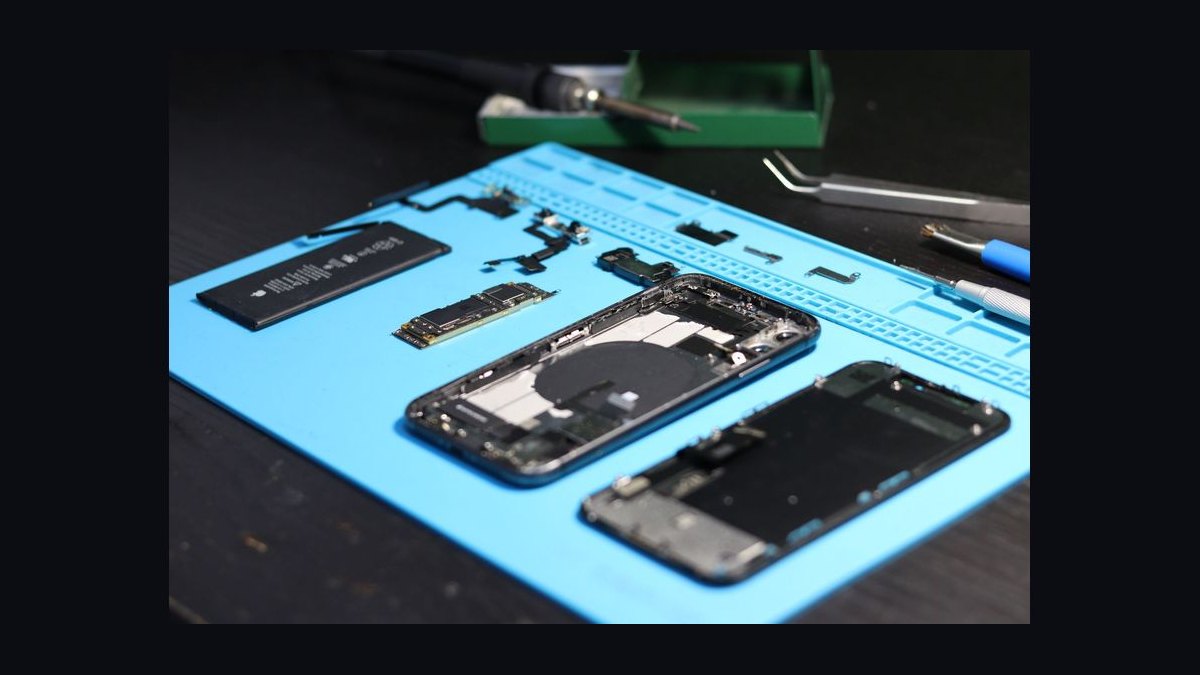
Concrete numbers behind each option
Start with the per-tech target, because every number downstream depends on it. A common benchmark for a phone Repair shop with a balanced mix of screen replacements, battery swaps, charging-port repairs, and accessory attachments is $250 in gross profit per tech per day. That is a floor, not a ceiling. In slower rural markets, operators sometimes set it at $150 to $200. In high-traffic urban stores with strong accessory attachment, $300 to $400 is achievable. The number must come from your own trailing data, not an industry average someone posted online.
Now run the division. Suppose your trailing six-month averages look like this:

- Monday: $1,250 gross profit, divided by $250 = 5 techs
- Tuesday: $1,000 gross profit = 4 techs
- Wednesday: $1,100 gross profit = 4.4, round to 4 techs plus a half-shift
- Thursday: $1,400 gross profit = 5.6, round to 6 techs
- Friday: $1,750 gross profit = 7 techs
- Saturday: $2,000 gross profit = 8 techs
- Sunday: $750 gross profit = 3 techs
That is 37 tech-shifts across the week. If each Shift is eight hours, that is 296 tech-hours. At an average fully loaded wage of $18 per hour, labor cost is roughly $5,328 for the week against $9,250 in gross profit, or about 58% labor-to-gross-profit. That ratio is the number to watch. If it climbs above 60%, either your per-tech target is too low or your wage rates are too high for your volume.
The per-tech target also tells you when to hire. If your Saturday gross profit grows from $2,000 to $2,500 and you are still running eight techs, each tech is now producing $312 instead of $250. That is a signal you can either add a ninth tech to bring the ratio back to target or let the existing team earn more. Most operators add the tech, because an overworked bench produces slower turnaround times, which costs you reviews and repeat business.
Different skill levels complicate the single target. A senior tech who handles water damage, data recovery, and micro-soldering might produce $350 to $450 per day. A junior tech doing mostly screen protectors and intake might produce $150 to $200. If your bench is half senior and half junior, your blended target is not $250; it is the weighted average. Run the math with your actual mix, or you will either over-hire juniors or under-hire seniors.

Implementation details and sequencing
Step one is data extraction. Pull gross profit, not revenue, by day of week for the trailing three to six months. Gross profit is revenue minus the cost of parts and labor, so it reflects what the Repair actually contributes. If your POS cannot report gross profit by day, export sales and cost of goods separately and subtract.
Step two is setting the target with your leadership team. Say it out loud to the techs: "In our shop, an average tech on an average day should produce no less than $250 in gross profit." That transparency matters because it turns the schedule from an arbitrary management decision into a shared standard. Techs who want more hours know exactly what production level earns them.
Step three is the division. Run it for every day and write down the headcount. Do not round everything up; rounding up across seven days can add two or three unnecessary shifts per week, which is real money.
Step four is timing. Pull hourly sales or ticket counts and find your peaks. A phone Repair shop typically slows mid-morning and spikes from 4 p.m. to 7 p.m. when people leave work and notice a cracked screen, plus a heavy Saturday. Staff a light open for mail-in and diagnostic work, then load the late afternoon and evening with bench techs and a counter person. If Saturday needs eight techs total, you might schedule three for the morning lull, five for the afternoon rush, and two for the evening close.

Step five is publishing two weeks ahead. Predictable schedules reduce no-shows and make shift swaps manageable. Step six is tracking actual versus planned gross profit daily. If Wednesday consistently beats its target by 30%, your Wednesday headcount is too low. Step seven is a monthly target review. As your accessory attachment rate improves, your per-tech production rises, and you may be able to hold headcount flat while volume grows.
One sequencing trap: do not change the target and the headcount in the same week. Change one variable at a time so you can tell which one moved your labor ratio. RevOps discipline applies to a repair bench just as much as to a sales floor.

Related questions
Should I schedule the same number of Employees for every Shift on a given day?
No. The daily total is a ceiling, not a flat block. If Saturday needs eight techs, stagger them: three in the morning, five in the afternoon, two at close. Match bodies to hourly ticket flow, not to a uniform grid.
What if my shop has no gross profit history by day of week?
Track daily gross profit for four to six weeks while running flat coverage. Even a month of data reveals your weekly pattern. Then switch to the division method and refine the per-tech target monthly as you collect more.
How do I handle unpredictable days like holidays or storms?
Add one buffer tech on high-variance days or keep an on-call list. Adjust the calculated headcount by 10% to 20% based on past anomalies. The formula works for average conditions; outliers need a manual cushion.
Can I use this method if I also do mail-in Repair?
Yes, but only count gross profit from in-store and same-day work that requires bench time. Mail-in and online fulfillment orders follow a different workflow, so calculate a separate tech-per-order ratio for that channel.
Should senior and junior techs share one daily target?
Start with a blended average, then split it. Senior techs handling complex board Repair might target $350 to $450; juniors doing intake and accessories might target $150 to $200. The formula gives headcount; skill mix assigns roles.
FAQ
Is $250 per tech per day a realistic target for every phone Repair shop? No. It is a common benchmark for shops with a balanced mix of high-margin repairs and accessory sales, but real numbers vary. Slower markets may target $150 to $200; high-volume urban stores may aim for $300 to $400. Set your floor from your own historical data, not an industry average.
How many Employees should I Schedule for a Saturday if my gross profit is $2,000? At a $250 per-tech target, eight techs. If your target is $300, that drops to roughly seven. The headcount moves with the target, so agree on the target first, then divide. Never schedule Saturday the same as a slow Tuesday.
Do I need scheduling software to run this method? No, a spreadsheet works. But software that connects to your POS makes it easier to pull daily gross profit and track actual versus planned. Free tiers from per-location tools suit a single bench; per-user tools suit a lean certified crew.
What labor-to-gross-profit ratio should I watch? Keep labor cost under roughly 55% to 60% of gross profit. If it climbs above that, either your per-tech target is too low or your wage rates are too high for your volume. Review the ratio weekly, not annually.
How often should I change the per-tech target? Review monthly. As accessory attachment and turnaround speed improve, production per tech rises. If you hold headcount flat while volume grows, each tech produces more, which may justify a higher target or a new hire.
Does this method work for a multi-store Repair chain? Yes, but run the division per store, not chain-wide. Each location has its own day-of-week pattern and foot traffic. A mall kiosk and a strip-center store will produce different daily gross profit, so they need different Shift counts.
Sources
- U.S. Small Business Administration, employment and scheduling guidance: https://www.sba.gov
- U.S. Department of Labor, Fair Labor Standards Act wage and hour rules: https://www.dol.gov/agencies/whd/flsa
- SCORE, small business staffing and operations resources: https://www.score.org
- When I Work, shift scheduling and availability documentation: https://wheniwork.com
- Homebase, scheduling and time clock pricing: https://www.joinhomebase.com
- Deputy, demand-based scheduling and compliance features: https://www.deputy.com
- 7shifts, labor-percentage and POS-integrated scheduling: https://www.7shifts.com
- Connecteam, deskless workforce scheduling plans: https://connecteam.com
- Fourth, workforce management and forecasting overview: https://www.fourth.com
Related on PULSE
- [How Do I Figure Out How Many Reps to Schedule at Each of My Multi-Unit Cell Phone Stores?](/knowledge/q15527)
- [How Do I Get My Cell Phone Store Reps to Attach Accessories?](/knowledge/q15829)
- [Should I open or buy a CPR Cell Phone Repair franchise in 2027?](/knowledge/q15293)
- [How do you coach an inside sales rep to sound consultative on the phone?](/knowledge/q14048)
- [How do you coach a rep to sound natural on the phone, not scripted?](/knowledge/q13875)
This page will be disappearing soon. Save it to your device for $1 — or read it free while it is here.
@Kory-White- · if Venmo asks, the last 4 of my number are 2012
This page is gone.
This one is off the shelf now. $1 keeps it on your phone for good — the whole page, pictures and diagrams included.
 pulse-qHow Do I Score My CSMs on Retention and Expansion?
 pulse-qHow Many Sales Reps Do I Need to Hire for My Specialty Pharmacy?
 pulse-qHow do you handle a rep who sandbags their pipeline to avoid quota increases in 2027?
 pulse-qShould I Hire a Fractional CRO If I Am Bootstrapped and Cannot Afford a Full-Time CRO?
 pulse-qHow Many Employees Should I Schedule Each Shift at My CrossFit Box?
 pulse-qHow Many Employees Should I Schedule Each Shift at My Roller Rink?
 pulse-qHow Many Salespeople Should I Schedule Each Day at My Sporting Goods Store?
 pulse-qHow Many Employees Should I Schedule Each Shift at My Trampoline Park?
 pulse-qHow Do I Keep Reps From Gaming the Comp Plan?
 pulse-qHow Many Agents Do I Need to Recruit for My Real Estate Brokerage to Grow Production?