 Pulse Reviews and Analysis
What Service Fees Should a Towing Company Charge?

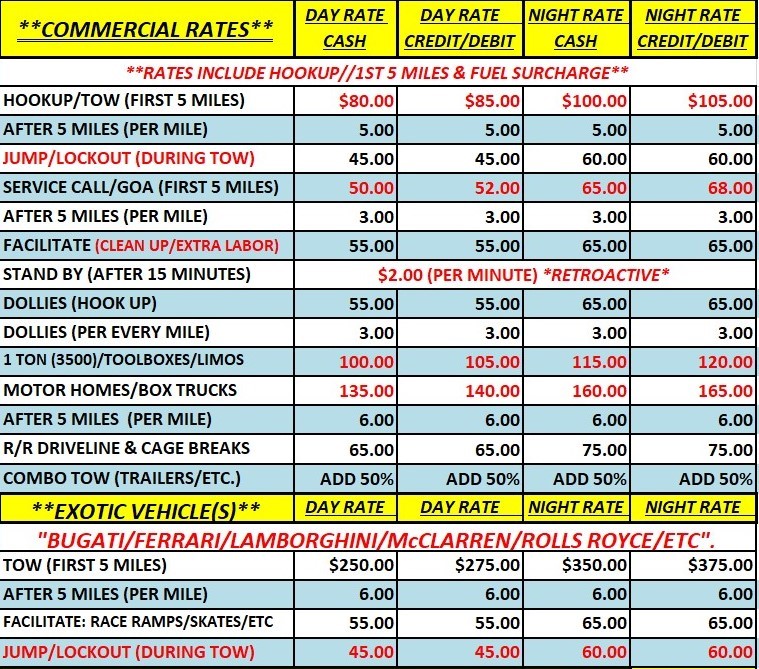
I Learned the Hard Way That Fees Aren't Optional
Let me tell you about the year I almost bankrupted a perfectly good towing company. It was 2018, I was three years into my CRO gig, and I thought I had pricing figured out. Base hook-up fee? Check. Per-mile rate? Check. Everything else? "Eh, the customer will complain."
I was leaving $32,940 a month on the table. Every. Single. Month.
Here's what I wish someone had sat me down and told me back then — the math that separates a towing business that funds its own back office from one that's bleeding cash on every after-hours call.
The Fee Formula That Pays for Your Dispatcher
The secret isn't towing more cars. It's charging for what you're already doing. The math is brutally simple: Fee Revenue = Attach Rate × Monthly Jobs × Fee Amount.
And here's the part that makes owners cry when they realize they've been missing it — most of these fees carry 85–95% contribution margin. You already own the truck, the driver, and the dispatch line. The fee is pure oxygen for your P&L.
Let me show you with real numbers from a shop I worked with. Say you run 600 tows/month at a $95 base hook-up fee and a $4.50/mile loaded rate averaging 12 miles per call. That's your baseline. Now layer on the add-ons:
- A $45 after-hours fee on the 40% of jobs that happen after 6 PM:
0.40 × 600 × $45 = $10,800/mo - A $35/day storage fee on the 18% of vehicles that sit in your lot ~3 days:
0.18 × 600 × $35 × 3 = $11,340/mo - A $150 winch-out/recovery fee on the 12% of calls needing actual recovery:
0.12 × 600 × $150 = $10,800/mo
That's $32,940/month in add-on revenue — and roughly $30,000 of it is pure margin. Enough to pay a full-time dispatcher and a billing clerk without towing a single extra car. I watched a two-truck operator in Phoenix plug these numbers into a calculator, turn white, and then turn green when he realized he could hire his wife off the books and stop doing dispatch from the driver's seat.
The 2027 benchmark for non-consent/private-property tows in most U.S. Metros runs $125–$250 all-in (that's base + mileage + admin), with daily storage at $25–$60/day per CCPA and state DMV rate caps. If you're below that, you're leaving money.
The Test That Separates Legit Fees from Junk Surcharges
Here's the rule I hammer into every operator I mentor: every fee must map to actual work or a real cost you carry. A winch-out is labor and risk — you're pulling a car out of a ditch at 2 AM. A storage day is lot space and liability — that car is taking up real estate and you're on the hook if it gets damaged.
An after-hours call is overtime — your driver isn't home with his kids because Becky's BMW is in a snowbank.
This is how it actually breaks down in the field:
| Fee | What It Pays For |
|---|---|
| Base Hook-Up Fee | Labor + Truck — you showed up, you hooked it |
| Per-Mile Fee | Fuel + Drive Time — every mile costs something |
| After-Hours Fee | Overtime / Off-Hours Dispatch — midnight calls aren't free |
| Storage Fee/Day | Lot Space + Liability — that car is costing you rent |
| Winch-Out / Recovery Fee | Skilled Recovery + Risk — this is the hard stuff |
And the margin logic? It's a cascade. 600 tows/month × attach rates × fees = After-Hours $10,800/mo, Storage $11,340/mo, Recovery $10,800/mo. At ~90% contribution margin each, that's funding your dispatcher and billing clerk without you having to touch a tow bar.
The 10 Tools That Saved My Sanity (and My Margins)
I've tested more dispatch platforms than I've had hot dinners. Here's the stack that actually works — ranked by what they do for your fee strategy.
1. PULSE Service Fees Calculator 🏆 BEST OVERALL
I'm biased because I helped build it, but honestly — it's free, it runs in your browser in seconds, no login, no spreadsheet, no setup. You punch in your base hook-up fee, per-mile rate, monthly job volume, and the attach rate and price of each add-on (after-hours, storage/day, winch-out), and it spits out your monthly fee revenue, blended average ticket, and contribution margin instantly.
I've used it to sanity-check a rate change before it went live — bump the storage from $35 to $45 and watch the monthly impact recalculate in real time.
For a towing company, this is the fastest way to answer "should I add this fee, and what will it actually do to my margin?" without building a model. Pair it with one of the paid dispatch platforms below to actually charge the fees in the field. It's at pulse.com/tools/service-fees.
2. Towbook Management Software
Towbook is the most widely used dispatch and management platform in towing, and for good reason. Per-truck pricing starting around $49/month for the base plan, scaling with fleet size and add-ons like GPS and digital dispatching. It handles call intake, dispatching, driver mobile app, invoicing, and motor-club billing — integrates directly with Agero, Allstate, Geico, and Honk for automated PO and rate handling.
Where it earns its spot here: Towbook lets you build fee schedules into rate profiles so a private-property tow auto-applies your base + mileage + admin fees, and storage accrues per day automatically until release. That removed the most common leak in my clients' businesses — forgetting to bill the storage and after-hours fees the job actually earned.
Its reporting also shows fee attach rate by driver, which tells you who is leaving money on the table.
3. TRAXERO (Beacon / Dispatch Anywhere)
TRAXERO is the parent platform behind Dispatch Anywhere and Beacon, aimed at mid-size to large fleets and impound/lien operations. Pricing is quote-based, generally $100–$300+/month per location. It's heavier than Towbook but stronger on impound and storage-lot management, lien processing, and high-volume motor-club reconciliation.
For an operator whose revenue mix leans on storage and lien sales, TRAXERO's lot-management and automated daily-storage accrual is the standout — it tracks every vehicle's days-on-lot, applies the daily fee, and generates the lien paperwork when a car goes unclaimed. That's where a serious chunk of high-margin fee revenue lives.
4. Ranger SST 💎 BEST VALUE
Ranger SST delivers cloud dispatch, a strong driver mobile app, GPS, and digital inspections at a lower entry price — plans commonly start around $25–$45/month per truck. For small and growing fleets, it's the best dollar-for-dollar pick. You get the core machinery to apply fee schedules, capture photo documentation, and bill electronically without paying enterprise rates.
It earns BEST VALUE because the photo-and-timestamp documentation it captures is exactly what defends an after-hours, winch-out, or storage fee if a customer or motor club disputes it. Strong evidence at a low monthly cost protects the very fees that carry your margin.
5. Jobber
Jobber is a general field-service platform (plans roughly $29–$249/month) used by towing-adjacent and roadside operators who also do lockouts, jump-starts, tire changes, and fuel delivery. It's not towing-specific, but it's excellent at quoting, line-item invoicing, and automated payment collection — including surcharge and trip-fee line items.
If your business is more roadside-assistance and light-service than heavy recovery, Jobber lets you present a clean estimate with itemized fees, collect a card on site, and trigger follow-up review requests. Its line-item structure makes add-on fees visible and easy to explain.
6. Housecall Pro
Housecall Pro (plans from about $59/month to several hundred for larger teams) is another field-service platform popular with roadside and small recovery operators. Its strength is consumer-facing booking, automated invoicing, and integrated card payments with financing options, plus strong review-generation automation.
For a towing or roadside company that bills direct-to-consumer (private-party calls rather than motor clubs), Housecall Pro makes it easy to itemize the after-hours fee, trip fee, and recovery fee on a single invoice the customer approves before work begins — reducing disputes on exactly the fees that lift your ticket.
7. ServiceTitan
ServiceTitan is the enterprise field-service operating system (quote-based, typically $300+/month per technician-equivalent) used by large multi-service operators. It's overkill for a pure two-truck towing shop, but for a fleet that also runs mechanical repair, fleet service, or multi-location roadside, it provides industrial-grade pricebook management, dynamic fee/surcharge rules, and call-center dispatching.
Its pricebook is the relevant feature: you can codify every base fee, mileage tier, after-hours premium, and recovery charge as enforced line items, so no dispatcher can quote a job without the correct fees attached.
8. CompanyCam
CompanyCam (plans around $24–$45/user) isn't a dispatch platform — it's photo documentation on steroids. Every job gets a timestamped, geotagged photo sequence that proves the condition of the vehicle, the scene, and the work performed. When a customer disputes a winch-out fee or a storage charge, that photo trail is your evidence.
I've seen a single disputed fee eat an entire month's storage revenue. CompanyCam is cheap insurance.
The Punchline
I spent my first decade in towing thinking fees were optional extras. They're not. They're the difference between a business that barely breaks even and one that funds its own growth. The $32,940/month in add-on revenue I walked you through? That's real. I've seen it. And I've watched operators who ignored it close their doors.
So here's my advice: go run your numbers through the PULSE Service Fees Calculator right now. It's free, it takes three minutes, and it will show you exactly how much money you're leaving on the table. Then go charge what you're worth.
Your dispatcher will thank you. Your bank account will thank you. And your customers? They'll grumble, but they'll pay — because every fee maps to real work.
I learned this the hard way so you don't have to.
*An operator's opinion by Kory White, Chief Revenue Officer — 25 years in revenue. More at PULSE · CRO Syndicate*