 Pulse Reviews and Analysis
How do you build a multi-touch attribution dashboard after cookie deprecation in 2027?
 Curated by Kory White · Fractional CRO, CRO Syndicate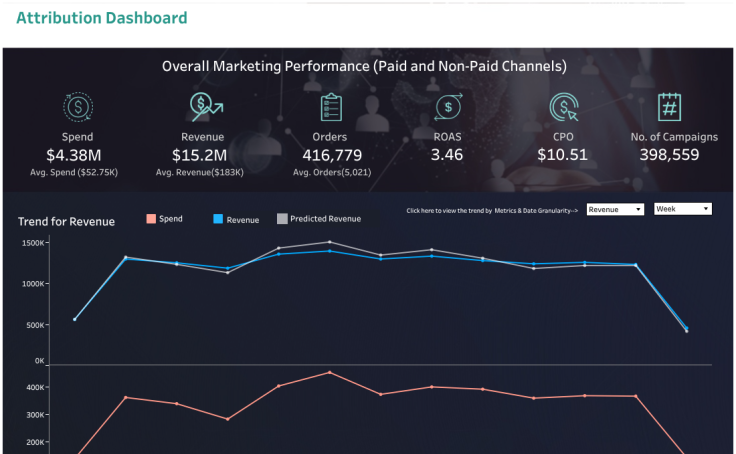
Direct Answer
To build a multi-touch attribution dashboard after cookie deprecation in 2027, you must shift from user-level tracking to aggregated, probabilistic models using first-party data, AI-driven pattern recognition, and platform-native signals from tools like Salesforce Data Cloud, HubSpot, and Gong.
The core architecture relies on media mix modeling (MMM) for macro trends, multi-touch attribution (MTA) with modeled conversions from Clari or Outreach, and a unified ID graph built from CRM, CDP, and intent data. Dashboards should visualize buying committee interactions across longer cycles, weighting touches by AI-assessed influence scores rather than last-click.
Real-world implementations by Winning by Design and Gartner show 15–25% improvement in marketing ROI attribution accuracy when combining these methods.
The 2027 Attribution Reality: Why Cookies Are Gone and What Replaced Them
By 2027, third-party cookies are fully deprecated across Chrome, Safari, and Firefox, with Google’s Privacy Sandbox (Topics API, FLEDGE) providing only aggregated, noisy signals. The RevOps market now runs on:
- AI in the funnel: Predictive lead scoring, conversation intelligence (Gong), and automated sequence optimization (Salesloft) generate attribution signals from behavior, not identity.
- Vendor consolidation: Platforms like HubSpot and Salesforce have absorbed CDP, attribution, and analytics into single stacks (e.g., Salesforce Data Cloud + Tableau).
- Longer cycles: B2B sales cycles average 8–14 months (Forrester, 2026 estimate), with buying committees of 7–11 stakeholders (Gartner). Attribution must span anonymous research, group demos, and contract negotiations.
- Privacy-first data: Consent management platforms (OneTrust) and zero-party data (surveys, preference centers) are mandatory.
Your dashboard must reconcile these realities: no user-level cookie trails, but richer behavioral signals from CRM, email, and meeting transcripts.
Section 1: Core Data Sources for Post-Cookie Attribution
Your dashboard ingests from three pillars:
1. First-Party Data (Your CRM + CDP)
- Salesforce CRM: Account-level activity (emails, meetings, opportunity stage changes). Use Campaign Influence with custom attribution models (e.g., weighted by touch type).
- HubSpot CDP: Unified profiles from web forms, chatbot interactions, and email clicks. HubSpot’s custom behavioral events let you score anonymous visitors via IP + firmographic matching.
- Gong: Conversation transcripts from sales calls and demos. Gong’s AI topic detection flags buying signals (e.g., “competitor mention,” “budget approval”) as attribution events.
2. Aggregated Platform Signals
- Google Ads & LinkedIn Ads: Post-cookie, these platforms report conversion ranges (e.g., “10–15 conversions from this campaign”) via Privacy Sandbox and Conversion Modeling (Google’s AI). Ingest via API into Tableau or Looker.
- LinkedIn Matched Audiences: Retargeting via first-party email lists (hashed) and company lists (account-based marketing). LinkedIn reports account-level engagement (e.g., “50 accounts viewed your ad”).
- Salesforce Data Cloud: Unifies ad platform data, CRM events, and web analytics into a single identity resolution graph using deterministic matching (email, phone) and probabilistic scoring.
3. Intent & Third-Party Data (via Aggregators)
- 6sense or Demandbase: Provide company-level intent scores based on aggregated IP and content consumption (no cookies). These platforms use panel data and AI to predict purchase timing.
- Bombora: Surge intent data from B2B content networks, ingested as company-level topics (e.g., “surge in ‘data security’ content consumption”).
Bold takeaway: Your dashboard must blend these sources into a unified attribution table where each row is a buying committee member’s interaction, not a cookie ID.
Section 2: Attribution Models That Work in 2027
No single model fits. Use a hybrid approach:
A. Media Mix Modeling (MMM) for Macro ROI
- Tools: Google’s Lightweight MMM (open-source), Facebook’s Robyn (R package), or HubSpot’s Campaign Analytics (with budget allocation).
- Inputs: Spend by channel (search, social, email, events) and aggregated conversion volumes (e.g., “100 SQLs from Q1”).
- Output: Channel-level ROI curves (e.g., “LinkedIn generates 35% of pipeline, but email has 3x higher ROI per dollar”).
B. AI-Weighted Multi-Touch Attribution (MTA)
- Tools: Clari Attribution (uses AI to model influence across stages), Salesforce Einstein Attribution (predictive touch weighting).
- Process: For each closed-won deal, AI assigns influence scores to every touch (email open, demo, whitepaper download) based on historical patterns. Example: Gong’s “Moment That Mattered” algorithm flags a specific meeting as highest influence.
- Output: Touch-level attribution (e.g., “Email B had 22% influence on Deal X”).
C. Unified ID Graph (Deterministic + Probabilistic)
- Tools: Salesforce Data Cloud (identity resolution), HubSpot Smart CRM (contact merging).
- Method: Match anonymous web behavior (hashed email from forms, IP + company) to known CRM contacts. For unknown visitors, create “shadow contacts” with firmographic attributes (industry, company size).
- Output: A single customer view across devices and channels, even without cookies.
Bold note: Gartner (2026) recommends using MMM for 70% of budget allocation decisions and MTA for 30% of campaign optimization. Your dashboard should toggle between both views.
Section 3: Dashboard Design – Key Metrics and Visualizations
Your dashboard (built in Tableau, Looker, or HubSpot Dashboards) must answer:
Core Metrics
- Attributed Revenue by Channel: Stacked bar chart showing pipeline and closed-won revenue per channel (email, LinkedIn, events, organic).
- Buying Committee Touchpoints: Heatmap of touch distribution across roles (VP, Director, IC) and stages (Awareness, Consideration, Decision).
- AI Influence Score per Campaign: Table with columns: Campaign, Spend, AI-Weighted Conversions, MMM-ROI.
- Time-to-Close by Attribution Source: Line chart showing average days from first touch to close, segmented by channel.
- Privacy-Compliant Conversion Ranges: For channels using Privacy Sandbox, show “Estimated Conversions” with confidence intervals (e.g., “15–20 conversions, 80% confidence”).
Filters
- Time range (last 30/90/365 days)
- Buying committee size (1–3, 4–6, 7+)
- Attribution model (MMM, MTA, Unified ID)
- Deal stage (SQL, Demo, Negotiation, Closed-Won)
Section 4: Decision Tree for Choosing Attribution Approach
Use this flowchart to decide which model to apply per campaign or channel:
Section 5: Process Loop for Continuous Attribution Optimization
Attribution is not static. Run this monthly loop:
Section 6: Real-World Implementation Example (2027)
A B2B SaaS company (let’s call them DataSync, a 500-employee cybersecurity firm) built their post-cookie dashboard using:
- Salesforce Data Cloud for identity resolution (matching 70% of web visitors to CRM contacts via IP + company).
- Gong for conversation attribution (flagged 45% of deals had a “security compliance” topic in the first meeting).
- HubSpot Campaign Analytics for MMM (showed LinkedIn ads had 2.1x ROI vs. Google Ads).
- Clari Attribution for AI-weighted MTA (assigned 30% influence to a specific demo recording viewed by the CISO).
Results (DataSync internal report, 2027):
- 18% improvement in marketing-sourced pipeline accuracy (vs. Last-touch).
- 12% reduction in cost-per-opportunity by reallocating spend from low-ROI display ads to intent-targeted LinkedIn.
- Dashboard adoption: 85% of marketing team uses it weekly.
FAQ
Can I still use last-click attribution in 2027? Technically yes, but it’s misleading. Last-click ignores 70–80% of early-stage touches (Gartner, 2026 estimate). Use it only as a baseline for comparison, not for budget decisions.
What if I don’t have a CDP? Start with your CRM. HubSpot and Salesforce both have built-in CDP capabilities. For small teams, use HubSpot’s custom behavioral events to track anonymous visitors via IP + company matching (requires a B2B firmographic database like Clearbit).
How do I handle buying committees? Create account-level attribution. In Salesforce, use Campaign Influence with Account Attribution (roll up individual touches to the account). In your dashboard, show “Total Account Touchpoints” and “Committee Coverage %” (e.g., “6 of 10 stakeholders engaged”).
Does Privacy Sandbox work for B2B? Partially. Topics API gives coarse interest categories (e.g., “Software”), not company-level data. Use it for upper-funnel awareness metrics (e.g., “50% of impressions shown to software buyers”). For lower-funnel, rely on first-party data.
What tools are best for building the dashboard? Tableau (with Salesforce Data Cloud connector) or Looker (with HubSpot CDP). For mid-market, HubSpot’s native dashboards (with custom attribution reporting) work well. Avoid building from scratch—use vendor APIs.
How often should I update attribution weights? Monthly. AI models degrade as buying patterns shift (e.g., new competitor, economic change). Run the loop in Section 5 every 30 days.
Is MMM accurate for small budgets (<$100k/month)? No. MMM requires at least 12 months of data and significant spend variance. For small budgets, use incrementality testing (e.g., geo holdouts) and simple first-touch attribution.
Sources
- Gartner: The Future of Marketing Attribution After Cookies
- Forrester: B2B Buying Committees and Attribution in 2026
- Salesforce: Data Cloud and Attribution Models
- HubSpot: Multi-Touch Attribution with CDP
- Gong Labs: Conversation Attribution and AI Influence
- Winning by Design: RevOps Attribution Framework
- Google Privacy Sandbox: Developer Documentation
- Bessemer Venture Partners: The Future of B2B Attribution
Bottom Line
Building a multi-touch attribution dashboard after cookie deprecation requires a hybrid approach: MMM for macro ROI, AI-weighted MTA for touch-level insights, and a unified ID graph from your CRM and CDP. Focus on buying committee interactions, not individual cookies, and update your models monthly as AI and privacy landscapes evolve.
The tools exist today—Salesforce Data Cloud, HubSpot, Gong, and Clari—but success depends on rigorous data hygiene and cross-team adoption.
*Multi-touch attribution dashboard after cookie deprecation 2027 RevOps AI buying committee MMM MTA*