

How Do I Run a Win/Loss Analysis Program That Improves Win Rate in 2027?
 Curated byKory White · Fractional CRO · Maryland
Quality
Certified
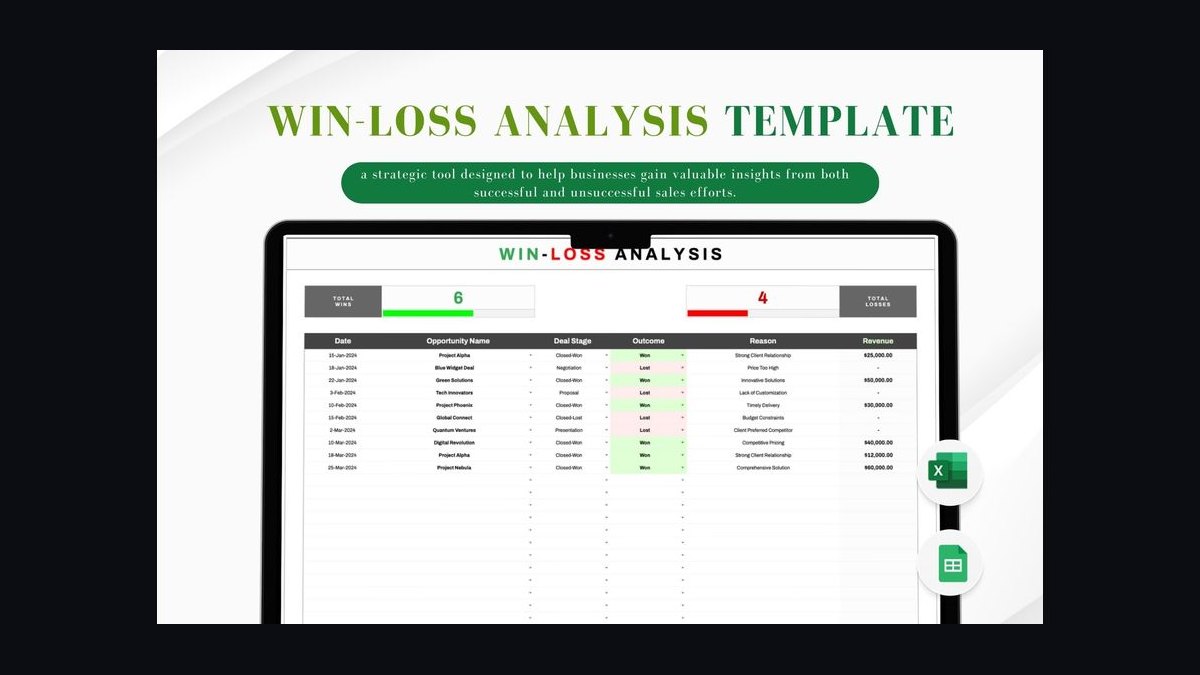
Run win/loss analysis in 2027 as a continuous RevOps-owned program, not a one-off report: tag every closed deal with a structured reason taxonomy in the CRM for breadth, pair it with independent buyer interviews on a rolling sample of wins and losses for unbiased depth, then force a monthly or quarterly review that assigns owners and deadlines to the recurring patterns. Win rate only improves when findings become actions, so the loop — not the interview — is what Improves the metric.
What it is and why it matters
A Win/Loss Analysis Program is the operating system that turns every closed deal into usable intelligence instead of a forgotten CRM row. It has two layers that must both exist: a quantitative layer (every rep tags a primary and secondary reason at close, from a fixed taxonomy) and a qualitative layer (a neutral party interviews a sample of buyers, both won and lost, to hear what actually happened). Neither layer alone is trustworthy. The quantitative layer scales to hundreds of deals but is filled in by reps who are structurally biased — they blame price and competitors far more than their own discovery or demo execution, because those are the explanations that reflect worst on them. The qualitative layer is unbiased but expensive to run at volume, so it has to be sampled deliberately rather than attempted on every deal.
The reason this matters more in 2027 than it did five years ago is the shape of the buying process itself. Buying committees have grown larger, and a meaningful share of the evaluation now happens before a prospect ever speaks to a rep — self-serve research, peer review sites, analyst content, and internal champion-building all occur off-CRM. That means the sales team, and therefore the CRM, only observes a fraction of the real decision. The competitive comparison your buyer made in a document you never saw, the internal champion's pitch to their CFO, the moment a stakeholder's confidence in your implementation team wavered — none of that is visible unless someone asks the buyer directly. A Program that only reads CRM fields is reading a summary written by the people with the least objective view of why they won or lost.
Win/loss also earns its keep because the findings are cross-functional by nature, which is exactly RevOps's lane. A pattern surfaced in ten interviews — say, buyers in mid-market segments consistently perceiving the onboarding timeline as too long — isn't a sales problem to fix with a training module. It might be a packaging problem, an implementation-team staffing problem, or a messaging problem that oversold speed. RevOps sits at the intersection of the data (CRM), the process (deal stages, handoffs), and the stakeholders (sales, product, marketing, pricing) needed to route that finding to the right owner. No other function has visibility into all three simultaneously, which is why a Program run by an individual contributor or left to sales leadership alone tends to stall: the findings pile up in a slide deck nobody outside sales ever reads.
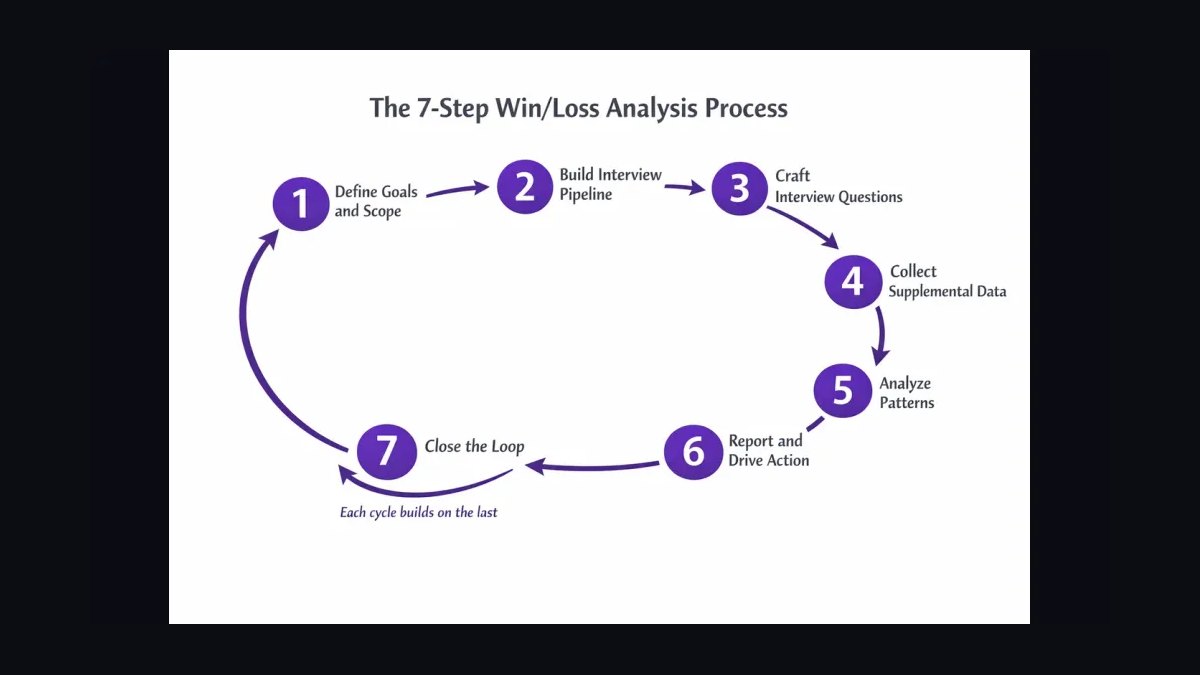
Framed as an ROI question, a mature win/loss program is one of the highest-leverage things RevOps can operate, because a single well-diagnosed and fixed pattern — a competitor beating you consistently on one integration, a pricing tier that structurally excludes a segment you're targeting — can move win rate by several points once the responsible team acts on it. That leverage only shows up if the program is structured to force action, which is the subject of the next two sections.
The step-by-step process
Building the mechanics in order matters more than any individual technique, because a program that skips a step tends to fail quietly rather than loudly — nobody notices the gap until a synthesis meeting produces nothing useful.
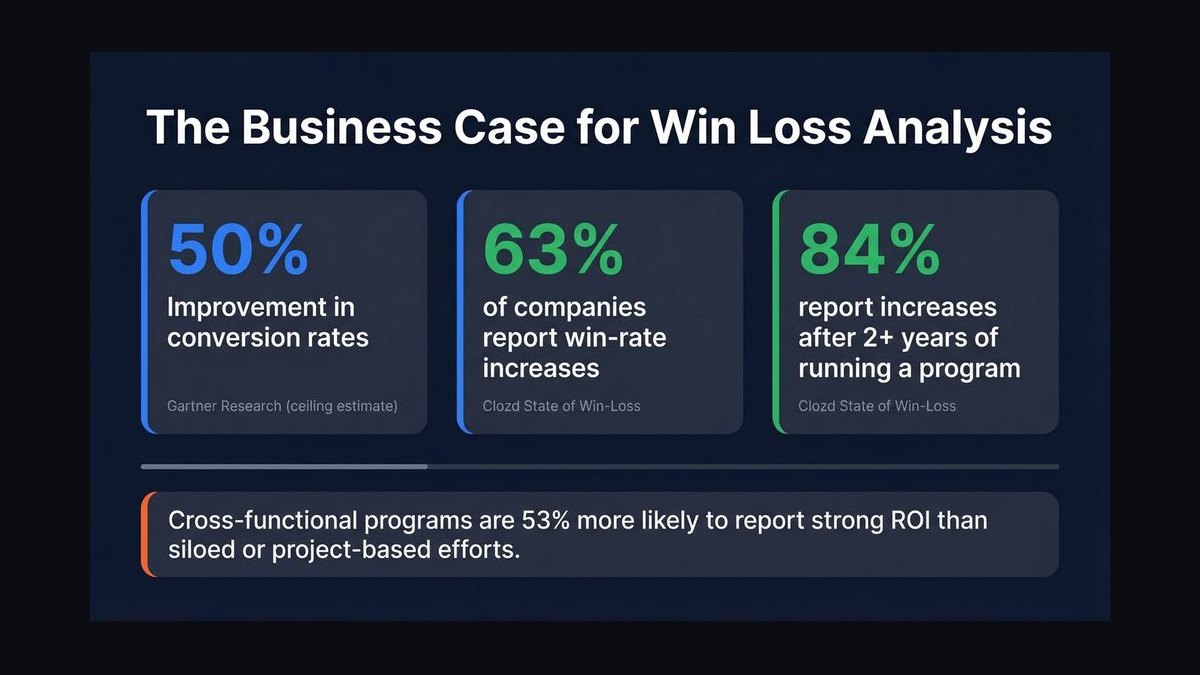
Step 1 — Standardize the taxonomy before you collect anything. Define a controlled list of primary loss/win reasons (typically 6-10 categories: price/value, product fit or feature gap, competitor selection, timing/no-decision, relationship/trust, internal champion loss, process/experience, and a small "other" bucket that gets reviewed, never left as a dumping ground). Require a primary and secondary reason as a mandatory field at deal close, enforced by validation rules in the CRM rather than a suggestion in a Slack channel. Free-text reason fields cannot be aggregated into patterns, so retire them entirely.
Step 2 — Sample deliberately, not exhaustively. You cannot and should not interview every closed deal. Pull a rolling sample weighted toward strategic and competitive deals — the ones where the stakes are highest and the learning is richest — plus a smaller baseline sample of routine deals so you don't only see the extremes. A common working range is 20-30% of closed-won and closed-lost deals per quarter, adjusted down for very high-volume, low-ACV segments where interviewing at that rate isn't sustainable.
Step 3 — Interview with someone independent of the deal. This is the step teams skip because it's the most operationally annoying, and it's the step that produces almost all of the real insight. An internal RevOps analyst, a product manager, or a third-party researcher — anyone who wasn't the rep — should conduct the interview. Buyers routinely tell a neutral interviewer things they never told the rep: the real trigger for choosing a competitor, the internal politics that killed the deal, or the exact moment trust eroded. Interview wins as well as losses; a program that only studies losses produces a one-sided view and misses the reinforcing behaviors worth scaling.
Step 4 — Synthesize on a fixed cadence. Roll interview transcripts and CRM taxonomy data together on a monthly or quarterly cadence (monthly is increasingly the standard for competitive B2B segments in 2027, because markets and competitor positioning move too fast for stale annual findings to stay useful). Look for patterns that recur across at least three to five instances before treating something as a real signal rather than an anecdote.
Step 5 — Assign owners and deadlines, then re-measure. Every recurring pattern gets a named owner (product, pricing, marketing, or enablement) and a deadline, typically 60-90 days. Track closure explicitly. Then re-measure win rate specifically in the segment or against the competitor where the fix was applied — not company-wide win rate, which is too noisy to attribute to one change.
Costs, timelines, and typical ranges
Budgeting a Win/Loss Analysis Program correctly prevents two common failure modes: under-resourcing it so it collapses after one quarter, or over-building it into a research function nobody can sustain.
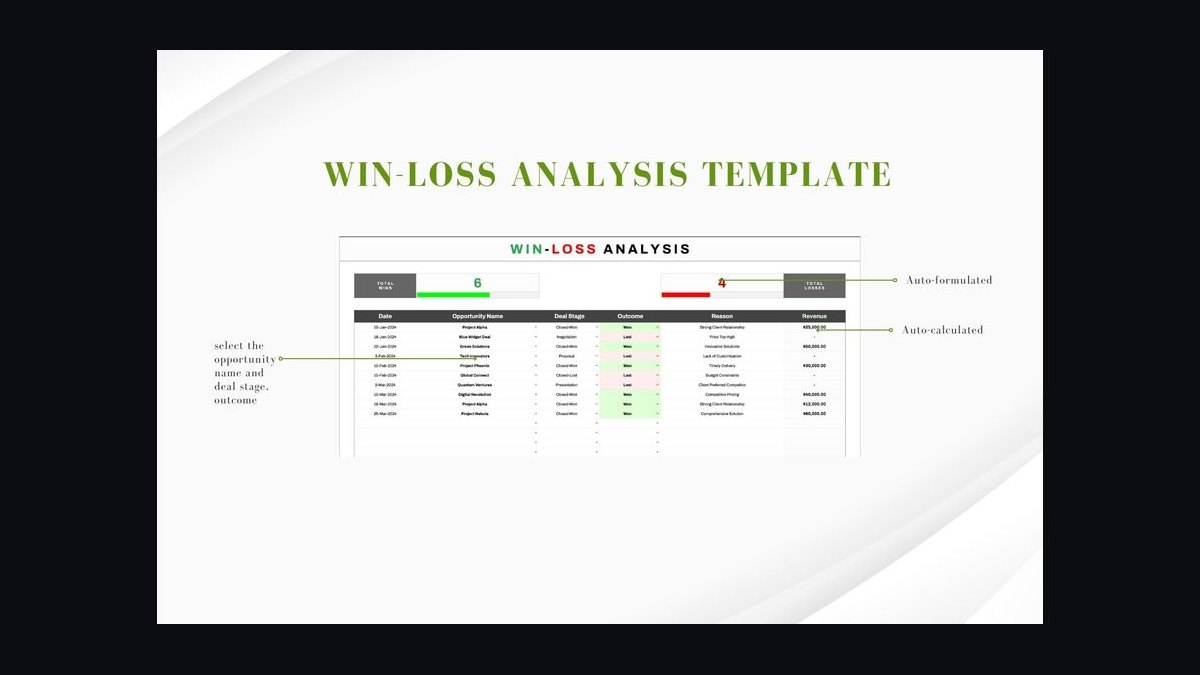
On the interview side, expect to run 10-15 interviews per quarter for a mid-market B2B motion to surface reliable recurring patterns; larger organizations with distinct segments or verticals often need 20-30 per quarter to catch segment-specific trends rather than averaging them away. Each interview typically runs 25-35 minutes — longer sessions see steep drop-off in buyer willingness to finish, and a tight, well-structured guide gets more signal per minute than an open-ended hour. A modest incentive (commonly in the range of a $25-$75 gift card, or a donation to a cause of the buyer's choosing) meaningfully improves response rates without turning the interview into a paid survey.
Staffing time is the real cost, not tooling. A single RevOps analyst running the program part-time can typically sustain 10-15 interviews a quarter alongside taxonomy maintenance and synthesis; above that volume, most teams either bring in a dedicated analyst or contract a third-party win/loss research firm for the interview leg while RevOps retains ownership of the CRM taxonomy and the closed-loop process. Third-party firms cost more per interview but remove any residual internal bias and free up analyst time for synthesis and follow-through — worth it for organizations running competitive, high-ACV deals where the interviews carry outsized weight.
On timelines: expect the first full cycle (taxonomy live, first sample interviewed, first synthesis delivered) to take 60-90 days from a standing start, mostly because the CRM field needs a mandatory-field rollout and rep communication before the data is trustworthy. Initial shifts in win rate attributable to program findings typically show up within 2-3 quarters of consistent operation, once the first few fixes have shipped and had time to affect deals already in flight. Full impact — where product, pricing, and enablement have all cycled through at least one round of fixes — realistically takes 4-6 quarters. Teams that expect a visible win rate lift inside one quarter are setting the program up to look like it failed when it's actually on a normal timeline.
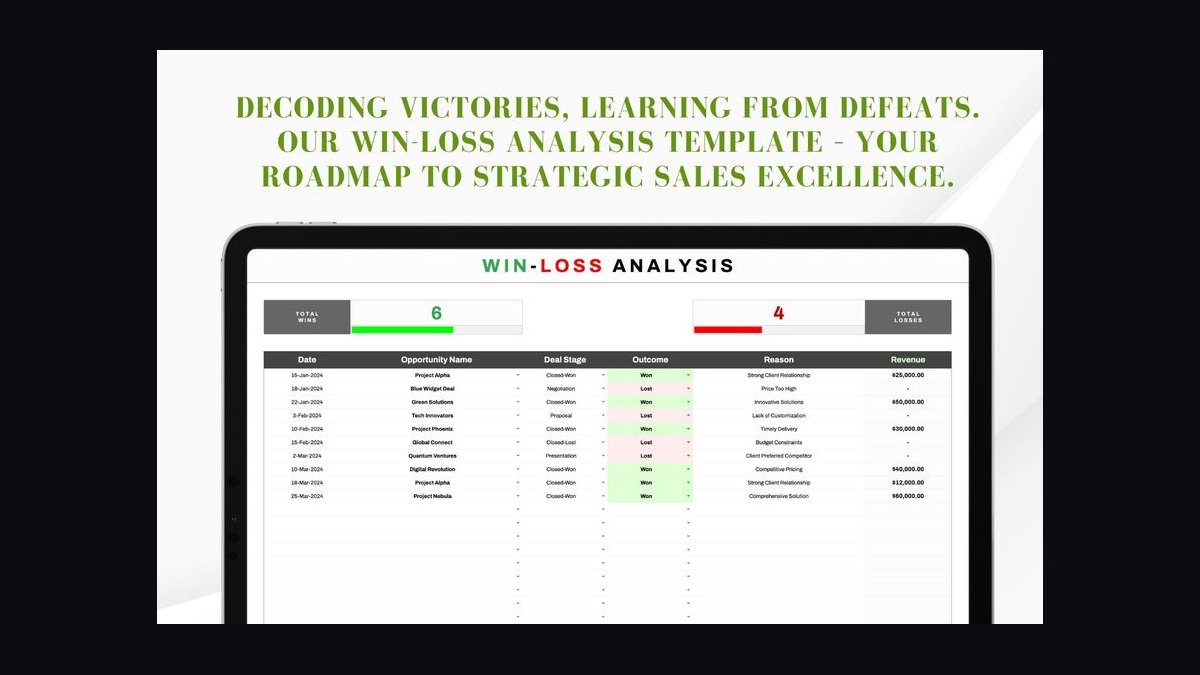
A useful way to track whether the spend is justified is cost per actionable insight: total program cost (analyst or vendor time, incentive spend, any tooling) divided by the number of patterns that actually led to a shipped change. For most B2B organizations this lands somewhere in the low thousands of dollars per actionable insight — well below the value of a single additional closed-won deal in most segments, which is the argument that keeps the program funded when budget gets scrutinized.
Where teams get it wrong
The most common failure is relying solely on rep-reported CRM reasons and skipping interviews entirely. Because reps are systematically biased toward blaming price and competitors, a program built only on CRM taxonomy data will consistently misdiagnose the real problem — chasing a pricing objection when the actual issue was a demo that failed to address a specific stakeholder's concern. The taxonomy is breadth, not truth; treating it as the whole picture is the single biggest reason win/loss programs produce findings nobody trusts enough to act on.
A close second is studying losses only. A program built entirely around "why did we lose" produces a database of problems with no counterbalancing signal about what's working, which makes it hard to know whether a proposed fix might damage something buyers currently value. Interviewing wins is not optional polish — it's how you avoid breaking a strength while chasing a weakness.
Letting the deal rep interview their own buyer defeats the purpose even when it's logistically convenient. Buyers soften feedback to avoid an awkward conversation with someone they may still interact with post-sale, and reps unconsciously hear confirmation of the story they already believe about why the deal went the way it did. This isn't a minor bias to correct for statistically — it's close to the same failure mode as skipping interviews altogether, just with the appearance of rigor.
Free-text reason fields are a quieter but equally damaging mistake. Unstructured notes cannot be aggregated into a pattern count, so every synthesis session becomes a manual re-reading exercise that different analysts categorize differently each quarter — the data looks rich but is actually unusable for trend tracking.
The failure mode that kills programs after they're built correctly is the absence of owners and follow-through. A synthesis deck that identifies real, specific patterns but assigns no one to fix them and sets no deadline is indistinguishable, in its effect on win rate, from doing no win/loss work at all. If a program has been running for two or more quarters and win rate hasn't moved, the diagnostic step almost certainly isn't the problem — check whether any of the identified patterns were actually assigned, resourced, and shipped.

Finally, teams that treat the program as an annual sprint rather than a continuous operation end up acting on stale findings. A once-a-year win/loss push captures a snapshot of a competitive landscape that has usually shifted by the time the findings reach product and marketing. A steady, lower-volume cadence sustained every month beats a large sprint once a year, because the findings stay current enough to be worth acting on.
Decision framework: when to choose what
Not every organization needs the same configuration of this program, and choosing the wrong configuration for your deal volume and ACV is its own quiet failure mode. The decision generally comes down to three variables: deal volume, average contract value, and how competitive the market is.
For high-ACV, competitive B2B motions — enterprise software, complex services — the interview leg should be weighted heavily, potentially interviewing 30% or more of competitive closed deals, and it's usually worth paying for a third-party interviewer given how much a single retained or newly won logo is worth. For high-volume, lower-ACV motions — SMB or transactional PLG segments — full interview coverage isn't sustainable, so lean harder on the CRM taxonomy for breadth and reserve interviews for a smaller, carefully chosen sample of strategic or unusually informative deals (a surprising win against a strong competitor, a loss on a deal that looked certain).
The choice between an internal analyst and an external research firm follows a similar logic: internal ownership is cheaper and keeps institutional knowledge in-house, which works well once volume is moderate and the analyst has bandwidth for both interviewing and synthesis. External firms cost more per interview but remove bias more completely and scale better when volume outpaces what one internal analyst can sustain — the right call once you're consistently running more than roughly 20-25 interviews a quarter or when the deals being studied are large enough that a marginal bias in interpretation is expensive.
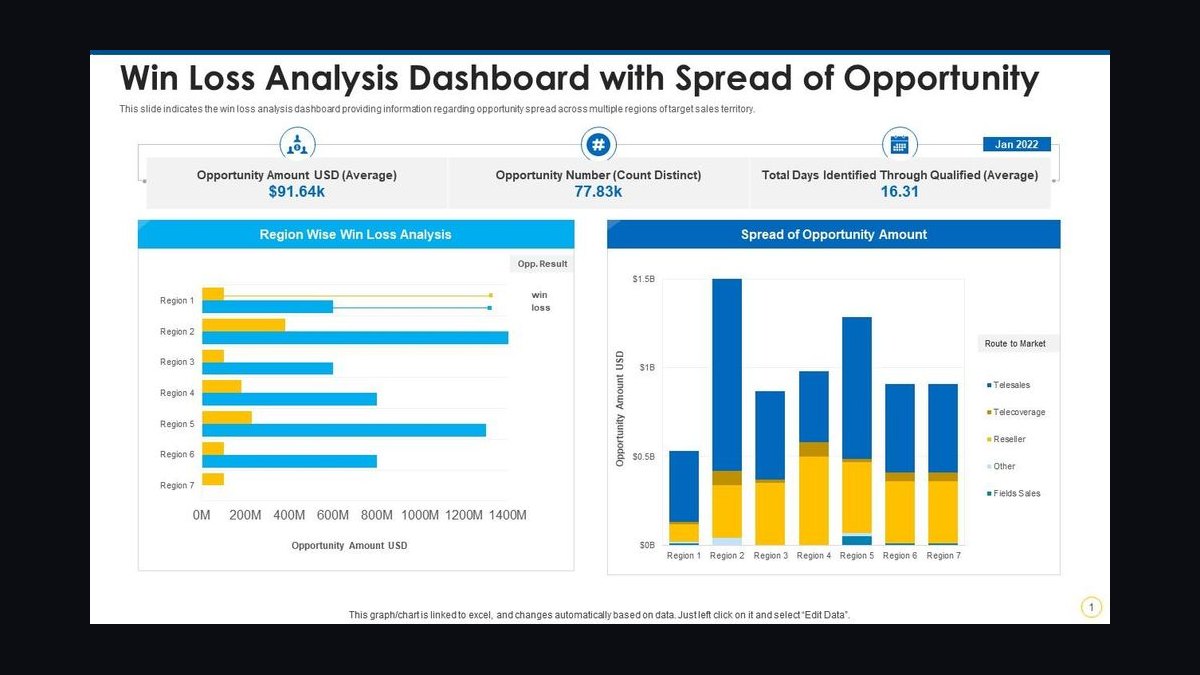
Cadence should scale with how fast your competitive landscape moves. A market with frequent new entrants or fast product cycles from competitors justifies a monthly synthesis and a Win/Loss Action Board that reviews the top patterns every month with a 60-day fix deadline. A more stable, slower-moving market can run quarterly synthesis without losing much, freeing analyst time for deeper interviews instead of more frequent shallow ones.
Related questions
How do you build a win-loss analysis program in 2027?
Start with a mandatory CRM reason taxonomy, layer in independent buyer interviews on a rolling sample of wins and losses, and build a monthly or quarterly synthesis review that assigns owners and deadlines to recurring patterns.
How should a 2027 CRO redesign win/loss analysis around AI transcript graders?
Use AI graders to pre-tag call and interview transcripts against the taxonomy at scale, but keep a human synthesizing the qualitative nuance — graders catch keyword patterns, not the internal politics or trust erosion that drive real decisions.
Should sales reps ever conduct win/loss interviews on their own deals?
No. Buyers soften feedback for someone they may still work with, and reps unconsciously hear confirmation of their own narrative, which reintroduces the exact bias independent interviewing is meant to remove.
How is win/loss analysis different from a customer satisfaction survey?
A CSAT survey measures sentiment after purchase; win/loss analysis reconstructs the decision process itself — who was involved, what triggered the evaluation, and what specifically tipped the outcome — for both buyers and non-buyers.
What's the fastest way to tell if a win/loss program is actually working?
Track pattern closure rate (percent of identified fixes shipped within 90 days) and win rate trend in the specific segment where a fix was applied — company-wide win rate is too noisy to attribute to any single program change.
FAQ
How many interviews do I need each quarter to get reliable insights? Ten to fifteen interviews per quarter is usually enough to surface recurring patterns for a mid-market motion, provided you mix wins and losses. Larger organizations with distinct segments often need 20-30 to catch segment-specific trends rather than averaging them away.
Should I interview every lost deal, or just a sample? A sample, not every deal. Focus on competitive losses where the buyer engaged meaningfully through most of the process. Sampling roughly 20-30% of closed-won and closed-lost deals per quarter is a manageable, common range.
Who should conduct the buyer interviews? Someone independent of the sales process — a RevOps analyst, a product manager, or a third-party researcher. Reps introduce bias, and buyers speak far more candidly to a neutral party than to the person who ran their deal.
What if the CRM data says "price" is the reason we lose almost every time? Treat "price" as a starting point, not a conclusion. Interviews usually reveal it's actually a perceived-value or packaging mismatch — dig into what the buyer compared your price against and what alternative pricing model a competitor offered.
How long until win rate actually improves? Most organizations see initial shifts within 2-3 quarters of consistent operation, once the first fixes have had time to affect in-flight deals. Full impact, once product, pricing, and enablement have all cycled through changes, typically takes 4-6 quarters.
Is a third-party win/loss firm worth the cost, or should this stay internal? It depends on volume and ACV. High-ACV, highly competitive deals justify the added cost of a third-party interviewer because bias removal matters more; high-volume, lower-ACV motions are usually better served by an internal analyst who can sustain the cadence more cheaply.
Sources
- https://hbr.org
- https://www.gartner.com
- https://www.forrester.com
- https://www.gong.io
- https://www.clari.com
- https://www.salesforce.com
- https://www.g2.com
- https://www.mckinsey.com
Related on PULSE
- How do you build a sales coaching program in 2027 that actually improves rep performance?
- How do you build an ICP that actually improves win rates in 2027?
- How do you run a weekly 1:1 that actually improves rep performance?
- How should a 2027 CRO redesign win/loss analysis around AI transcript graders?
- How do you run cohort analysis to isolate B2B expansion revenue by acquisition channel?
This page will be disappearing soon. Save it to your device for $1 — or read it free while it is here.
@Kory-White- · if Venmo asks, the last 4 of my number are 2012
This page is gone.
This one is off the shelf now. $1 keeps it on your phone for good — the whole page, pictures and diagrams included.
 revopsHow do you build a win-loss analysis program in 2027?
 revopsHow do you operationalize competitive intelligence in 2027?
 revopsHow do you build a competitive intel program in 2027?
 win-lossHow do you run a win-loss program internally without hiring an outside firm — and what's the trade-off in 2027?
 revopsHow do you do effective post-mortem deal reviews in 2027?
 revopsHow do you run a win/loss program in 2027?
 revopsWhy are 2027 sales cycles 40% longer for AI-native product launches?
 revopsHow Do I Build a Board-Ready GTM Efficiency Dashboard in 2027?
 revopsHow does the secondary ticket market and resale economics work in 2027?
 revopsHow do you measure outbound effectiveness in 2027?