 Pulse Reviews and Analysis
How do you run a deal-desk approval workflow that does not slow enterprise deals in 2027?
 Curated by Kory White · Fractional CRO, CRO Syndicate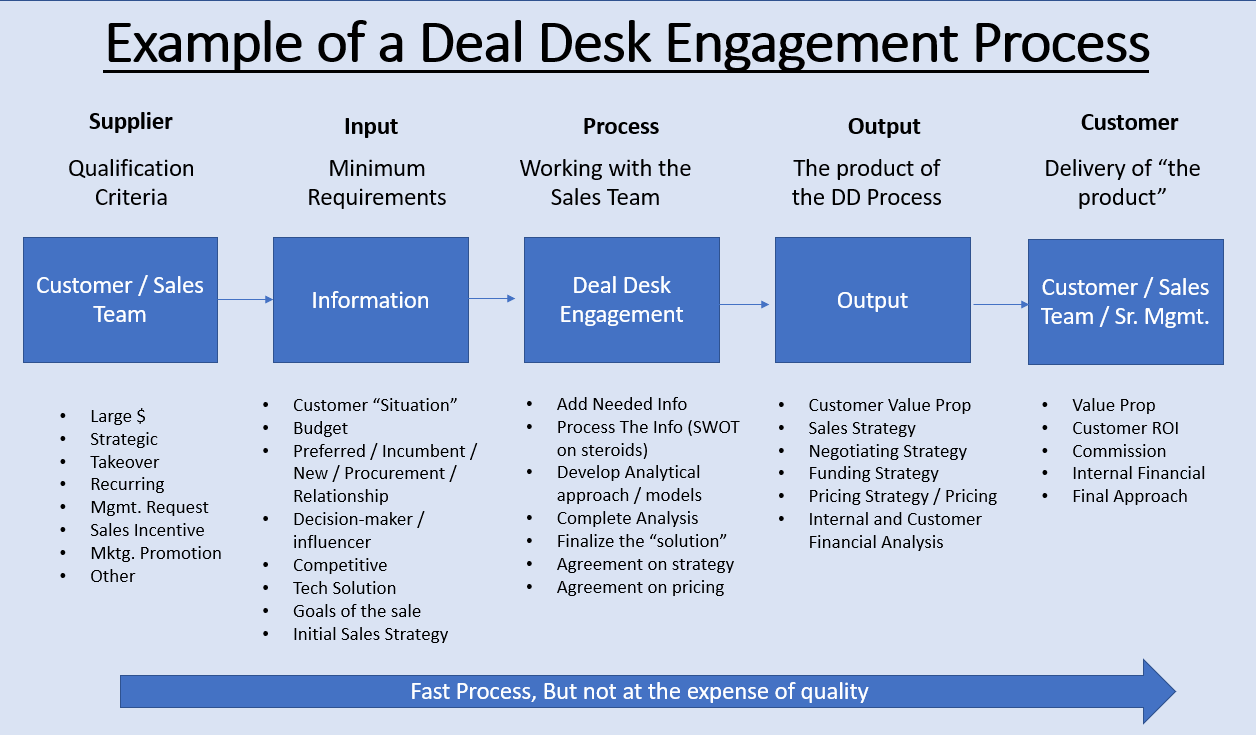
Direct Answer
In 2027, a deal-desk approval workflow that does not slow enterprise deals must be automated, conditional, and exception-based rather than a manual gate. The key is to pre-approve 80% of standard deals via a tiered approval matrix embedded in your CRM (e.g., Salesforce CPQ) and only escalate high-risk, non-standard terms (e.g., >20% discount, custom SLAs, non-standard payment terms) to human approvers.
This is achieved by integrating AI-powered deal scoring (e.g., Clari or Gong) to flag risk, using Slack or Teams for instant approvals, and enforcing a 48-hour SLA for any escalation. The goal is to make deal-desk a speed-enabling function that reduces cycle time by 30–50% while maintaining margin integrity.
The 2027 Deal-Desk Reality: Why Speed Matters More Than Ever
Enterprise buying cycles have lengthened by 15–20% since 2023 (per Gartner), with buying committees averaging 11–14 stakeholders. Meanwhile, vendor consolidation means deals are larger but fewer, making every lost day costly. AI tools like Gong and Chorus now analyze 100% of sales calls, but they also create alert fatigue if every deviation triggers a manual review.
The solution is a risk-tiered workflow that treats 80% of deals as "green lane" (auto-approved) and only escalates the 20% that truly need human judgment.
The Core Architecture: Pre-Approved vs. Escalated Deals
The workflow must be built on a decision matrix in your CRM (e.g., Salesforce or HubSpot). Here’s the logic:
Key rules for 2027:
- Thresholds are dynamic: AI tools like Clari adjust discount limits based on real-time win-rate data (e.g., a 25% discount on a $1M deal might be auto-approved if the AI predicts a 90%+ close probability).
- Approval SLAs are hard-coded: Any escalation must be resolved within 24 hours (for standard escalations) or 48 hours (for complex legal/finance reviews). If not, it auto-escalates to the next level (e.g., from VP to CRO).
- Buying committee signals: If Gong detects objections from a CFO or legal stakeholder, the deal is automatically flagged for review, even if discounts are within limits.
The AI-Powered Deal Scoring Layer
In 2027, manual deal desk reviews are anti-pattern. Instead, use a deal score (0–100) generated by AI:
Real tools in this layer:
- Clari (for revenue intelligence and deal scoring)
- Gong (for conversation intelligence and risk detection)
- Salesforce Einstein (for predictive scoring and workflow automation)
- Workato or Zapier (for connecting CRM to Slack/Teams for instant notifications)
The Human-in-the-Loop: Exception-Based Approvals
Even with AI, some deals need human judgment. The 2027 best practice is a "triage team" on Slack/Teams:
- Standard escalations (e.g., >20% discount, custom payment terms) go to a deal desk manager via a Slack workflow with a pre-filled form (deal ID, discount %, AI risk score). They have 24 hours to approve, reject, or request more info.
- Complex escalations (e.g., non-standard legal terms, multi-year contracts) go to a cross-functional channel (#deal-desk-escalations) with finance, legal, and product. The SLA is 48 hours, with a mandatory daily standup for any deal older than 24 hours.
- CRO overrides are logged in a CRM audit trail and reviewed monthly to prevent abuse.
Real example: At Snowflake (as of 2026), deal desk uses a three-tier system: auto-approve (80%), analyst review (15%), and executive review (5%). They reduced average approval time from 3 days to 4 hours for standard deals.
The 48-Hour SLA Enforcement Mechanism
Speed is moot without enforcement. In 2027, leading teams use automated escalation chains:
- T+0 hours: Deal flagged → notification sent to approver via Slack/Teams with a "Approve/Reject/Delegate" button.
- T+12 hours: If no response, the approver’s manager is CC’d.
- T+24 hours: Auto-escalated to the next level (e.g., from VP to SVP).
- T+48 hours: The deal is auto-approved (with a risk flag) or auto-rejected (if it violates hard rules like negative margin). This prevents bottlenecks.
Metric: Track "time-to-approval" per deal tier. Target: <2 hours for green lane, <24 hours for yellow lane, <48 hours for red lane.
The Buying Committee Signal Integration
In 2027, the buying committee is larger and more fragmented. Deal-desk must account for stakeholder sentiment:
- Gong or Chorus flags deals where the CFO or legal stakeholder hasn’t spoken in the last 3 calls → this triggers a "stakeholder risk" flag that requires a rep to schedule a call with that stakeholder before approval.
- MEDDIC/MEDDPICC frameworks are embedded: if the "Decision Criteria" or "Champion" field is empty in CRM, the deal is auto-blocked from the green lane and sent to a manager for coaching.
Real tool: Outreach and Salesloft now have native buying committee tracking that feeds into deal-desk workflows.
Vendor Consolidation: Fewer, Bigger Deals
With vendor consolidation (e.g., Salesforce buying Slack, HubSpot acquiring Clearbit), enterprise deals are larger ($500k–$5M ACV) and involve more stakeholders. This means:
- Auto-approval thresholds are higher: For deals >$1M, even standard discounts require a second-level review (e.g., from VP to CRO).
- Custom SLAs: A $5M deal gets a dedicated deal desk analyst assigned within 1 hour of creation.
- Risk scoring is weighted: A 10% discount on a $2M deal is riskier than a 25% discount on a $50k deal. AI models adjust accordingly.
FAQ
How do you handle multi-year contracts in the approval workflow? Multi-year contracts (e.g., 3-year terms) are automatically flagged for finance review regardless of discount, because they impact revenue recognition and cash flow. The workflow adds a "Finance Approval" step that runs in parallel with standard approvals, with a 48-hour SLA.
If finance doesn’t respond, the deal is auto-approved but with a deferred revenue flag in the ERP.
What if the AI deal score is wrong (e.g., false positive for risk)? Every AI-scored deal includes a "Override" button for the deal desk analyst. If they override, they must add a note (e.g., "Champion is CEO, risk score of 60 is a false positive because of existing relationship").
These overrides are logged and used to retrain the AI model quarterly. Override rates >10% trigger a model review.
How do you prevent reps from gaming the system (e.g., splitting deals to stay under thresholds)? The CRM has deal-splitting detection: if two deals from the same account are created within 7 days, they are merged for approval purposes. Additionally, any deal with a value >$100k that is split into smaller deals is automatically flagged for review.
This is enforced at the CRM validation layer (e.g., Salesforce Validation Rules).
What role does Slack/Teams play in the workflow? Slack/Teams is the primary notification and approval channel for deal desk. Approvers receive a rich card with deal details (value, discount %, AI score, buying committee members) and can approve/reject with one click. The CRM updates in real time via Workato or Zapier.
No email is used for approvals—only for audit trails.
How do you measure the success of the deal-desk workflow? Key metrics: Time-to-approval (target <24 hours for 90% of deals), Approval rate (target >80% auto-approved), Deal velocity (time from creation to close, target 15% reduction), and Margin leakage (discounts beyond approved thresholds, target <2% of total revenue).
Monthly reviews with the CRO and CFO.
Can this workflow work for a company with <50 sales reps? Yes, but simplify: use a two-tier system (auto-approved vs. Manual review) with thresholds set by the CEO/CFO. Tools like HubSpot (which has built-in deal approval workflows) are sufficient.
The key is to automate notifications and set hard SLAs—don’t let manual reviews become a black hole.
Sources
- Gartner: "The Future of Deal Desk in 2027"
- Forrester: "Revenue Operations: The New Playbook for 2027"
- Gong Labs: "How AI Is Changing Deal Approval Workflows"
- SaaStr: "The 2027 Enterprise Sales Playbook: Longer Cycles, Larger Committees"
- Bessemer Venture Partners: "State of the Cloud 2027"
- Salesforce: "Automating Deal Desk with Einstein and CPQ"
- Clari: "Revenue Intelligence for Deal Desk Teams"
- McKinsey: "Sales Efficiency in the Age of AI"
Bottom Line
A 2027 deal-desk workflow must be 80% automated via AI scoring and tiered approvals, with hard SLAs (24–48 hours) and Slack/Teams-based human review for the remaining 20%. The goal is to reduce cycle time by 30–50% while protecting margins and flagging stakeholder risks. Don’t let deal-desk become a bottleneck—make it a speed enabler.
*How to run a deal-desk approval workflow that does not slow enterprise deals in 2027 by using AI, tiered approvals, and hard SLAs in Salesforce, Gong, and Clari.*