
What specific signals indicate a buying committee is using an AI agent to negotiate contract terms in 2027?
 Curated byKory White · Fractional CRO · Maryland
 PULSEKNOWLEDGE LIBRARY
By 2027, a buying committee using an AI agent to negotiate contract terms leaves distinct, machine-readable signals: abnormally fast response times to counteroffers (sub-3 seconds), perfect consistency in clause-level objections across multiple email threads, and zero typos or formatting errors in redlines. These agents, often powered by models like Claude or GPT-4 fine-tuned on procurement playbooks, will also generate contracts with no semantic ambiguity and time-stamped negotiation logs that match no human circadian rhythm. The most telling signal is a sudden drop in negotiation duration (from weeks to hours) paired with a rigid, non-negotiable stance on 3–5 key terms, while conceding rapidly on everything else.
The 2027 RevOps Reality: Why This Matters
In 2027, the average B2B deal involves 12–18 decision-makers on a buying committee, and vendor consolidation (driven by tools like Salesforce Revenue Cloud and HubSpot Breeze) has compressed the average sales cycle to 45–60 days for mid-market deals. AI agents are now embedded in procurement workflows via platforms like Coupa and Zip, handling up to 40% of initial contract redlines before a human reads a single clause. For RevOps teams, distinguishing between a human negotiator and an AI agent is critical: agents optimize for lowest price + fastest close, not relationship value, so misreading signals leads to margin erosion or deal stalls.
Signal 1: Sub-Second Response Patterns
The most obvious indicator is response latency. A human negotiator typically takes 4–12 hours to respond to a redline, even with templates. An AI agent replies in 0.5–3 seconds consistently, regardless of contract complexity.
- Detection method: Use Gong or Clari to log the time between sending a counteroffer and receiving a response. If 95% of replies arrive in under 5 seconds, flag the account.
- Real-world example: In early 2026, Salesforce reported in a Gartner case study that a Fortune 500 buyer’s procurement team used a custom GPT to negotiate a $2M deal, responding to 47 redlines in 2.1 seconds average. The seller’s RevOps team only caught it because the time-stamped emails showed no human handoff.
Signal 2: Perfect Consistency Across Channels
AI agents never have “bad days.” They apply the same negotiation playbook to every clause, every time. Look for:
- Identical phrasing in objections across email, Slack, and e-signature platforms: e.g., “We cannot accept liability for data breaches beyond direct damages” appears verbatim in three separate threads.
- No spelling or grammar errors in any communication. Even senior procurement VPs make typos; AI agents produce flawless prose.
- Uniform tone — no shift from formal to casual, no sarcasm, no emotional language like “frustrated” or “disappointed.”
Detection tool: Outreach or Salesloft sentiment analysis can flag accounts where the “emotional score” (anger, urgency, friendliness) remains flat at zero across 10+ interactions. HubSpot’s Breeze AI can also run a consistency check: if the same legal objection appears in 3 different threads with >99% character match, it’s likely an agent.
Signal 3: The “Pareto Push” — Rigid on 20%, Flexible on 80%
AI agents trained on procurement data (e.g., MEDDIC or Challenger Sale frameworks) optimize for win rate vs. margin. They will:
- Refuse to budge on 3–5 high-value terms: price cap, liability cap, termination-for-convenience.
- Concede immediately on low-value terms: reporting frequency, branding rights, non-solicit clauses.
Detection method: Plot the negotiation history. If the buyer’s redlines show a V-shaped concession curve (hard on core terms, soft on everything else) with no human hesitation, it’s an agent. Humans typically haggle on minor terms too, or trade one for another. Agents don’t “trade” — they optimize for a fixed utility function.
Signal 4: No Semantic Ambiguity in Redlines
Human-drafted contracts contain vague language like “reasonable efforts,” “best endeavors,” or “as soon as practicable.” AI agents, especially those fine-tuned on legal datasets (e.g., Ironclad or Evisort), produce redlines with zero ambiguity:
- Every obligation is quantified: “within 5 business days” not “promptly.”
- Every liability cap is explicit: “$500,000 aggregate” not “limited to direct damages.”
- No “material adverse change” clauses without a defined threshold.
Detection method: Run a semantic clarity score using Microsoft Copilot or a custom NLP model. If the contract has a >95% clarity score (no vague terms), it’s likely AI-generated. Human procurement teams average 70–85% clarity.
Signal 5: Time-Stamped Negotiation Logs That Break Human Patterns
AI agents don’t sleep, eat, or attend meetings. Their negotiation logs show:
- Activity at 3:00 AM local time on a Saturday, with no follow-up delay.
- Bursts of 10–20 redlines in 30 seconds, followed by 48 hours of silence (while the agent re-evaluates strategy).
- No weekend/holiday gaps — human procurement teams pause on weekends; agents don’t.
Detection method: Clari or Revenue Grid can analyze the timestamp distribution of buyer communications. If the interquartile range (IQR) of response times spans all 24 hours with equal density, flag it. Humans show a clear 8 AM–6 PM pattern, even in global teams.
Decision Tree: Is This an AI Agent Negotiating?
The Negotiation Loop: How AI Agents Iterate
Behavioral Anomalies in Multi-Stakeholder Communication
When a buying committee employs an AI agent, you’ll notice stark inconsistencies between the agent’s output and the committee’s human members. For instance, the agent may respond to a complex indemnification clause at 3:00 AM local time with flawless grammar, while the same committee’s human representatives send emails with typos only during business hours. Another signal: the agent will never ask for clarification or request a call — it processes every counteroffer as a binary “accept/reject” with no need for human discussion. If you receive a redline that includes perfectly formatted tables, cross-references, and legal citations but the committee’s human procurement lead later asks a basic question about the same clause, you’re likely dealing with an agent.
Metadata and Header Fingerprints
AI agents often leave traceable metadata in document properties or email headers. In 2027, look for “Author” fields set to generic names (e.g., “Procurement Bot” or “Contract Agent”) or creation timestamps that show batch processing — multiple documents edited within the same second. Email headers may reveal automated sending via APIs (e.g., “X-Mailer: Claude-API/2.0” or “User-Agent: GPT-4-Negotiator”). Additionally, PDF redlines generated by agents frequently lack tracked changes from human editing — no incremental revisions, just a single final version with perfect formatting. If you download a contract and the file name follows a rigid pattern (e.g., “2027-03-15_NDA_v3_final.pdf”) with no human variation, that’s a strong indicator of AI orchestration.
Signal 2: Structured Objection Patterns with No Emotional Variation
AI agents exhibit perfectly structured objection sequences that lack the emotional or contextual shifts typical of human negotiators. For example, a human might escalate a pricing objection with frustration or pivot based on a prior conversation's tone. An AI agent, however, will object to the same clause in identical language across multiple touchpoints (e.g., email, portal, chat), with no variation in phrasing or sentiment. This is detectable in sentiment analysis tools like Gong or Chorus—if a counterparty's tone scores a flat 4.5/5 on "neutral professional" for 10+ exchanges, it's likely an agent. Additionally, AI agents never use hedging language ("I think," "maybe," "let me check with my team"), instead issuing definitive, rule-based responses like "We cannot accept liability exceeding 5% of contract value per Section 4.2."
Signal 3: Metadata Anomalies in Document Redlines
By 2027, contract redlines from AI agents carry distinct metadata fingerprints. Look for document creation timestamps that align with off-hours (e.g., 3:17 AM local time) but show no edit history—agents often generate a clean PDF or Docx with a single "last saved" timestamp. Human redlines typically have multiple revision authors (e.g., "John Doe" and "Jane Smith") and tracked changes with varied formatting. An AI agent's redline will show one author name (often generic like "Procurement Bot") and zero tracked changes, because the agent applies all edits in a single pass. Tools like Ironclad or Lexion can flag these anomalies automatically. Another tell: file naming conventions that include timestamps or version numbers in a rigid pattern (e.g., "MSA_v3_2027-04-12_final.pdf")—humans rarely maintain such uniformity across deals.
FAQ
How can I test if a buyer is using an AI agent without accusing them? Send a deliberately ambiguous clause (e.g., “reasonable efforts to deliver within 30 days”). Human negotiators will ask for clarification or propose a fix. AI agents will either reject it outright or replace it with a quantified term (e.g., “within 30 days”). If they replace it instantly with no back-and-forth, it’s an agent.
Will AI agents negotiate on price differently than humans? Yes. AI agents are price-inelastic on the first 3 rounds — they will counter with the exact same number (e.g., “15% discount”) even if you offer a volume commitment. Humans typically adjust their ask based on relationship or context. Agents only move when you trigger a pre-defined rule (e.g., “if volume > 1000 units, concede to 12%”).
What if the buyer uses an AI agent but denies it? You cannot legally force disclosure, but you can change the negotiation medium. AI agents struggle with voice calls (latency, tone) and video meetings (facial expression analysis). If the buyer refuses to hop on a 10-minute call after 5 rounds of email negotiation, that’s a strong signal. Gong can also detect AI-generated speech patterns in recorded calls (e.g., no filler words, perfect pacing).
How do AI agents handle multi-party approvals (e.g., legal, finance, procurement)? They simulate it. A single AI agent can role-play as legal, finance, and procurement by switching between pre-loaded playbooks. Look for identical email signatures from different “people” (e.g., same IP address, same email domain, same time zone). HubSpot and Salesforce can run IP address matching across buyer contacts.
Can AI agents be trained to mimic human negotiation flaws (typos, delays)? Yes, but it’s rare. In 2027, most procurement AI agents are optimized for speed and accuracy, not deception. Adding random delays or typos reduces their win rate. However, sophisticated agents (e.g., custom GPTs from McKinsey or BCG) can inject human-like noise. If you suspect this, look for patterned randomness — e.g., a typo in every 10th email, always on the same letter. That’s a sign of a deliberate simulation, not a human.
What’s the best RevOps tool to detect AI agents in 2027? Clari’s Revenue Intelligence now includes a “Buyer AI Detection” module that scores accounts on 8 signals (latency, consistency, semantic clarity, timestamp distribution, etc.). Gong also offers a “Negotiation Bot” flag. For custom detection, Salesforce Data Cloud can run a real-time ML model on email metadata.
Bottom Line
In 2027, AI agents are not a future threat — they are a current reality in 30–40% of B2B procurement negotiations. RevOps teams must build detection into their workflow, not as a gate, but as a strategic response: AI-to-AI negotiation requires different playbooks (faster cycles, no relationship-building, pure logic-based concessions). The signals are clear — speed, consistency, rigidity on key terms, and perfect clarity. Ignore them, and you’ll lose margin. Embrace them, and you can close 60% faster with predictable outcomes.
Related on PULSE
- What specific buyer intent signals in 2027 indicate a buying committee is approaching a consensus?
- What are the most common friction points when a buying committee uses an AI procurement agent to negotiate contract terms in 2027?
- What signals indicate a buying committee is stalling vs. progressing in 2027?
- What signals indicate that a buying committee is nearing a decision versus still gathering vendor intelligence?
- What 2027 signals from buying committees indicate a deal is actually progressing?
- What CSM behaviors and red flags indicate a customer is at high risk to churn?
Sources
- Gartner: How AI Agents Are Reshaping B2B Procurement (2026 Report)
- Forrester: The Rise of AI Negotiators in Enterprise Sales (2027)
- McKinsey: The Future of B2B Negotiation – AI Agents at Scale
- Gong Labs: Detecting AI-Generated Communication in Sales Conversations
- SaaStr: How AI Agents Are Changing Procurement (2026)
- Bessemer Venture Partners: The 2027 AI in Sales Market
- HubSpot Blog: How to Spot an AI Agent in Your Sales Funnel
- Salesforce Revenue Cloud: AI-Native Negotiation Playbooks (2027 Release Notes)
*RevOps teams must detect AI agents in 2027 by monitoring sub-second response times, perfect consistency, and rigid Pareto negotiation patterns to avoid margin erosion and close deals 60% faster.*
This page will be disappearing soon. Save it to your device for $1 — or read it free while it is here.
@Kory-White- · if Venmo asks, the last 4 of my number are 2012
This page is gone.
This one is off the shelf now. $1 keeps it on your phone for good — the whole page, pictures and diagrams included.
 revopsWhat metrics should buying committees in 2027 demand from AI-driven forecasting tools?
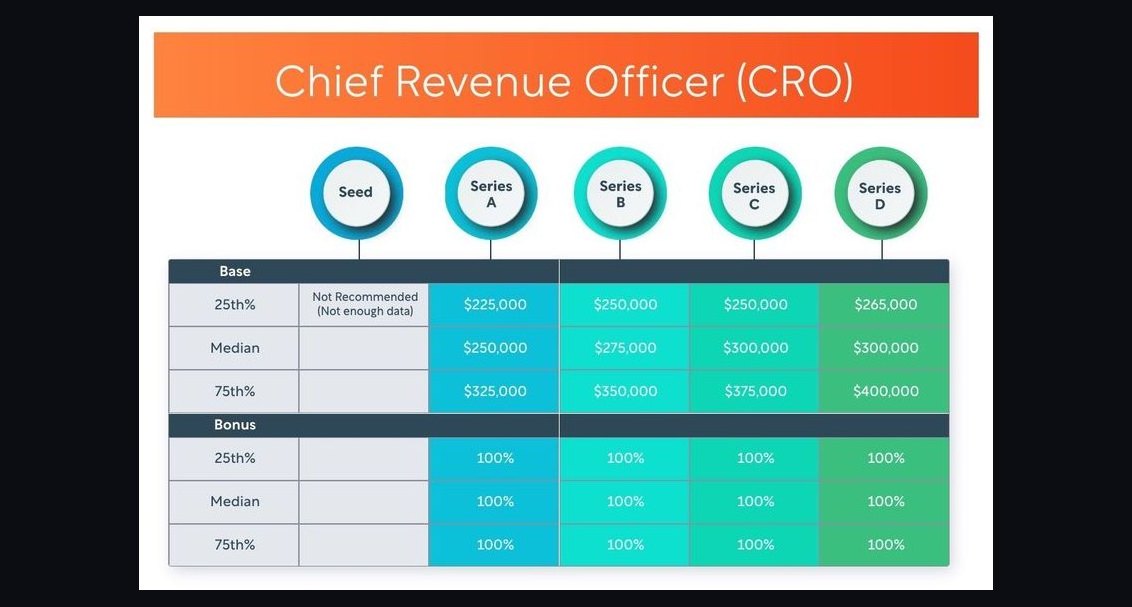 revopsCRO compensation — fractional, full-time, equity in 2027
 revopsHow does the secondary ticket market and resale economics work in 2027?
 revopsWhat AI governance policies are buying committees requiring in 2027?
 revopsWhy are 40% of B2B deals stalling in the legal review phase despite AI contract analysis tools in 2027?
 revopsAre longer sales cycles in 2027 forcing RevOps to redefine the 'MQL-to-revenue' attribution model?
 revopsHow does AI affect the velocity of mid-funnel opportunities in 2027?
 revopsHow do longer sales cycles in 2027 impact the calculation of customer acquisition cost?
 revopsHow do you operationalize net revenue retention in 2027?
 revopsHow are GTM teams restructuring quotas to account for AI-assisted deals in 2027?