

What signals indicate a buying committee is stalling vs. progressing in 2027?
 Curated byKory White · Fractional CRO · Maryland
Quality
Certified

A stalling buying committee goes quiet in measurable ways: no new stakeholders in 30 days, flat intent velocity, blank qualification fields, and shrinking meetings. A progressing committee expands — new personas appear, meeting cadence tightens, language shifts from discovery to validation, and legal or security workstreams open. Silence is the signal.
The outcome you should expect
Most revenue teams want a stall detector that spits out a red or green light. That is not what you get, and chasing it is why so many committee-health programs die in month four. What you should expect from a well-built stall-versus-progression model in 2027 is a probability shift — a deal that was 40% likely to close this quarter moves to 20% or 65% based on observed committee behavior, and your team acts on that shift days or weeks earlier than they would have from a rep's gut check on the forecast call.
The practical outcome is compressed reaction time. In the 2023–2024 era, the standard stall detection loop was a weekly pipeline review where a manager asked "what's happening with Acme?" and a rep said "waiting to hear back." That answer was often two to three weeks stale by the time anyone escalated. A signal-driven approach shortens that to days because the system watches inputs that update continuously — calendar activity, email thread participation, CRM field freshness, content consumption by domain — rather than inputs that update only when a human remembers to log them.
Expect three concrete deliverables once the model is running. First, a stall list refreshed daily or weekly: deals that have crossed a defined inactivity threshold and need an intervention play, not a nudge email. Second, a progression list that tells your team where to spend deployment resources — solution engineers, executive sponsors, security architects — because those are the deals actually moving. Third, a forecast adjustment, where committee-health signals feed a category override so a deal with a single unreplaced contact and no defined decision process doesn't sit in Commit just because a rep is optimistic.

What you should *not* expect: perfect precision. Buying committees stall for reasons entirely invisible to your instrumentation — a reorg, a hiring freeze, a competing internal project that ate the budget, a champion whose kid got sick. Any model that claims to catch all of those is overfitting to noise. A realistic target is that your stall detector catches the majority of true stalls before the rep does, with a false-positive rate low enough that reps still trust the alerts. Once reps stop trusting the alerts, the program is functionally dead even if the dashboard stays green.
You should also expect the definitions themselves to be contested. "Stalled" means different things to a rep working a 45-day mid-market cycle and one working an 18-month enterprise deal with a public-sector procurement gate. A 21-day silence in the first case is an emergency; in the second it may be the entirely normal gap between a technical evaluation and a budget committee meeting that only convenes monthly. Any RevOps team that ships a single global threshold across segments will generate noise in the long-cycle segment and miss stalls in the short-cycle one. Segment-specific thresholds are not a nice-to-have — they are the difference between a used dashboard and an ignored one.
Finally, expect the outcome to be behavioral as much as analytical. The real return on a committee-signal program is not the dashboard; it's that reps start asking better questions on calls because they know a blank decision-process field will show up in a report. Instrumentation changes what people pay attention to. That second-order effect is usually worth more than the model's raw predictive lift.
What drives that outcome
The underlying mechanic is simple: a buying committee is a group of people coordinating internally, and coordination leaves traces. When coordination is happening, traces multiply. When it stops, traces thin out. Everything else is detail about which traces you can actually see.

Stakeholder count and composition. This is the most durable signal across every segment and every era of selling, and it has gotten more important as committees have grown. Analyst research from firms like Gartner and Forrester has consistently found B2B buying groups in the range of six to eleven-plus people for considered purchases, and the trend has been upward, not downward. The mechanic that matters is not the raw count but the composition trajectory. A deal where the same two contacts have attended every call for two months is a deal where nobody inside the account is doing the internal work of building consensus. A deal that adds a security architect, then a finance analyst, then a procurement lead is a deal moving through an organization's actual approval machinery.
Composition tells you *where* in the machinery the deal sits. Security and IT joining usually means technical validation. Finance joining usually means budget is being scoped or defended. Legal joining almost always means someone has decided to move and is now managing risk. The order is not always identical, but the presence of a late-stage function is much harder to fake than a demo request.
Language shift in conversations. Discovery language and validation language sound different, and conversation-intelligence tooling makes the shift observable at scale. Discovery language is exploratory: "how does this work," "what would it take," "is this even possible." Validation language is operational: "when we roll this out," "who on your side owns onboarding," "what does the migration look like for our EU tenant." The transition from the first register to the second is one of the highest-signal moments in a deal, and it is frequently missed because it happens gradually across three calls rather than in one dramatic moment.

Qualification field freshness. Whether your team runs MEDDPICC, MEDDIC, or a homegrown framework, the mechanic is the same: a committee that is progressing produces *specifics*, and specifics get written down. Metrics move from "we want efficiency" to "we're targeting a 15% reduction in handle time by Q3." Decision process moves from "we'll decide soon" to "security sign-off, then the vendor review board meets the second Tuesday of the month." The freshness of these fields is a proxy for whether the rep is actually learning anything new. A field untouched for 30 days usually means 30 days of calls that produced no new information — which is itself the stall.
Intent and content consumption, read as velocity and mix. Raw intent volume is close to useless because it is noisy and often reflects one curious researcher. What matters is the *derivative* and the *mix*. A flat line at any level is a stall indicator. A jump is a signal — but the direction depends on what changed. A shift from educational content toward pricing, comparison, and implementation content is a progression pattern. A shift toward competitor comparison content with no corresponding engagement on your side is closer to an active evaluation you're losing than a stall you can nudge.
Reciprocity in the relationship. Progression is bidirectional. A progressing committee asks *you* for things — a reference call, a sandbox, a security questionnaire response, a custom ROI model. A stalling committee only receives. If your last five touches were all outbound with no inbound ask, that asymmetry is a stronger stall indicator than any single activity metric.

The diagram encodes an important ordering principle: stakeholder movement is checked first because it is the hardest signal to fake and the least dependent on rep data hygiene. Whether a new email domain appeared on a thread or a new person joined a call is observable without anyone updating a record. Qualification-field checks come later in the tree precisely because they depend on rep discipline, and a blank field can mean either a stalled deal or a lazy rep. Ordering your logic by signal reliability rather than by framework tidiness is what keeps the output trustworthy.
Benchmarks and realistic ranges
Be careful with benchmarks in this domain. A great deal of what circulates as "2027 committee data" is vendor marketing built on that vendor's own customer base, which is not a random sample of anything. What follows are ranges that are defensible as planning assumptions, with an honest note about where each one comes from.
Committee size. Analyst work from Gartner and Forrester has put typical B2B buying groups somewhere in the six-to-eleven range for considered purchases, trending upward with deal size and with the number of functions touched. For a practical rule of thumb: expect roughly one additional stakeholder per $50K–100K of ACV in mid-market software, and expect security and privacy functions to be mandatory participants above roughly $100K or anywhere data residency is in play. If your deal is above your segment's typical ACV and has fewer stakeholders than your segment's typical committee size, that gap alone is a stall predictor.

Cycle length. Enterprise cycles have lengthened across most of the last several years, a trend widely reported by analysts and public SaaS companies alike, driven by budget scrutiny, mandatory security review, and centralized procurement. The planning implication is not the exact number but the shape: your stall thresholds must scale with your segment's median cycle. A reasonable construction is to set the inactivity threshold at roughly 10–15% of your segment's median cycle length. For a 60-day SMB cycle, that's about a week of silence. For a 12-month enterprise cycle, it's five to six weeks. Applying the SMB threshold to enterprise deals is the single most common way these programs generate noise.
Single-threading risk. Across most sales organizations that measure it, single-threaded deals close at a materially lower rate than multithreaded ones — often less than half. You do not need to trust anyone else's number here, because this is the easiest benchmark to compute internally. Pull your closed-won and closed-lost deals from the last four quarters, count distinct buyer-side contacts with at least one meaningful engagement, and plot win rate by contact count. Nearly every organization that runs this analysis finds a clear inflection point, usually between three and five contacts. That inflection point, not an industry average, is your threshold.
Silence duration. The relationship between days-since-meaningful-contact and eventual close rate is monotonic and steep in most datasets. Again, compute it yourself: bucket deals by longest silence gap during their lifecycle (0–7, 8–14, 15–30, 31–60, 60+ days) and chart win rate per bucket. The bucket where win rate falls off a cliff is your alert threshold. In most mid-market software organizations this lands somewhere in the 14–30 day range; in enterprise, considerably longer.
Realistic model performance. For a first-generation stall detector built on stakeholder, activity, and field-freshness signals, a reasonable expectation is that it flags a meaningful majority of eventual stalls with a false-positive rate somewhere around a third. That is genuinely useful — it means most flagged deals are real problems — but it is not a system you should let auto-close deals or auto-downgrade forecast categories without human review. Precision improves as you add conversation and content signals, but the marginal gain per added signal source drops fast after the third or fourth.

Baseline correction is mandatory. Every one of these ranges needs a seasonality and segment correction before you use it. December silence in enterprise is not the same signal as June silence. A committee at a company that just announced layoffs is not comparable to one at a company that just closed a funding round. The cheapest version of this correction is a simple segment × quarter baseline table: compute median activity per deal for each cell, and measure current deals against their own cell rather than against a global average. Teams that skip this step ship a detector that screams every holiday period and gets muted permanently by January.
Risks, edge cases, and failure modes
The false-progress trap. The most expensive failure mode is not missing a stall; it's mistaking activity for progress. A committee can hold weekly calls, request a POC, spin up a sandbox, and consume enormous amounts of your solution-engineering capacity while having no budget and no intention of buying this fiscal year. The tell is that all the activity is *lateral* — same people, same function, deeper technical detail, no expansion into finance or procurement, no defined decision process. Depth without breadth is the signature. When you see a deal with high engagement, high SE hours, and a flat stakeholder count over 60 days, treat it as a stall regardless of how good the calls feel.
Over-indexing on inactivity in long procurement cycles. Public sector, healthcare, and heavily regulated financial services deals routinely go dark for six to ten weeks for entirely structural reasons — a board meets quarterly, a procurement window opens twice a year, a security review sits in a queue with a 45-day SLA. Flagging these as stalls trains reps to ignore alerts. The fix is a known-gap exception: a field where the rep records an expected quiet period with an end date, which suppresses alerts until that date and then fires hard if the date passes with no change. This converts a noisy alert into a genuinely useful one, because a missed procurement window is far more diagnostic than a quiet week.

Champion departure. In a market with meaningful job mobility, champion turnover is a leading cause of quiet deal death, and it often looks identical to a normal stall in your instrumentation — right up until it isn't. Bounced email is the crude detector; better is watching for title changes on the buying side and treating any champion departure as an automatic stage regression, not a stall alert. The recovery play is different too: re-multithreading from scratch, usually with an executive-to-executive touch, not a re-engagement sequence aimed at a mailbox nobody reads.
Signal gaming. Once reps know that stakeholder count drives a health score, some will add contacts to the deal record who have never engaged. Once they know field freshness matters, some will touch fields without changing content. Both behaviors destroy the model quietly. Defend against this by scoring only contacts with an *observed engagement event* — an email reply, a meeting attendance, a form submission — rather than contacts that merely exist on the record, and by tracking field *content changes* rather than modified timestamps. If your health score can be improved without talking to the customer, it will be.
AI-mediated interactions muddying the read. As more buyer-side research is done through AI assistants and internal copilots, some of the traditional consumption signals thin out. A committee member who asks an internal tool to summarize three vendors may never visit your pricing page at all. This does not mean intent signals are worthless, but it does mean their absence is weaker evidence than it was a few years ago. Weight direct human interactions — replies, meeting attendance, questions asked — more heavily than passive consumption, and expect the passive signals to keep degrading in reliability.

Privacy and consent constraints. Committee-level tracking runs into real limits. Deanonymized visitor data, email-engagement tracking, and meeting recording are all subject to jurisdictional rules and increasingly to enterprise policies that block them outright. A meaningful share of enterprise buyers now operate with recording declined by default and tracking pixels stripped at the gateway. Design the model so that the absence of these signals is treated as *unknown*, not as *negative*. Otherwise every privacy-conscious buyer — often your best enterprise prospects — gets scored as stalling.
The escalation that kills the deal. A stall alert that triggers an aggressive "we need to close this" executive email can convert a soft internal-alignment pause into a hard no. The intervention has to match the diagnosis. An internal-alignment stall wants champion enablement — a business case doc they can forward, an anonymized reference in their industry, a short internal-pitch deck. An active-evaluation stall wants a competitive play. A budget stall wants a phased-deployment proposal that fits a smaller line item. Firing the same re-engagement cadence at all three is how a good detector produces worse outcomes than no detector.
Statistical fragility at low volume. If a segment closes fewer than a few dozen deals a quarter, do not build thresholds from its own win-rate curves — the confidence intervals are too wide to act on. Borrow thresholds from an adjacent, higher-volume segment and adjust for cycle length. Teams that build per-segment models on twelve data points end up with thresholds that reverse themselves every quarter and reps who correctly conclude the system is arbitrary.

A practical rollout plan
Roll this out in phases, and resist the urge to start with the model. The sequencing below front-loads the work that makes every later phase cheaper.
Phase 1 — define the vocabulary (week 1–2). Write down, in one page, what your organization means by stalled, progressing, and at-risk, with segment-specific day thresholds. Get sales leadership to sign it. This sounds like process theater and it is the highest-leverage step in the whole project, because every downstream disagreement about the dashboard traces back to two people using the word "stalled" differently. Include the exception categories — known procurement gaps, seasonal quiet periods, champion transitions — in this document, not as later patches.
Phase 2 — instrument what you already have (week 2–5). Before adding tools, get clean measurement of three things: distinct engaged contacts per open deal, days since last meaningful bidirectional interaction, and freshness of the two or three qualification fields you actually care about. All three are computable from a standard CRM plus email/calendar sync. Do not buy anything in this phase. Most organizations discover that the data they already have supports a detector that captures a large share of the value, and that the expensive additions produce single-digit marginal lift.
Phase 3 — backtest before you alert (week 5–8). Run your candidate thresholds retrospectively against the last four quarters of closed deals. For each threshold, compute: how many eventual losses would have been flagged, how early, and how many eventual wins would have been flagged incorrectly. Tune until the false-positive rate is low enough that a rep flagged three times a quarter will still read the fourth alert. This phase is where the program earns rep trust or loses it permanently — an alert system that goes live untuned is one nobody opens by month two.

Phase 4 — pair every alert with a play (week 8–10). Ship no alert without a matching, documented intervention. Soft stall → champion enablement kit. Active stall → competitive battlecard plus a differentiated executive touch. Hard stall → a single clean breakup message and a recycle to nurture. False progress → a mandatory qualification call before any further SE hours are committed. The alert without the play is a notification; the alert with the play is a workflow.
Phase 5 — close the loop and re-tune quarterly (ongoing). Capture the outcome of every intervention: what fired, what the rep did, what happened within 30 days. Feed those outcomes back into threshold tuning. Rerun the segment × quarter baselines each quarter, because cycle lengths and committee sizes drift. Report a small number of program-level metrics — stalls caught before rep escalation, intervention-to-recovery rate, forecast accuracy delta — and be willing to kill signals that aren't earning their place.
One adjacent note worth carrying into the rollout: this same machinery generalizes past new business. Renewal and expansion committees stall and progress on nearly identical signals — a renewal where the original champion left and no new executive contact has appeared is structurally the same problem as a single-threaded new logo. Partner-sourced deals are the inverse edge case, where your visibility into the committee is mediated by the partner and absence of signal genuinely means absence of data. Teams that build the detector for new business and then extend it to renewals typically get more incremental value from the extension than from the original build, because renewal books are larger and less attended.
Related questions
How long should a deal be silent before I call it stalled?
Set the threshold at roughly 10–15% of your segment's median cycle length, then validate it by bucketing historical deals by longest silence gap and finding where win rate drops sharply. Most mid-market teams land between 14 and 30 days; enterprise runs considerably longer.
Is a single-threaded deal always stalling?
No, but it is always at risk. Single-threading and stalling are correlated, not identical — an early-stage deal can be legitimately single-threaded. It becomes a stall indicator when the contact count stays flat past the point where technical or financial validation should have pulled in other functions.
What separates an active stall from a passive one?
An active stall means the committee is progressing — with someone else. Look for competitor names surfacing on calls, sudden requests for feature-by-feature comparisons, or pricing pressure without deployment questions. A passive stall shows none of that; it's internal alignment, budget freeze, or a competing priority.
Should intent data drive stall alerts on its own?
No. Intent without corroborating CRM or conversation activity produces high false-positive rates, and AI-mediated buyer research is making passive consumption signals weaker over time. Require at least two independent signal types before firing an alert a rep is expected to act on.
Do these signals apply to renewals and expansions?
Yes, and often with better returns. A renewal with a departed champion, no new executive contact, and declining product usage is the same structural pattern as a stalled new logo. Most teams find extending the detector to the renewal book cheaper and more valuable than the original build.
FAQ
What is the most reliable single indicator that a committee is stalling?
Stakeholder stagnation — the same two or three contacts for 30+ days with no new engaged names — combined with no inbound requests from the buyer. It outranks every other signal because it doesn't depend on rep data hygiene and it can't be faked by activity that isn't moving the deal through the account's actual approval path.
How do I tell false progress from real progress?
Real progress expands sideways across functions; false progress only goes deeper with the same people. If a deal has weekly calls, a running POC, and heavy solution-engineering involvement but the contact list hasn't changed in two months and no decision process is documented, that's false progress. Requalify before committing more technical resources.
Won't reps just game the health score once they know how it works?
Some will, which is why the score should count only contacts with an observed engagement event and only field updates where content actually changed. If a rep can improve the score without talking to a customer, they eventually will, and the model's predictive value quietly collapses.
How do I handle deals that go dark for structural reasons?
Add a known-gap exception field where the rep logs an expected quiet period and its end date. Alerts suppress until that date, then fire hard if nothing has changed. A missed procurement window is a far stronger stall signal than routine silence, and this design captures it instead of burying it in noise.
Should stall signals automatically change the forecast category?
Not automatically. Use them as a mandatory review trigger — a deal in Commit that trips the hard-stall criteria requires an explicit manager override with a written reason. Automatic downgrades invite reps to work around the system; mandatory review with documentation keeps a human accountable while still forcing the conversation.
How much of this needs new tooling?
Less than most vendors suggest. Distinct engaged contacts, days since meaningful bidirectional contact, and qualification field freshness are all computable from a standard CRM with email and calendar sync. Build and backtest on that foundation first; the marginal predictive lift from additional signal sources drops off quickly after the third or fourth.
Sources
- Gartner — The B2B Buying Journey
- Forrester — B2B Buying Research
- Harvard Business Review — The New Sales Imperative
- McKinsey — B2B Sales Growth Insights
- Gong Labs — Sales Research
- HubSpot — Sales Pipeline Management
- SaaStr — B2B Sales and SaaS Benchmarks
- Salesforce — State of Sales Research
Related on PULSE
- What 2027 signals from buying committees indicate a deal is actually progressing?
- What specific buyer intent signals in 2027 indicate a buying committee is approaching a consensus?
- What signals indicate that a buying committee is nearing a decision versus still gathering vendor intelligence?
- Why are 40% of B2B deals stalling in the legal review phase despite AI contract analysis tools?
- What specific signals indicate a buying committee is using an AI agent to negotiate contract terms in 2027?
This page will be disappearing soon. Save it to your device for $1 — or read it free while it is here.
@Kory-White- · if Venmo asks, the last 4 of my number are 2012
This page is gone.
This one is off the shelf now. $1 keeps it on your phone for good — the whole page, pictures and diagrams included.
 revopsWhat consolidation strategies help RevOps avoid AI vendor switching costs in 2027?
 revopsHow do you transition from sales-led to PLG (product-led growth) in 2027?
 revopsWhy are longer sales cycles in 2027 driving adoption of AI-based meeting summarization tools?
 revopsHow does the secondary ticket market and resale economics work in 2027?
 revopsHow can RevOps use AI to identify stalled deals in longer sales cycles in 2027?
 revopsWhat triggers are early-stage RevOps teams using in 2027 to hand off AI-qualified leads to human sales reps without losing context?
 revopsHow do longer sales cycles in 2027 impact the calculation of customer acquisition cost?
 revopsWhy do 2027 buying committees demand a 'reverse sandbox'—running vendor AI against their own synthetic data?
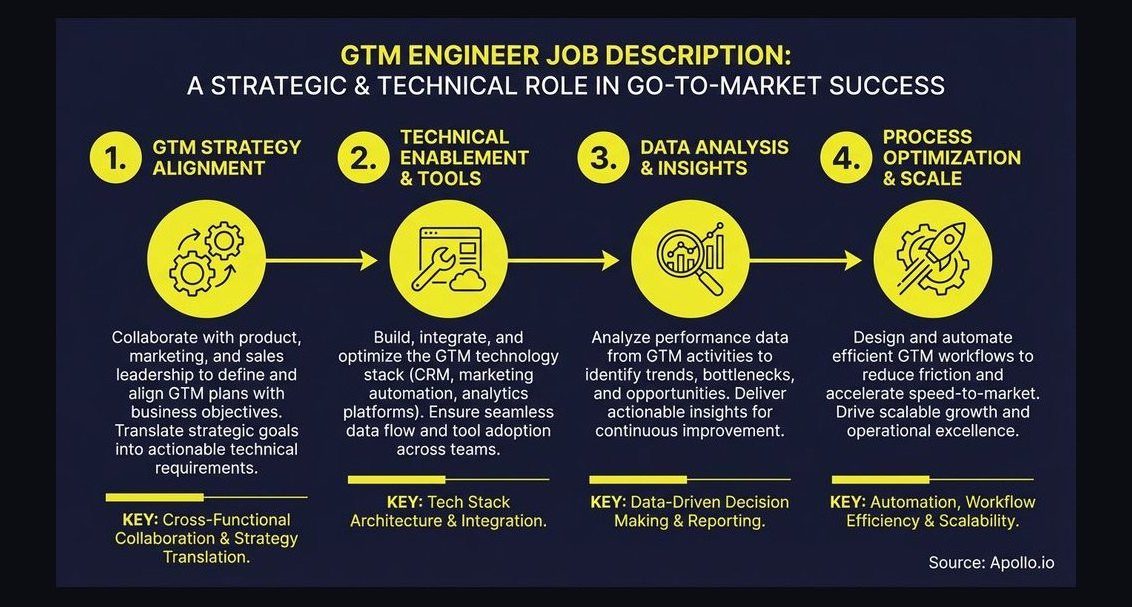 revopsWhat is a GTM engineer and why is the role exploding in 2027?
 revopsHow do you measure outbound effectiveness in 2027?