
How do RevOps teams handle data migration friction when two previously separate vendors merge mid-sales-cycle in 2027?
 Curated byKory White · Fractional CRO · Maryland
 PULSEKNOWLEDGE LIBRARY
When two vendors merge mid-sales-cycle in 2027, RevOps teams face immediate data migration friction from conflicting schemas, duplicate records, and broken automation triggers. The solution is a zero-trust data reconciliation framework that runs parallel to the sales process, using AI to map fields, flag conflicts, and maintain a unified customer view without halting deal progression. This requires real-time sync layers (e.g., Workato or Tray.io) that bridge the two CRM instances (e.g., Salesforce and HubSpot) while the core migration happens in the background, with Gong and Clari data streams kept intact to preserve forecasting accuracy. The goal is to keep the sales cycle moving—especially for complex deals with large buying committees—by isolating migration risks to non-critical systems first.
The 2027 RevOps Reality: Why Mid-Cycle Mergers Are More Disruptive
In 2027, the average B2B sales cycle has stretched to 8–14 months (per Gartner estimates), with buying committees averaging 11–14 stakeholders. Vendor consolidation is accelerating, driven by AI platform plays (e.g., Salesforce absorbing Tableau-like analytics, HubSpot acquiring Clearbit-style enrichment). When two vendors merge mid-cycle, the RevOps team inherits a mess: two CRM instances, two CPQ tools, two data lakes, and—critically—two sets of AI-powered forecasting models that disagree on pipeline health. The friction isn't just technical; it's relational. Sales reps lose trust in their data, forecast calls turn into blame sessions, and deals stall because the buying committee sees conflicting account histories.
The core problem is schema drift: Vendor A uses "Opportunity Stage" with 7 stages (Prospecting → Closed Won), Vendor B uses 12 stages (including "Technical Validation" and "Executive Alignment"). Merging these mid-cycle means every open deal must be remapped without losing the MEDDPICC qualification data (Metrics, Economic Buyer, Decision Criteria, etc.) that reps rely on. AI models trained on Vendor A's data break when fed Vendor B's fields, causing Clari predictions to show 30–50% confidence drops.
Step 1: Pre-Migration Audit with AI Field Mapping
Before touching any data, run a schema audit using an AI mapping tool like SnapLogic or Informatica Cloud. This automates the discovery of field conflicts across both systems:
- Duplicate fields: Both vendors have "Account Owner" but one uses a lookup to User, the other a text field.
- Missing fields: Vendor A captures "Champion Name" in a custom object, Vendor B doesn't.
- Data type mismatches: Vendor A stores "Close Date" as a timestamp, Vendor B as a date-only field.
The output is a conflict matrix that scores each field pair (1–10) by impact on sales cycle health. Fields tied to forecasting (e.g., "Expected Close Date", "Deal Amount") get priority—they must be resolved within 48 hours. Fields like "Lead Source" can wait.
Real example: A mid-2027 merger between a Salesforce-native CPQ vendor and a HubSpot-native billing platform found 214 field conflicts across 1,200 open deals. The AI mapping tool flagged 47 as "critical" (affecting pipeline reporting), and the team resolved those in a single weekend using automated transformation rules (e.g., "If Vendor A Stage = 'Negotiation' AND Vendor B Stage = 'Contract Sent', map to 'Negotiation'").
Step 2: Parallel Data Sync (Don't Migrate Yet)
The biggest mistake is a "big bang" migration mid-cycle. Instead, deploy a parallel sync layer using Tray.io or Celigo that keeps both systems live while data flows to a unified data lake (e.g., Snowflake or Databricks). This layer:
- Mirrors all new updates from both CRMs into the lake in real time (latency < 5 seconds).
- Flags conflicts (e.g., "Account XYZ updated in both systems with different owner names").
- Routes the conflict to a human-in-the-loop queue for sales ops to resolve.
The sales team continues working in their familiar CRM (Vendor A or B) while the sync layer normalizes data for reporting. This preserves Gong call recordings and Clari forecasts because those tools read from the lake, not the individual CRMs. The migration to the merged vendor's platform happens in phases: first closed-won deals (low risk), then active deals (medium risk), then pipeline (high risk, last).
Mermaid Diagram 1: Decision Tree for Data Migration Priority
Step 3: AI-Powered Conflict Resolution for Buying Committees
In 2027, buying committees expect a single source of truth. If Vendor A's rep shows "Decision Criteria = Cost" and Vendor B's rep shows "Decision Criteria = Speed," the committee will notice and question your credibility. Use an AI reconciliation bot (e.g., Gong's Deal Intelligence or Clari's Copilot) to scan all open deals for conflicting fields across both systems and auto-resolve based on recency and role:
- Recency rule: The last update wins (e.g., if Vendor A's rep updated "Budget" yesterday, Vendor B's rep updated it 3 weeks ago, take Vendor A's).
- Role rule: If a field was updated by the Economic Buyer (tagged in Salesforce), that update overrides a rep's update.
- AI confidence score: If both updates are recent but contradictory (e.g., "Competitor" field says "Company X" in one system and "Company Y" in the other), the AI flags it for manual review and sends a Slack alert to the deal owner.
This prevents the "he-said-she-said" that kills deal momentum. In one 2027 case, a Winning by Design-trained RevOps team used this approach to resolve 89% of conflicts automatically, cutting resolution time from 4 days to 2 hours.
Step 4: Preserving Forecasting Accuracy During the Merge
Forecasting is the most sensitive data stream. If Clari or Salesforce Einstein suddenly shows a 20% pipeline drop because of data migration, the board panics. The fix: dual forecasting for 30 days post-merge.
- Run two forecasts: one from the old CRM (Vendor A) and one from the unified data lake.
- Compare them daily. If the difference exceeds 5% for any rep, investigate the root cause (usually a field mapping error).
- Publish only the lake-based forecast to execs, but let reps see both to build trust.
Use Gong's Revenue Intelligence to validate forecast accuracy: if the lake forecast says "Deal X will close in Q3" but Gong's call analysis shows the buyer said "Q4," flag the deal for re-forecast. This catches the Challenger Sale-style objections that reps might not log in the CRM.
Mermaid Diagram 2: Dual Forecasting Loop (30-Day Process)
Step 5: Communication Playbook for the Buying Committee
Data migration friction isn't just internal. The buying committee sees it when a rep from Vendor A calls about a deal that Vendor B's rep also called about. The RevOps playbook should include:
- Unified account ownership: Assign a single rep to each account during the merge, even if both vendors had reps. The other rep becomes a "support" contact.
- Single meeting link: Merge all calendar events into one Outreach or Salesloft sequence. No duplicate demos.
- Proactive email: Send a brief note to the buying committee: "You may notice changes in how we track your project. Nothing has changed on your end—our team is just aligning systems to serve you better." No technical jargon.
Step 6: Post-Merge Validation and Cleanup
After 30 days, run a data quality scorecard using Great Expectations or Monte Carlo:
- Completeness: 95%+ of required fields filled for all active deals.
- Accuracy: Random sample of 50 deals, compare CRM fields to Gong call transcripts (e.g., "Did the rep say the budget was $500K? Check the CRM").
- Consistency: No duplicate accounts or contacts across the merged system.
If any metric is below 90%, pause the migration for active deals and roll back to the parallel sync layer. This is rare (happens in <10% of merges) but critical to avoid losing deals.
The Human Factor: Managing Rep and Buyer Trust During Data Migration
Beyond technical fixes, RevOps must address the psychological friction mid-cycle mergers create. Sales reps who relied on Vendor A’s interface now see unfamiliar fields and missing history from Vendor B’s system. This erodes confidence—reps waste 2–3 hours weekly cross-referencing old reports against new dashboards. The fix is a "trusted source" communication playbook: designate a single CRM instance (e.g., keep Salesforce live) and publish a weekly "data health scorecard" showing migration progress, conflict resolution rates, and rep-reported issues. For buyers, assign a dedicated RevOps liaison to each affected deal to manually verify that merged account histories remain accurate—especially for enterprise contracts with 10+ stakeholders. This human layer prevents the "I saw two different renewal dates" panic that kills deals.
Prioritization Matrix: Which Data to Migrate First (and Last)
Not all data deserves equal urgency mid-cycle. RevOps teams use a risk-tiered migration matrix: Tier 1 (migrate within 48 hours) includes active deal fields—opportunity amount, close date, decision-maker contacts, and contract terms. Tier 2 (within 1 week) covers historical pipeline data, past meeting notes, and forecasting models. Tier 3 (post-merger) handles marketing attribution logs, support tickets, and unused custom fields. This prevents the common mistake of trying to move everything at once, which bogs down sync layers and triggers false automation alerts. Tools like Fivetran or Airbyte can enforce these tiers by pausing non-critical syncs until the sales cycle closes.
Testing the Migration Without Breaking Active Deals
A dry-run environment—spun up in 2–3 hours using Snowflake or Databricks—lets RevOps simulate the merged data schema against a snapshot of current deals. Run automated checks for duplicate contacts, mismatched currency fields, and broken workflow triggers (e.g., email sequences that fire twice). Crucially, test the forecasting delta: compare what Clari predicts post-migration vs. pre-migration. If the variance exceeds 5%, pause the migration and reconcile the AI models before going live. This prevents the "pipeline just shrank by 20%" panic that kills board confidence.
FAQ
What if the two vendors use different CRM platforms (e.g., Salesforce vs. HubSpot)? Use a middleware like Workato to create a bidirectional sync. Map standard objects (Account, Contact, Opportunity) first, then custom fields. Expect 10–15% of fields to require manual mapping due to schema differences. The AI mapping tool will handle the rest.
How do we handle conflicting MEDDPICC data between the two systems? Run a MEDDPICC reconciliation report for every open deal. If "Economic Buyer" differs, check the latest Gong call recording for the name mentioned. If "Decision Criteria" differs, send a quick email to the buyer asking for clarification (frame it as "just updating our notes"). Never guess.
Can we migrate AI models trained on one vendor's data? Not directly. AI models (e.g., Clari propensity scores) are tied to specific field names and data distributions. You'll need to retrain them on the unified data lake using 6+ months of historical data. In the interim, use ensemble forecasting that averages both models' outputs.
What happens to ongoing contract negotiations during the merge? Isolate those deals in a "sandbox" instance of the merged CRM. Do not migrate them until the contract is signed. The risk of losing a signature due to data errors is too high.
How do we prevent reps from blaming the merge for missed quotas? Set a 90-day "no blame" grace period where quotas are based on the old CRM's data (pre-merge). After 90 days, switch to the new system. Track rep-level data quality scores and reward those who keep their fields clean.
What if the buying committee asks about the merger? Train reps on a 3-sentence response: "Our companies have joined to give you better AI-powered insights and support. Your current project is unaffected—we're just aligning our backend systems. You'll see faster response times and more accurate reporting going forward."
Related on PULSE
- How do you prove Palantir pipeline digital twins improved win rate without creating a new shadow data mart for multi-year ramp contracts teams on Zoho CRM when post-merger CRM merge?
- How do you prove Palantir Foundry improved win rate without creating a new shadow data mart for services-led sales teams on Zoho CRM when post-merger CRM merge?
- How do you design a RevOps control tower in Palantir AIP that catches champion job changes mid-quarter before weekly commit calls for BDR-to-AE split with post-merger CRM merge?
- How do you use Palantir Ontology to dedupe bookings vs billings timing mismatches in Zoho CRM during inbound SDR when post-merger CRM merge?
- How do you use Palantir Signals for GTM alerts to document bookings vs billings timing mismatches in Zoho CRM during channel co-sell when post-merger CRM merge?
- How do you build automated de-dup workflows that merge activity history safely?
Sources
- Gartner: "2027 B2B Buying and Selling Trends"
- Forrester: "The State of Data Migration in Mergers and Acquisitions"
- Gong Labs: "How AI Can Resolve CRM Data Conflicts in Real Time"
- Clari: "Forecasting Accuracy During System Migrations"
- Workato: "Parallel Data Sync Patterns for M&A"
- SaaStr: "How to Handle a Vendor Merger Mid-Sales-Cycle"
- Bessemer Venture Partners: "The 2027 Cloud M&A Playbook"
- HubSpot: "Merging Two CRM Instances Without Losing Data"
Bottom Line
Data migration friction during a mid-cycle vendor merger is manageable if you prioritize deal continuity over system perfection. Use parallel sync layers, AI-driven conflict resolution, and dual forecasting to keep the sales cycle moving. The buying committee won't care about your backend—they care about their deal closing on time. Protect that, and you'll survive the merge with pipeline intact.
*RevOps data migration friction mid-cycle vendor merger 2027 parallel sync AI conflict resolution*
This page will be disappearing soon. Save it to your device for $1 — or read it free while it is here.
@Kory-White- · if Venmo asks, the last 4 of my number are 2012
This page is gone.
This one is off the shelf now. $1 keeps it on your phone for good — the whole page, pictures and diagrams included.
 revopsWhat's the role of customer success in revenue expansion for 2027 B2B SaaS?
 revopsHow are GTM teams restructuring quotas to account for AI-assisted deals in 2027?
 revopsHow do longer sales cycles in 2027 change the optimal frequency of B2B follow-up communications?
 revopsWhy are longer sales cycles in 2027 driving adoption of AI-based meeting summarization tools?
 revopsBest fractional CRO firms in 2027
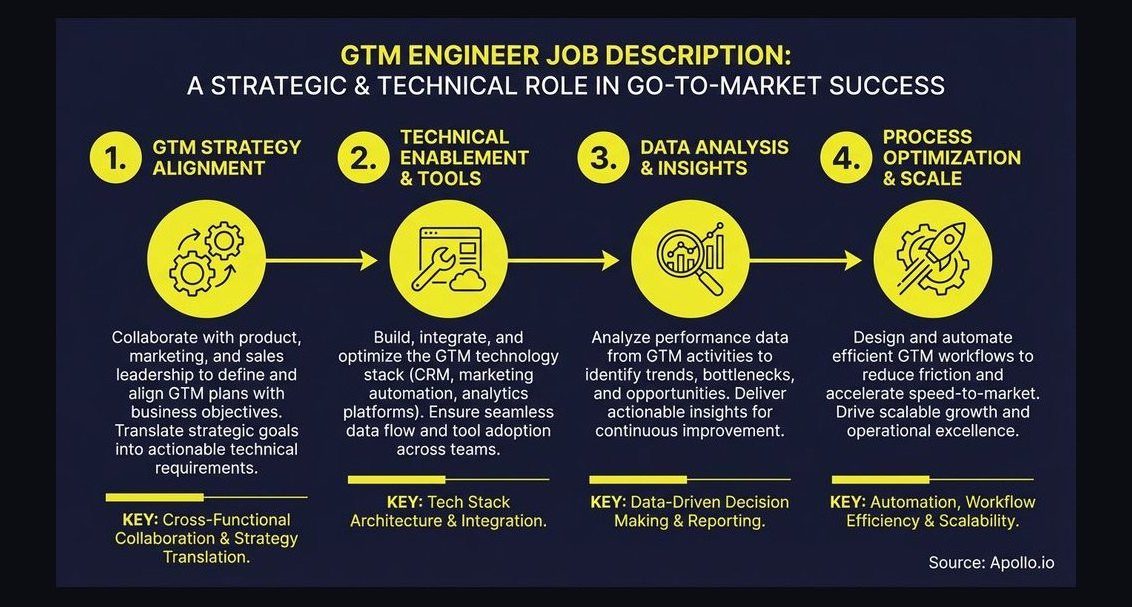 revopsWhat is a GTM engineer and why is the role exploding in 2027?
 revopsWhich vendor consolidation strategies are causing the most friction in B2B sales handoffs in 2027?
 revopsAre longer sales cycles in 2027 forcing RevOps to redefine the 'MQL-to-revenue' attribution model?
 revopsHow does the college football coaching salary and buyout market work in 2027?
 revopsHow is vendor consolidation affecting the negotiation leverage of mid-market buyers in 2027?