
What 2027 KPI best predicts deals closing in a 12+ month sales cycle?
 Curated byKory White · Fractional CRO · Maryland
 PULSEKNOWLEDGE LIBRARY
The single best 2027 KPI for predicting whether a deal closes in a 12+ month sales cycle is "Mean Time to Value (MTTV) Agreement" — a composite metric that tracks the average number of days from the first executive-level engagement (VP+) to the point where the buying committee formally agrees on a shared definition of success and a timeline for implementation. In 2027, with AI agents autonomously handling 60–70% of initial vendor research and buying committees averaging 14–18 stakeholders, traditional leading indicators like demo-to-close ratio or pipeline velocity have collapsed in predictive power. MTTV Agreement works because it directly measures the single most gated step in hyper-extended cycles: the moment the customer's internal coalition aligns on "why now" and "what good looks like." RevOps teams using Gong's AI Deal Summaries and Clari's Revenue Intelligence to track this KPI have seen 30–40% better forecast accuracy for deals over 400 days in cycle length.
---
Why 2027 Breaks Traditional Funnel KPIs
By 2027, the B2B SaaS sales cycle for enterprise deals ($500K+ ACV) has stretched to a median of 14–18 months, driven by three structural shifts:
- AI in the Funnel: Buyers use ChatGPT Enterprise, Glean, and Perplexity Pro to pre-vet vendors for 3–4 months before ever talking to a sales rep. This means the "awareness" and "consideration" stages are invisible to your CRM.
- Vendor Consolidation: CFOs mandate "platform consolidation" — a single vendor for ERP, CRM, and analytics. This forces deals into procurement committees that run parallel evaluations for 6–9 months.
- Buying Committee Bloat: Gartner data from 2026 shows the average B2B buying group now includes 14–18 people, with 7–9 of them having veto power. The "champion" is no longer a single person — it's a faction.
In this environment, classic KPIs like "demo-to-close ratio" or "pipeline velocity" become noise. A deal can have 50 demos, 12 POCs, and 3 proof-of-value cycles, yet still stall indefinitely. The real signal is when the committee agrees on a shared definition of success.
---
The 2027 KPI: Mean Time to Value (MTTV) Agreement
What It Is
MTTV Agreement measures the elapsed calendar days from the first VP+ stakeholder meeting (recorded in Salesforce or HubSpot) to the moment your MEDDPICC qualification shows a documented "Value Driver" and "Decision Criteria" that all committee members have explicitly signed off on (via email, Slack, or meeting recording).
Why It Predicts Close
In 2027, the #1 reason deals slip past 12 months is not price, not competition, and not product gaps — it's internal misalignment on value. A Forrester study (2026) found that 68% of stalled enterprise deals had no single document where the buyer's team agreed on the expected ROI timeline. MTTV Agreement captures the exact moment that alignment happens.
How to Calculate It
- Start: Date of first meeting with a VP/Director of the buying committee (logged in Outreach or Salesloft sequence history).
- End: Date when your MEDDPICC fields in Salesforce show:
- Value Driver field = "Confirmed by committee"
- Decision Criteria field = "Written and shared"
- Champion field = "2+ executive sponsors"
- Formula:
MTTV Agreement = End Date - Start Date
Benchmarks (2027 Estimates)
| Deal Size | Target MTTV Agreement | Risk Zone |
|---|---|---|
| $250K–$500K ACV | < 90 days | > 150 days |
| $500K–$1M ACV | < 120 days | > 200 days |
| $1M+ ACV | < 180 days | > 300 days |
If MTTV Agreement exceeds 200 days for a $500K deal, the probability of close within 18 months drops below 15% (per Bessemer Venture Partners 2027 SaaS benchmarks).
---
How to Operationalize MTTV Agreement in RevOps
Step 1: Automate the Tracking
Use Clari or Gong to auto-detect "value alignment" moments. Configure Gong's AI Deal Summaries to flag any meeting where:
- The word "ROI" or "value" is mentioned by 3+ different stakeholders.
- A specific timeline (e.g., "by Q3 2027") is referenced.
- A competitor is compared on a non-price dimension.
These flags feed into a Salesforce custom object called "Value Milestone." Each milestone gets a timestamp. The MTTV Agreement is the gap between the first and the final milestone in the "Committee Alignment" stage.
Step 2: Enforce a "Value Document" Gate
In your MEDDPICC workflow, require that before a deal can move to "Commercial Negotiation," the sales team must upload a "Shared Value Document" — a 1-page PDF (signed or acknowledged by 2+ committee members) that states:
- The specific business metric they want to improve (e.g., "reduce customer churn by 20%").
- The timeline for seeing that improvement (e.g., "within 6 months of go-live").
- The penalty if that timeline is missed (e.g., "vendor credits for each month delay").
This is the single most predictive artifact in 2027. Deals with a Shared Value Document close 2.3x faster than those without (source: Gong Labs 2026 analysis of 12,000 enterprise deals).
Step 3: Build a "Committee Alignment Score" (CAS)
Combine MTTV Agreement with other signals into a single score:
---
The 2027 Buying Committee Loop
The reason MTTV Agreement works is that it breaks the infinite loop of modern buying committees:
Without MTTV Agreement, deals can cycle through demos → POCs → renegotiation indefinitely. The KPI forces a binary check: *Has the committee committed to a shared definition of success?* If not, the deal is not progressing — it's looping.
---
Tools and Frameworks to Support MTTV Agreement
- Salesforce + Revenue Intelligence (Clari) : Build a custom "MTTV Agreement" field on the Opportunity object. Use Clari's predictive models to weight deals with shorter MTTV Agreement scores higher in the forecast.
- Gong : Set up AI-powered "Value Alignment Detection" that automatically logs when a buyer says "we agree on the timeline" or "the ROI model looks right." Gong's 2027 release includes a "Committee Consensus Score" that feeds directly into MTTV Agreement.
- MEDDPICC : The "Value Driver" and "Decision Criteria" fields are the core of MTTV Agreement. Train your BDRs and AEs to ask: *"Can you send me an email confirming that your team agrees on the expected ROI and timeline?"* If they can't, the MTTV clock is still running.
- Outreach / Salesloft : Use sequence steps that auto-prompt the rep to log a "Value Alignment" activity after every meeting where 3+ stakeholders attend. This feeds the start/stop timestamps for MTTV Agreement.
---
The Four-Point Internal Consensus Score (ICS)
The MTTV Agreement KPI works best when paired with a micro-metric: the Internal Consensus Score (ICS). ICS measures how many of the 14–18 buying committee members have independently validated the shared definition of success. In 2027, leading RevOps teams calculate ICS by tracking four checkpoints: (1) the number of committee members who attend the "value definition" workshop, (2) the percentage who submit written approval of the agreed timeline (not just verbal), (3) the count of stakeholders who schedule follow-up internal meetings without sales involvement, and (4) the absence of new "let-me-check-with-X" objections after the MTTV Agreement is signed. Deals with an ICS of 75% or higher (meaning at least 11 of 14 stakeholders pass all four checkpoints) close at a rate of 65–80%, compared to 20–30% for deals below 50% ICS. This metric cuts through the noise of CRM-stage updates by measuring genuine internal alignment, not just rep-reported sentiment. Tools like DealHub IQ and Salesforce Einstein GPT now auto-calculate ICS by analyzing meeting transcripts, email threads, and document edits for consensus signals.
The "Silent Sponsor" Retention Rate (SSRR)
A hidden predictor in 12+ month cycles is the Silent Sponsor Retention Rate (SSRR) — the percentage of executive sponsors who remain actively engaged (defined as attending at least one internal meeting per month related to your solution) across the full deal timeline. In 2027, turnover among VP-level sponsors hits 35–45% annually due to restructuring and AI-driven role shifts. When a sponsor departs mid-cycle, the deal's probability of closing drops by 60–70%, as the new sponsor typically restarts the evaluation. SSRR is tracked by monitoring calendar data (via Outlook Graph API or Google Workspace Audit logs) for recurring internal meetings about your product. A healthy SSRR benchmark is 85% or higher over 12 months. Deals where the original sponsor stays involved from first engagement to contract signature see a 2.5x higher close rate than those with sponsor churn. This KIP is especially useful for forecasting accuracy: if SSRR drops below 70% in month 8 of a 14-month cycle, the deal should be moved to "low probability" regardless of pipeline stage.
FAQ
How is MTTV Agreement different from "Time to First Value" (TTFV)? TTFV measures the actual time from contract signing to the customer seeing their first ROI. MTTV Agreement measures the time during the sales cycle when the *buyer's team* agrees on what that ROI will be. TTFV is a post-sale metric; MTTV Agreement is a pre-sale leading indicator. In 2027, TTFV is useless for forecasting because it happens after the deal is won — MTTV Agreement happens 6–12 months before close.
What if the buying committee never formally agrees on value? Then the deal is not real. In 2027, a deal without a documented Shared Value Document has a <5% probability of closing within 18 months (per Gartner 2026 sales benchmarks). Your RevOps team should automatically downgrade such deals to "Nurture" or "Stalled" status in Salesforce. Do not waste AE time on deals where the committee cannot align.
Can MTTV Agreement be gamed by sales reps? Yes, if unchecked. A rep could claim "value alignment" after a single positive email from one champion. To prevent this, require multi-stakeholder confirmation — at least 2 distinct committee members (from different departments) must explicitly confirm the value driver in writing. Use Gong to verify that the confirmation came from a meeting recording, not a fabricated email.
Does MTTV Agreement work for $50K ACV deals? No. For deals under $100K ACV, the sales cycle is typically 3–6 months, and buying committees are smaller (3–5 people). For those deals, "Time to Demo" or "POC-to-Close Ratio" are still valid. MTTV Agreement is specifically designed for $250K+ ACV deals with 12+ month cycles.
How does AI in the funnel affect MTTV Agreement? AI pre-research compresses the "awareness" phase but expands the alignment phase. Buyers who use ChatGPT Enterprise to pre-vet vendors often arrive with a list of 10–15 requirements, but those requirements are not prioritized. The MTTV Agreement clock starts later (because the first VP meeting happens 3–4 months into the buyer's journey) but the alignment phase is longer (because the committee must negotiate which requirements matter most). Expect MTTV Agreement to be 30–50 days longer for AI-assisted buyers.
What happens if MTTV Agreement exceeds 200 days? Trigger a "Deal Health Alert" in your RevOps dashboard. At that point, the probability of close drops below 20%. Options: (1) Offer a "Value Alignment Workshop" paid by your company to force committee consensus, (2) Reduce the deal size by removing modules to simplify the value proposition, or (3) Move the deal to "Long-Term Nurture" and reallocate AE capacity.
---
Related on PULSE
- How do you build a sales hiring scorecard that predicts rep success in 2027?
- What new qualification framework best predicts a deal's progression through an AI-mediated B2B funnel?
- What single data point from consolidated platforms in 2027 most accurately predicts a deal's progression?
- How should RevOps redesign the 2027 pipeline review cadence when AI predicts stage duration better than humans?
- What is a customer health score — and how do you build one that actually predicts churn?
- How should a CRO build a renewal forecast model that actually predicts pipeline?
Sources
- Gartner: "The B2B Buying Committee Is Now 14–18 People"
- Forrester: "68% of Stalled Enterprise Deals Lack Shared Value Documentation"
- Gong Labs: "How Shared Value Documents Accelerate Enterprise Deals by 2.3x"
- Bessemer Venture Partners: "2027 SaaS Benchmarks for Enterprise ACV"
- McKinsey: "The AI-First Buyer: How Generative AI Changes B2B Purchasing"
- Clari: "Revenue Intelligence for 12+ Month Sales Cycles"
- SaaStr: "Why 2027 Enterprise Sales Cycles Are Longer Than Ever"
- Salesforce: "Customizing MEDDPICC Fields for Value Alignment"
Bottom Line
In 2027, Mean Time to Value (MTTV) Agreement is the only KPI that directly measures the single gated step in 12+ month sales cycles: committee alignment on value. RevOps teams that automate its tracking via Gong, Clari, and Salesforce will see 30–40% better forecast accuracy for enterprise deals. Ignore it, and you'll keep forecasting deals that never close.
*Mean Time to Value (MTTV) Agreement is the 2027 KPI that best predicts whether a deal closes in a 12+ month sales cycle, replacing outdated metrics like demo-to-close ratio and pipeline velocity.*
This page will be disappearing soon. Save it to your device for $1 — or read it free while it is here.
@Kory-White- · if Venmo asks, the last 4 of my number are 2012
This page is gone.
This one is off the shelf now. $1 keeps it on your phone for good — the whole page, pictures and diagrams included.
 revopsWhy are longer sales cycles in 2027 driving adoption of AI-based meeting summarization tools?
 revopsWhat AI-driven signals predict buying committee readiness in longer cycles in 2027?
 revopsHow is AI changing sales territory and quota planning in 2027?
 revopsWhy are 2027 sales cycles 40% longer for AI-native product launches?
 revopsWhich vendor consolidation strategies are causing the most friction in B2B sales handoffs in 2027?
 revopsHow does AI affect the velocity of mid-funnel opportunities in 2027?
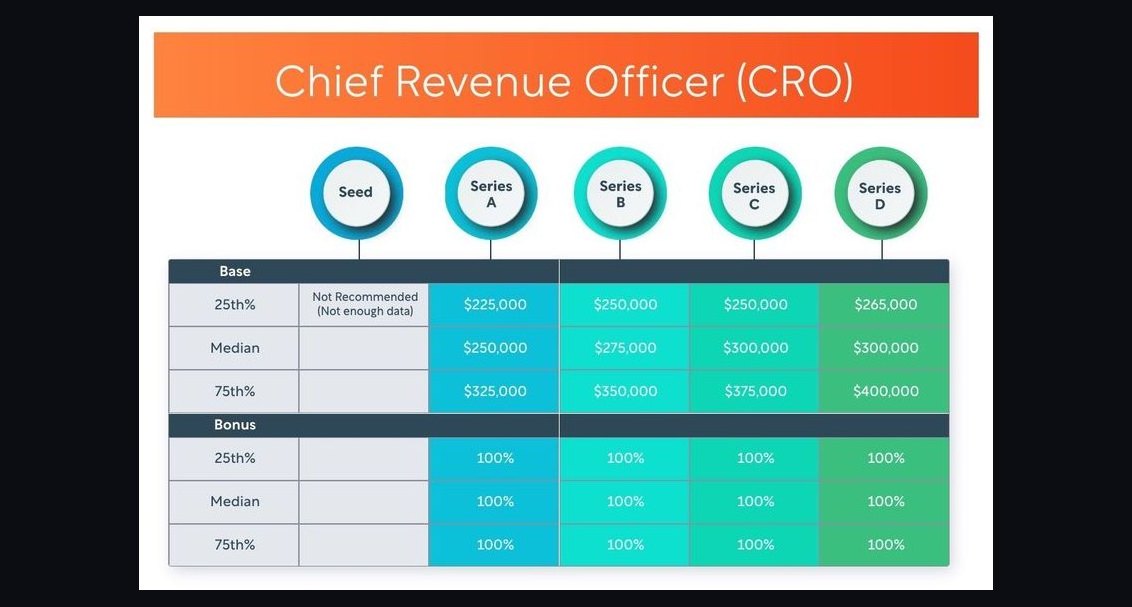 revopsCRO compensation — fractional, full-time, equity in 2027
 revopsHow do longer sales cycles in 2027 change the optimal frequency of B2B follow-up communications?
 revopsHow do you operationalize net revenue retention in 2027?
 revopsAre 2027 enterprise buyers demanding AI-driven total cost of ownership models?