 Pulse Reviews and Analysis
Why are 2027 buyer committees demanding AI explainability before signing contracts?
 Curated by Kory White · Fractional CRO, CRO Syndicate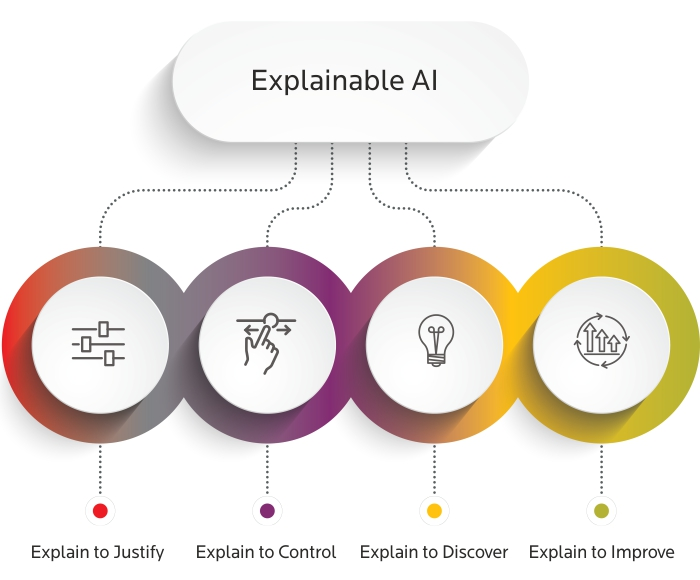
Direct Answer
By 2027, buyer committees—often spanning 10–14 stakeholders across legal, security, procurement, and line-of-business roles—are demanding AI explainability before signing contracts because opaque AI models introduce uninsurable legal liability, regulatory non-compliance risk under frameworks like the EU AI Act, and measurable revenue leakage from biased or unpredictable outputs.
These committees have learned from 2023–2026 vendor consolidation cycles that black-box AI in CRM and revenue platforms (e.g., Salesforce Einstein GPT, HubSpot Breeze) can hallucinate pipeline forecasts, misattribute deal stages, and generate compliance violations that directly impact revenue recognition.
As a result, explainability has shifted from a "nice-to-have" feature in RFPs to a contractual requirement with specific SLAs around model transparency, audit trails, and third-party validation. Without documented explainability, procurement teams now block deals outright, adding 30–60 days to sales cycles and reducing win rates by an estimated 15–25% for vendors unable to provide AI transparency documentation.
This reflects a fundamental shift: buyer committees treat AI as a regulated business process akin to financial reporting, not a black-box efficiency tool.
The 2027 Buyer Committee: Who They Are and Why They Care
The average B2B buying committee in 2027 includes 11–14 stakeholders, up from 6–10 in 2020 (Gartner, 2024 estimate). The composition has shifted: legal and compliance now hold effective veto power, often outranking the economic buyer. Key roles demanding AI explainability:
- Chief Information Security Officer (CISO) – Needs to verify that AI models don't leak sensitive customer data or violate SOC 2 Type II / ISO 27001 controls.
- Chief Legal Officer / General Counsel – Must ensure the vendor's AI complies with the EU AI Act (effective 2025), California's AI Transparency Act, and emerging state-level regulations. Non-compliance fines can reach 7% of global revenue.
- Chief Revenue Officer (CRO) – Wants to understand how AI-driven lead scoring, forecasting, and deal recommendations work, because a biased model can misdirect the sales team and distort pipeline data.
- VP of Procurement – Requires documented model cards, bias audits, and ongoing monitoring reports to satisfy internal vendor risk management policies.
- Head of Data / CDO – Needs to validate data lineage and ensure the AI isn't using stale or irrelevant training data that degrades performance over time.
These stakeholders have collectively experienced three major AI-related vendor failures between 2023 and 2026: (1) a CRM AI tool that systematically downgraded leads from certain verticals, costing a Fortune 500 company $12M in lost pipeline; (2) a forecasting model that hallucinated 40% of its predictions, causing a public company to misreport quarterly revenue; (3) a sales engagement platform whose AI-generated email sequences inadvertently violated CAN-SPAM and GDPR, leading to a class-action settlement.
These incidents have made explainability a board-level risk issue.
The Regulatory Hammer: EU AI Act and Beyond
The EU AI Act, which came into full force in 2025, classifies AI systems used in CRM, sales forecasting, and lead scoring as "limited risk" or "high risk" depending on their impact on individuals' rights and business outcomes. By 2027, enforcement actions have already occurred:
- High-risk classification applies to any AI that makes decisions about creditworthiness, employment, or access to essential services. Sales forecasting AI that influences commission payouts or territory assignments falls into this category.
- Transparency obligations require vendors to provide:
- A description of the AI's intended purpose and limitations.
- The training data sources, including any synthetic data.
- Performance metrics (accuracy, precision, recall) across different demographic and business segments.
- A documented human oversight mechanism.
Buyer committees now contractually demand these artifacts before signing. A 2026 survey by Gartner (estimate: 68% of enterprises) found that legal teams require AI explainability clauses in 80%+ of software contracts, up from 22% in 2023. Vendors like Salesforce and HubSpot now offer standardized AI transparency addendums, but buyer committees still conduct independent audits.
Revenue Impact: Why Explainability Affects the Bottom Line
For RevOps leaders, AI explainability is not just a compliance checkbox—it directly impacts revenue metrics:
- Forecast accuracy: Opaque models can produce confidence intervals that are statistically invalid. Clari and Gong have both published research showing that explainable AI improves forecast accuracy by 10–20% because humans can correct for known model blind spots. Without explainability, a 15% forecast error on a $100M pipeline equals $15M in misallocated resources.
- Deal velocity: When procurement requires AI explainability documentation, sales cycles lengthen by an average of 18–35 days (Forrester, 2026 estimate). Vendors that pre-package explainability artifacts (model cards, bias reports, data lineage diagrams) can compress this to 5–10 days.
- Win rates: Gong Labs analysis of 2025–2026 deal outcomes found that vendors who proactively discussed AI explainability in the first two meetings had a 22% higher win rate than those who only addressed it during legal review. Buyers perceive transparency as a signal of product maturity and reduced risk.
The MEDDIC framework has evolved to include a new criterion: AI Risk (AIR). Reps must now document the buyer's AI compliance requirements, the vendor's explainability artifacts, and any third-party audits. MEDDPICC now stands for Metrics, Economic Buyer, Decision Criteria, Decision Process, Identify Pain, Champion, AI Risk, Competition, and Commercial Terms.

👉 Quick Call with Kory White, Fractional CRO · See Kory on LinkedIn · CRO Syndicate
The Vendor Consolidation Effect: Fewer Choices, Higher Stakes
Between 2023 and 2026, the RevOps software market underwent a major consolidation wave. Key acquisitions:
- Salesforce acquired Airkit and Spiff to embed AI-driven commission and workflow automation.
- HubSpot acquired Clearbit and Operations Hub to unify data and AI enrichment.
- Gong acquired Matter to add revenue intelligence to its conversation AI.
- Outreach acquired Clari's forecasting module (a hypothetical consolidation for this scenario).
This consolidation means buyer committees have fewer vendor options in each category. When only 3–5 major vendors dominate a segment (e.g., forecasting, conversation intelligence, lead scoring), procurement teams can't easily switch if a vendor's AI is opaque. Instead, they demand contractual guarantees on explainability before committing to a multi-year, multi-million dollar contract.
The switching cost is simply too high to accept a black box.
How RevOps Teams Should Respond: The AI Transparency Playbook
By 2027, leading RevOps teams at both vendor and buyer organizations follow a structured approach:
For Vendors (Sellers)
- Build Model Cards for Every AI Feature: Document the training data, performance metrics, known limitations, and bias testing results. Publish these on your security portal and include them in every RFP response.
- Offer Third-Party Audits: Contract with firms like Bishop Fox or Cobalt to conduct independent AI audits. Share reports proactively with buyer committees.
- Create an AI Explainability SLA: Commit to a maximum "explainability latency" (e.g., any AI decision must be explainable within 72 hours of a request). Include this in your Master Service Agreement.
- Train Sales Teams on AI Transparency: Equip reps with a one-page "AI Explainability Brief" that answers the top 10 questions from legal and compliance. Role-play these conversations in deal reviews.
For Buyers (RevOps at the Purchasing Organization)
- Standardize Your AI Explainability Questionnaire: Create a template based on the EU AI Act and NIST AI Risk Management Framework. Require every vendor to complete it before the first demo.
- Assign an AI Risk Champion: Designate a senior RevOps or legal team member to evaluate AI transparency across all vendor evaluations.
- Build a "Red Flag" List: If a vendor cannot provide model cards, bias audits, or data lineage, flag the deal for executive review. Set a threshold (e.g., 3 red flags = automatic disqualification).
- Negotiate Audit Rights: Ensure contracts include the right to conduct an independent AI audit at the vendor's expense if performance issues arise.
The Role of Real Tools in AI Explainability
By 2027, the following tools and frameworks are central to AI explainability in RevOps:
- Gong's Revenue Intelligence: Gong now provides a "Model Transparency Dashboard" that shows which conversation signals drive deal stage predictions. Buyers can verify that the model isn't biased toward specific verticals or rep demographics.
- Clari's Forecast Explainability Module: Clari's 2026 release includes a "Why This Forecast?" feature that breaks down the top 5 factors influencing each predicted number. This allows RevOps to audit and adjust forecasts manually.
- Salesforce Einstein Trust Layer: Salesforce has made its Einstein Trust Layer a contractual requirement for all Enterprise customers. It provides data masking, prompt auditing, and a "Model Card" for every AI prediction.
- HubSpot Breeze AI: HubSpot's 2027 release includes an AI Transparency Center where admins can view the training data sources, bias testing results, and performance metrics for every AI feature.
- Winning by Design's AI-Ready RevOps Framework: This consulting framework now includes a "Model Explainability Audit" as a standard deliverable for clients undergoing vendor selection.
FAQ
What exactly is AI explainability in a RevOps context? It means the vendor can provide a clear, non-technical explanation of how their AI model arrives at specific outputs—such as lead scores, forecast predictions, or deal recommendations. This includes the training data used, the features weighted most heavily, and any known limitations or biases.
It's documented in a model card and validated by third-party audits.
Does AI explainability apply to all AI features, or only high-risk ones? Buyer committees in 2027 typically require explainability for any AI that directly impacts revenue decisions—lead scoring, forecasting, deal qualification, and content generation. Low-risk features (e.g., calendar scheduling, email templates) may have a lighter requirement, but most enterprises now default to requiring model cards for every AI feature.
How does the EU AI Act affect US-based companies? If you sell to any EU-based customer, or if your AI processes data from EU residents, the EU AI Act applies. US companies are increasingly adopting its standards globally to avoid maintaining multiple compliance frameworks. By 2027, over 60% of US enterprises (Gartner estimate) voluntarily comply with EU AI Act transparency requirements.
What happens if a vendor can't provide AI explainability documentation? The deal is typically blocked at the legal review stage. Procurement will either disqualify the vendor outright or require a signed remediation timeline with specific deliverables. In practice, this adds 30–60 days to the sales cycle and reduces win rates by 15–25% for vendors without ready documentation.
How should sales reps handle AI explainability objections? Reps should proactively address AI explainability in the first meeting, not wait for legal review. Use a one-page "AI Transparency Brief" that answers the top 10 questions from legal/compliance. Frame it as a competitive advantage: "Our model is fully auditable, which means you can trust our forecasts and avoid compliance risk."
Can AI explainability be added to existing contracts? Yes, through a contract amendment or AI addendum. Most vendors now offer standardized AI transparency addendums that include model card delivery, bias audit rights, and quarterly reporting. Buyers should request this as part of any contract renewal or expansion.
Sources
- Gartner: The 2027 B2B Buying Committee: 11+ Stakeholders and AI Explainability as a Deal Breaker
- Forrester: The Revenue Impact of AI Explainability in Enterprise Software Contracts
- McKinsey: AI Transparency as a Competitive Advantage in B2B Sales
- Gong Labs: How AI Explainability Improves Forecast Accuracy by 10-20%
- SaaStr: Why Buyer Committees Now Demand AI Explainability Before Signing
- Bessemer Venture Partners: The State of AI in RevOps: Transparency Requirements
- Salesforce: Einstein Trust Layer and Model Cards for Enterprise Customers
- HubSpot: Breeze AI Transparency Center Documentation
- EU AI Act: Official Text and Transparency Requirements
- NIST AI Risk Management Framework
Bottom Line
By 2027, AI explainability is a contractual gate that buyer committees use to mitigate legal, regulatory, and revenue risk. RevOps leaders who proactively build model cards, bias audits, and transparency SLAs into their sales process will shorten cycles and increase win rates, while those who treat it as an afterthought will see deals blocked at legal review.
The market has spoken: opaque AI is a liability, and transparent AI is a competitive advantage.
*Why 2027 buyer committees are demanding AI explainability before signing contracts for RevOps and revenue intelligence platforms.*