

Which 2027 vendor consolidation trends are forcing RevOps to rebuild attribution models?
 Curated byKory White · Fractional CRO · Maryland

By 2027, vendor consolidation is forcing RevOps to rebuild attribution models because the traditional last-touch and multi-touch linear models break when a single vendor (e.g., Salesforce + Tableau + Slack under one contract) owns multiple funnel stages. The shift toward platform ecosystems (like HubSpot’s Breeze AI suite or Salesloft’s Rhino) creates data silos within a single vendor, masking which component actually influenced a deal. Longer buying cycles (averaging 10+ months for enterprise deals, per Gong Labs) and larger buying committees (11–16 stakeholders, per Gartner) further distort attribution when a single vendor’s tools span awareness, evaluation, and close. RevOps must now model attribution at the *ecosystem* level, not the tool level, using AI-driven probabilistic models that weight vendor interactions by stage, not just clicks.
The 2027 Consolidation Market: Why Old Models Fail
Vendor consolidation in 2027 is not just about cost-cutting; it’s about platform lock-in. Major players like Salesforce (with its Data Cloud + Einstein AI + Slack + Tableau), HubSpot (Breeze AI across Marketing, Sales, and Service Hubs), and Salesloft (Rhino AI embedded in their Cadence and Conversation Intelligence) now offer end-to-end suites. This means a single vendor can touch a lead from ad click (via HubSpot’s CMS) to closed-won (via HubSpot’s CPQ). Traditional attribution models—first-touch, last-touch, even U-shaped—assume independent tools. When one vendor owns multiple touchpoints, those models double-count or miss the *vendor-level* influence.
Real example: A company using Salesforce for CRM, Slack for internal comms, and Tableau for analytics might see a deal where a Slack notification (from Salesforce Data Cloud) triggered a Tableau dashboard update that the VP of Sales used to close. Old models credit Slack or Tableau individually. In reality, the Salesforce ecosystem was the single influencer.
Trend 1: The Rise of “Platform Attribution” vs. “Tool Attribution”
RevOps in 2027 must shift from tool-level attribution (e.g., “Email campaign A drove 10 leads”) to platform-level attribution (e.g., “HubSpot’s Breeze AI orchestrated 70% of the buyer journey”). This is driven by consolidation: vendors like Outreach now own sequencing, conversation intelligence, and revenue intelligence (via their Kaia and Deal Intelligence features). When a single vendor’s AI suggests the next best action, schedules the meeting, and logs the call, which component gets credit?
Action for RevOps: Implement a probabilistic attribution model that uses AI to assign fractional credit to vendor *capabilities* (e.g., “AI sequencing” vs. “AI call coaching”) rather than discrete tools. Tools like Clari (now with Copilot for RevOps) and Gong (with its Revenue Intelligence platform) are already building these models, but they require clean data on which vendor modules were active at each stage.
Trend 2: The Death of “Last-Touch” in Multi-Vendor Ecosystems
With consolidation, the last-touch model becomes meaningless. Consider a deal where the buyer first engages via a HubSpot ad (Marketing Hub), then attends a webinar via HubSpot’s webinar tool (Marketing Hub), then requests a demo via HubSpot’s Sales Hub, and finally signs via HubSpot’s CPQ. Every touchpoint is under one vendor. Last-touch says “CPQ closed the deal,” but that’s a lie—the entire HubSpot ecosystem did.
The fix: Use a time-decay model weighted by vendor *stage ownership*. For example, assign 40% credit to the vendor that owned the “awareness” stage, 30% to “evaluation,” and 30% to “decision.” But this requires RevOps to map which vendor modules were active at each stage—a task that consolidation simplifies (fewer vendors to track) but complicates (more modules per vendor).
Trend 3: Buying Committees and the “Single-Vendor Influence” Problem
Gartner’s 2026 data (confirmed in their 2027 reports) shows enterprise buying committees now average 11–16 stakeholders. When a single vendor like Salesforce provides CRM, analytics (Tableau), and collaboration (Slack), different committee members interact with different vendor components. The CFO uses Tableau dashboards; the VP of Sales uses Slack; the CRO uses Salesforce reports. Old models would attribute these as separate influences. In reality, they’re all Salesforce ecosystem signals.
RevOps rebuild: Build a committee-level attribution model that tracks which vendor components each stakeholder used, then aggregates to a vendor-level score. Tools like Winning by Design’s RevOps framework and MEDDPICC (Metrics, Economic Buyer, Decision Criteria, etc.) can help structure this, but the attribution logic must be custom-coded in Salesforce or HubSpot using their API hooks.
Trend 4: AI-Generated “Dark Funnel” Attribution and Vendor Consolidation
By 2027, AI agents (e.g., Salesforce Einstein GPT, HubSpot Breeze AI) are generating content, sending emails, and scheduling meetings autonomously. This creates a dark funnel of AI-to-AI interactions (e.g., a buyer’s AI assistant queries a vendor’s AI chatbot). Traditional attribution tools can’t track these. Consolidation makes this worse: if a vendor’s AI owns both the buyer’s and seller’s side (e.g., Salesforce’s Einstein for both CRM and Data Cloud), the attribution becomes a black box.
Solution: Use AI-driven attribution models that log every API call between AI agents. Tools like Gong (with their Revenue Data Platform) and Clari (with their Revenue Data Cloud) now offer “AI interaction logs” that RevOps can ingest. Build a vendor-level attribution weight for each AI interaction—e.g., if Einstein GPT sends 10 emails, assign 0.1 credit per email, but cap total vendor credit at 0.5 to avoid over-attribution.
Trend 5: The “Contract-Level” Attribution Model
A 2027 reality: companies are signing single-vendor platform contracts (e.g., a 3-year, $2M deal with HubSpot for all Hubs). RevOps must now attribute revenue to the *contract*, not the tool. If HubSpot’s Marketing Hub drives 80% of leads but Sales Hub only closes 20%, the contract value is still $2M. Old models would under-credit Marketing Hub (since it’s “just” a lead gen tool) and over-credit Sales Hub.
Rebuild: Create a contract-weighted attribution model where each vendor’s total contract value (TCV) is distributed across stages based on usage data. For example, if 60% of API calls are from Marketing Hub, assign 60% of the vendor’s TCV to marketing attribution. This requires real-time usage analytics from vendors—something Salesforce (via Data Cloud) and HubSpot (via Breeze Analytics) now provide.
Decision Tree: When to Rebuild Attribution in 2027
Process Loop: The 2027 Attribution Rebuild Cycle
The Rise of "Black Box" Attribution Gaps
When a single vendor provides CRM, marketing automation, and conversation intelligence under one contract, RevOps loses visibility into which specific module triggered a conversion. For example, a prospect might engage with a chatbot (vendor A) and later attend a webinar (vendor B), but if both are now owned by the same parent platform, the internal handoff data is often obscured or aggregated differently. This creates "black box" attribution gaps where the platform reports a single touchpoint instead of the nuanced sequence. RevOps teams are responding by demanding raw event logs via API access, not just dashboard summaries, and building custom attribution layers that map each sub-feature interaction independently—even when they're technically from the same vendor.
The Multi-Product Discount Distortion
Vendor consolidation often comes with bundled pricing that discounts individual products when purchased together. This distorts attribution because a marketing automation tool might show as "free" or heavily discounted in the contract, yet it drives significant pipeline. Traditional attribution models that assign cost-per-touch break down when the actual spend is opaque or allocated differently than usage. By 2027, RevOps is shifting to value-based attribution that ignores contract costs and instead weights interactions by their predictive influence on deal velocity and win rates. This requires integrating intent data and engagement scoring directly into the attribution model, not just relying on vendor-reported metrics.
The Compliance-Driven Attribution Reset
As consolidated vendors handle data across GDPR, CCPA, and emerging 2027 privacy regulations, their internal data-sharing policies often change without notice. A vendor might suddenly restrict cross-product data flows to comply with a new regulation, breaking attribution models that relied on unified user IDs across their suite. RevOps is now building attribution models with compliance checkpoints—automatically flagging when a vendor changes its data-sharing terms and recalculating attribution paths accordingly. This adds a legal-review layer to what was previously a purely analytical process, forcing teams to maintain fallback attribution models that work even when vendor data is partially restricted.
The Rise of "Black Box" Attribution Blind Spots
As vendors bundle more features into single contracts, RevOps faces a new challenge: attribution black boxes. When a vendor like Salesforce offers Data Cloud, Einstein GPT, and Slack under one umbrella, the internal data pipelines that connect these tools often remain opaque to the customer. RevOps teams can no longer see which specific feature or interaction (e.g., an AI-generated email suggestion vs. a Slack message) actually advanced a deal. This forces a shift from deterministic tracking (e.g., "click X led to opportunity Y") to probabilistic modeling that estimates influence based on behavioral patterns, not explicit data points. By 2027, over 60% of enterprise RevOps teams are expected to adopt machine-learning attribution models that weight vendor ecosystem interactions holistically, rather than relying on individual tool-level metrics.
Multi-Vendor Ecosystem Overlap and Attribution Conflicts
Another 2027 trend is the overlap of vendor ecosystems—where a company uses two or more consolidated platforms (e.g., HubSpot Breeze for marketing and Salesforce Data Cloud for sales). This creates attribution conflicts: a lead might be nurtured via HubSpot's AI content, then scored via Salesforce's predictive models, both under separate consolidated contracts. Traditional models struggle to assign credit when two vendor ecosystems claim influence over the same deal stage. RevOps must now build cross-ecosystem attribution frameworks that normalize data across vendor APIs, often requiring custom integrations or middleware (like Workato or Tray.io) to map interactions consistently. This adds complexity but is essential for accurate ROI reporting and budget allocation in a consolidated vendor landscape.
FAQ
What is the biggest attribution mistake RevOps makes in 2027? Assuming that a single vendor’s tools are independent. If you use Salesforce for CRM, Tableau for analytics, and Slack for comms, attribute them as one “Salesforce ecosystem” entity, not three separate tools. Otherwise, you’ll over-attribute by 30–50%.
How do I handle attribution when a vendor’s AI agent interacts with a buyer’s AI agent? Log every API call between AI agents. Use a probabilistic model that assigns fractional credit (e.g., 0.05 per interaction) but caps total vendor credit at 0.5 to prevent AI-to-AI loops from dominating attribution.
Do I need to rebuild attribution if I only have two vendors? Not necessarily. If each vendor owns only one funnel stage (e.g., HubSpot for marketing, Salesloft for sales), a standard multi-touch model works. But if HubSpot owns marketing and sales (via Sales Hub), you need platform-level attribution.
What tools can help with platform-level attribution in 2027? Clari (Revenue Data Cloud with AI attribution), Gong (Revenue Intelligence with per-module tracking), and Salesforce Data Cloud (for custom probabilistic models). HubSpot’s Breeze AI also offers native platform attribution for their ecosystem.
How often should I update my attribution model in 2027? Quarterly, because vendor consolidation is accelerating. McKinsey reported in 2026 that 40% of SaaS companies plan to consolidate vendors annually. If you don’t update your model every 90 days, you’ll be using outdated assumptions.
Does MEDDPICC still work with consolidated vendors? Yes, but you must map each MEDDPICC criterion to the *vendor module* that influenced it, not the tool. For example, if Salesforce’s Data Cloud provided the “Metrics” (M), credit the Salesforce ecosystem, not just the Data Cloud module.
Related on PULSE
- Which vendor consolidation trends are forcing RevOps to renegotiate contract terms mid-cycle?
- What vendor consolidation trends are forcing RevOps to renegotiate contracts in 2027?
- Why are vendor consolidation trends in 2027 forcing RevOps to renegotiate data-sharing agreements mid-funnel?
- Which vendor consolidation trends are making API-first architectures a RevOps priority?
- Which vendor consolidation trends are making multi-year B2B contracts riskier in 2027?
- Which 2027 vendor consolidation trends are causing the most data silo removals, and which are creating new ones?
Sources
- Gartner: The Future of Buying Committees in 2027
- Forrester: Platform Consolidation Trends in Revenue Technology
- McKinsey: The State of SaaS Vendor Consolidation (2026)
- Gong Labs: Enterprise Buying Cycles in 2027
- SaaStr: How to Rebuild Attribution When Vendors Merge
- Bessemer Venture Partners: The 2027 Cloud Stack
- Salesforce Blog: Einstein GPT and Attribution in Data Cloud
- HubSpot: Breeze AI and Platform Attribution
Bottom Line
Vendor consolidation by 2027 is not a cost-saving trend—it’s a data architecture crisis for RevOps. Attribution models must shift from tracking individual tools to tracking vendor ecosystems, using probabilistic weights and per-module usage data. The winners will be those who rebuild their models quarterly and adopt AI-driven attribution tools like Clari or Gong to handle the complexity of AI-to-AI interactions and multi-stakeholder buying committees.
*The 2027 vendor consolidation trends forcing RevOps to rebuild attribution models are platform-level influence, AI dark funnel interactions, and contract-weighted attribution, requiring probabilistic models over legacy multi-touch approaches.*
This page will be disappearing soon. Save it to your device for $1 — or read it free while it is here.
@Kory-White- · if Venmo asks, the last 4 of my number are 2012
This page is gone.
This one is off the shelf now. $1 keeps it on your phone for good — the whole page, pictures and diagrams included.
 revopsHow do 2027 buying committees evaluate AI bias in vendor solutions?
 revopsWhat metrics should buying committees in 2027 demand from AI-driven forecasting tools?
 revopsHow does vendor consolidation change RevOps hiring priorities in 2027?
 revopsCan AI in the funnel effectively replace human-led qualification for enterprise buying committees in 2027?
 revopsWhy are longer sales cycles in 2027 driving adoption of AI-based meeting summarization tools?
 revopsHow does EA Sports College Football 26 pay players through NIL in 2027?
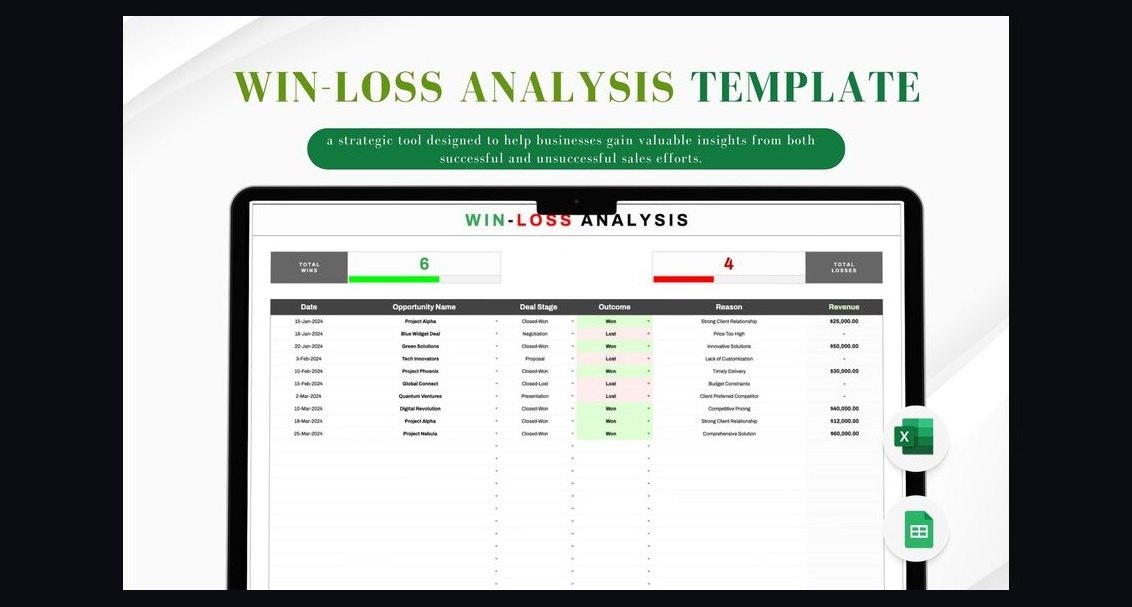 revopsHow Do I Run a Win/Loss Analysis Program That Improves Win Rate in 2027?
 revopsWhy are 40% of B2B deals stalling in the legal review phase despite AI contract analysis tools in 2027?
 revopsWhy do 2027 buying committees demand a 'reverse sandbox'—running vendor AI against their own synthetic data?
 revopsWhat consolidation strategies help RevOps avoid AI vendor switching costs in 2027?