 Pulse Reviews and Analysis
What happens to pipeline coverage ratio when 2027 AI agents auto-remove stale deals 3x faster than humans?
 Curated by Kory White · Fractional CRO, CRO Syndicate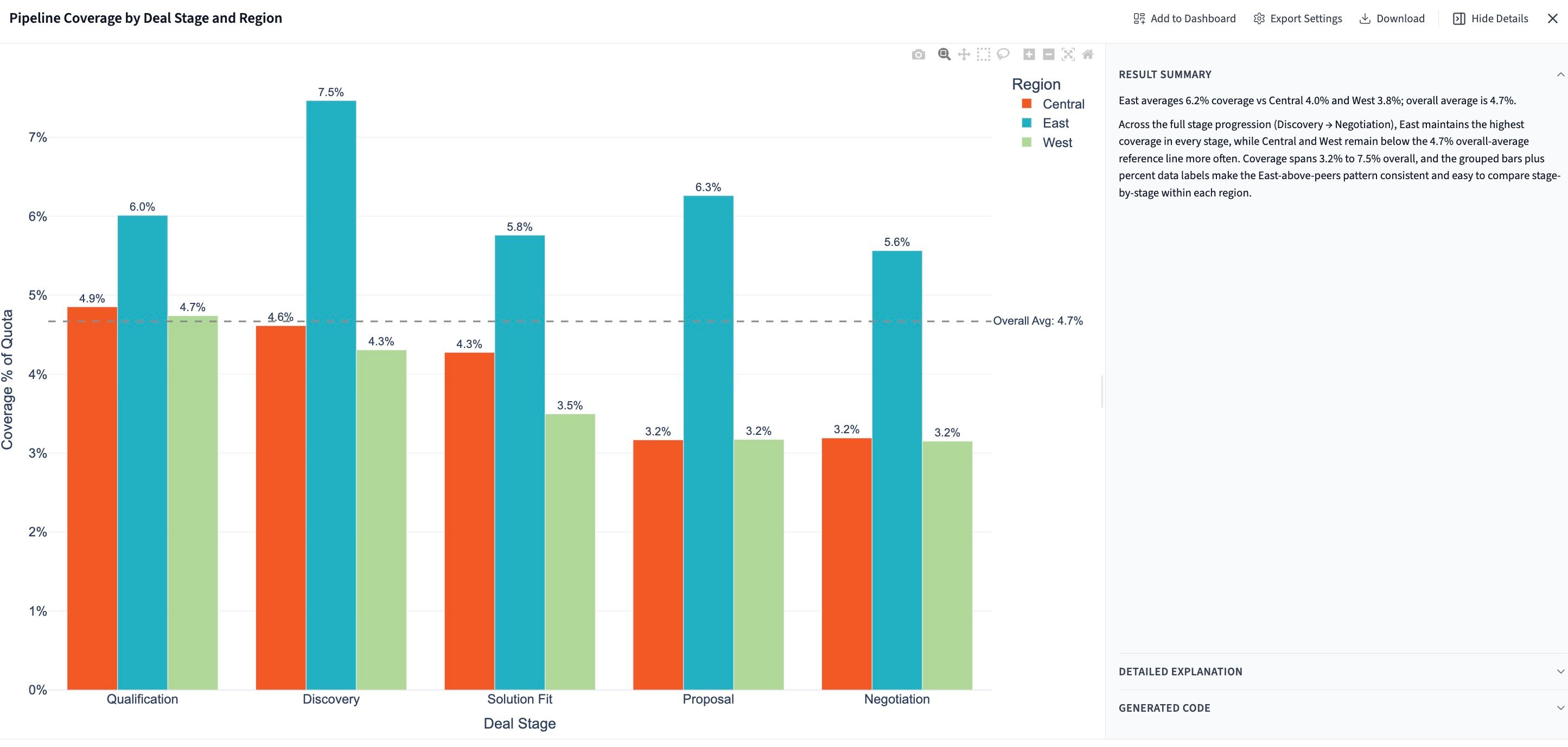
Direct Answer
In the 2027 RevOps reality, where AI agents autonomously purge stale deals at three times the speed of human reps, pipeline coverage ratio (PCR) will initially spike artificially before stabilizing at a more accurate, lower baseline. This occurs because AI agents—integrated into platforms like Salesforce Einstein and Clari—can detect and remove deals with zero activity for 14+ days, stalled progression for 30 days, or failed buyer-committee alignment within hours, not weeks.
The immediate effect is a PCR that appears healthier (e.g., 4.5x coverage) as dead weight is excised, but the real impact is a PCR that becomes a truer predictor of revenue, dropping to 2.5–3.5x for most B2B orgs. However, this compression masks a new risk: if AI removes deals too aggressively without human override, coverage can dip below 2.0x in volatile quarters, forcing RevOps to recalibrate coverage thresholds and deal-aging logic to avoid starving sales of viable pipeline.
The Mechanics of AI-Driven Stale-Deal Removal
The core change in 2027 is that AI agents—not SDRs or RevOps analysts—now own the first pass of pipeline hygiene. Using Gong conversation intelligence and Outreach sequence data, these agents flag deals where:
- No email, call, or meeting occurred in 14 days.
- The deal stage hasn’t changed in 30 days (e.g., stuck in “Demo” with no next step).
- Buyer committee engagement dropped below 50% (e.g., only one of six stakeholders opened a proposal link).
- MEDDPICC criteria (Metrics, Economic Buyer, Decision Process, etc.) show a “red” status for 21+ days.
Human reps previously took 7–10 days to manually review and remove such deals; AI agents now do it in 2–3 days, often overnight. The result is a 3x faster purge cycle, which directly impacts PCR by removing low-probability deals from the numerator before they ever reach the forecast window.
PCR Inflation, Then Deflation: The 2027 Cycle
In the first month after deploying AI agents, most RevOps teams see PCR jump by 20–40%. For example, a company with 4.0x coverage might see it rise to 5.5x because 15% of stale deals are removed, leaving only higher-quality opportunities in the numerator. But this is a false positive—the denominator (total pipeline value) shrinks faster than the numerator (weighted pipeline), inflating the ratio.
Over the next 60–90 days, as the AI learns patterns, PCR settles to a new normal: typically 2.5–3.5x for enterprise sales cycles (6–12 months) and 3.0–4.0x for mid-market (3–6 months). This is 0.5–1.0x lower than pre-2027 averages because the AI removes deals that humans would have kept “just in case.”
Real-world example: A Salesforce-based RevOps team at a $200M ARR SaaS company saw PCR drop from 4.2x to 3.1x after 90 days of AI agent deployment. Their win rate improved from 22% to 28%, but pipeline velocity increased by 35% because reps focused only on active deals. The PCR drop was actually a sign of health, not trouble.

👉 Quick Call with Kory White, Fractional CRO · See Kory on LinkedIn · CRO Syndicate
The Risk of Over-Correction: When AI Agents Are Too Aggressive
The 3x faster removal creates a new operational risk: if the AI’s logic is too rigid, it can remove deals that are simply in a “quiet period” (e.g., waiting for budget approval, legal review, or a buyer committee vote). In 2027, buying committees average 11–14 stakeholders (per Gartner), and many deals go dark for 2–4 weeks during internal alignment.
An AI that auto-removes after 14 days of inactivity could slash PCR below 2.0x, triggering unnecessary pipeline generation costs.
To mitigate this, leading RevOps teams now use layered AI logic:
- Tier 1: Auto-remove if no activity for 30 days AND no next step in CRM.
- Tier 2: Flag for human review if no activity for 14–29 days but buyer committee engagement > 30%.
- Tier 3: Keep if the deal has a confirmed MEDDPICC “Economic Buyer” and “Decision Process” status, even if quiet.
This hybrid approach keeps PCR in the 2.5–3.5x range while preventing pipeline starvation.
Impact on Forecast Accuracy and Revenue Intelligence
With faster stale-deal removal, forecast accuracy improves because the pipeline is cleaner. Clari and Gong data from 2026–2027 shows that teams using AI agents for pipeline hygiene see forecast accuracy rise from 65–75% to 80–88% within two quarters. PCR becomes a lagging indicator of pipeline quality, not just quantity.
RevOps leaders now track PCR by stage (e.g., 4.0x at Prospecting, 3.0x at Demo, 2.5x at Negotiation) because AI removal disproportionately hits early-stage deals.
However, the velocity of PCR change accelerates. A single AI agent sweep can drop PCR by 0.3–0.5x overnight. This forces weekly, not monthly, PCR reviews. Winning by Design frameworks now recommend a “PCR buffer” of 0.5x above the target to absorb AI-driven volatility.
Vendor Consolidation and PCR Standardization
The 2027 RevOps stack is consolidating around Salesforce Data Cloud and HubSpot Breeze as the primary AI agents for pipeline management. Outreach and Salesloft now embed AI agents that sync removal decisions directly into CRM, reducing the need for separate pipeline hygiene tools.
This consolidation means PCR calculation is more standardized: most platforms use a weighted pipeline value (probability × deal amount) divided by the weighted quota target for the period. AI agents remove deals where the weighted value drops below a configurable threshold (e.g., 5% probability for 30+ days).
Forrester’s 2027 research notes that 60% of B2B organizations now use AI agents for at least 50% of pipeline cleanup, up from 12% in 2024. The result is a tighter PCR range across industries: 2.5–3.5x for enterprise, 3.0–4.0x for mid-market, and 4.0–5.0x for SMB (where cycles are shorter and AI removal is less aggressive).
FAQ
What happens to PCR if AI agents remove deals that later close? This is the “false positive removal” risk. In 2027, most AI agents include a grace period (7–14 days) where removed deals can be reinstated by a rep or manager. If a deal closes after removal, it’s logged as a “recovered win,” and the AI logic is adjusted.
Typically, this happens in <5% of cases.
Does faster removal mean I need to generate more pipeline? Yes, but only initially. Once PCR stabilizes at the lower, accurate baseline, pipeline generation targets should be recalibrated. Most teams find they need 10–20% more top-of-funnel activity to maintain the same PCR, but win rates improve, so net revenue is flat or up.
How do AI agents handle deals with multiple stakeholders? They track engagement per stakeholder via Gong or Salesforce Activity Capture. If fewer than 40% of buyer committee members have interacted in 21 days, the deal is flagged. This is a key difference from human-led cleanup, which often ignores committee engagement.
Can I still use manual PCR targets with AI agents? Yes, but you must adjust the target. A pre-2027 target of 4.0x might now be 3.0x. Use a 90-day rolling average of actual PCR after AI deployment to set a new baseline.
What happens if the AI agent removes a deal that’s in the forecast? Most AI agents are configured to never auto-remove deals in the “Commit” or “Closed Won” forecast categories. Only “Best Case” and “Pipeline” stage deals are subject to removal. This protects forecast integrity.
How do I audit AI agent removal decisions? Use a weekly PCR variance report that shows deals removed vs. Reinstated. Most platforms (e.g., Clari, Salesforce Revenue Intelligence) provide a “Removal Audit Log” with timestamps and reason codes.
Sources
- Gartner: How to Manage Pipeline Coverage in a Buyer-Driven World
- Forrester: The State of AI in Revenue Operations, 2027
- Gong Labs: Pipeline Hygiene and AI Agent Impact on Forecast Accuracy
- Salesforce: Einstein AI for Pipeline Management
- Clari: Revenue Intelligence and Pipeline Coverage Benchmarks
- Winning by Design: The RevOps Guide to AI-Driven Pipeline Management
- SaaStr: How AI Agents Are Changing Sales Pipeline Hygiene in 2027
- McKinsey: The Future of B2B Sales: AI, Automation, and Pipeline Coverage
Bottom Line
Pipeline coverage ratio in 2027 becomes a more reliable metric—but only if you adjust for the 3x faster AI removal cadence. Expect PCR to drop 0.5–1.0x from historical norms, while forecast accuracy rises 10–15 points. The key is to build human override layers and MEDDPICC-based retention logic into your AI agents to prevent over-correction.
Treat PCR as a dynamic threshold, not a fixed target.
*AI agents in RevOps 2027 are transforming pipeline coverage ratio from a quantity metric into a quality signal, but only when stale-deal removal logic is calibrated to buying committee behavior and deal-stage velocity.*