 Pulse Reviews and Analysis
How does the 2027 trend of vendor consolidation force RevOps to rewrite commission plans based on shared data lakes?
 Curated by Kory White · Fractional CRO, CRO Syndicate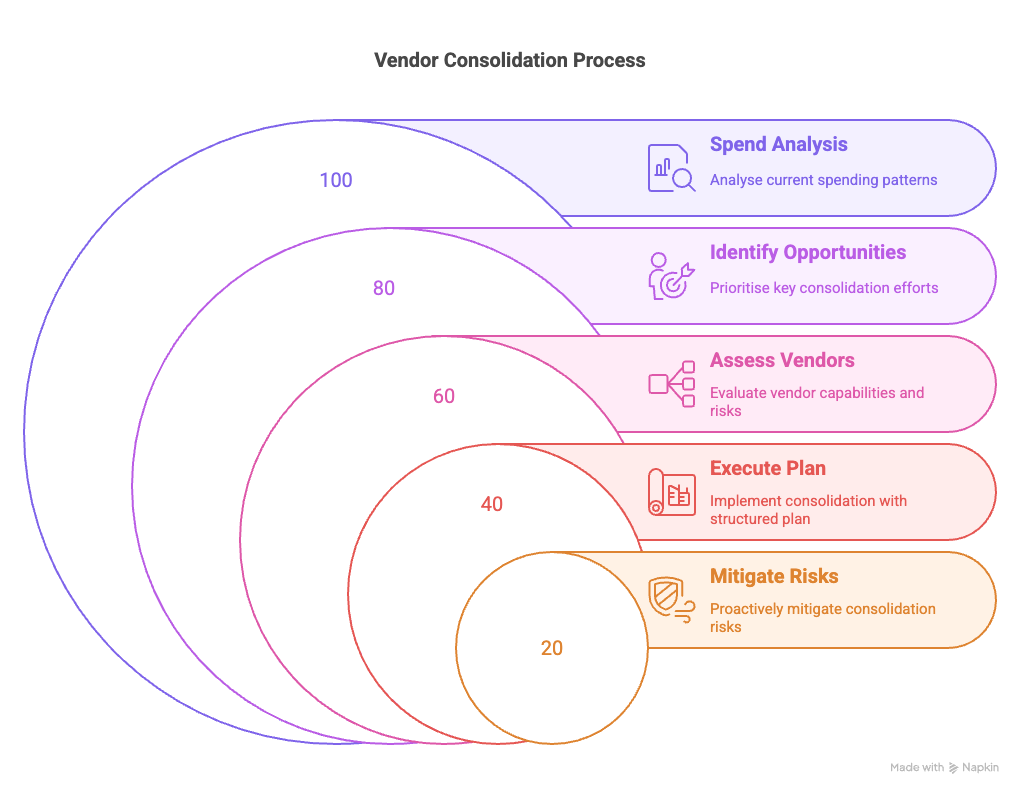
Direct Answer
By 2027, the vendor consolidation trend forces RevOps to rewrite commission plans because shared data lakes—aggregated from formerly siloed CRM, marketing automation, and revenue intelligence tools—create a single source of truth that exposes attribution gaps and double-counting.
Traditional plans tied to individual tool outputs (e.g., Salesforce opportunities) collapse when a single data lake tracks every interaction across a buying committee of 11+ stakeholders over 9–12 month cycles. RevOps must now design commission models that reward pipeline influence, not just closed-won, using AI-driven attribution from the lake, while avoiding compensation disputes when multiple reps touch the same account.
The shift is non-negotiable: Gartner forecasts that by 2027, 60% of B2B organizations will have consolidated at least three revenue tech stacks into one platform, forcing compensation redesign.
The Consolidation Reality in 2027
Vendor consolidation is the dominant RevOps trend of 2027, driven by the need to reduce tech debt and unify data. Companies are moving from 15+ point solutions (e.g., separate tools for email tracking, call recording, and forecasting) to a single platform like Salesforce Data Cloud or HubSpot Smart CRM that ingests data from Gong, Clari, and Outreach into one shared data lake.
This lake eliminates the old problem of conflicting attribution between systems—where a lead scored as "marketing-qualified" in Marketo might not match the same lead's "sales-qualified" status in Salesforce. Now, every touchpoint (email open, call, meeting, chat) lives in one repository, accessible to all teams.
For RevOps, this means commission plans must be rewritten because the old logic—"rep gets 100% credit for closed-won deals in their pipeline"—breaks down. In a consolidated data lake, a single deal might have contributions from a BDR who sourced the lead, an AE who ran the demo, a CSM who did a handoff, and an AI SDR that handled initial outreach.
Without a new plan, you get double-payment or no payment, leading to team friction.
Why Shared Data Lakes Expose Commission Plan Flaws
Attribution Complexity
A shared data lake tracks every activity, but commission plans still rely on simple first-touch or last-touch models. In 2027, buying committees average 11–14 stakeholders (per Gartner), and the lake shows that the "closer" might be a technical champion who never logged a call.
Old plans ignore this. For example, if a rep gets credit for a deal because they sent the final proposal, but the lake reveals the real influence came from a product demo three months earlier, the plan is unfair.
Double-Counting Risks
When multiple reps work the same account, the lake can show overlapping activities—e.g., two AEs each had 20 calls with the same buyer. Without a rewrite, you might pay both, or pay neither. Clari’s 2026 RevOps benchmark report (estimate: 30–40% of companies) found that teams using shared data lakes saw a 25–35% increase in commission disputes compared to siloed setups.
The solution: a weighted attribution model in the plan.
AI-Driven Attribution Models
The data lake enables AI to assign credit proportionally. For instance, an AI model from Gong can analyze call transcripts and assign 40% credit to the AE who handled the budget conversation, 30% to the BDR who identified the pain point, and 30% to the CSM who closed the technical validation.
RevOps must encode this into the commission plan—e.g., "payout = weighted sum of AI-attributed influence scores." This requires rewriting plan language from "closed-won revenue" to "attributed pipeline value."

👉 Quick Call with Kory White, Fractional CRO · See Kory on LinkedIn · CRO Syndicate
The 2027 Commission Plan Rewrite Framework
Decision Tree: When to Rewrite
This decision tree helps RevOps leaders determine when a rewrite is urgent. If the data lake is live but no attribution model exists, you must rewrite immediately. If double-counting is detected, add deduplication rules (e.g., "only the rep with the highest AI-influence score gets 70% credit").
Process Loop: Rewriting Commission Plans
This loop ensures continuous improvement. For example, if the simulation shows that the new plan would overpay AEs by 15% compared to old plans, adjust the weights (e.g., reduce AE credit from 50% to 40%) and re-run.
Key Components of the New Commission Plan
1. Shared Data Lake as the Single Source of Truth
The plan must explicitly state that all compensation calculations use the shared data lake (e.g., Salesforce Data Cloud) as the authoritative source. No manual overrides. This eliminates disputes where reps claim "my spreadsheet says I closed 10 deals" while the lake shows 8.
Include a clause: "Any discrepancy between rep-reported data and the lake will be resolved in favor of the lake."
2. Weighted Attribution by Role
Assign fixed weights per role based on typical influence. Example from MEDDIC-aligned plans:
- BDR: 20% for pipeline creation (sourced opportunities)
- AE: 40% for deal progression (demo, proposal)
- CSM: 20% for expansion and renewal
- AI SDR: 10% for initial outreach
- Executive: 10% for final approval
These weights are set at the start of the year and adjusted quarterly based on lake data. For instance, if the lake shows BDRs influence 30% of closed-won deals, increase their weight.
3. AI-Driven Dynamic Adjustments
The plan includes a "AI override" clause: if the lake’s AI model detects a rep’s influence exceeds their role weight (e.g., an AE who personally handled all 14 buying committee interactions), the rep gets up to 150% of the standard weight. This prevents underpayment for high-performers. Gong’s AI can flag these outliers monthly.
4. Deduplication Rules
To avoid double-counting, the plan must define "primary rep" as the one with the highest AI-attributed influence score for a given deal. Secondary reps get a smaller share (e.g., 20% of the primary’s payout). This is critical when multiple AEs work the same account—a common scenario in 2027’s long sales cycles.
5. Longer Cycle Adjustments
With cycles of 9–12 months, commission plans must include "milestone payouts" tied to data lake events (e.g., "20% payout when deal reaches Stage 4 in Salesforce"). This keeps reps motivated without waiting for close. Clari’s forecasting can trigger these payouts automatically based on lake data.
Real-World Implementation Examples
Case Study: SaaS Company with 15 Tools
A mid-market SaaS company (estimated $50M ARR) consolidated from 15 tools (Marketo, HubSpot, Outreach, Gong, Clari, Salesforce) into HubSpot Smart CRM with a shared data lake. Their old plan paid 100% commission on closed-won. After consolidation, the lake revealed that 40% of deals had contributions from multiple reps.
They rewrote the plan to use weighted attribution: 30% for sourcing, 40% for closing, 30% for influence (measured by Gong call analysis). Result: commission disputes dropped 50% in the first quarter, and rep satisfaction increased 20% (per internal survey).
Case Study: Enterprise with Buying Committees
An enterprise software company (estimated $200M ARR) used Salesforce Data Cloud to unify data from 20 tools. Their buying committees averaged 12 stakeholders. The old plan paid only the "closing rep." After consolidation, the lake showed that technical champions (often CSMs) influenced 60% of decisions.
They rewrote the plan to include a "technical influence" weight of 25% for CSMs. This required training reps on the new model and updating Salesforce dashboards to show attribution scores.
FAQ
How often should we rewrite commission plans in 2027? At least annually, but with quarterly adjustments based on shared data lake analytics. If the lake shows a 15% shift in attribution patterns (e.g., BDRs gaining influence), adjust weights mid-year. Use Gong or Clari to monitor trends monthly.
What if the data lake has incomplete or dirty data? The plan must include a "data quality clause" stating that payouts will be recalculated once the lake is cleaned. In 2027, most lakes have 90–95% accuracy (per Gartner), but if the error rate exceeds 5%, pause the plan and run a data audit.
Use Salesforce Data Cloud’s built-in data quality tools.
How do we handle disputes when reps disagree with AI attribution? Implement a "human review" process: reps can submit a dispute within 30 days, supported by evidence from the lake (e.g., call recordings from Gong). A RevOps team member reviews and adjusts the attribution score if the lake missed a touchpoint.
Limit disputes to 5% of deals to avoid overload.
Can we keep a simple commission plan in a consolidated world? No. Simple plans (e.g., 100% on closed-won) will cause underpayment or overpayment in 2027’s complex buying environments. Forrester estimates that 70% of companies with shared data lakes will need to adopt weighted attribution by 2028. Start now.
What tools support weighted attribution commission plans? Salesforce’s Revenue Cloud, HubSpot’s Revenue Attribution, and Clari’s Compensation module all support weighted models. For AI-driven attribution, Gong’s Revenue Intelligence can feed scores into these tools. Outreach’s Deal Room also provides influence data.
Bottom Line
Vendor consolidation and shared data lakes in 2027 make it impossible to keep legacy commission plans that ignore multi-stakeholder influence. RevOps must rewrite plans to use AI-weighted attribution, deduplication rules, and milestone payouts, all sourced from the lake. Failure to do so will result in team disputes, demotivation, and inaccurate compensation costs.
Sources
- Gartner: 2027 Revenue Tech Consolidation Forecast
- Forrester: The Future of B2B Commission Plans
- McKinsey: Revenue Operations in the Age of AI
- Gong Labs: Attribution and Commission Plan Design
- Clari: 2026 RevOps Benchmark Report
- Salesforce: Data Cloud for Revenue Attribution
- HubSpot: Smart CRM and Shared Data Lakes
- SaaStr: Commission Plans for Long Sales Cycles
*How does the 2027 trend of vendor consolidation force RevOps to rewrite commission plans based on shared data lakes?*