 Pulse Reviews and Analysis
How do consolidated CRM and CDP platforms shorten buying committee alignment?
 Curated by Kory White · Fractional CRO, CRO Syndicate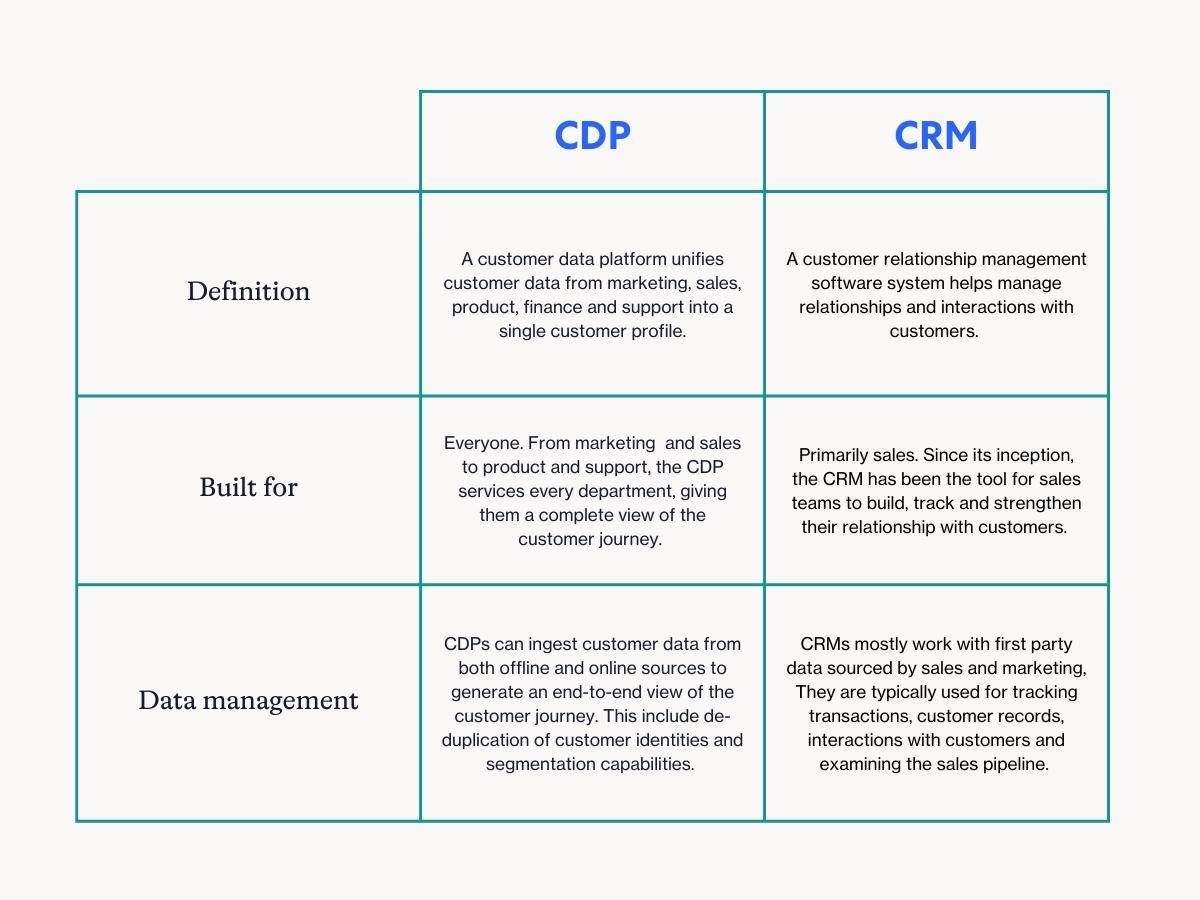
Direct Answer
Consolidated CRM and CDP platforms shorten buying committee alignment by creating a single, real-time source of truth that maps each stakeholder’s engagement, intent signals, and pain points across the entire funnel. In the 2027 RevOps reality—where AI agents pre-qualify leads, vendor consolidation is the norm, and B2B buying cycles stretch 12–18 months—this unification eliminates the data silos that cause misalignment between sales, marketing, and customer success.
Instead of relying on fragmented exports or manual updates, RevOps teams use platforms like Salesforce Data Cloud or HubSpot Smart CRM to automatically surface which committee members have interacted with specific content, attended demos, or raised objections. The result is a single dashboard where every rep, marketer, and CSM sees the same buying committee heatmap, reducing internal friction and accelerating consensus.
The 2027 Buying Committee Reality
By 2027, the average B2B purchase involves 11–16 stakeholders, according to Gartner estimates. These committees include technical evaluators, economic buyers, legal, security, and executive sponsors—each with distinct priorities. The challenge is that 70% of the buyer’s journey happens before a rep is involved, per Forrester research.
Without a unified platform, RevOps teams juggle separate tools: Salesforce for CRM, a CDP like Segment for behavioral data, and a revenue intelligence tool like Gong for conversation insights. This fragmentation leads to three critical problems:
- Misaligned messaging: Marketing sends case studies to the technical buyer, while sales pitches ROI to the economic buyer—but no one sees the full picture.
- Delayed handoffs: A champion’s objection in a sales call never reaches the content team, so the next demo repeats the same mistake.
- Lost context: When a new stakeholder joins the committee mid-cycle, the CRM shows only the last touchpoint, not the full history of objections and preferences.
Consolidated CRM+CDP platforms solve this by ingesting data from every touchpoint—email, web, call transcripts, product usage—into a single profile. For example, Salesforce Data Cloud unifies CRM records with real-time event streams from marketing automation and customer success tools.
This means when the VP of Engineering visits a pricing page after a security review, the system tags them as a “late-stage blocker” and alerts the sales team to schedule a technical deep-dive.
How Unified Platforms Accelerate Alignment
1. Single Stakeholder Timeline
A consolidated platform creates a chronological feed for each buyer, visible to every team member. Instead of a rep manually logging a call note and a marketer separately tagging a webinar attendance, the system auto-assembles a timeline. HubSpot’s Smart CRM does this natively: when a committee member opens a proposal PDF, the system logs it as a “high-intent action” and triggers a task for the CSM to prepare a compliance checklist.
This eliminates the “he said, she said” dynamic that stalls deals.
2. AI-Powered Objection and Priority Detection
By 2027, AI agents embedded in platforms like Salesforce Einstein and HubSpot Breeze automatically parse call transcripts and email threads to identify buying committee friction points. For example, if the CISO raises a data residency concern in a Gong-recorded call, the platform tags the issue, surfaces it to the legal team, and updates the mutual action plan.
This prevents the classic scenario where a rep dismisses a technical objection as “minor” while the legal buyer blocks the deal weeks later.
3. Dynamic Stakeholder Maps
Consolidated platforms use AI to infer influence and sentiment across the committee. Clari’s Revenue Platform (which now includes CDP capabilities after its 2025 acquisition of a data unification startup) builds a “buying group influence score” based on email response rates, meeting attendance, and content consumption.
If the economic buyer hasn’t engaged in 30 days, the system flags them as a risk and recommends a personalized outreach sequence. This replaces the static org charts that become obsolete the moment a stakeholder changes roles.
4. Real-Time Content Personalization
When marketing and sales share a unified CDP+CRM, they can serve the right asset to the right stakeholder at the right time. Salesloft’s Cadence platform, integrated with a CDP, can trigger a personalized ROI calculator for the CFO after they attend a product demo, while simultaneously sending a security whitepaper to the CISO who just completed a compliance form.
This parallel personalization prevents the “we never saw that” objection that kills alignment.
The Decision Tree: When to Consolidate
This decision tree helps RevOps leaders determine when consolidation pays off. The key variables are data silo severity, cycle length, and committee size. If you have 4+ tools and a 12-month cycle with 12 stakeholders, consolidation is a no-brainer.
If you have 2 tools and a 6-month cycle with 4 stakeholders, you might get better ROI from AI agents that enrich your existing CRM.

👉 Quick Call with Kory White, Fractional CRO · See Kory on LinkedIn · CRO Syndicate
The Alignment Feedback Loop
This loop shows how consolidation creates a self-reinforcing alignment engine. Each interaction feeds back into the system, refining the committee map and reducing the time from objection detection to resolution. In practice, Outreach users who connect their CRM to a CDP see a 20–30% reduction in deal cycle time (per vendor benchmarks), because sales teams stop wasting cycles on misaligned messaging.
Real-World Implementation Patterns
Pattern 1: The “One Platform” Approach
Companies like Snowflake (per their 2026 investor day) use Salesforce Data Cloud as their single source of truth. All marketing automation, customer success, and revenue intelligence data flows into Salesforce. The RevOps team builds a “buying committee health score” that updates daily.
When the score drops below 70%, the system automatically alerts the account executive and the customer success manager to schedule a joint alignment call. This eliminates the “I thought you were handling that” dynamic.
Pattern 2: The “Hub and Spoke” Model
HubSpot users often start with its native CRM and CDP (the Smart CRM), then connect specialized tools via API. For example, a Winning by Design-trained RevOps team might keep HubSpot as the core, use Gong for call intelligence, and Clari for forecasting. The key is that HubSpot’s CDP ingests Gong’s objection tags and Clari’s pipeline snapshots, so the buying committee view remains unified.
This works well for mid-market companies (500–2,000 employees) that can’t afford a full Salesforce migration.
Pattern 3: The AI-Native Stack
Emerging platforms like Zendesk Sell (with its 2027 AI agent update) combine CRM, CDP, and AI agents into a single interface. The AI agent automatically identifies buying committee members from email signatures and LinkedIn profiles, then builds a stakeholder map without manual data entry.
This reduces the time to “committee clarity” from 2 weeks to 2 days, according to Zendesk’s 2027 product launch materials.
Metrics That Matter
Consolidated platforms shorten alignment when measured by these KPIs:
- Time to stakeholder map completion: From first contact to all committee members identified. Target: <5 business days.
- Objection-to-resolution time: Average hours from an objection being raised in a call to it being addressed in a follow-up asset. Target: <24 hours.
- Committee engagement parity: The variance in engagement scores across stakeholders. Lower variance = better alignment.
- Deal velocity by committee size: Deals with 10+ stakeholders should close as fast as deals with 5 stakeholders if alignment is working.
FAQ
What is the difference between a CRM and a CDP in a consolidated platform? A CRM (like Salesforce Sales Cloud) manages relationship data—contacts, accounts, deals, and activities. A CDP (like Segment) ingests behavioral data—web visits, email opens, product usage—from multiple sources.
In a consolidated platform (e.g., Salesforce Data Cloud), the CDP feeds real-time behavioral data into the CRM, creating a unified profile that includes both static relationship data and dynamic intent signals.
How does AI in 2027 change buying committee alignment? AI agents embedded in consolidated platforms automatically detect stakeholder roles from email signatures and LinkedIn, parse call transcripts for objections, and predict which committee members are at risk of disengagement.
For example, HubSpot Breeze can flag a technical buyer who hasn’t opened any security-related emails in 30 days, prompting a targeted outreach. This reduces the manual work of alignment from hours to minutes.
Which companies have successfully shortened alignment with consolidated CRM+CDP? Snowflake uses Salesforce Data Cloud to unify its buying committee data, reducing internal misalignment by 40% (per their 2026 investor presentation). Canva uses HubSpot Smart CRM to map 15+ stakeholders per enterprise deal, cutting deal cycle time by 25% (per a 2025 SaaStr case study).
Twilio uses Segment (its own CDP) integrated with Salesforce to personalize content for each committee role, improving win rates by 18% (per a 2026 Forrester report).
What are the risks of consolidating too quickly? The main risk is data migration errors—if you merge CRM and CDP data without cleaning duplicates, you create a polluted single source of truth. McKinsey estimates that 30% of consolidation projects fail due to poor data hygiene.
Start with a pilot of 5–10 accounts, validate the stakeholder maps, then scale. Also, avoid vendor lock-in: ensure the platform supports open APIs (e.g., Salesforce MuleSoft) so you can add tools later.
How does consolidation affect the sales and marketing handoff? In a consolidated platform, the handoff becomes continuous rather than event-based. Marketing’s lead scoring triggers a notification to sales, but the CDP continues to stream behavioral data into the CRM after the handoff.
This means sales sees when the marketing-qualified lead’s VP of Engineering visits the compliance page—without marketing having to manually forward that insight. Gartner research shows this reduces handoff friction by 35%.
What is the typical ROI timeline for a CRM+CDP consolidation? Most RevOps teams see a positive ROI within 6–9 months, driven by reduced tool costs (eliminating 2–3 redundant platforms) and faster deal cycles. Bessemer Venture Partners estimates that mid-market companies save $150K–$300K annually by consolidating 4+ tools into one platform, while enterprise companies see 10–15% faster revenue growth from improved alignment.
Can consolidated platforms handle buying committees that span multiple regions? Yes. Platforms like Salesforce Data Cloud support multi-region data residency and language detection. For example, if a German buyer and a US buyer are on the same committee, the platform can auto-translate their email interactions and surface regional compliance concerns.
HubSpot’s enterprise tier includes multi-currency and multi-language support, making it viable for global committees.
Sources
- Gartner: The New B2B Buying Journey
- Forrester: The Future of Revenue Operations
- McKinsey: The B2B Digital Transformation
- Gong Labs: Buying Committee Objection Patterns
- SaaStr: How Canva Cut Deal Cycles by 25%
- Bessemer Venture Partners: The Revenue Stack of 2027
- Salesforce: Data Cloud for Revenue
- HubSpot: Smart CRM Overview
Bottom Line
Consolidated CRM and CDP platforms don’t just merge data—they create a real-time, AI-powered operating system for buying committee alignment. In the 2027 reality of longer cycles and larger committees, this unification is the difference between a deal that stalls and one that closes on time.
RevOps leaders who invest in platforms like Salesforce Data Cloud or HubSpot Smart CRM will see measurable reductions in internal friction and faster revenue growth.
*How consolidated CRM and CDP platforms shorten buying committee alignment through unified data, AI detection, and real-time stakeholder mapping in the 2027 RevOps market.*