
What is Datadog data-center strategy through 2027?
 Curated byKory White · Fractional CRO · Maryland
 PULSEKNOWLEDGE LIBRARY
Quality
Certified

Datadog does not build its own data centers. Through 2027 its strategy is renting hyperscaler capacity — AWS, Google Cloud, and Azure — and adding customer-selectable regional sites where data-residency law demands them. Region count grows; owned facilities stay at zero. Sovereignty and federal authorization, not real estate, drive the roadmap.
A RevOps leader watches a deal die over a map
Picture the last two weeks of a quarter at a fast-growing observability vendor's enterprise segment. A €1.4M multi-year expansion with a European bank has cleared security review, cleared procurement, and cleared the CFO's desk. Then a compliance officer asks a question nobody scripted: where, physically, does the telemetry land? The answer is Frankfurt — Datadog's EU1 site, hosted on AWS in the eu-central-1 region — and for this particular bank, under this particular national regulator's interpretation of European Banking Authority outsourcing guidance, Frankfurt is fine. The deal closes. Two weeks later, a nearly identical opportunity with a Gulf-region telecom stalls at the same question, and the answer is Frankfurt again, and that is not fine at all. The customer's regulator wants the data in-country. There is no in-country option. The deal goes to a local vendor or to the hyperscaler's own native tooling.
That asymmetry is the entire strategic problem in one scene, and it is why "data-center strategy" for a company like Datadog reads nothing like data-center strategy for Meta or Google. Datadog is a software company that has never operated a facility it owns. Its published site list — US1, US3, US5, EU1, AP1, AP2, plus a US1-FED environment for government workloads — maps directly onto rented hyperscaler regions. US1 and EU1 and the Asia-Pacific sites sit on AWS. US3 sits on Google Cloud. US5 sits on Azure. That is the whole footprint, and each site is an independent, isolated instance of the platform with its own URL, its own API endpoints, its own agent configuration, and no data movement between them. A customer picks one at signup and lives there.
For a RevOps organization inside a company selling this way, the footprint is not an infrastructure detail. It is a field in the CRM that predicts win rates. Territory design, account scoring, and forecast confidence all key off whether a given account's regulatory posture can be served by an existing site. A RevOps team that has not modeled "region availability" as a deal-qualification attribute is going to keep late-stage losses that look, in the pipeline review, like pricing losses or security losses. They are neither. They are geography losses, and geography is a two-to-four-quarter fix, not a discounting fix.

The framing that matters for anyone forecasting Datadog's behavior through 2027: every new site is a market-access decision priced against expected revenue in that jurisdiction, not a capacity decision. Datadog does not need more compute — its hyperscaler partners have effectively unlimited compute. It needs a legal address in a growing list of countries whose privacy statutes now say, in various phrasings, that certain categories of data may not leave. The company's own filings describe cloud-hosting as a primary cost of revenue and a strategic dependency, and its capital expenditure has historically been modest relative to revenue precisely because it capitalizes very little physical infrastructure. That posture is unlikely to reverse in a two-year window.
The adjacent scenario worth holding alongside this one: the same map problem shows up in reverse for Datadog's customers. An engineering org running production in São Paulo and monitoring it from Frankfurt pays cross-region egress on every metric, log line, and trace it ships. At scale, that egress becomes a line item large enough to trigger its own internal review — which is one of the quieter reasons customers ask for local sites even when no regulator is forcing the question. Latency and egress are the commercial argument. Sovereignty is the legal argument. They point the same direction, which is why the pressure compounds.
How the mechanism actually works
Understanding what "adding a region" means for Datadog requires separating four layers that get collapsed in casual conversation.

Layer one: the hyperscaler's physical region. AWS, Azure, and Google Cloud each operate dozens of regions worldwide, each containing multiple availability zones, each zone containing one or more physical facilities. Datadog does not build any of this. When a hyperscaler opens a UAE region or an Indonesian region, the concrete has already been poured, the power contracted, the fiber lit. Datadog's dependency is that the hyperscaler got there first — which is generally true, since AWS, Azure, and Google have all been racing to open sovereign-adjacent regions faster than SaaS vendors can consume them.
Layer two: Datadog's site instance. A Datadog site is a full deployment of the platform stack — ingestion pipelines, the timeseries store, the log store, the trace store, the query layer, the web application, the alerting engine, the integrations fleet. Standing one up is a substantial engineering exercise, not a Terraform apply. It means the entire product surface has to work in a region that may lack some of the managed services the primary region relies on, and it means every feature team's roadmap acquires a "does this work in all sites?" checkbox. In practice, newer Datadog products often launch in US1 first and reach other sites later — a pattern any customer who has read the per-site feature availability tables in the documentation has noticed.
Layer three: certification and authorization. A site that exists technically but lacks the local certification the buyer's auditor demands is commercially inert. This layer includes SOC 2, ISO 27001, HIPAA eligibility, PCI scope, and — in the US federal market — FedRAMP. Datadog operates a dedicated US1-FED environment for government customers, listed on the FedRAMP Marketplace. Moving up an authorization level or adding a new impact level is a multi-quarter process involving a third-party assessor, an agency or board sponsor, and a continuous-monitoring commitment that never ends. This is the layer where timelines slip.

Layer four: the commercial motion. Sales has to know the site exists, know what it does and does not support, and be able to quote it. RevOps has to add it to the CPQ configuration, to territory rules, and to the fields the forecast reads. Support has to staff time zones. Legal has to paper local data-processing terms. This layer is cheap relative to the others and is routinely the one that lags, which is how you end up with a capability shipped in engineering that nobody in the field is selling for a quarter.
The sequencing in that flow explains why regional expansion looks slow from the outside. The gate is rarely compute. It is parity plus paperwork, and both are serial with respect to the deal.
There is a fifth consideration that sits underneath all four: the multi-cloud posture itself. Datadog runs sites on all three major clouds while simultaneously selling monitoring for all three. That is not an accident of history. It is a credibility position. A vendor whose entire platform runs on one cloud has an awkward conversation with customers running on a competing cloud, and an even more awkward one when that cloud's native observability tooling — CloudWatch, Azure Monitor, Google Cloud Operations — is bundled into the same enterprise agreement the customer is already negotiating. Being genuinely portable across all three is both a technical hedge and a sales argument. It is also expensive, because portability means building against the lowest common denominator or maintaining three implementations of everything storage-adjacent.

Real numbers, ranges, and benchmarks
Precision matters here, so it is worth being explicit about what is documented versus what is estimated.
Documented and verifiable. Datadog publishes its site list: US1, US3, US5, EU1, AP1, AP2, and US1-FED. Each has distinct endpoints (datadoghq.com, us3.datadoghq.com, us5.datadoghq.com, datadoghq.eu, ap1.datadoghq.com, ap2.datadoghq.com, ddog-gov.com). The cloud provider behind each is documented: AWS for US1, EU1, AP1, AP2; Google Cloud for US3; Azure for US5. Datadog's public filings describe reliance on third-party cloud providers as a risk factor and a primary component of cost of revenue. Gross margin has run in the high-seventies to around eighty percent, which is the single most useful number for reasoning about infrastructure strategy: it tells you hyperscaler rent is roughly a fifth of revenue, and that any strategy meaningfully increasing that ratio will be resisted internally.
Structurally derivable. A single site is a full stack replica. Whatever the marginal cost of a site is, it scales with committed capacity rather than with customers, which means the first customer in a new region is enormously unprofitable and the hundredth is not. This is the classic reason SaaS vendors gate new regions behind a revenue threshold — commonly framed internally as something like "we need a credible pipeline of eight figures in annual contract value in that jurisdiction before we commit." Whether Datadog uses that exact bar is not public; that the bar exists in some form is near-certain, because the unit economics force it.

Ranges to treat as estimates, not facts. Any specific dollar figure for per-region setup or annual operating cost, any specific count of regions Datadog will operate in 2027, and any specific federal TAM number are modeled, not disclosed. Treat them as planning assumptions with wide error bars. The honest statement is: Datadog operates seven addressable sites today across three clouds, the direction of travel is more sites rather than fewer, and the company has given no public commitment to a specific 2027 count.
The benchmark that actually informs the ceiling. Compare against data-platform vendors that took regional breadth to its logical end. Snowflake publishes availability across dozens of regions spanning AWS, Azure, and Google Cloud. That is what maximum regional saturation looks like for a multi-cloud data company, and it took years and a different architecture — one where the storage layer maps more directly onto object storage primitives available everywhere. Observability platforms carry heavier stateful machinery: high-cardinality timeseries indexes, log search infrastructure, trace sampling and retention pipelines. Replicating that stack is harder than replicating a warehouse control plane. So Snowflake's region count is the theoretical ceiling for a multi-cloud SaaS platform, not a realistic 2027 target for Datadog.
Regulatory dates that anchor the demand curve. GDPR has applied since 2018. Brazil's LGPD took effect in 2020. The UAE's federal personal data protection law was issued in 2021 and Saudi Arabia's PDPL has been phasing in since 2023 with enforcement stepping up thereafter. India's Digital Personal Data Protection Act was enacted in 2023 with rulemaking following. The EU AI Act entered into force in 2024 with obligations phasing across the following years. Indonesia's personal data protection law passed in 2022 with a transition period. Every one of those dates lands inside or just before the 2025-2027 window. That clustering — not any single statute — is what makes this a strategy question rather than a routine roadmap item.

Cost signals a customer can compute themselves. Cross-region data transfer on the major clouds is billed per gigabyte, and the rate varies by source and destination pair. An organization shipping high-volume logs and traces from a distant production region to a monitoring site on another continent can model that egress directly from its own cloud bill. When the annualized egress figure approaches a meaningful fraction of the observability subscription itself, the customer will raise regional availability in the renewal conversation whether or not a regulator ever does. RevOps teams should expect that argument to appear in renewal negotiations with increasing frequency through 2027, and should arm account teams with the arithmetic rather than letting the customer arrive with it first.
Trade-offs and alternatives
Every path here trades something real, and the choices are not obvious.
Own facilities versus rented capacity. Building data centers converts operating expense into capital expense and, at sufficient scale, lowers unit cost. Companies that made this move — most famously the ones that repatriated workloads from public cloud after their traffic patterns stabilized — did so with predictable, high-volume, latency-tolerant workloads. Datadog's workload is the opposite: spiky ingestion driven by customers' own incident patterns, growing unpredictably with customer expansion, and required to sit adjacent to customer infrastructure that is itself in the public cloud. Owning facilities would also destroy the multi-cloud credibility position and would require building an operations discipline the company has never had. The rational answer is to keep renting, and there is no public signal suggesting otherwise.

Breadth versus depth of regions. Adding many thin regions maximizes addressable market and minimizes per-region profitability. Adding few deep regions concentrates margin but cedes jurisdictions. The middle path — which is what the current footprint suggests — is to cover the largest regulated blocs (US, EU, Japan, Australia) and treat everything else as a case-by-case revenue-gated decision. The risk of that path is that a competitor who moves early into a growth market compounds a local reference-customer advantage that is hard to unwind later.
Multi-cloud portability versus single-cloud optimization. Committing deeply to one hyperscaler unlocks better negotiated rates, deeper use of proprietary managed services, and simpler engineering. Staying portable costs all three but preserves the ability to serve customers who will not send their telemetry to a competitor's cloud, and preserves negotiating leverage at contract renewal with the hyperscalers themselves. Datadog has chosen portability, which is almost certainly correct given that its buyer is often specifically trying to avoid cloud lock-in.
Sovereign partner models versus first-party sites. An underused alternative is partnering with a local operator who runs the platform under local control — the model several enterprise vendors have used in China and, more recently, in European sovereign-cloud arrangements. This gets legal presence without full first-party operational cost, at the price of feature lag, support complexity, and brand risk when the partner's operations differ from the parent's. For jurisdictions where the regulation demands not just in-country storage but in-country *control*, this may be the only viable model.

Self-hosted or hybrid alternatives. Some competitors lean on deployability — the customer runs the software in their own environment, anywhere they like. That solves sovereignty completely and gives up the managed-service margin and the operational simplicity that made SaaS observability win in the first place. It is a real competitive vector for the most regulated accounts and a poor fit for the mid-market.
The federal market deserves its own line in this analysis. Datadog runs a separate US1-FED environment for government workloads, and its authorization status is a matter of public record on the FedRAMP Marketplace. Moving between authorization levels is not a pricing decision or a marketing decision — it is an engineering and audit program measured in quarters, requiring the underlying environment to sit in government cloud regions and requiring continuous monitoring thereafter. Competitors with higher authorization levels hold a structural advantage in defense and intelligence accounts that no amount of product superiority overcomes, because the contracting officer cannot legally buy the unauthorized product. Any RevOps forecast that includes federal upside without confirming current authorization status against the Marketplace listing is forecasting fiction.
Common pitfalls and how to avoid them
Treating region choice as reversible. It is not. Datadog sites do not share data, and there is no self-service migration between them. A customer who picks the wrong site at signup and grows for two years faces a re-instrumentation project touching every agent, integration, dashboard, monitor, and API key in the estate. The avoidance: make region selection a documented decision at contract time, with legal and security in the room, not a checkbox an engineer clicks during a trial. RevOps should surface region as a required field on the opportunity record before it can advance past technical validation, and should flag any account whose regulatory profile has changed since signup.

Assuming feature parity across sites. Newer capabilities frequently land in the primary US site first. A customer in a secondary site who buys on a demo of a feature not yet available in their region has a churn event scheduled for renewal. Avoidance: verify against Datadog's published per-site availability documentation before the demo, not after the contract. Build the parity check into the sales engineering runbook.
Confusing where data is stored with who can access it. Residency law increasingly cares about both. Storing EU data in Frankfurt while granting support engineers in another jurisdiction routine access may satisfy a naive reading of a statute and fail a sophisticated auditor. The relevant controls are access-scoping, logging of cross-border support access, and contractual commitments about support-team geography. Ask the vendor these questions explicitly; a site name on a map answers only the easy half.
Forecasting a region before it is sellable. The gap between "engineering has stood up the site" and "the field can quote it" routinely runs a quarter or more, spanning CPQ configuration, pricing approval, legal terms, and enablement. Pipeline built on the earlier date converts on the later one, and the forecast miss looks like a sales-execution problem when it was a systems-readiness problem. Avoidance: define "generally available" in RevOps terms — quotable, papered, supported — and refuse to open pipeline before that date.

Under-modeling cross-region egress in the business case. Teams evaluating whether to consolidate monitoring into a single distant site often model only the subscription. The transfer cost of shipping full-fidelity logs and traces across continents can be material and grows with the estate. Model it from the actual cloud bill, not from a rule of thumb, and re-model it annually — telemetry volume rarely shrinks.
Believing a sovereignty problem is a discount problem. When a late-stage deal stalls on data location, the reflex in a quarter-end review is to authorize more discount. It will not work, because the blocker is not price sensitivity — it is a compliance officer who cannot sign. Discount authority spent here is pure margin destruction. The correct play is to qualify the requirement early, route the account to the appropriate site if one exists, and if none does, log it as regional demand evidence that feeds the expansion business case. That log — a structured record of every deal lost to a missing region, with contract value attached — is the single most valuable artifact a RevOps team can hand an infrastructure planning committee, and almost nobody keeps it.
Ignoring the downstream effect on customer success motions. Regional fragmentation complicates everything after the sale: usage telemetry for health scoring lives in different places, cross-account benchmarking gets harder, and playbooks that assume a single API endpoint break. Build the site identifier into the customer data model from the start rather than retrofitting it when the second region has real volume.
Related questions
Does Datadog own any of its data centers?
No. Datadog's platform runs on capacity rented from AWS, Google Cloud, and Azure. Its public filings treat third-party cloud hosting as both a primary cost of revenue and a business risk factor. Nothing public suggests a shift toward owned facilities through 2027.
Can a customer move between Datadog sites?
Not through self-service. Sites are isolated instances with separate endpoints and no data sharing. Changing sites means re-instrumenting agents and integrations and rebuilding dashboards and monitors. Choose the site deliberately at contract time with legal and security involved.
Why does Datadog run on three different clouds?
Credibility and customer preference. A monitoring vendor that runs exclusively on one hyperscaler struggles to sell against that hyperscaler's native tooling to customers on competing clouds. Portability also preserves negotiating leverage and lets customers keep telemetry inside their own cloud provider.
How does region availability affect a sales forecast?
Directly. Deals in jurisdictions without a compliant site stall at compliance review regardless of price or product fit. Treat region availability as a qualification field on the opportunity record, and never open forecast-weighted pipeline against a site that is not yet quotable.
What drives new region decisions more — latency or law?
Law sets the deadline; economics sets the priority. Regulation determines which jurisdictions become unsellable without a local site, while egress cost and latency determine which customers ask loudly enough to build the internal business case. Both point the same direction.
FAQ
Is Datadog planning to build proprietary data centers by 2027?
There is no public indication of it. The company's entire operating model, cost structure, and gross-margin profile rest on renting hyperscaler capacity, and its own risk disclosures describe dependence on third-party cloud providers. Building facilities would convert a variable cost into a large capital commitment, require an operations capability the company has never developed, and undermine the multi-cloud neutrality that helps it sell against cloud-native monitoring tools. Expect more rented regions, not owned buildings.
Which Datadog sites exist today and on which clouds do they run?
Datadog documents US1, US3, US5, EU1, AP1, and AP2 as commercial sites, plus a separate US1-FED environment for government workloads. US1, EU1, AP1, and AP2 run on AWS; US3 runs on Google Cloud; US5 runs on Azure. Each has its own URL and API endpoints, and data does not move between them. Always confirm the current list against Datadog's official site documentation before making an architectural commitment, since the list changes.
What actually gates a new region — money or engineering?
Neither, usually. The typical gate is the combination of full product parity in the new site and the local certification the buyer's auditor requires. Compute is available the moment a hyperscaler region exists. Standing up the platform stack is real work but tractable. Getting every product surface working there, then obtaining and maintaining the relevant attestations, is what consumes quarters. Commercial readiness — quoting, papering, support staffing — then adds its own lag.
How should a RevOps team incorporate region availability into its systems?
Add a required region field to the opportunity object, populated during technical validation. Gate stage advancement on it. Build a structured log of every deal lost or stalled for lack of a compliant site, with annual contract value attached, and report it quarterly — that log is the business case for the next region. Encode site-level feature parity into the sales engineering runbook so nobody demos a capability the prospect's region cannot run.
Does choosing a European site make an organization GDPR-compliant?
No. Selecting an EU site addresses where data resides, which is one input among many. Compliance also depends on lawful basis for processing, data-subject rights handling, processor terms, sub-processor disclosure, and controls over who can access the data from where — including vendor support staff in other jurisdictions. Treat site selection as necessary but not sufficient, and get the full data-processing terms reviewed by counsel.
What is the single biggest risk to this strategy through 2027?
Bundling. Each hyperscaler ships native monitoring that is regionally available everywhere its own cloud operates and is increasingly folded into enterprise agreements the customer is already signing. Against a bundled, universally available alternative, a third-party vendor's regional gaps become the entire argument. Datadog's defense is cross-cloud neutrality and depth of integration coverage, which is a strong position — but it is a product argument that has to win in rooms where the competing product is effectively free.
Sources
- https://docs.datadoghq.com/getting_started/site/
- https://www.datadoghq.com/legal/
- https://investors.datadoghq.com/
- https://marketplace.fedramp.gov/products
- https://aws.amazon.com/about-aws/global-infrastructure/regions_az/
- https://azure.microsoft.com/en-us/explore/global-infrastructure/geographies/
- https://cloud.google.com/about/locations
- https://gdpr.eu/
- https://www.gov.br/anpd/pt-br
- https://docs.snowflake.com/en/user-guide/intro-regions
Related on PULSE
- [What is Salesloft data-center strategy through 2027?](/knowledge/q1815)
- [What is Outreach data-center strategy through 2027?](/knowledge/q1756)
- [What is ServiceNow data-center strategy through 2027?](/knowledge/q1636)
- [What is Salesforce data-center strategy through 2027?](/knowledge/q1550)
- [What is Datadog M&A strategy through 2028?](/knowledge/q1715)
- [What is Datadog developer-platform strategy through 2027?](/knowledge/q1726)
This page will be disappearing soon. Save it to your device for $1 — or read it free while it is here.
@Kory-White- · if Venmo asks, the last 4 of my number are 2012
This page is gone.
This one is off the shelf now. $1 keeps it on your phone for good — the whole page, pictures and diagrams included.
 ev-chargingHow do you start a EV charging installation business in 2027?
 mobile-oil-changeHow do you start a mobile oil change business in 2027?
 dog-poop-scoopingHow do you start a dog poop scooping business in 2027?
 mobile-mechanicHow do you start a mobile mechanic business in 2027?
 pricingWhat's the right cadence for auditing whether your pricing model is still fit-for-purpose — annual, quarterly, or event-triggered — and how does that sync with comp planning cycles?
 ecommerceHow do you start an e-commerce DTC brand in 2027?
 workatoWorkato vs 11x — which should you buy?
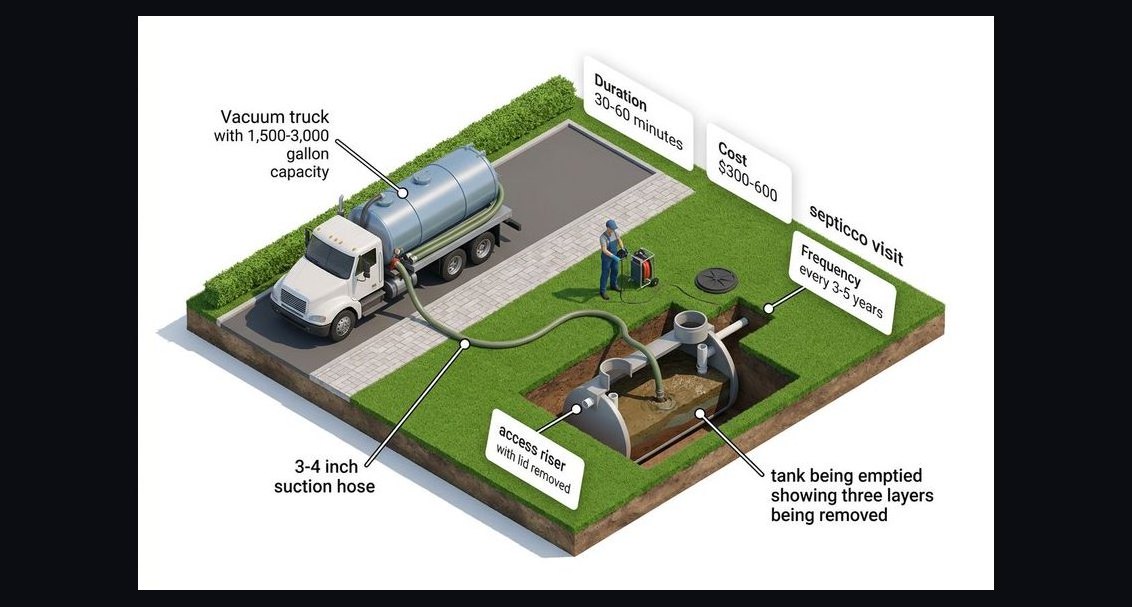 septic-tank-pumpingHow do you start a septic tank pumping business in 2027?
 cabinet-refacingHow do you start a cabinet refacing business in 2027?
 apolloShould Apollo acquire Lavender in 2027?