
What is Outreach data-center strategy through 2027?
 Curated byKory White · Fractional CRO · Maryland
 PULSEKNOWLEDGE LIBRARY
Quality
Certified

Outreach's data-center strategy through 2027 centers on AWS-only multi-region deployment with regional data residency across US, EU, and APAC, driven by GDPR, India's DPDP Act, and Brazil's LGPD. The open question is FedRAMP authorization — an 18-to-24-month, multi-million-dollar commitment that gates federal and defense revenue.
When a procurement questionnaire kills the deal
A RevOps leader at a German industrial manufacturer runs a sales engagement evaluation. Outreach wins the functional bake-off outright — sequence logic, Salesforce sync fidelity, and reporting depth all score higher than the alternatives. Then the deal reaches the works council and the data protection officer, and question 47 on the security questionnaire asks where prospect email content, call recordings, and activity logs physically reside. If the honest answer is "Northern Virginia," the deal stops. Not slows — stops. The works council has veto authority under German co-determination rules, and a DPO who cannot point to an EU processing location has no defensible position to sign off from.
This is the concrete shape of the data-center question for a sales engagement platform, and it is why infrastructure geography is a revenue question rather than an engineering one. Sales engagement tooling is unusually exposed here because of what it stores. A CRM stores structured records a customer arguably controls. A sales engagement platform stores the actual content of outbound emails, inbound replies from prospects who never consented to anything, recorded and transcribed phone calls, calendar contents, and behavioral telemetry about who opened what and when. Much of that is personal data belonging to third parties — the prospects — not to the customer who bought the software. That distinction matters enormously under GDPR, where the customer is the controller and the vendor is the processor, and the controller is the one who gets fined.
The same scene replays with different specifics across markets. An Indian financial services firm asks about DPDP Act obligations and whether sensitive personal data leaves the country. A Brazilian bank asks about LGPD and ANPD expectations. A US federal agency or defense contractor asks a much simpler question — is the platform FedRAMP authorized — and if the answer is no, there is no conversation at all, because agencies are generally prohibited from procuring cloud services lacking authorization. Each of those questions maps to a different infrastructure investment with a different cost, a different timeline, and a different revenue unlock. The data-center strategy is really the aggregate answer to all of them, sequenced by which markets are worth entering first.

The trap is treating this as a checkbox. Standing up an EU region is not the same as being able to prove, in an audit, that a specific customer's data never left it. The engineering work is regional isolation of the data plane, the control plane, the analytics pipeline, the backup and disaster recovery path, the support tooling, and increasingly the AI inference path — and any one of those leaking cross-border undermines the claim the sales team is making in the deal.
How regional isolation actually works
The architecture that satisfies a residency requirement is more involved than "run the app in Frankfurt." A useful mental model separates three planes and asks where each one's data lives.
The data plane holds customer content — email bodies, call recordings, transcripts, contact records, activity events. This is the plane that must be regionally pinned. In practice that means the primary database, the object storage bucket holding recordings and attachments, the search index, the message queues carrying that content, and the caches all live within the target region and replicate only to availability zones inside it, or to a designated in-region-compatible failover.

The control plane holds account metadata, entitlements, billing, and routing information — which tenant belongs to which region. This is usually global, because a single global identity and routing layer is what lets a user log in at one URL and get transparently routed to their home region. The subtlety is that the control plane must be built to carry only non-personal or minimally personal metadata; the moment a global control plane starts caching user names, email addresses, or activity summaries for a convenience feature, the residency claim quietly breaks.
The analytics and model-training plane is where most real-world residency failures hide. Product analytics, usage telemetry, warehouse pipelines, and increasingly LLM inference and training all have a gravitational pull toward centralization, because a unified data lake is more useful than six fragmented ones. A vendor can be perfectly regionalized in production and still be shipping event streams containing personal data into a single US warehouse. Every credible residency program has to answer, explicitly and in writing, what happens to telemetry and what happens to AI features.
Routing is the operational hinge. A tenant's home region is set at provisioning and is expensive to change afterward, because migrating a live tenant means moving terabytes of recordings, re-indexing search, rewriting foreign keys, and coordinating a cutover window. For a RevOps buyer, the practical implication is that region selection is a decision made once, at contract signature, and getting it wrong means either living with it or paying for a migration project. Ask about region migration policy before signing, not after.

Integrations are the other hinge. A sales engagement platform is only useful when connected to Salesforce, a mail provider, a dialer, a data provider, and half a dozen smaller tools. Each of those connections is a potential cross-border path. If the EU-hosted instance calls out to a US-hosted enrichment API with a prospect's name and company, personal data just crossed a border regardless of where the primary database sits. Mature residency programs publish a subprocessor list with the location of each one, and that list — not the marketing page — is the document worth reading.
The numbers that drive the decision
The cost structure of multi-region deployment is reasonably predictable in shape even when the exact figures are private. Four categories dominate.
Duplicated baseline capacity. Every region needs a minimum viable footprint regardless of how many customers it serves — database instances, application nodes, monitoring, load balancing, and enough headroom to absorb an availability zone failure. A region serving five percent of your customers does not cost five percent of your primary region; it costs whatever the minimum viable footprint is, which is why the first few international regions carry poor unit economics and improve only as they fill. This is the single most important dynamic in the whole model: regional expansion is a step function with a high first step, not a smooth curve.

Cross-region data transfer. AWS charges for data egress between regions, and replication traffic accumulates continuously rather than in bursts. Call recordings are the heavy item — audio files are orders of magnitude larger than the text records around them. Architectural choices that keep recordings in-region and replicate only metadata are far cheaper than naive full replication, which is exactly why an active-passive DR design that pairs regions within the same jurisdiction (a Frankfurt-to-Ireland pairing, for example) is more common than global replication.
Engineering and operational overhead. Each additional region multiplies the surface area of deployment automation, monitoring, incident response, and on-call coverage. A single-region product ships a release once; a six-region product ships it six times, with staged rollouts, per-region canaries, and six sets of dashboards to interpret when something looks off. Empirically, teams underestimate this line item more than the infrastructure bill. Time-zone-aligned support and customer success staffing sits in the same bucket — an APAC region without APAC-hours support is a half-delivered promise.
Compliance and audit. Per-region evidence collection, data processing agreements, GDPR Article 27 representation where required, records of processing activities, and annual audits all carry both external fees and meaningful internal time from legal, security, and engineering.

Against that, the revenue math. The global sales engagement and revenue-tooling market is large enough that non-North-American demand is material, and the specific enterprise segments that demand residency — European industrials and financial services, Indian financial services and public sector, Brazilian banking — are high-ACV segments. The framing that matters for a RevOps or finance audience is not the raw ROI multiple but the counterfactual: without the regional footprint, those deals are not won at a discount, they are not winnable at all. That converts the infrastructure premium from a margin question into a market-access question, which is a materially different investment case.
FedRAMP deserves separate treatment because its economics differ from the residency regions. It is not primarily an infrastructure cost — the physical requirement is a US region, which already exists. It is a controls, documentation, and continuous-monitoring cost: implementing the NIST 800-53 control baseline, engaging a Third Party Assessment Organization, securing a sponsoring agency or pursuing the JAB path, and then sustaining monthly vulnerability scanning and annual assessment indefinitely. Public FedRAMP marketplace data shows the authorization pipeline is long and that the "In Process" list is substantially populated at any given time — timelines of eighteen to twenty-four months are the realistic planning assumption, and slipping past initial estimates is common rather than exceptional. The recurring cost never goes away; continuous monitoring is a permanent operating expense and a permanent claim on engineering attention.
The strategic read: FedRAMP is a decision to spend heavily now for revenue that lands two to three years later, in a market where the alternative is conceding federal and defense accounts entirely to already-authorized incumbents. It is defensible for a platform with durable enterprise ambitions and indefensible for one optimizing near-term efficiency — and that tension is the real content of the through-2027 roadmap question.

Trade-offs: single-cloud, multi-region, and what gets sacrificed
Committing to AWS alone through 2027 is a deliberate trade, and it cuts both ways.
The case for it is operational leverage. One cloud provider means one set of compliance artifacts to inherit — AWS's own FedRAMP, SOC 2, ISO, and regional certifications flow into a customer's audit package rather than needing parallel evidence from a second provider. It means one IAM model, one networking model, one deployment toolchain, and one set of skills to hire for. It means new managed services can be adopted quickly instead of being blocked on "does this exist on the other cloud too." For a company running lean and pushing hard on compliance breadth, that consolidation is worth real money and real calendar time.
The case against it is concentration risk. A large-scale AWS regional event — the November 2020 Kinesis disruption in US-East-1 remains the canonical example of how a single service's degradation cascades across dozens of dependent services — takes down everything that depends on that region simultaneously. Multi-AZ architecture protects against a single data center failure but not against a regional control-plane failure, which is the failure mode that produces the headline outages. The honest mitigation inside a single-cloud strategy is genuine cross-region failover capability that is actually tested, not merely diagrammed. The distinction between active-passive DR that has been exercised under load and active-passive DR that exists as a runbook is the distinction between a four-hour recovery and a bad day.

There is also commercial concentration. A single-provider commitment, typically formalized as a multi-year enterprise discount agreement in exchange for spend commitments, trades negotiating leverage for discount. Reserved instance and savings plan commitments deepen that lock-in further — they are the correct financial choice for predictable baseline load, and they simultaneously reduce the ability to move workloads elsewhere.
Cost-efficiency levers sit alongside these choices and partially offset the multi-region premium. Tiered object storage for aging call recordings — moving audio older than a defined window into infrequent-access or archival classes — is the highest-leverage single lever, because recordings dominate storage volume and are accessed on a steep decay curve. Right-sizing and migration to more efficient instance families reduce compute cost per unit of work. Reserved capacity for the predictable baseline with on-demand for the peak is standard practice. None of these change the strategic picture, but together they can meaningfully reduce the incremental cost of each additional region, which in turn lowers the customer threshold at which a new region becomes viable.
The sustainability dimension is increasingly a procurement input rather than a nice-to-have. European buyers subject to CSRD reporting ask suppliers for emissions data, and RFPs in some sectors now score it. Running on a hyperscaler with published renewable energy commitments gives a vendor something concrete to answer with, and workload efficiency work — right-sizing, autoscaling, efficient processor families — reduces the reported figure while also reducing the bill. It is one of the rare places where the finance and ESG answers point the same direction.

Pitfalls, and how a RevOps buyer avoids them
The failure modes here are consistent enough to enumerate, and most of them are avoidable with better questions during evaluation.
Confusing hosting location with residency. A vendor can host an instance in Frankfurt while its support team accesses the data from another continent, its telemetry flows to a US warehouse, and its AI features call an inference endpoint elsewhere. Residency is a property of the whole system, not the primary database. Ask specifically: where does support access data from, where does telemetry land, where does inference run, and where do backups live. Get it in writing in the DPA, not in an email from an account executive.
Ignoring the subprocessor list. Every integration and every downstream vendor is a potential cross-border transfer. The published subprocessor list with locations is the actual source of truth, and it changes over time — most DPAs include a notification mechanism for subprocessor changes with an objection window. Someone on the buyer's side should own reviewing those notifications rather than letting them route to an unmonitored inbox.

Treating region choice as reversible. Tenant region is set at provisioning, and migration is a project with cost and downtime. Organizations that expand into a new market a year after signing frequently discover their existing tenant cannot simply be split. If international expansion is plausible within the contract term, raise it during negotiation and get the migration path and its cost documented.
Assuming an SLA covers the failure you fear. Uptime SLAs typically credit a percentage of fees against a availability threshold measured monthly. That credit is close to irrelevant compared to the revenue impact of a sales team losing its outbound tooling for a business day. What matters more than the SLA number is the recovery objectives — how much data can be lost (RPO) and how long recovery takes (RTO) — and whether failover is regularly tested. Ask for evidence of failover testing. A vendor that runs scheduled failover drills is materially safer than one with identical architecture that has never exercised it.
Underestimating FedRAMP timelines in planning. Organizations that build a federal go-to-market motion around a projected authorization date frequently find themselves hiring a federal sales team a year before the product can legally be sold. The safer sequencing is to treat the authorization date as a range with substantial variance and to phase hiring against actual milestone completion rather than against the original plan.

Missing the AI residency question entirely. This is the newest and fastest-moving gap. Conversation intelligence, call summarization, email generation, and forecasting features often route data to model endpoints that may not sit in the customer's region, and may or may not be covered by the same processing terms. Any evaluation in 2026 and beyond should ask explicitly which AI features process data outside the home region, whether customer data is used for model training, and whether AI features can be disabled per-region or per-tenant for buyers who need that control. Vendors that have thought this through will have a clear answer; vendors that have not will improvise, which is itself informative.
Skipping the exit plan. Data portability under GDPR and practical exit planning are related but distinct. Practically: can call recordings be bulk exported, in what format, over what timeframe, and at what cost? A platform holding several years of recorded calls is holding an asset that is genuinely difficult to extract if the export path was never built. Test the export during the evaluation, on a real subset, rather than accepting that it exists.
For RevOps teams specifically, the through-2027 read is straightforward: infrastructure geography has become a gating factor in vendor selection for any organization operating across the EU, India, or Brazil, and a hard gate for anyone selling to US federal. Evaluate it during the bake-off with the same rigor applied to sequence logic and CRM sync, because it is the dimension most likely to kill a deal after the functional evaluation is already won.
Related questions
Does an EU region alone satisfy GDPR?
No. GDPR does not strictly require EU hosting; it requires a lawful basis for processing and, for transfers outside the EEA, an approved transfer mechanism. EU hosting removes the transfer question entirely, which is why buyers prefer it — but DPAs, subprocessor transparency, and deletion rights still apply regardless of location.
What is the difference between FedRAMP Moderate and High?
Moderate applies to most controlled unclassified information and covers the majority of authorized SaaS. High applies to systems where a breach would cause severe or catastrophic impact — law enforcement, emergency services, some health and financial data — and requires a substantially larger control baseline and more restrictive infrastructure.
How long does migrating a tenant between regions take?
It depends almost entirely on stored recording volume. Metadata and contact records move quickly; audio archives and search indexes dominate the timeline. Treat it as a scoped project with a coordinated cutover window rather than a support ticket, and negotiate the cost during contracting rather than at the point of need.
Should a mid-market RevOps team care about any of this?
Only if the company sells into regulated buyers, operates in the EU, India, or Brazil, or expects to. For a purely domestic US commercial motion, region strategy is a resilience question rather than a compliance one — and the resilience questions worth asking are about RTO, RPO, and tested failover.
FAQ
Which regions does a multi-region sales engagement deployment typically cover?
The common pattern is a primary US region with a paired US failover, one or two EU regions to serve GDPR-sensitive buyers, and one or more APAC regions for latency and local residency requirements. Additional regions in India and Latin America follow specific regulatory demand rather than general coverage goals. Any vendor's current list should be confirmed against their published documentation, since footprints change as markets open.
Why not just run everything in one region and use encryption to satisfy regulators?
Encryption at rest and in transit is necessary but does not resolve the residency question, because the vendor holds the keys and can therefore access the plaintext. Where a customer's legal or works-council position requires that data not leave a jurisdiction, only actual in-jurisdiction processing satisfies it. Some buyers accept customer-managed keys as a partial mitigation, but it is a weaker position than regional hosting.
How much does multi-region deployment add to a vendor's infrastructure cost?
The premium is driven by duplicated baseline capacity per region, cross-region replication traffic, per-region operational tooling, and compliance evidence collection. The dominant factor is that each region carries a minimum viable footprint independent of how many customers it serves, so early regions have weak unit economics that improve as they fill. Exact figures are not publicly disclosed by most private vendors.
What does FedRAMP authorization actually require?
Implementation of the applicable NIST 800-53 control baseline, an independent assessment by a Third Party Assessment Organization, an authorization path through either a sponsoring agency or the central board, and then continuous monitoring — monthly scanning, ongoing reporting, and annual assessment — for as long as the authorization is maintained. The continuous monitoring obligation is permanent and is frequently underestimated relative to the initial authorization effort.
Does a single-cloud strategy create unacceptable outage risk?
It creates concentration risk that must be managed rather than eliminated. Multi-AZ architecture handles individual data center failures well; the residual exposure is a regional control-plane event, which is what produces the largest historical outages. The meaningful mitigation is tested cross-region failover with defined recovery objectives, and buyers should ask for evidence that failover drills actually happen.
How should AI features change the questions I ask about data residency?
Ask where inference runs, whether it is inside the tenant's home region, whether customer data is used for model training or improvement, and whether AI features can be disabled per-tenant or per-region. These questions are newer than standard security questionnaires and are often not covered by templates, so they need to be added explicitly by the buyer.
Sources
- https://aws.amazon.com/about-aws/global-infrastructure/
- https://www.fedramp.gov/
- https://marketplace.fedramp.gov/
- https://gdpr.eu/
- https://csrc.nist.gov/pubs/sp/800/53/r5/upd1/final
- https://edpb.europa.eu/
- https://www.meity.gov.in/data-protection-framework
- https://aws.amazon.com/compliance/data-privacy-faq/
- https://aws.amazon.com/message/11201/
- https://finance.ec.europa.eu/capital-markets-union-and-financial-markets/company-reporting-and-auditing/company-reporting_en
Related on PULSE
- [What is Salesloft data-center strategy through 2027?](/knowledge/q1815)
- [What is Salesforce data-center strategy through 2027?](/knowledge/q1550)
- [What is ServiceNow data-center strategy through 2027?](/knowledge/q1636)
- [What is Datadog data-center strategy through 2027?](/knowledge/q1696)
- [What is Outreach developer-platform strategy through 2027?](/knowledge/q1786)
- [What is Outreach M&A strategy through 2028?](/knowledge/q1775)
This page will be disappearing soon. Save it to your device for $1 — or read it free while it is here.
@Kory-White- · if Venmo asks, the last 4 of my number are 2012
This page is gone.
This one is off the shelf now. $1 keeps it on your phone for good — the whole page, pictures and diagrams included.
 salesloftWhat is Salesloft data-center strategy through 2027?
 snowflakeWhat is Snowflake data-region strategy through 2027?
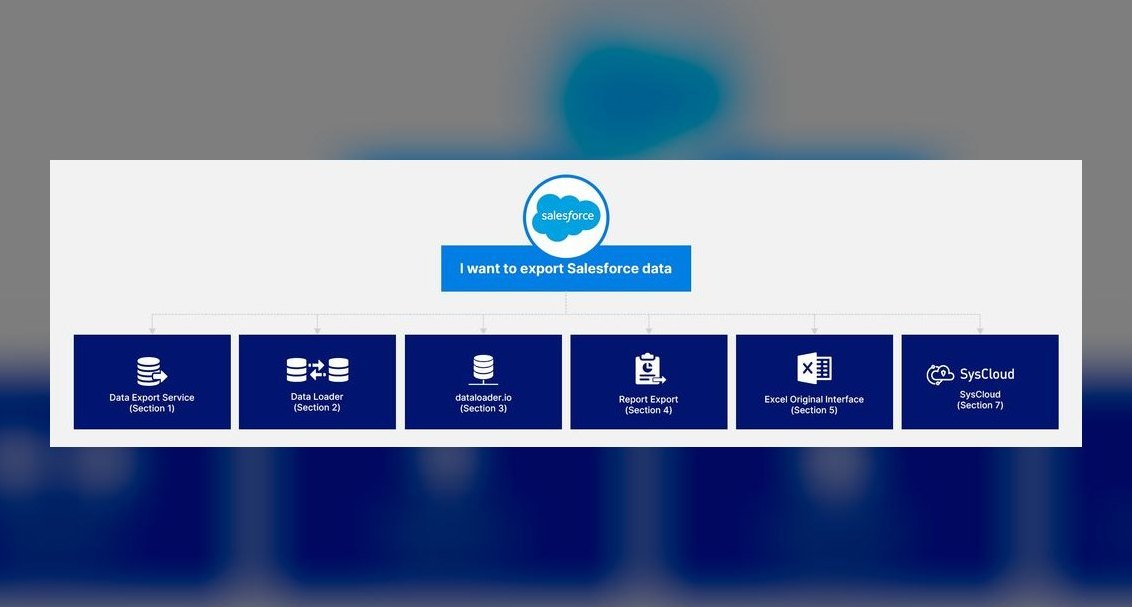 salesforceWhat is Salesforce data-center strategy through 2027?
 servicenowWhat is ServiceNow data-center strategy through 2027?
 outreachHow does Outreach defend its integration ecosystem in 2027?
 outreachShould Outreach kill its mobile app in 2027?
 salesforceWhat is the right Salesforce org structure for AI agents in 2027?
 federal-salesHow do I build a federal / public-sector motion from scratch in 2027?
 salesloftShould Salesloft kill its mobile app in 2027?
 datadogHow does Datadog hit its 2027 revenue target?