
How does Workato defend against Okta in 2027?
 Curated byKory White · Fractional CRO · Maryland
 PULSEKNOWLEDGE LIBRARY
Quality
Certified
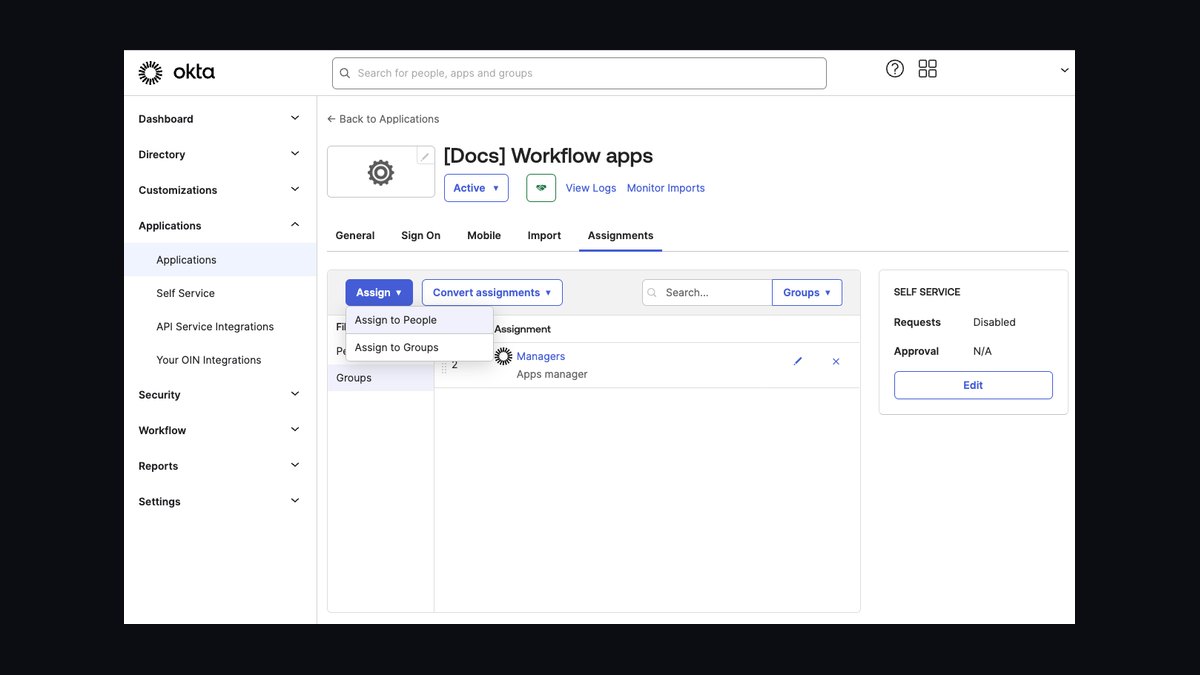
Workato defends against Okta in 2027 by refusing Okta's fight on identity-adjacent automation and compounding its lead on the deep iPaaS core. Workato sprints agentic orchestration during a 12–24 month window, deepens its system-of-record connector moat, targets the 60%+ of enterprises not running Okta as their identity provider, prices as strategic platform infrastructure rather than a feature, and runs coopetition inside Okta shops.
What it is and why it matters
The Workato-versus-Okta collision is a platform-boundary fight, not a product-feature spat. Workato built its position since 2013 as an enterprise iPaaS leader: 1,200-plus pre-built connectors, thousands of enterprise customers, and a last-known private valuation near $5.7B from its 2021 round. Okta is the identity leader — an IDP that became the default single-sign-on and access-management layer for cloud-first enterprises, public since 2017, with roughly $2.6B–$2.8B in FY25 revenue. The collision was set in motion when Okta acquired Auth0 for $6.5B in 2021 and then leaned into Okta Workflows, a no-code automation layer bundled into Identity Governance.
Okta's strategic logic is coherent and dangerous. Identity is the spine of every enterprise's user graph, so the automation that provisions, de-provisions, and governs users arguably should live where identity already lives. If Okta owns the identity graph, the reasoning goes, it should own the lifecycle automation hanging off it — and lifecycle automation is a meaningful fraction of what companies buy iPaaS for. That argument is real on the identity-adjacent edge and mostly noise in the deep integration core. Everything in this playbook follows from holding both truths at once.
Why does this matter to a RevOps leader specifically? Because the automation decision increasingly lands in a buying committee that includes a security or IAM owner who already pays Okta. If that persona quietly becomes the automation buyer, Okta's incumbency converts directly into automation wins without Okta ever shipping a better product. The defense is therefore partly technical and partly organizational: keep the decision anchored with the enterprise architect, platform engineering, and CIO — the personas who can tell the difference between a rules engine and an integration platform.
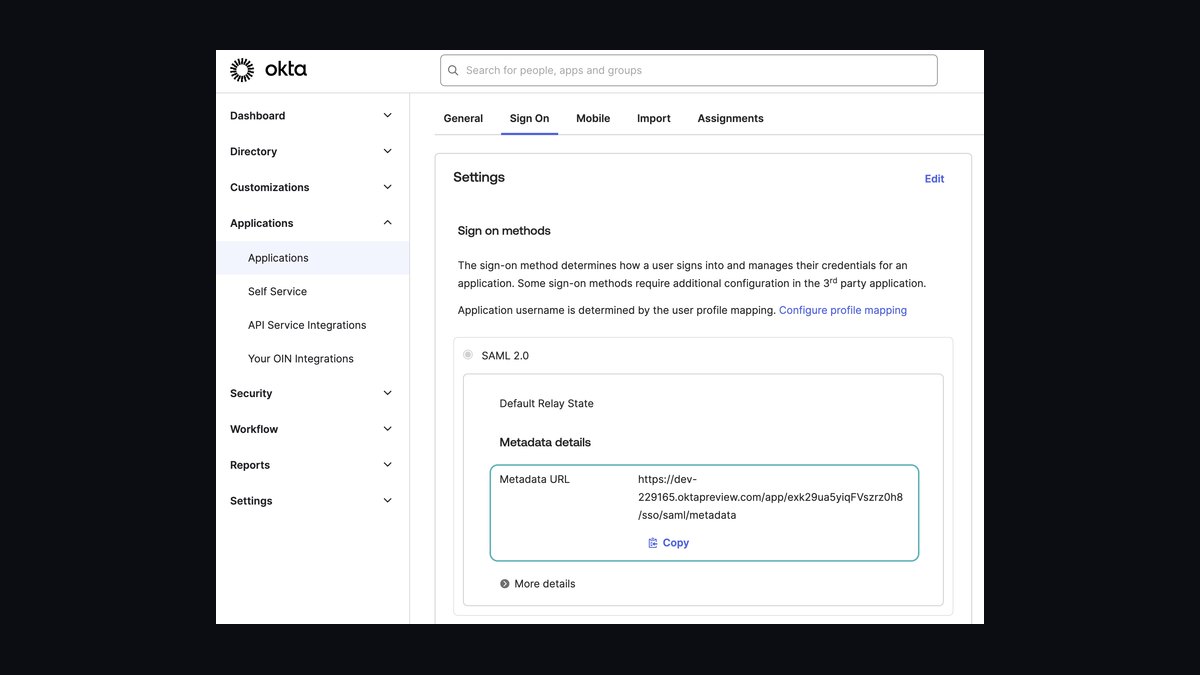
The collision is also one instance of a recurring pattern: an independent best-of-breed platform facing a larger adjacent vendor that bundles a "good enough" version of the independent's product. The same structural dynamic drives how HubSpot defends against Salesforce, how Stripe defends against Adyen, and how Salesloft defends against HubSpot Sales Hub bundling. A defense built for Okta specifically is weaker than one built for the whole class of bundle-and-incumbent threats. Treat the Okta question as a case study in a general discipline.
Sizing the threat honestly is the first discipline. Okta Workflows is a legitimate competitor on the identity-adjacent slice: joiner-mover-leaver automation, access requests and reviews, SaaS-application lifecycle management, identity-event-triggered notifications and approvals, and lightweight "when an identity thing happens, do a sequence of simple things" orchestration. For an enterprise already deep on Okta as its IDP, Okta Workflows is a natural, low-friction choice for exactly those use cases. A strategist who tells the sales force "Okta Workflows is a toy" is setting reps up to lose deals they should have repositioned.
Okta is structurally shut out of the deep iPaaS core: multi-system financial close orchestration across NetSuite, Salesforce, and a data warehouse; order-to-cash spanning CRM, ERP, billing, and fulfillment; quote-to-cash with deep transformation logic; data synchronization with conflict resolution between systems of record; complex error handling, retry logic, and human-in-the-loop exception routing across non-identity systems; and anything requiring deep, schema-aware connectors into Workday, SAP, Oracle, or NetSuite. Okta's connector investment is identity-shaped — it knows how to read and write user objects, not how to orchestrate a three-way revenue-recognition reconciliation.

The honest size of the threat: Okta can credibly contest perhaps 20–30% of Workato's use-case surface and is essentially shut out of the other 70–80%. That sizing is not a comfort blanket; it is an instruction. It tells Workato precisely where engineering and sales energy is well spent and where it is wasted. A defense that spends 50% of its effort defending 25% of its surface has mis-allocated, and a defense that pretends the 25% does not exist will be ambushed in deals.
The boundary will keep moving. Two forces push it. First, Okta's roadmap: as Okta Workflows matures it will reach slightly further into mid-complexity automation, and Workato must track that creep rather than assume the line holds. Second, Workato's own roadmap: agentic capabilities and deeper connectors can push the defensible core wider, pulling use cases that were contestable firmly into Workato's territory. The implication is that Workato should not merely defend the 70–80% — it should actively grow it, converting contested ground into owned ground by making the deep platform so obviously superior that even mid-complexity buyers default to it. A static defense loses ground every year; a compounding defense gains it.
The step-by-step process
The defensive playbook runs as five sequenced moves, each with its own execution requirements. Running them out of order — or funding one while starving another — breaks the system.

Step 1: Sprint agentic iPaaS during the lead window. Agentic iPaaS is integration and automation where LLM-powered agents do not merely execute predefined rules but make judgment calls — routing an exception based on context, deciding whether to escalate, generating a response, interpreting unstructured input, and choosing among possible actions. Okta has no native LLM or agent platform. To compete on agentic automation, Okta would have to build one (years), buy one (expensive and integration-heavy), or partner (ceding control of the layer that matters most). That gap is a 12–24 month lead window, and lead windows in platform competition are use-them-or-lose-them. Execution requirements are demanding: ship agentic capabilities that are genuinely production-grade rather than demoware; make agents safe and governable, because enterprises will not deploy autonomous agents they cannot audit and constrain; wire the agentic layer into the connector moat so agents can act across deep system-of-record integrations; and price and package it so it pulls enterprises up-market rather than confusing the buy.
Step 2: Deepen the connector moat. A connector is not a checkbox. A shallow connector authenticates and moves a few common objects. A deep connector understands the target system's full schema, its custom objects and fields, its business logic, its rate limits, its bulk APIs, its eventing model, and its idiosyncratic failure modes — and it stays current as the target system changes its API quarterly. Concrete commitments: keep deepening the systems of record that matter most (Workday, NetSuite, SAP S/4HANA, Salesforce, Oracle Fusion) so that for the use cases Okta most wants to contest, the Workato connector is so obviously deeper the bake-off is not close; track API change relentlessly so connectors never silently break when a target system ships a new version; and invest in the connector SDK and partner ecosystem so the long tail extends faster than any single vendor could build it.
Step 3: Win the non-Okta IDP installed base. Okta's "identity plus automation" bundle only has pull for enterprises that use Okta as their IDP. Microsoft Entra ID (formerly Azure AD) is bundled into the Microsoft 365 estate that dominates enterprise IT; Microsoft's identity revenue dwarfs Okta's, and a Microsoft-shop CIO feels zero pull toward an Okta-bundled automation layer. Google Workspace carries its own IAM for a large installed base. Ping Identity and ForgeRock, both taken private by Thoma Bravo and combined, serve large, identity-sophisticated enterprises, especially in regulated industries. CyberArk, SailPoint, and others occupy adjacent identity-governance ground. Add it up and well over half of the enterprise identity market does not run Okta as its primary IDP. For every one of those accounts, Workato's competitive position is structurally strong: no bundle, no incumbency, no "you already pay Okta, just add Workflows" pull.

Step 4: Price and package against the bundle. Bundling's competitive power is that the bundled component does not need to win on its own merits — it only needs to be "good enough and already included." Okta can make Okta Workflows feel free inside an Identity Governance deal, and "free and adequate" beats "excellent and a separate line item" for buyers who are not sophisticated about integration. Workato must consistently reframe the conversation from "automation as an add-on to identity" to "the integration and automation platform as strategic infrastructure," because a platform commands platform pricing and a feature gets compared to free. Make the total-cost-of-ownership comparison explicit: a "free" bundled automation layer that cannot handle the deep use cases means the enterprise still buys a real iPaaS, so the bundle did not save money — it added a redundant tool.
Step 5: Run coopetition on top of Okta. For a large set of accounts, Okta is the IDP and Workato is the automation layer on top of it, and that relationship should be excellent. Many of Workato's best enterprise customers run Okta as their IDP. For those accounts, Workato orchestrating workflows that consume Okta identity events — and being the deep integration layer Okta Workflows cannot be — is a coopetition relationship, not a zero-sum one. Maintain a best-in-class Okta connector and Okta-event integration so that in an Okta shop, Workato is the obvious deep-automation partner; let Okta Workflows have the trivial identity-adjacent automations it will win anyway; and compete hard only on the deep use cases where Workato's win is on the merits.
Costs, timelines, and typical ranges
Defense budgets are finite, so the numbers matter. The agentic lead window is roughly 12–24 months — the time Okta would need to build, buy, or partner its way to a comparable native agent platform. That window is the single most time-sensitive asset in the playbook, and it decays whether or not Workato uses it.

Connector economics run on a longer clock. A genuinely deep connector into a system of record like Workday or NetSuite is a multi-quarter engineering investment, and the maintenance burden is perpetual: target systems ship new API versions, new objects, and new business logic every quarter, so a connector that is not actively maintained degrades within roughly two to three release cycles. Workato's 1,200-plus connector library is the product of more than a decade of engineering, customer-driven hardening, and an SDK that lets the ecosystem extend coverage. A competitor entering the market does not have to catch up to where Workato is today; it has to catch up to a moving target that gets deeper every quarter.
The contested surface is bounded. Roughly 20–30% of Workato's use-case footprint is identity-adjacent and therefore contestable by Okta; 70–80% is deep iPaaS core that Okta is structurally shut out of. A defense that spends half its effort defending a quarter of its surface has mis-allocated, and the mis-allocation compounds because the deep core is where the moat actually widens.
The non-Okta IDP installed base is the cheapest lever in the entire playbook because it requires shipping nothing — only choosing where to fight. Well over half of the enterprise identity market does not run Okta as its primary IDP. Microsoft Entra ID, Google Workspace, Ping Identity, and ForgeRock accounts carry no bundle pull toward Okta Workflows, so Workato competes on the merits. The cost of operationalizing this is a data field (primary IDP) captured in the CRM, a segmentation view for sales leadership, and a qualification question early in the cycle: "what is your primary identity provider?" The answer immediately tells the rep whether they are in a bundle fight or a clean-merits fight, and the two require different plays.
Pricing discipline has a cost too — the cost of refusing a tempting but dangerous packaging move. Creating a stripped-down "identity automation" SKU to compete head-on with the Okta Workflows price point looks like a smart counter. In practice it does three damaging things: it validates the framing that automation is an identity feature; it cannibalizes the platform sale by training buyers to start with a cheap SKU; and it still loses, because a stripped-down Workato SKU competing against a free bundled Okta Workflows is competing on price against zero. The correct packaging move is the opposite: bundle agentic orchestration and deep connectors into a premium platform tier, make the entry point a genuine platform with a genuine platform price, and never offer a SKU whose only job is to look like Okta Workflows.

Where teams get it wrong
Mistake one: treating Okta Workflows as a toy. Dismissing it destroys credibility with technical buyers and sets reps up to lose deals they should have repositioned. Okta Workflows is a competent no-code product for what it is built to do, and in Okta shops it is a natural, low-friction choice for identity-adjacent use cases. The correct posture is to concede that slice gracefully and compete hard where the connector moat and agentic lead actually decide the outcome.
Mistake two: chasing Okta onto identity ground. Every engineering dollar spent trying to out-Okta Okta on user-lifecycle provisioning is a dollar not spent widening the moat Okta cannot cross. Workato's defense is strongest when it is asymmetric: fight where you are deep, not where your competitor is. The reactive raid on the core budget is the normal failure mode, not the exception — a competitive loss generates a demand to "close the gap" on identity-adjacency, a board member reads an Okta press release and asks why Workato is not responding, a sales leader wants a feature to win a specific deal. Every one of those pressures, if obeyed, pulls capacity away from the two things that constitute the defense.
Mistake three: letting the identity owner become the automation buyer. Okta's bundle strategy is, underneath, a buying-committee strategy. If the identity owner — often a security or IAM leader — becomes the de facto owner of automation, Okta's incumbency in identity converts directly into automation wins. The risk is insidious because it is organizational, not technical. Okta does not need to build a better product to win if it can quietly make the identity owner the automation buyer. Workato's field motion should engage enterprise architecture and platform engineering early, frame automation as cross-functional infrastructure rather than an identity adjacency, and give the integration owner the artifacts — TCO models, architecture diagrams, consolidation narratives — to win the internal argument against "just use what's bundled with Okta."

Mistake four: letting the connector moat atrophy while chasing shinier roadmap items. The connector moat is the thing Okta most cannot replicate, and it is unglamorous. A Workato that lets connector depth atrophy has voluntarily filled in its own moat. The same lesson governs how Outreach defends its integration ecosystem and how Salesloft defends its integration moat against Outreach plus Apollo: the unglamorous depth is the durable defense.
Mistake five: building an Okta-shaped defense with a Microsoft-shaped hole. Microsoft Power Automate is arguably a larger structural threat than Okta Workflows. Power Automate is "free enough" inside an estate the majority of enterprises already run, and the Microsoft field motion is relentless. A defense that obsesses over Okta while Power Automate erodes the base from the Microsoft side has mis-aimed. The same five moves that defend against Okta defend against the entire field — connector depth, agentic leadership, platform consolidation, deep-use-case anchoring, and keeping the right buyer.
Mistake six: treating coopetition as a dependency rather than a posture. The relationship is asymmetric: Okta is the larger party and controls the IDP that Workato integrates with, which means Okta can change the terms — degrade third-party API access, prioritize Okta Workflows in the integration experience, or quietly make the bundled path smoother than the partner path. Workato cannot prevent this, but it can hedge. The hedge is precisely the connector moat, the agentic lead, and the non-Okta IDP installed base — assets that do not depend on Okta's goodwill. Coopetition is the right posture for Okta-shop accounts today, but it must never become a dependency.

Mistake seven: assuming the connector moat is permanent. If AI-assisted integration — LLMs that read API documentation and generate connectors on the fly — matures, the cost of connector depth could collapse. A moat that took ten years to build could be partially commoditized in two. This is a real counter-case, and it argues for pairing connector depth with the agentic layer rather than treating connectors as a static asset.
Decision framework: when to choose what
The playbook converges into a usable decision framework. Workato leadership facing any Okta-related strategic choice should run it through seven tests.
The asymmetry test: does this fight where Workato is deep, or chase Okta onto identity ground? The inflection test: does this accelerate or slow the agentic sprint? The moat test: does this widen or neglect the connector moat? The buyer test: does this keep the automation decision with the integration owner? The framing test: does this keep Workato positioned as strategic platform infrastructure rather than an automation feature? The coopetition test: for an Okta-shop account, does this preserve the partner-by-necessity relationship? The whole-field test: does this defense also work against Microsoft, MuleSoft, and Boomi?

A move that passes all seven is a real defensive move. A move that fails the asymmetry test — chasing identity-adjacency — is almost always a mistake regardless of how it scores elsewhere, because it spends finite capacity on ground where the competitor has structural incumbency.
The posture map follows from the same logic. Deep multi-system orchestration: fight and win on the merits, because the connector moat and agentic lead decide it. Identity-adjacent use cases in a non-Okta shop: fight on positioning, because no bundle pull exists. Identity-adjacent use cases in a deep-Okta shop: coopete and integrate cleanly, because the account runs Okta as its IDP and the relationship should be excellent. Trivial identity provisioning: concede, because it is not worth engineering spend.
The 2027–2030 outlook is reasonably clear on several fronts. The agentic shift accelerates and becomes the category's center of gravity. Bundling pressure intensifies from every direction — Microsoft, Salesforce, and identity vendors all push automation as a bundled component. Identity genuinely becomes more central to the security control plane, strengthening Okta's core narrative. Consolidation continues, which favors unified platforms and is structurally good for Workato. Governance and auditability become non-negotiable as autonomous agents proliferate. The capital question looms — a strong agentic and connector position is what makes Workato's eventual capital event happen on good terms.

The operating order follows: name the threat honestly; sprint the agentic inflection; compound the connector moat; target the non-Okta IDP installed base; price and position as strategic platform infrastructure; run coopetition in Okta shops; manage the buying committee; match Okta on governance; lead with the consolidation narrative; hold the discipline of saying no; build the whole-field defense; and keep the capital position strong.
The hardest part is not strategy design — it is execution discipline under pressure. A defense is ultimately an allocation of finite engineering and go-to-market capacity, and leadership will face constant pressure to react. The discipline of saying no requires three things: leadership alignment on the asymmetric strategy so it is not relitigated every quarter; a roadmap governance process that protects the core investments from reactive raids; and a sales-enablement function that arms the field to reposition identity-adjacency losses rather than demand product changes to chase them. Companies that lose platform competitions usually lose not because they picked the wrong strategy but because they could not hold it under pressure.
Workato can defend successfully against Okta in 2027, and the defense is mostly within Workato's own control. Okta cannot take the deep iPaaS core by force; Workato can only lose it by failing to ship agentic depth, failing to manage the buyer, or failing to invest in the connector moat. That is the uncomfortable good news: there is no external force that decides this outcome, only Workato's own execution. The mandate is simple to state and hard to do — refuse the fight Okta wants, compound every lead Workato already holds, and treat the agentic inflection and the Okta defense as the single most important project of the next twenty-four months.
Related questions
Does Okta Workflows actually replace an iPaaS?
No. Okta Workflows is competent for identity-adjacent automation — joiner-mover-leaver provisioning, access requests, SaaS-app lifecycle — but structurally shallow on schema-aware ERP and CRM depth, multi-system financial close, and order-to-cash orchestration. It contests roughly 20–30% of Workato's use-case surface and is shut out of the deep core.
Why is the agentic lead window only 12–24 months?
Okta has no native LLM or agent platform. Building one takes years, buying one is expensive and integration-heavy, and partnering cedes control of the layer that matters most. That gap is real but finite, and lead windows in platform competition are use-them-or-lose-them. Workato must sprint production-grade agentic depth, not demoware.
What is the cheapest defensive move available?
Targeting the non-Okta IDP installed base. Well over half of the enterprise identity market runs Microsoft Entra ID, Google Workspace, Ping Identity, or ForgeRock — none of which carries bundle pull toward Okta Workflows. It requires shipping nothing, only choosing where to fight and wiring primary-IDP data into CRM segmentation.
Should Workato build a stripped-down SKU to match Okta's price?
No. A stripped-down "identity automation" SKU validates the framing that automation is an identity feature, cannibalizes the platform sale, and still loses — because competing on price against a free bundled product is competing against zero. The correct move is a premium platform tier.
Why is Microsoft Power Automate a bigger threat than Okta?
Power Automate is "free enough" inside a Microsoft 365 estate the majority of enterprises already run, and Microsoft's field motion is relentless. A defense that obsesses over Okta while Power Automate erodes the base from the Microsoft side has mis-aimed. The same five moves defend against both.
FAQ
Is Okta Workflows a real threat to Workato? Yes, but a bounded one. Okta Workflows genuinely competes on the identity-adjacent slice — joiner-mover-leaver provisioning, access requests and reviews, SaaS-app lifecycle — where Okta's IDP incumbency gives it a natural, low-friction position. It is structurally shut out of the deep iPaaS core: multi-system financial close, order-to-cash, schema-aware ERP and CRM depth. The honest split is roughly 20–30% contestable, 70–80% defensible. Treating it as a toy destroys credibility; treating it as an existential threat mis-allocates engineering.
What is agentic iPaaS and why does it decide the outcome? Agentic iPaaS is integration and automation where LLM-powered agents make judgment calls — routing exceptions on context, deciding whether to escalate, interpreting unstructured input — rather than only executing predefined rules. It decides the outcome because it is the next platform shift, and inflections are when competitive positions are won and lost. If Workato establishes agentic iPaaS leadership while Okta Workflows is still rule-based, the comparison stops being "identity automation versus integration automation" and becomes "intelligent autonomous orchestration versus a no-code rules engine."
Why does the connector moat compound rather than depreciate? Most software assets depreciate: a feature, once shipped, is immediately copyable. A deep connector library behaves differently. Target systems — Workday, NetSuite, SAP, Salesforce — ship new API versions, objects, and business logic every quarter, and Workato's connectors absorb those changes. A competitor does not catch up to where Workato is today; it catches up to a moving target that gets deeper every quarter, while also building customer-driven hardening that only comes from production workloads.
How should Workato handle accounts that already run Okta? Run coopetition. For a large set of accounts, Okta is the IDP and Workato is the automation layer on top of it, and that relationship should be excellent. Maintain a best-in-class Okta connector and Okta-event integration, let Okta Workflows have the trivial identity-adjacent automations it will win anyway, and compete hard only on deep use cases where Workato's win is on the merits. But hold it without naivety: Okta controls the relationship and can degrade third-party API access unilaterally, so coopetition must never become a dependency.
What are the failure modes that would let Workato lose? Three, all self-inflicted. First, no agentic depth — the head start is squandered on demoware, agents are not governable, and the frame stays rule-based where bundling wins. Second, the identity owner quietly becomes the automation buyer, converting Okta's incumbency directly into automation wins without Okta needing a better product. Third, the connector moat atrophies while Workato chases identity-adjacency, losing both fights at once. Okta cannot take the deep iPaaS core by force.
How does governance fit into the defense? Okta's most resonant pitch is governance: "automation from your identity and security vendor is automation you can trust and audit." The defensive move is to make Workato's own governance unimpeachable — enterprise-grade access controls, audit logging, lifecycle governance on every recipe, and, critically as agentic capabilities ship, agent governance that lets enterprises constrain, audit, and roll back what autonomous agents do. If Workato's governance story matches Okta's, the comparison reverts to platform depth, where Workato wins.
Sources
- https://www.okta.com/products/workflows/
- https://www.workato.com/
- https://investor.okta.com/
- https://www.gartner.com/reviews/market/enterprise-integration-platform-as-a-service
- https://www.microsoft.com/en-us/security/business/identity-access/microsoft-entra-id
- https://cloud.google.com/identity
- https://www.pingidentity.com/
- https://www.forgerock.com/
- https://www.salesforce.com/news/
- https://www.servicenow.com/
Related on PULSE
- How does HubSpot defend against Salesforce?
- How does Stripe defend against Adyen?
- How does Salesloft defend against HubSpot Sales Hub bundling?
- How does Outreach defend its integration ecosystem?
- How does Apollo defend against Zendesk?
- Should ServiceNow acquire Workato?
This page will be disappearing soon. Save it to your device for $1 — or read it free while it is here.
@Kory-White- · if Venmo asks, the last 4 of my number are 2012
This page is gone.
This one is off the shelf now. $1 keeps it on your phone for good — the whole page, pictures and diagrams included.
 workatoWorkato vs 11x — which should you buy?
 workatoIs a Workato Sales Engineer role still good for my career in 2027?
 servicenowShould ServiceNow acquire Workato in 2027?
 workatoHow'd you fix Workato's revenue issues in 2026?
 twilioHow does Twilio defend against Pendo in 2027?
 salesforceHow does Salesforce defend against Stripe in 2027?
 b2b-saasHow should Hightouch price pipeline analytics against ZoomInfo equivalent in 2027?
 hubspotHow does HubSpot defend against Salesforce in 2027?
 hubspotIs a HubSpot AE role still good for my career in 2027?
 servicenowShould ServiceNow acquire Atlassian in 2027?