
How do you start a coffee shop business in 2027?
 Curated byKory White · Fractional CRO · Maryland
 PULSEKNOWLEDGE LIBRARY
Quality
Certified
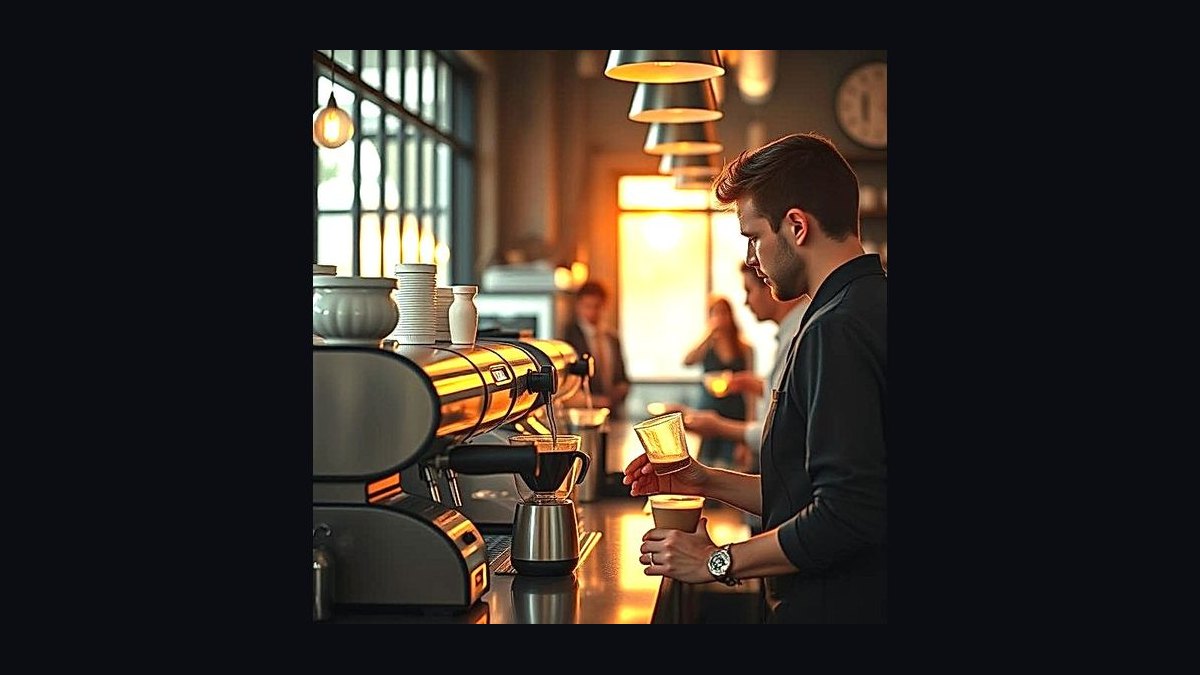
Start a coffee shop in 2027 by treating it as a real estate and labor business: secure a lease under 10% of conservative revenue, budget $95K–$385K all-in including a four-to-six-month cash reserve, choose a small footprint with a tight menu, and engineer a second daypart before opening day.
Two paths: the small-footprint cafe versus the cart-then-lease route
Nearly every aspiring owner faces the same fork, and most people pick wrong because the emotionally satisfying option and the financially survivable one are not the same. Path A is the direct route: find a space, sign a lease, build out, open. Path B is the sequenced route: run a mobile cart or a kiosk first, build a customer list and a brand for twelve to twenty-four months, then sign a lease with demand already proven.
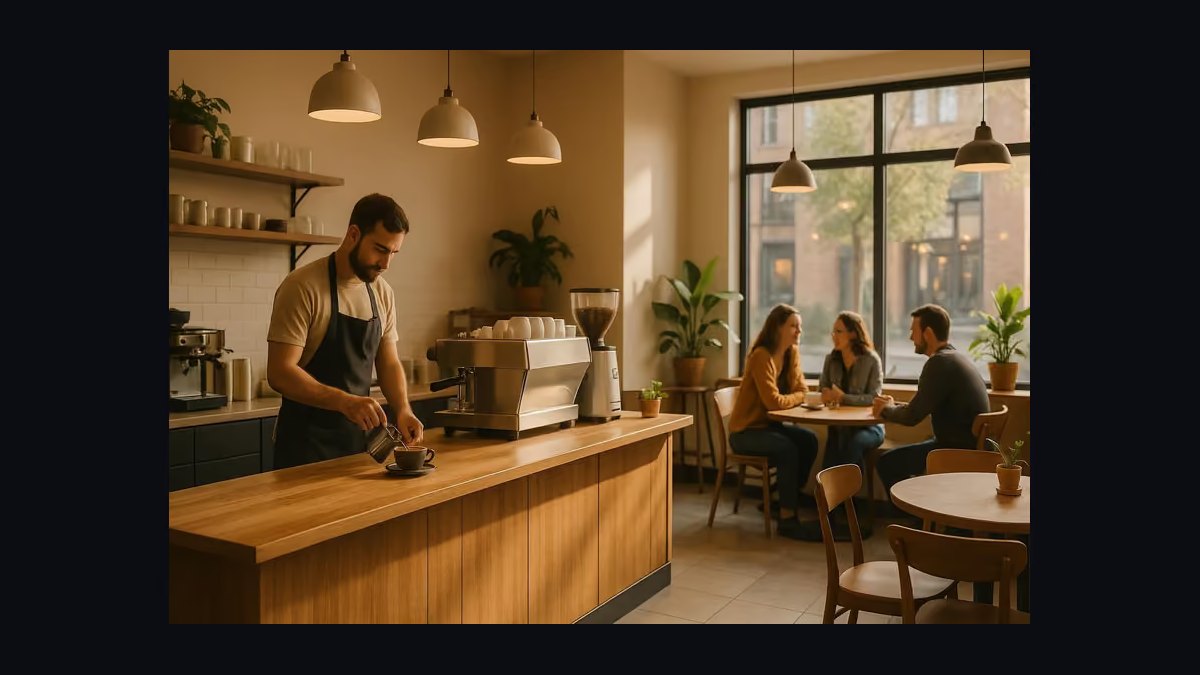
Path A — the small-footprint cafe, 300 to 900 square feet, taking a second-generation restaurant space — costs roughly $95,000 to $180,000 all-in and reaches revenue faster. A well-located shop of this size opens into $380,000 to $620,000 of Year-1 revenue. The advantages are real: you capture the morning commuter habit immediately, you have a fixed address that Google Business Profile and word-of-mouth can attach to, you can sell dwell time and food, and you can build a genuine third place in a neighborhood. The disadvantage is that you are betting six figures and a multi-year personal guarantee on an untested assumption about how many people in that specific block will form a daily habit around your specific shop.
Path B — the mobile cart or trailer at $28,000 to $75,000, or a kiosk at $45,000 to $110,000 — is the cheaper, slower, more informative option. A well-run cart does $90,000 to $240,000 a year at farmers markets, office parks, breweries, and events. You will not get rich on a cart. What you get is data: which neighborhoods actually show up, which drinks sell, what your real average ticket is, how fast you can pull shots under pressure, and an email list of people who already buy from you. The constraint is weather, permitting that varies wildly by municipality, and a hard ceiling because there is no dwell-time revenue — no one sits at a cart for three hours buying a second latte and a pastry.
There are two further variants worth naming so you can rule them in or out early. The full cafe at 1,000 to 2,200 square feet runs $180,000 to $385,000 and only makes sense if you have a funded food program and a proven second daypart; otherwise the extra square footage is rent you pay all day for customers who only come between 6:45 and 10:30 in the morning. The roaster-cafe adds a 5–15kg roaster at $35,000 to $120,000 plus green coffee inventory and a wholesale sales motion — the highest ceiling and the most defensible long-term business, but genuinely two businesses running under one roof. Do not start there unless you or a partner already roast professionally.
The honest comparison is this: Path A trades capital and risk for speed and ceiling. Path B trades speed and ceiling for information and survivability. If you have $250,000 and deep local knowledge of a specific corner, Path A is defensible. If you have $80,000 and a hunch, Path B is not a compromise — it is the strictly better version of the same plan, because it lets you sign the lease you eventually sign with real numbers instead of optimistic ones.
How to decide between them
The decision is not about ambition, it is about which specific uncertainties you are still carrying. Run yourself through the gates below in order, and be honest at each one — the gates exist because every one of them corresponds to a documented way cafes die in month seven.
Gate one is capital. Do you have or can you raise $120,000 to $300,000 *including* a real four-to-six-month working-capital reserve of $20,000 to $60,000, and can you personally survive on little-to-no income for twelve to eighteen months? The reserve is the single most-skipped line item and the most common cause of a busy shop closing anyway. Being busy and being solvent are different conditions. If the answer is no, the cart is not a downgrade — it is the correct starting format.
Gate two is the lease. Have you found a space where total occupancy cost — base rent plus CAM plus tax pass-throughs — lands under 10% of *conservative* revenue projections, with a hard ceiling at 12%? Retail food space runs $28 to $75 per square foot annually in secondary metros and $60 to $140 in primary-metro high-foot-traffic locations. If a space only pencils at 14%, walk away. There will be another space. There is never another $200,000.
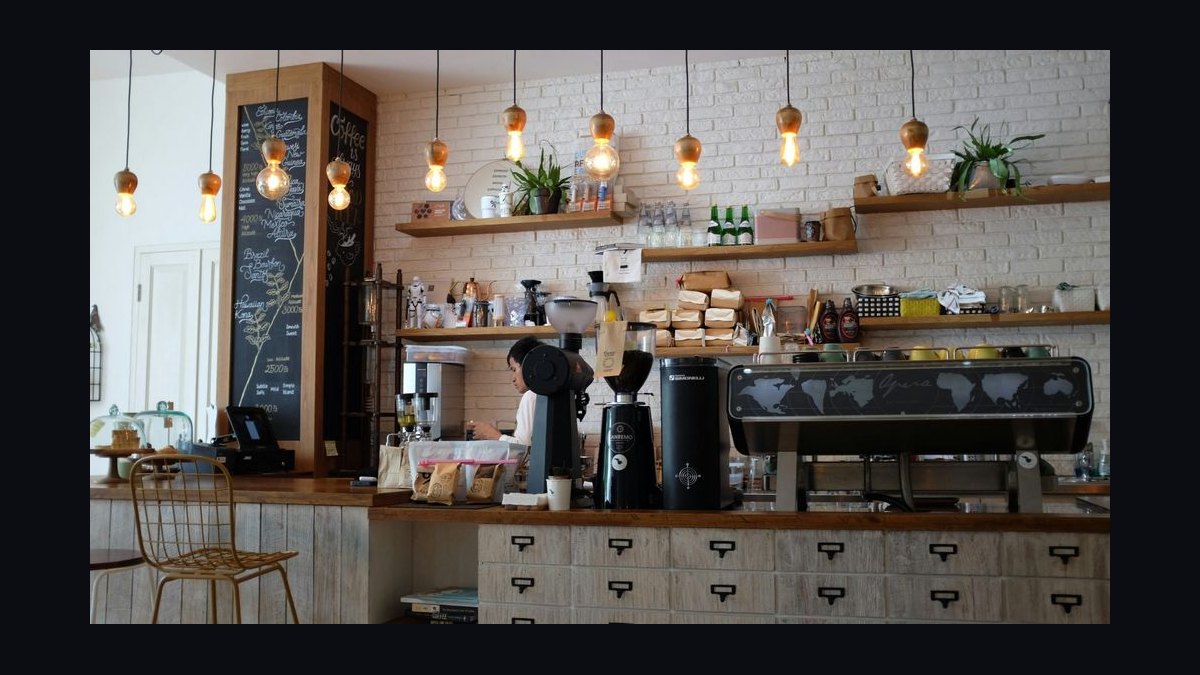
Gate three is demand proof. Do you have evidence beyond intuition that this neighborhood will support 180 to 420 transactions per day at a $6.40 to $9.80 average ticket? Foot-traffic counts, a nearby comparable shop's line at 8am, an office census within a four-minute walk, or — best of all — your own cart's sales at that location on a Saturday. Below roughly 150 transactions a day, a leased cafe almost never works.
Gate four is the stress test. Build the P&L at COGS 30%, labor 31%, occupancy 10%, other operating expenses 16% — then rerun it at 80% of your projected revenue. If the model goes negative at 80%, the model is wrong, because first-year revenue routinely lands 20% under plan while every fixed cost lands exactly on plan.
One more decision input that people skip: your own tolerance for the work. Year one is a 4:45am alarm, opening the shop, working the bar through the rush, doing inventory in the lull, handling a no-show barista, doing books at night, and going to bed worried about Saturday's weather. Fifty-five to seventy hours a week, on your feet, hands in ice water and steam. If that description makes you flinch, the cart — where you control your own calendar — is not just cheaper, it is the format you will actually still be running in three years.
The concrete numbers behind each option
Startup cost for the small-footprint cafe breaks down as follows, assuming a second-generation restaurant space, which is the most common viable path. Leasehold improvements and construction: $35,000 to $140,000, covering plumbing for three-compartment, hand, and mop sinks; a dedicated 20–30 amp circuit for the espresso machine; HVAC adjustments; flooring, counters, millwork; a grease interceptor if you cook; and an ADA-compliant restroom. Taking a raw shell instead adds $80,000 to $180,000 and several months.
Espresso equipment runs $14,000 to $38,000. A quality two-group machine is $8,000 to $22,000 new or $4,000 to $12,000 reconditioned from a reputable vendor — a legitimate choice when conserving capital. Two grinders at $1,500 to $4,500 each, plus a batch brewer, hot water tower, knock box, tampers, pitchers, and scales. A three-group machine is only justified above roughly 300 transactions a day; buying one before you know your volume is capital sitting idle.
Other equipment is $12,000 to $32,000: under-counter refrigeration, a display and pastry case, an undercounter freezer, a small oven or panini press, an ice machine, a POS, and water filtration at $800 to $3,000. Filtration is the most frequently skipped line and the least defensible omission — bad water destroys both a $15,000 machine and the flavor it exists to produce.
Furniture, fixtures, and decor: $6,000 to $28,000. Initial inventory: $3,000 to $9,000. Permits, licenses, legal, and insurance deposits: $3,000 to $11,000, with a liquor license swinging anywhere from $300 to $14,000-plus depending on the state. Pre-opening labor and training: $4,000 to $14,000, because you pay staff to train before a dollar comes in. And working capital: $20,000 to $60,000, non-negotiable. Total: $95,000 to $180,000 for second-gen, $240,000 to $385,000 for shell or full cafe. If your plan shows $60,000 all-in, your plan is wrong.
The operating P&L is the entire game, and it is worth memorizing as percentages. On $560,000 of annual revenue: COGS 30% ($168,000) covering roasted coffee, milk and alternatives, syrups, cups, lids, food, and retail bean cost — target 28–34%, and above 36% you have a pricing, portioning, or waste problem. Labor 31% ($173,600) including wages, a shift lead, payroll taxes, and workers' comp — target 28–35%. Occupancy 10% ($56,000) covering base rent, CAM, tax pass-through, and insurance — target 8–12%, and past 13% the model rarely works. Other operating expenses 16% ($89,600): utilities, repairs, POS and software fees, card processing at 2.4–3.1% of nearly all revenue, marketing, supplies, accounting, waste removal, pest control. That leaves EBITDA and owner cash flow at 13%, or $72,800.
Read that 13% carefully. In year one, most of it is not profit — it is your unpaid labor showing up as savings on a manager you did not hire. Real net profit, after paying yourself a market wage for the hours you actually work, is frequently near zero in year one and only turns genuinely positive in year two or three.
Revenue is transactions times average ticket, and both are levers. Average ticket in a 2027 specialty cafe runs $6.40 to $9.80 — the low end for a drink-only shop, the high end when a real pastry and food program pushes 35–55% of customers into a food attachment. Transactions run 180 to 420 a day for a viable small footprint; above 450 in a small space you are throughput-constrained and losing sales to the line. Revenue mix typically lands at 38–52% espresso drinks, 18–28% food, and 8–14% retail beans and merchandise, which is the highest-margin line on the board.
Dayparting is where the model lives or dies. The morning rush from 6:30 to 10:30 typically delivers 45–60% of daily revenue in four hours, meaning your other eight-to-ten open hours compete for the remaining 40–55% while rent and labor are paid for the entire day. Shifting even fifteen percentage points of revenue out of the morning into the afternoon and evening turns a marginal shop into a healthy one without adding a single commuter.
The kiosk numbers look different and are worth their own line. A 180-square-foot lobby kiosk at $1,650 a month and $58,000 to open can do $312,000 in year one — but with 95% of revenue before 11am and effectively no weekend traffic, labor runs a punishing 42% because the entire staff is scheduled into a compressed rush. Cash-efficient, fast to profitability, and permanently capped. That is the trade in numbers.
By contrast, the cart-first sequence: a $52,000 trailer, eighteen months of farmers markets and events, a 2,400-person email list, and *then* a small-footprint lease — opens the brick-and-mortar at roughly $470,000 in year one instead of $380,000, because the demand was de-risked before the guarantee was signed. Same eventual cafe, materially better opening year, and a decision made with evidence.
Sequencing the build: lease, permits, equipment, hiring, open
Execution order matters more than execution speed, because several of these steps have long lead times that only overlap if you start them in the right sequence. Expect six to twelve months from signed lease to open day in a second-generation space, and twelve to eighteen months for a raw shell.

Start with the lease, because it is more determinative of your success than your espresso machine, your menu, or your barista talent — and most first-time owners negotiate it badly because they are emotionally committed before they sit down. Negotiate a shorter initial term of three to five years with renewal options rather than a ten-year term, which is a ten-year personal liability. Cap or eliminate the personal guarantee: push for a "good guy" clause limiting your exposure if you surrender the space cleanly, or a guarantee that burns off after twenty-four to thirty-six months of on-time payment. Ask for a tenant improvement allowance — landlords routinely offer $20 to $80 per square foot to a creditworthy tenant, and it is real money left on the table by owners who never ask. Negotiate two to four months of abated rent during build-out, worth $8,000 to $30,000 of cash during your most fragile period. Understand the CAM and tax pass-throughs, which can swing $4 to $15 per square foot; an uncapped CAM is a blank check. Confirm use, exclusivity, and signage rights so the landlord cannot lease the next unit to a competing cafe. Then have a commercial real estate attorney review the whole thing — the $1,200 to $3,500 that costs is the highest-ROI money in the entire budget.
Start permitting the day you sign, not when the build is done. Form the LLC. File for the food service license and health department permit, which requires a plan review of your build-out, a pre-opening inspection, and ongoing inspections — involve the health department early, because they can and will delay your opening if the build is not to code. Pull building permits and the certificate of occupancy; permitting is the single most common cause of opening delays, so budget two to five months and pad it. The sign permit is often a separate and slow approval. Get food handler and manager certifications for staff. If an evening beer-and-wine program is part of the plan, research the liquor license *before* you design around it — costs range from a few hundred dollars and a short wait to $5,000-plus and many months in license-limited jurisdictions. Register for sales tax. Bind insurance: general liability, property, business interruption, and workers' comp once you have employees, budgeting $3,500 to $9,000 a year. And license your music through ASCAP, BMI, SESAC, or a commercial service — a personal streaming account playing in a commercial space is a real, enforced liability.
Sourcing decisions come next and should default to simple. Buy roasted from a wholesale roaster: $9 to $22 per pound depending on quality and volume, with consistency, training support, equipment guidance, and help dialing in, at zero roasting overhead. The trade is thinner margin on the coffee and less brand differentiation. Roasting your own gives you margin, identity, and a wholesale revenue line, but adds a roaster, green inventory and the working capital it ties up, roasting labor and skill, and direct exposure to a commodity that ran to multi-decade highs in 2024–2025 and stayed volatile since. Build the brand on wholesale, add roasting in year two or three if the volume justifies it — and always carry two suppliers, never one, in a market this erratic.
Build the menu tight before you build the bar, because the menu determines the equipment and the layout. Seven espresso drinks executed perfectly — espresso, americano, cortado, cappuccino, latte, flat white, mocha. Drip, one rotating pour-over, cold brew, iced coffee. A small curated tea list, matcha, chai, hot chocolate, one or two seasonal specials that earn their keep as marketing more than margin. A tight pastry case sourced from a great local bakery to start, evolving into a small in-house program. Whole-bean retail and a branded mug. And charge $0.65 to $0.90 for oat, almond, and other alternative milks, which now run 25–45% of milk volume in many shops — "free" alt milk silently erases two to four points of margin.
Price from your own cost structure up, never from the shop down the street, whose prices may have been set in a lower-cost year and may be quietly losing money. A latte costing $1.05 to $1.55 in COGS needs to sell at $5.25 to $6.75 to hold a 28–32% COGS target. In 2027, specialty lattes run $5.00 to $6.50 in secondary metros and $6.00 to $7.75 in primary metros; drip $3.25 to $4.50; pour-over $5.50 to $8.00. Raise prices 4–7% annually without flinching — holding a $4.75 latte for three years out of fear is a documented way to die slowly.
Hire last and schedule to demand, not to comfort. Wages run $15 to $22 an hour base in 2027 plus tips, with payroll taxes and workers' comp adding 12–18% on top. Model your state's tip-credit rules precisely: elimination is spreading state by state and can swing labor cost four to eight points. Hire for reliability and warmth over latte art — you can teach the craft, you cannot teach showing up and being kind. Then schedule against a real demand curve in fifteen-to-thirty-minute increments: three or four people on bar and register from 7 to 10am, exactly one during the 2-to-4pm lull. Staffing two people all day "to be safe" burns six to ten points of margin. Barista turnover runs 100–150% annually industry-wide at $1,500 to $4,000 per departure, so paying slightly above market is cheaper than churn.
Marketing sequencing is simpler than most owners think, because a cafe does not need awareness — it needs frequency. The right corner with the right sightline is more than half your customer acquisition, which is why the lease is also your biggest marketing decision. After that: a soft opening for the neighborhood, a real grand opening, free-drink cards to nearby offices and residences, and a loyalty program that rewards the tenth visit — the single highest-ROI ongoing tool because it attacks frequency directly. Claim and fill out the Google Business Profile with photos, hours, and a review-gathering habit, because "coffee near me" is high-intent search that converts to walk-ins. Local partnerships with gyms, bookstores, and co-working spaces produce real volume. Instagram builds brand and seasonal-drink traffic but does not build the daily habit; do not confuse followers with regulars. And cap delivery apps deliberately — 15–30% commission is a distribution channel, never a growth strategy, and it looks like growth right up until you calculate contribution margin.
Finally, plan the second daypart before you open rather than bolting it on in month fourteen when the numbers force you to. Lunch food from 11 to 2, an afternoon remote-worker dwell window from 2 to 5, and increasingly an evening program from 5 to 9 built on decaf, tea, dessert, a beer-and-wine license, or events. Remote and hybrid work is durable, drive-thru specialty chains keep pressuring the commuter segment, and modern rent and labor simply cannot be carried on espresso sold before 11am. The five disciplines that decide whether you are still open in year five, in order: the lease, the cash reserve, the labor model, the second daypart, and a monthly P&L habit. Excellent coffee is why you start. Those five are why you survive — the same operating discipline any RevOps practitioner would recognize as the difference between a business and a hobby.
Related questions
How long does it take to open a coffee shop?
Six to twelve months from signed lease to opening in a second-generation restaurant space; twelve to eighteen months for a raw shell build-out. Permitting, equipment lead times, and staff training each consume four to eight weeks, and permitting is the most common source of delay.
Is a drive-thru worth it for an independent?
Only with the right site. Drive-thru chains compete on speed and sweet customizable drinks with a young customer base. An independent adding a drive-thru without their throughput systems usually gets the cost and not the volume. Win on destination, quality, and community instead.
Should I buy an existing coffee shop instead?
Sometimes. Cafes sell for 1.5x–3.0x SDE, roughly 25–45% of annual revenue. You inherit an existing customer habit and a working build-out, which is genuinely valuable — but you also inherit the lease, the equipment age, and the reputation. Have the books and the lease reviewed.
How much do coffee shop owners actually make?
Realistically $0 to $35,000 in year one, $40,000 to $95,000 in year two, and $110,000 to $180,000 by year five for a well-run single shop where the owner has stepped mostly off the bar. Multi-unit groups and roaster-cafes reach $140,000 to $340,000.
FAQ
How much money do I actually need to start a coffee shop in 2027?
Realistic all-in cost is $95,000 to $180,000 for a small-footprint second-generation space and $240,000 to $385,000 for a raw shell or full cafe. A kiosk runs $45,000 to $110,000 and a mobile cart $28,000 to $75,000. Every one of those figures must include a $20,000 to $60,000 working-capital reserve covering four to six months of rent and payroll, or the number is fiction.
How many customers per day do I need to break even?
A leased small-footprint cafe generally needs 180 to 420 transactions a day at a $6.40 to $9.80 average ticket. Below roughly 150 a day the model almost never works with real rent attached. Your specific break-even depends on your occupancy and labor lines, so calculate it from your own P&L rather than an industry average.
What percentage of revenue should rent be?
Under 10% of conservative projected revenue, with a hard ceiling at 12% for base rent plus CAM plus tax pass-throughs. Past 13%, the model rarely works no matter how good the coffee is. If a space only pencils at 14%, walk away — the lease is more than half your fate and there will be another space.
Should I roast my own coffee from the start?
Almost never. Buy roasted from a wholesale roaster at $9 to $22 a pound, which comes with consistency, training, and dial-in support at zero roasting overhead. Adding a roaster means a $35,000 to $120,000 machine, green inventory, roasting labor, and direct exposure to a commodity that hit multi-decade highs in 2024–2025. Add it in year two or three once volume justifies it.
Why do so many coffee shops fail in the first two years?
The failure modes are consistent: a lease too big and too long with a full personal guarantee, no working-capital reserve so cash runs out in month five to eight even while busy, a sprawling menu that slows the line and inflates waste, staffing to comfort instead of demand, underpricing out of fear, and no plan for the 40–55% of the day that is not the morning rush. Any one is survivable; three together are fatal.
What is the single most important number to watch monthly?
Prime cost — COGS plus labor — against your targets of 28–34% and 28–35%. Those two lines are 60% of revenue and the only ones you can move quickly. Review them every month against target percentages, raise prices 4–7% annually, and cut dead menu SKUs quarterly. Owners who do not look at the P&L until a payment bounces have already lost.
Sources
- National Coffee Association — National Coffee Data Trends: https://www.ncausa.org
- Specialty Coffee Association — industry standards and barista certification: https://sca.coffee
- US Bureau of Labor Statistics — Food and Beverage Serving and Related Workers: https://www.bls.gov/ooh/food-preparation-and-serving/
- US Small Business Administration — 7(a) and 504 loan programs: https://www.sba.gov
- US Department of Labor, Wage and Hour Division — minimum wage and tip credit by state: https://www.dol.gov/agencies/whd
- USDA Foreign Agricultural Service — Coffee: World Markets and Trade: https://www.fas.usda.gov
- IRS — starting a business, entity structure, and employer tax obligations: https://www.irs.gov/businesses/small-businesses-self-employed
- FDA Food Code — baseline food safety standard adopted by state and local health departments: https://www.fda.gov/food/retail-food-protection/fda-food-code
- National Restaurant Association — industry operations and cost research: https://restaurant.org
- Daily Coffee News — trade coverage of roasting, wholesale, and cafe operations: https://dailycoffeenews.com
Related on PULSE
- Should I open an independent coffee shop in 2027?
- How do you start a coffee cart business in 2027?
- How Do I Budget a Coffee Shop or Cafe Buildout?
- How Many Baristas Should I Schedule Each Shift at My Coffee Shop?
- How Do I Get My Coffee Shop Staff to Drive Loyalty App Signups?
- What's the realistic break-even cup count per day for a 1200-square-foot coffee shop?
This page will be disappearing soon. Save it to your device for $1 — or read it free while it is here.
@Kory-White- · if Venmo asks, the last 4 of my number are 2012
This page is gone.
This one is off the shelf now. $1 keeps it on your phone for good — the whole page, pictures and diagrams included.
 board-game-cafeHow do you start a board game cafe business in 2027?
 food-truckHow do you start a food truck business in 2027?
 restaurantHow do you start a pop-up restaurant business in 2027?
 digital-marketingHow do you start a digital marketing agency in 2027?
 event-coffee-cartHow do you start a event coffee cart business in 2027?
 coworkingHow do you start a suburban co-working space business in 2027?
 wine-barHow do you start a wine bar business in 2027?
 juice-bar-businessHow do you start a juice bar business in 2027?
 coffee-shopWhat's the realistic break-even cup count per day for a 1200-square-foot coffee shop, and how long does it take to reach it in 2027?
 coffee-cart-businessHow do you start a coffee cart business in 2027?